Skip to Content Facebook Feature Image

Defense Department slashes its religious designations list from more than 200 choices to 31

News

Defense Department slashes its religious designations list from more than 200 choices to 31
News

News

Defense Department slashes its religious designations list from more than 200 choices to 31

2026-06-06 05:01 Last Updated At:05:11

WASHINGTON (AP) — The Department of Defense announced on Friday a significant reduction in the number of religious affiliations it officially recognizes.

The new list of 31 is down from more than 200 previously recognized traditions that troops could choose from. The list no longer includes atheists, Unitarian Universalists, pagans and Wiccans.

“This decrease in religious affiliation codes is not designed to make any claims on the legitimacy of any faith or religious belief, nor is it intended to provide a list of ‘officially approved’ religions,” Pentagon spokesperson Sean Parnell said in a statement. “Rather, it is designed to allow chaplains to quickly look at the religious composition of their units and determine how they structure resources to best provide for warfighters of all faith groups.”

Parnell added the department values the free exercise of religion and chaplains facilitate service members' “ability to freely exercise their religion of choice, or no religion at all.”

The list creates broad categories of some Christian traditions — Baptist, Presbyterian, Methodist — without specifying denominations within those traditions, which can span the theological and ideological spectrum.

Service members can choose to identify as “no religion,” “other religions” or agnostic. Also included are Buddhism, Islam, Judaism, Hinduism, Sikhism, the Baha’i faith and The Church of Jesus Christ of Latter-day Saints.

The Unitarian Universalist Association, which was cut from the list, said in a statement, "This may make it more difficult for our uniformed UUs to access the spiritual care that they need.” The denomination said it is working on a strategic response to support UU service members.

Defense Secretary Pete Hegseth has infused his evangelical Christianity with his leadership of the Pentagon, hosting worship services for employees and often speaking of the United States as a Christian nation.

He first announced the impending changes to the faith categories in December, saying the large number of faith codes had become unmanageable.

“Secretary Hegseth is not ‘streamlining’ anything. He is elevating one narrow religious worldview from the top of the chain of command,” said the Rev. Paul Raushenbush, a Baptist minister and head of the progressive Interfaith Alliance. “The First Amendment does not allow the government to create a hierarchy of faiths, and it certainly does not allow the Pentagon to decide which beliefs are worthy of recognition.”

The military is religiously diverse, and nearly 70% of troops identify as Christian, according to a 2019 congressional report. Almost a quarter of troops were listed as other, unclassified or unknown.

“As a member of a minority religion, I think it’s really important that we be counted,” said Irene Glasse, a pagan religious professional and Marine Corp veteran. “It erases us, and so many of us have served so proudly, so well, and so honorably.”

AP reporter Konstantin Toropin contributed to this report.

Associated Press religion coverage receives support through the AP’s collaboration with The Conversation US, with funding from Lilly Endowment Inc. The AP is solely responsible for this content.

Secretary of Defense Pete Hegseth attends a Cabinet meeting at the White House, Wednesday, May 27, 2026, in Washington. (AP Photo/Jacquelyn Martin)

Secretary of Defense Pete Hegseth attends a Cabinet meeting at the White House, Wednesday, May 27, 2026, in Washington. (AP Photo/Jacquelyn Martin)

FILE - Rows of gravestones stand at the Arlington National Cemetery in Arlington, Va., May 13, 2014. (AP Photo/Charles Dharapak, File)

FILE - Rows of gravestones stand at the Arlington National Cemetery in Arlington, Va., May 13, 2014. (AP Photo/Charles Dharapak, File)
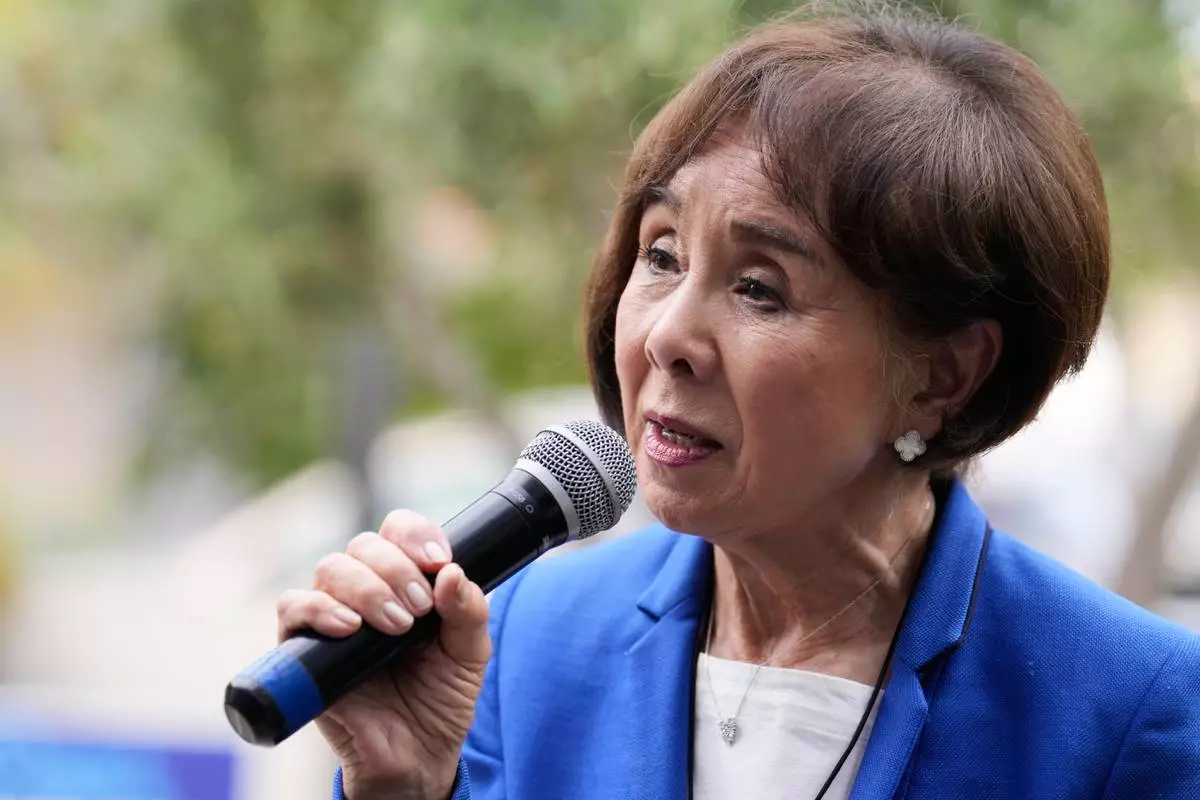
California Democratic Rep. Doris Matsui advanced to the November ballot on Friday after facing a reelection challenge from a younger Democrat.

Matsui, 81, has been in Congress since she replaced her late husband, former Rep. Bob Matsui, in the Sacramento-based seat in 2005.

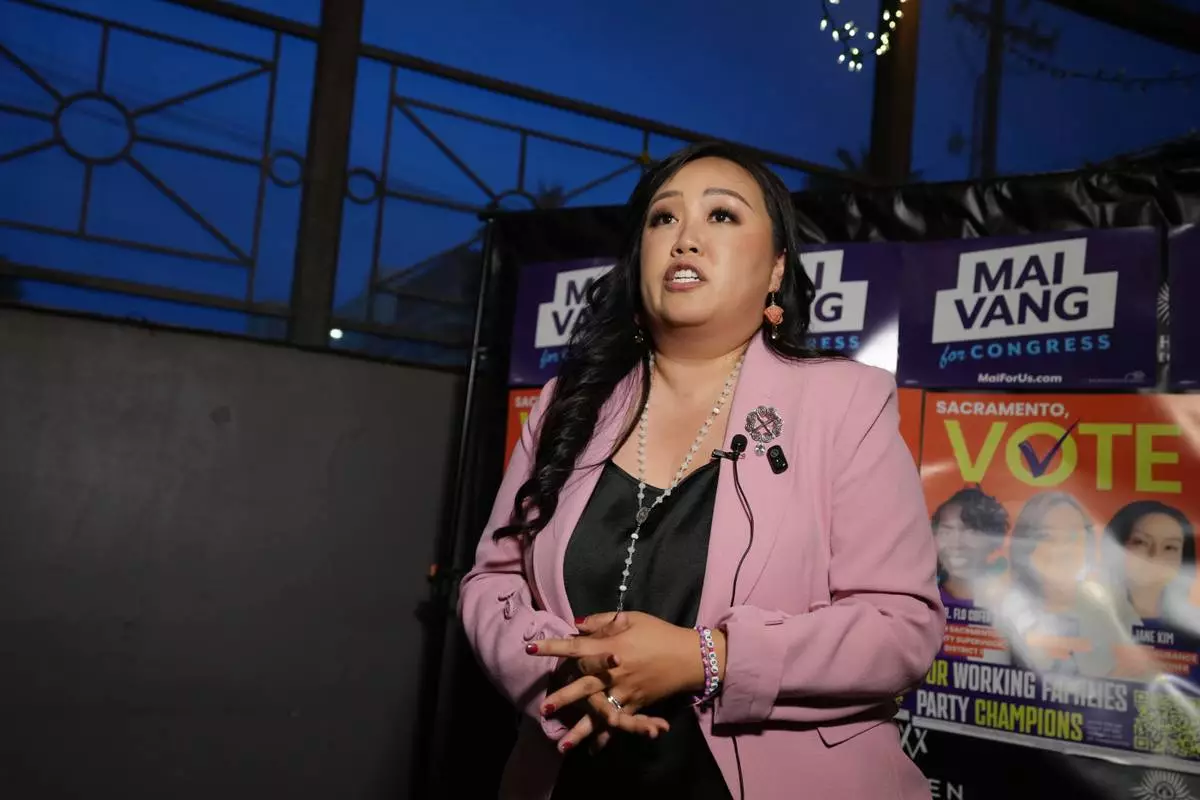
She faced a primary challenge from fellow Democrat Mai Vang, a member of the Sacramento City Council, and is one of several older Democrats challenged by younger insurgents this year. The second slot on the general election ballot has not yet been determined.

California’s primaries are helping set the stage for the fall battle for the House of Representatives and testing whether Democrats are able to add five potential pickups after they persuaded voters to let them redraw the electoral map last year.

The redistricting was sold as a countermeasure to Republican efforts to gain seats by reworking maps in states they control, including Texas.

Heading into Tuesday’s election, Democrats worried that California’s primary format, which sends the top two vote-getters to the general election regardless of party, could lead to them getting locked out of a seat they drew to their advantage in the San Diego’s suburbs.

That did not happen, as San Diego City Councilwoman Marni von Wilpert advanced to face Republican Jim Desmond, a San Diego County supervisor. But Democrats are at risk of being shut out of another district they expected to pick up, in Sacramento’s suburbs.

Another redrawn district, which straddles Orange and Riverside counties in Southern California, favors Republicans. GOP Rep. Ken Calvert has advanced to the November election in the 40th District but does not yet know who his opponent will be. He had a bruising primary fight with fellow Republican Rep. Young Kim, whom Democrats drew into a new district that includes areas Calvert previously represented.

In San Francisco a wealthy progressive challenger was unable to crack the top two slots to fill retiring Rep. Nancy Pelosi’s seat. Instead state Sen. Scott Wiener and San Francisco Supervisor Connie Chan will face off to replace the former House speaker.

And in the Central Valley, Republican Rep. David Valadao, widely considered one of the most vulnerable House Republicans, is waiting to see if he will face centrist Democrat and Assemblywoman Jasmeet Bains or progressive political science professor and school board member Randy Villegas in November.

Several races cannot be called yet because of California's typical drawn-out election count, in which mail ballots that tend to come from more Democratic areas are counted later, eroding conservatives' traditional leads in votes reported on election night.

Trump has previously seized on the count to baselessly alleged fraud and did so again Thursday, adding that his Justice Department would investigate the state over it. A federal prosecutor toured Los Angeles' main vote-counting facility on Friday.

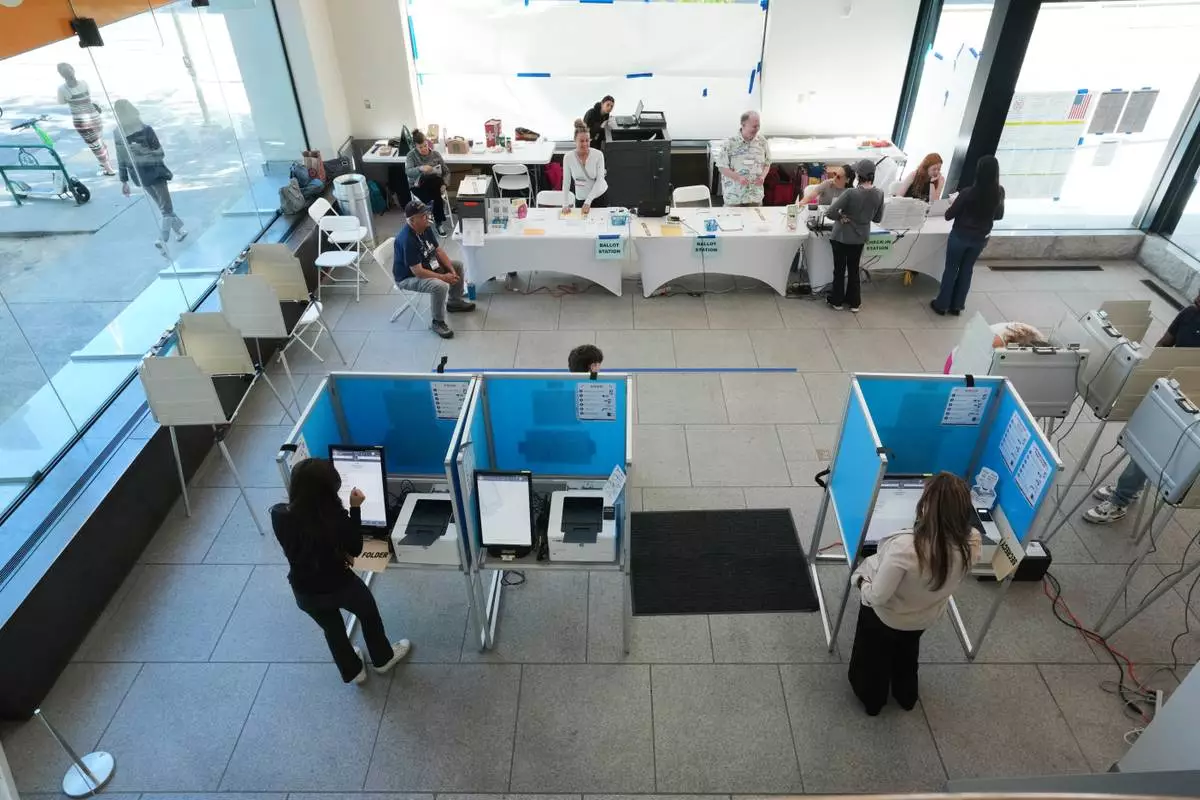
Voters cast their ballots for the California primary election on Tuesday, June 2, 2026, in Sacramento, Calif.. (AP Photo/Rich Pedroncelli)

Voters cast their ballots for the California primary election on Tuesday, June 2, 2026, in Sacramento, Calif.. (AP Photo/Rich Pedroncelli)

Sacramento council member Mai Vang, who is running for Congress, speaks at her election night party in Sacramento, Calif., Tuesday,, June 2, 2026.(AP Photo/Rich Pedroncelli)

Sacramento council member Mai Vang, who is running for Congress, speaks at her election night party in Sacramento, Calif., Tuesday,, June 2, 2026.(AP Photo/Rich Pedroncelli)

Rep. Doris Matsui, D-Calif., speaks during an election night event Tuesday, June 2, 2026, in Sacramento, Calif. (AP Photo/Rich Pedroncelli)

Rep. Doris Matsui, D-Calif., speaks during an election night event Tuesday, June 2, 2026, in Sacramento, Calif. (AP Photo/Rich Pedroncelli)

Recommended Articles