Thongloun Sisoulith, general secretary of the Lao People's Revolutionary Party Central Committee and president of Laos, said China's successful experience in poverty alleviation and sustainable development offers valuable lessons for Laos.
Thongloun arrived in Hangzhou, capital city of east China's Zhejiang Province on Tuesday for a five-day state visit to China at the invitation of President Xi Jinping.
In an exclusive interview with China Media Group (CMG) in Hangzhou on Wednesday, Thongloun said he has been deeply impressed by China's progress, both in governance and in its ecological transformation.
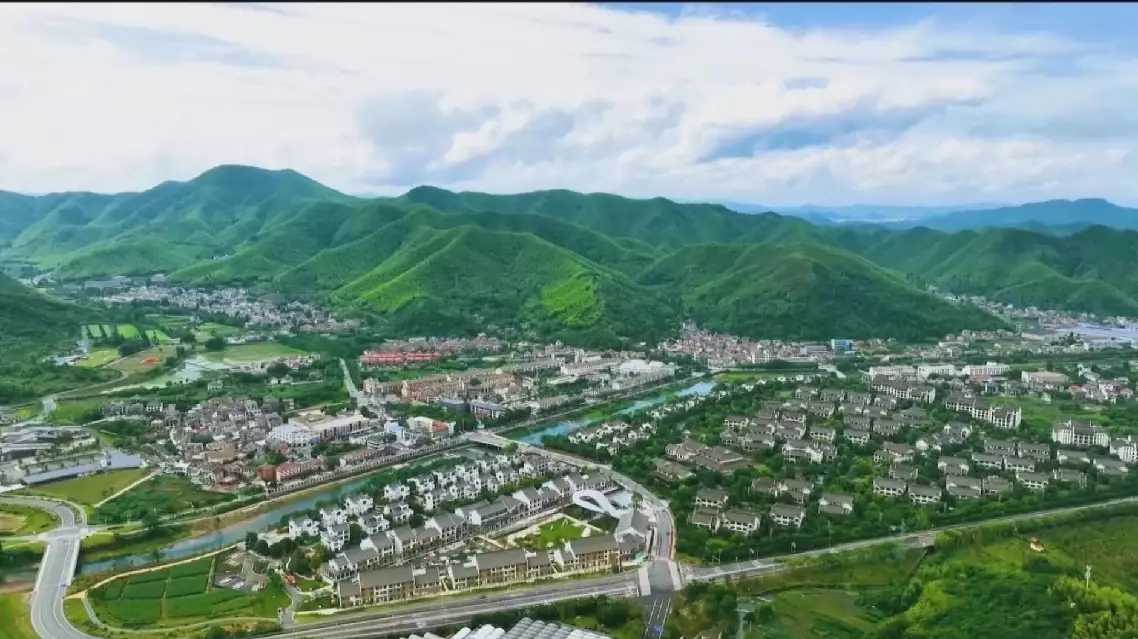
On Wednesday, Thongloun and his delegation traveled to Yucun Village in Zhejiang Province, the birthplace of Xi's "Lucid waters and lush mountains are invaluable assets" concept, to witness China's green development efforts firsthand.
Following a rain shower, Yucun's rolling hills, clear streams, and lush greenery offered a picture of ecological vitality. But more than two decades ago, the village looked very different. Rich in limestone resources, Yucun once relied heavily on quarrying and mining. Economic growth came at an environmental cost, with dust-filled skies and polluted waterways becoming a common sight. Yet shutting down the mines also raised concerns about livelihoods and local income.
During a visit to Yucun on August 15, 2005, Xi, then secretary of the Zhejiang Provincial Committee of the Communist Party of China, first articulated the concept that "Lucid waters and lush mountains are invaluable assets." Guided by this vision, Yucun embarked on ecological restoration and developed a low-carbon, sustainable "beautiful economy." Over the past two decades, the village has been transformed.
Its development path, one that combines environmental protection, industrial vitality, and rising living standards, left a strong impression on Thongloun, who stopped to photograph the iconic stone monument bearing the inscription: "Lucid waters and lush mountains are invaluable assets."
"My grandson indeed asked me that question when he was 13, and that was exactly how I answered him. Deep in my heart, I have always carried this concern: the people of Laos have not yet fully escaped poverty. That being said, the task of eliminating poverty has now been incorporated into the policy framework of our party and the state, and elevated to the level of a national agenda. Before this visit, a central committee (of the Lao People's Revolutionary Party) meeting had already made the decision for the government to submit it to the National Assembly for deliberation and approval, so that it can be formally established as a national agenda and advanced with great seriousness," said Thongloun.
"In 2023, I visited a village in a county in China. I couldn't clearly remember which province it is in, but it is a place where President Xi Jinping had personally been to guide and promote poverty alleviation. That visit gave me profound inspiration and helped me understand a profound truth: Policies should be simple, practical and well-grounded. We need to enable the people to have the 'Two Assurances,' that is, to have no worries about food or clothing, and the 'Three Guarantees,' namely guaranteed housing and income, guaranteed access to education for children, and guaranteed basic medical care. These are the things China has already fully achieved," he said.
"We are now discussing in Laos how to adapt and apply these policies to our own national realities. We are also formulating support policies and preparing to formally establish this as a national agenda and push it forward. But this is by no means easy. China's overall national strength is far greater than that of Laos. Our infrastructure construction takes time and requires investment. For that reason, we must proceed step by step and move forward steadily. But we have already set ourselves a clear goal: by the centenary of the founding of the Lao People's Revolutionary Party (the year 2055), Laos will have been transformed. By then, the problem of poverty facing our people will have been resolved," Thongloun said.
Laos learns from China’s successful experience in poverty alleviation: president
Major breakthroughs by Chinese scientists have laid the foundation for a future where space-based solar power stations are capable of wirelessly transmitting energy to Earth and spacecraft, though significant engineering problems remain.
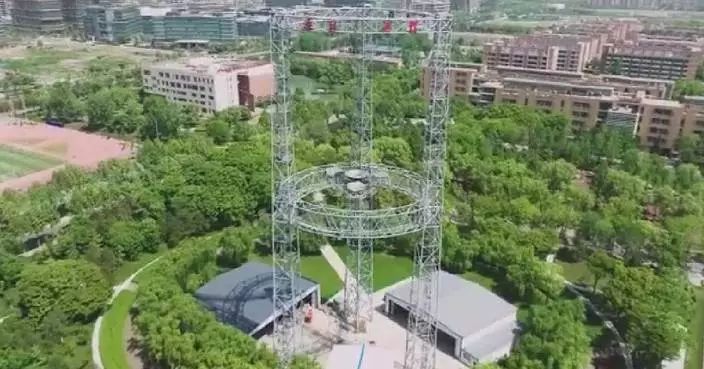
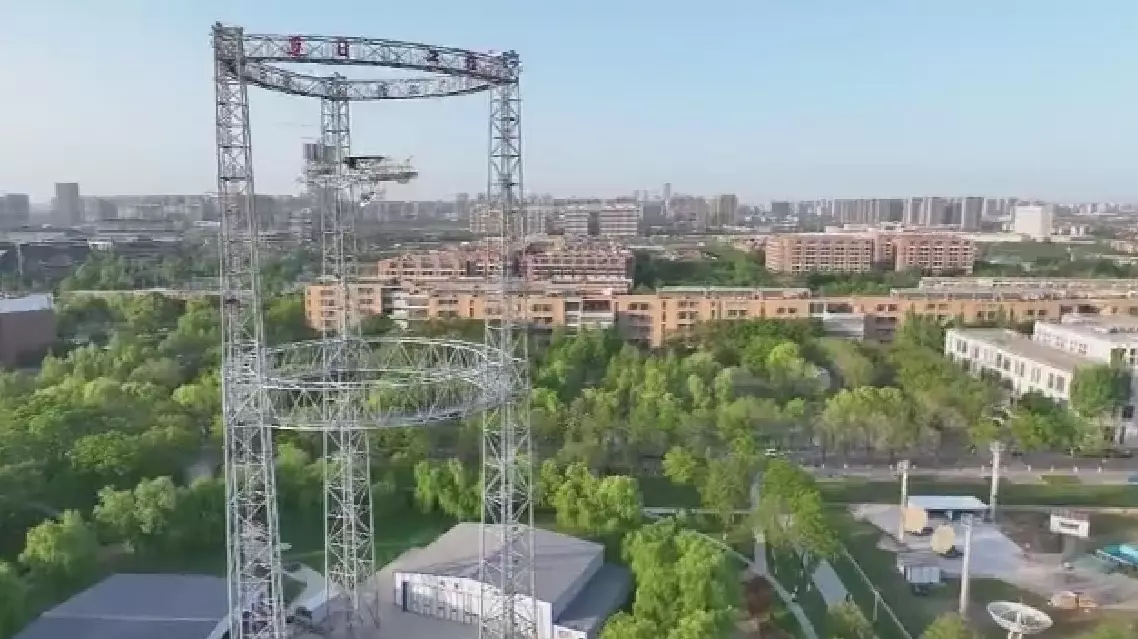
A research team from Xidian University in northwest China's Shaanxi Province has made significant progress on the Sun Chasing project, or "Zhuri" in Chinese. The team has developed a ground-based test system for wireless power transmission that can charge multiple moving targets at the same time.
In recent tests, the system achieved a wireless power transmission efficiency of 20.8 percent from direct current to direct current over a distance of 100 meters. It delivered 1,180 watts of power. The team has also built a wireless charging system for drones. In a test, a drone flying at 30 kilometers per hour was able to receive 143 watts of stable power from 30 meters away.
A space solar power station works exactly as its name suggests: a huge array of solar panels placed in orbit. It would collect sunlight in space, where the sun always shines, and then convert that energy into microwaves or lasers to beam down to Earth or directly to satellites and spacecraft. This could address two significant issues: supplying uninterrupted power for space missions and alleviating energy shortages on the ground.
"The construction of space solar power stations could become a major undertaking in the future. One potential benefit is access to a virtually unlimited power supply. Because energy can be collected continuously in space 24 hours a day, electricity could be supplied on an uninterrupted basis," said Fan Guanheng, an associate professor at the School of Mechano-Electronic Engineering at Xidian University.
"Secondly, it could reduce our dependence on fossil fuels, thereby lowering carbon emissions and helping protect the environment. Thirdly, it could support the development of charging infrastructure in space and enable wireless microwave charging for spacecraft, changing the way power is supplied to space vehicles," the professor added.
In 2018, the research team launched the first phase of the Sun Chasing project to build a ground test system. By June 2022, they had completed the world's first full-link, full-system ground validation system for a space solar power station. Now, the team has moved to phase two. The goal now is to solve the challenges of generating high power in space and transmitting it efficiently over long distances.
According to Duan Baoyan, an expert at Xidian University and an academician of the Chinese Academy of Engineering, recent breakthroughs include improving the efficiency of solar energy collection and conversion, increasing the precision of microwave beam control to reduce energy loss, and making the transmitting and receiving antennas smaller and lighter, which is critical for space application.
The team has also solved the problem of how to power multiple moving targets at once using a single transmitter. This means that in the future, one space power station could potentially supply electricity to several satellites or ground vehicles at the same time, Duan said.
Despite the advances in ground-based validation, a series of technical challenges must still be overcome before the technology can be deployed in space.
"The first issue that needs to be addressed is the adaptability of components to the space environment, as conditions in space are completely different from those on Earth, including radiation exposure and extreme temperatures. Another challenge involves the deployment and retraction design of transmitting and receiving antennas. We also need to develop thermal management systems to cope with extreme temperatures and temperature fluctuations in space. These are all areas where further breakthroughs are needed," said Qian Sihao, an associate professor at the School of Mechano-Electronic Engineering at Xidian University.
"We have now completed the development and validation of a ground-based test system, and our next step is to carry out in-orbit wireless microwave power transmission," Fan said.
With ground validation complete, the team now turns its attention to overcoming the harsh realities of space, aiming to demonstrate in-orbit wireless power transmission and bring the vision of orbital solar energy closer to reality.
Space-to-earth solar power moves closer to reality although hurdles remain: scientists