WASHINGTON (AP) — Consumer prices probably jumped in May for the third straight month, heightening concerns for the inflation fighters at the Federal Reserve and underscoring the threat that rising costs pose for the Trump administration as midterm elections near.
Inflation is expected to reach 4.2% in May from a year earlier when the Labor Department reports last month's figures Wednesday, according to a survey of economists by data provider FactSet The annual increase would be up from the 3.8% reading in April. On a monthly basis, prices are forecast to have risen a hefty 0.5%, slightly below the 0.6% increase in April.
Inflation had been cooling before President Donald Trump imposed sweeping tariffs in April 2025, which lifted the costs of many goods. Prices have since surged after the Iran war made oil and gas more expensive, making affordability a key political issue. The main question now is whether inflation will fade if the war ends and oil and gas prices fall, or will it persist even after the war.
Some economists worry that prices are still elevated in areas that should be unaffected by gas costs, such as dental care, motor vehicle repair, and other services. At the same time, wages are rising only modestly, which should reduce pressure on firms to raise prices further.
To that end, economists and financial markets will closely watch core prices, which exclude the volatile food and energy categories. Core inflation is forecast to have risen 0.3% in May from April, according to FactSet, a pace that is consistent with annual readings far higher than the Fed's 2% target. On an annual basis, core inflation may tick higher to 2.9% from 2.8%.
Gas prices have fallen this month, but they rose in May because of Iran's closure of the Strait of Hormuz, which has choked off about a fifth of the world's oil supply. Prices at the pump rose, on average, from about $4.04 in mid-April to $4.49 in mid-May, according to the Energy Information Administration.
They have since fallen back to $4.16 on average nationwide, according to AAA, which could lead to a cooler inflation reading in June.
More expensive diesel fuel has lifted shipping costs, with companies like UPS and FedEx adding fuel surcharges in the past couple of months. That is likely to push up grocery prices, which jumped 0.7% in April and are 2.9% higher than a year ago.
Stubbornly high inflation has shifted the debate among Fed policymakers, who had signaled at the start of the year that they were inclined to cut their key rate twice more this year. Now, more officials are saying they expect the Fed's next move will likely be a hike rather than a cut. When the Fed boosts its key rate, it typically over time leads to higher borrowing costs for mortgages, auto loans, and business loans.
Wall Street investors expect the Fed to raise rates in December, according to futures prices tracked by CME Fedwatch.
Despite higher inflation, the job market appears to be improving, with hiring increasing to a healthy level in May, and the economy is still growing. These positive signs suggest the Fed doesn't need to cut rates to stimulate growth and hiring. They also signal that the Fed's rate isn't so high that it is weighing on the economy. Yet some officials want rates to cool growth a bit, because that can bring down inflation.
Interest rates on two-year and 10-year Treasury securities have increased since Friday's jobs report showed hiring accelerated in May, a sign investors expect inflation may remain elevated and eventually require Fed rate hikes.
Higher inflation has put the new Fed Chair, Kevin Warsh, in a difficult spot. He advocated for rate cuts last year and was chosen by Trump to replace Jerome Powell, after Trump relentlessly criticized Powell for not reducing rates more quickly. Yet for now, Trump and White House officials are mainly arguing that interest rates don't need to increase, rather than demanding further cuts.
Some economists still see tariffs pushing up some costs, particularly clothing, which jumped 0.6% in April and are 4.2% more expensive than a year ago. Pricier fuel may have also led to higher airline fares last month, which would lift core inflation.
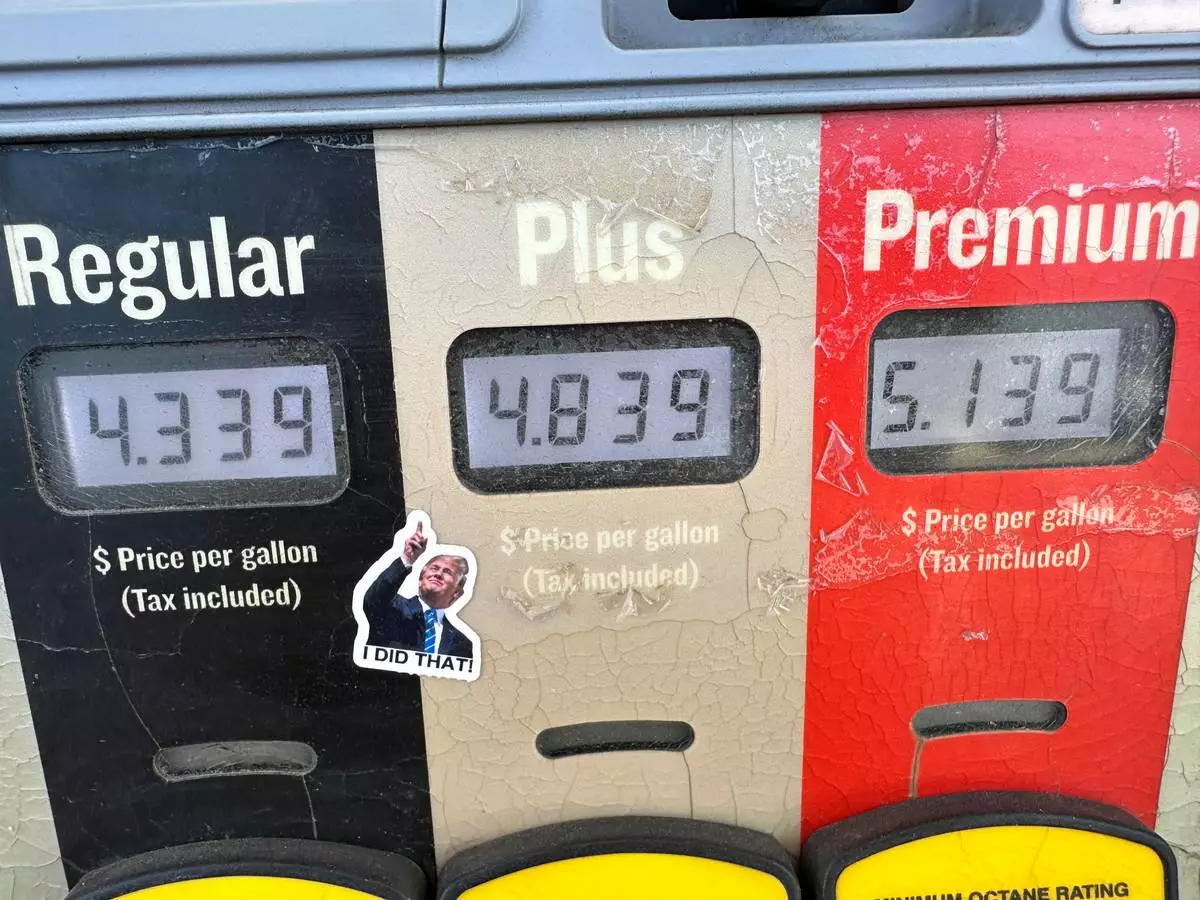
A sticker with the image of President Donald J. Trump points to the electronically-displayed per-gallon prices for the various grades of gasoline available from a pump at a Conoco station Saturday, May 30, 2026, in Denver. (AP Photo/David Zalubowski)
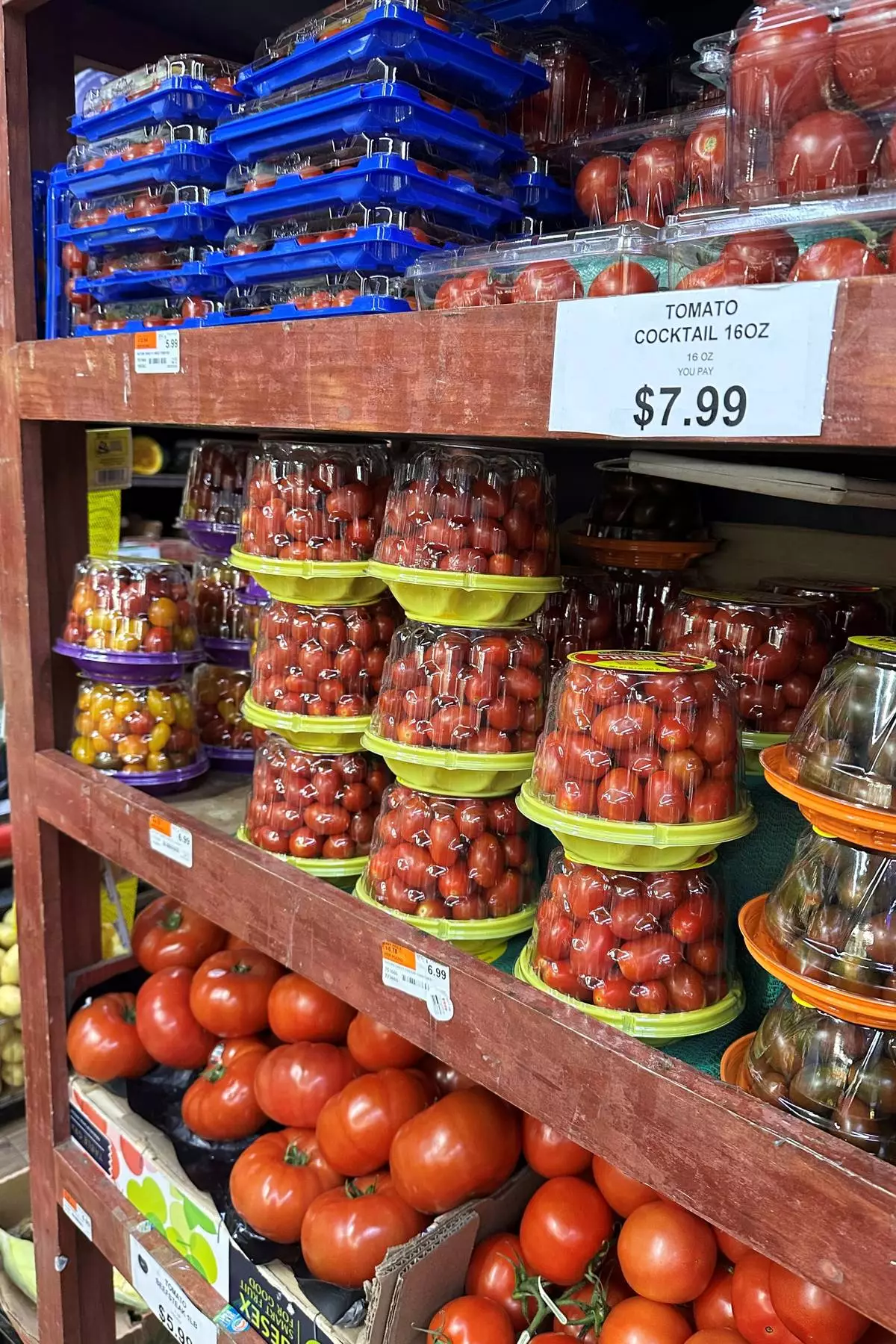
Tomatoes await customers on the shelves of a supermarket in New York on Tuesday, May 26, 2026. (AP Photo/Matt Sedensky)
U.S. President Donald Trump said Wednesday that Iran is taking “too long to negotiate a deal” and that “now they will have to pay the price.” What that means for Tehran wasn't clear. His latest statement came after the U.S. launched airstrikes early Wednesday against Iran after Trump blamed Tehran for the crash of an American attack helicopter. Iran fired back at countries in the region.
A bill to provide nearly $70 billion for immigration enforcement narrowly passed the House on Tuesday and now goes to President Donald Trump for his signature, bolstering the administration’s deportation agenda for the remainder of his time in the White House.
Graham Platner has secured Maine’s Democratic Senate nomination, setting up a high-stakes battle against longtime incumbent Republican Sen. Susan Collins in a race that could determine party control of the U.S. Senate. In South Carolina and Nevada, where Trump endorsed his favored candidates, his clout within his party was tested.
The Latest:
Consumer prices rose 4.2% in May from a year earlier, the Labor Department said Wednesday, up from 3.8% in April and the third straight increase. On a monthly basis, prices rose 0.5% last month, after big gains of 0.6% in April and 0.9% in March.
The numbers are a headache for the Federal Reserve and a political challenge for the Trump administration as midterm elections near.
Inflation had been cooling before Trump’s sweeping tariffs in April 2025 made many goods more costly. Prices surged again after the Iran war made oil and gas more expensive, potentially spreading price hikes across the economy.
Excluding the volatile food and energy categories, core prices rose 2.9% in March from a year earlier, up from 2.8% in April. On a monthly basis, core prices increased a modest 0.2%, down from a 0.4% gain in April.
Israeli Prime Minister Benjamin Netanyahu posted on X around the same time as Trump, again insisting that Iran could never have a nuclear weapon and defending Israel’s decisions to attack the Islamic Republic in the past.
While Iran and the U.S. seem to be looking for a way to end the conflict, Netanyahu appears intent on pursuing much more difficult goals: the collapse of Iran’s theocratic government, the elimination of its nuclear program and the destruction of the Iranian-allied Hezbollah militant group in Lebanon. That will make compromise much harder.
Hours after Bahrain, Kuwait and Jordan came under Iranian fire, Trump posted on his Truth Social platform that Iran was taking “too long to negotiate a deal” and that “now they will have to pay the price.”
It wasn’t clear what exactly that would mean, but the back-and-forth strikes Wednesday again raised the question of how much pressure the deal can take before it cracks. The exchange of fire was the second time this week that such strikes have tested the ceasefire after Iran and Israel targeted each other on Monday.
Recent U.S. sanctions targeting Cuba’s leadership and the indictment of former President Raúl Castro are a “pretext” for the Trump administration to persuade the American people to support a military intervention, Cuba’s top diplomat to the United States told The Associated Press.
In an interview on Tuesday, Ambassador Lianys Torres Rivera repeated accusations against the Trump administration made by other Cuban officials, including the foreign minister and the president, and complained bitterly that the U.S. is targeting Cuban civilians with its decades-old embargo and new blockade of energy shipments to the island.
“The sanctions against our leaders, we see as a pretext to make the American people think we are a threat,” she said at Cuba’s embassy in Washington. “We are not a threat to the U.S., and we don’t want confrontation.”
Torres Rivera, who holds the formal title of chargé d’affaires, described the situation as “a war without bombs.” She said efforts to change Cuba’s government by coercion or force would be met by fierce resistance.
▶ Read more
Mismanagement at a massive Immigration and Customs Enforcement facility in Texas created unsafe conditions that contributed to detainee deaths and suffering even as millions of wasted tax dollars enriched contractors, according to a federal report released Tuesday.
The Government Accountability Office report documents serious problems at Camp East Montana, a sprawling tent facility at Fort Bliss in El Paso, where three detainees have died in little more than six months. Evidence in one of those deaths, of a 55-year-old Cuban migrant who died in January after being held down by guards, was “missing or destroyed,” the report found.
ICE rushed to open the camp in August before construction was complete and failed to conduct required oversight to ensure detainees were held in sanitary conditions and receiving adequate medical care, according to the report.
DHS noted that ICE has replaced the contractor running the facility. “This new contractor will allow Camp East Montana to continue abiding by the highest detention standards with the ability to provide more medical care on-site,” said spokesperson Lauren Bis.
▶ Read more
The United States launched airstrikes early Wednesday against Iran after blaming Tehran for the crash of an American attack helicopter, and Iran fired back at countries in the region — another escalation that threatened to derail efforts to end the war.
Bahrain, Kuwait and Jordan — all of which host U.S. troops — came under Iranian fire. It was the second time this week that back-and-forth strikes have tested the ceasefire after Iran and Israel targeted each other on Monday, and it again raised the question of how much pressure the deal can take before it cracks.
While Trump has insisted that negotiations with Iran to end the war are making progress, he has repeatedly vacillated between expressing such optimism and warning that he was ready to return to all-out war. Iran, meanwhile, has proved resilient despite having faced weeks of heavy bombing, betting that its ability to effectively close the Strait of Hormuz — a crucial passageway for the world’s oil and natural gas — gives it a strong bargaining chip.
▶ Read more
Graham Platner has secured Maine’s Democratic Senate nomination, setting up a high-stakes battle against longtime incumbent Republican Sen. Susan Collins in a race that could determine party control of the U.S. Senate.
Nevada, South Carolina and North Dakota hosted primary elections Tuesday, but much of the political world was focused on Maine’s high-stakes U.S. Senate contest.
The results were never in question. Neither Republican incumbent Sen. Susan Collins nor Democratic challenger Graham Platner faced serious opposition for their party’s nomination. And yet Tuesday marked an especially significant moment for Platner, the embattled veteran and oyster farmer, who is fighting to rebuild his credibility in a campaign rocked by controversy.
Elsewhere, President Donald Trump’s clout within his party was tested anew in states like South Carolina and Nevada, where he endorsed his favored candidates. Democrats hoped to build momentum in Nevada as part of a broader push to reclaim key governor’s seats.
▶ Read more
A bill to provide nearly $70 billion for immigration enforcement narrowly passed the House on Tuesday and now goes to President Donald Trump for his signature, bolstering the administration’s deportation agenda for the remainder of his time in the White House.
Republicans used their majority to get the bill over the finish line, funding a pair of Homeland Security agencies through the next three years. The bill passed by a vote of 214-212, over the objections of Democrats. Trump is expected to sign it into law on Wednesday.
The White House says the bill will provide $38 billion for Immigration and Customs Enforcement, $26 billion for the Border Patrol and another $5 billion to cover unforeseen costs. It frontloads routine annual funding, ensuring a virtually uninterrupted flow of money as the Trump administration seeks to deport some 1 million people per year.
▶ Read more
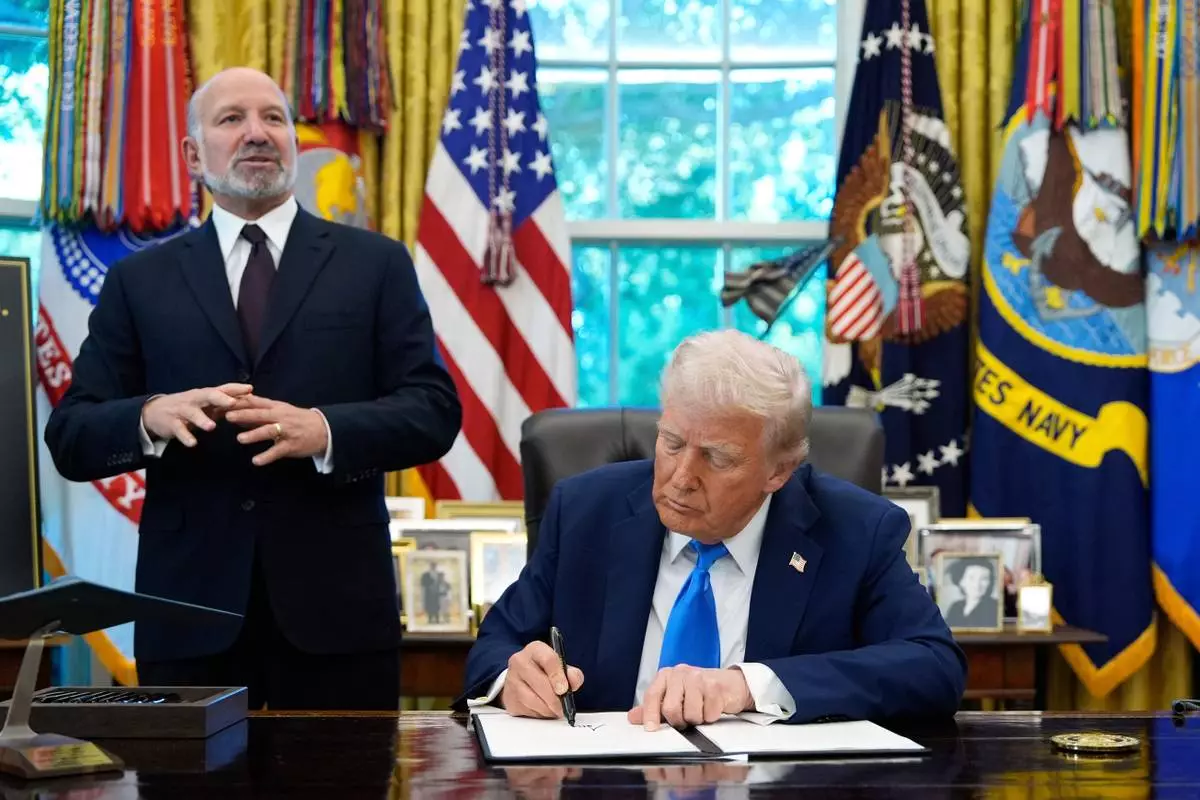
FILE - Commerce Secretary Howard Lutnick speaks as President Donald Trump signs the Gold Card executive order in the Oval Office of the White House, Sept. 19, 2025, in Washington. (AP Photo/Alex Brandon, File)

The Donald J. Trump and Jeffrey Epstein Memorial Reading Room opens to the public, where approximately 3.5 million pages of public records of the Epstein files are on display, Tuesday, June 9, 2026, in Washington. (AP Photo/Rod Lamkey, Jr.)

Medical staff transfer patients to a protected underground facility following an Iranian missile attack, at Ichilov Hospital in Tel Aviv, Israel, Monday, June 8, 2026. (AP Photo/Ohad Zwigenberg)

First Lady Melania Trump applauds students as she host the Inaugural Presidential AI Challenge National Champion Awards Ceremony at the White House on Tuesday, June 9, 2026, in Washington. (AP Photo/John McDonnell)

Democratic U.S. Senate candidate Graham Platner, right, and his wife Amy Gertner gesture to supporters during a primary election night watch party Tuesday, June 9, 2026, in Blue Hill, Maine. (AP Photo/Robert F. Bukaty)