LOS ANGELES--(BUSINESS WIRE)--Jun 10, 2026--
Xsolla, a leading global video game commerce company, today announced its sponsorship of First Playable Florence (FPF) 2026, Europe's premier annual gathering for independent game developers seeking publishing deals, investment, and platform partnerships. On June 11 in Florence, Italy, Xsolla will host two developer-focused programming activations led by Inês Ramalho, Xsolla's expert in partner-driven growth and publishing strategy. Together, the sessions are designed to give indie PC studios concrete tools for two of the most consequential conversations they will have in the current market: the one that gets them published, and the one they have with themselves about how to grow sustainably once they are.
This press release features multimedia. View the full release here: https://www.businesswire.com/news/home/20260610191923/en/
First Playable Florence is purpose-built for the moment when a studio has something worth showing and needs to find the right partner to take it further. With publishers, investors, and platform operators actively meeting with developers throughout the event, FPF represents a concentrated window of opportunity in which preparation, positioning, and the ability to communicate a game's value quickly and clearly can be the difference between a follow-up conversation and a dead end. Xsolla's presence at FPF reflects the company's broader commitment to equipping developers not just with commerce infrastructure, but with the strategic knowledge to navigate the industry relationships that determine whether a game reaches its audience.
At FPF 2026, Xsolla will host two sessions on June 11:
Roundtable: You Have 5 Minutes — How to Hook a PublisherThursday, June 11 | 11:00 AM
Inês Ramalho will lead a free roundtable focused on a reality every developer at the event will face: in early publisher conversations, the window to make an impression is short, the competition is dense, and the gap between a strong game and a successful pitch is wider than most studios expect. The roundtable will focus on how to distill a game's core hook into language that lands immediately, what publishers are actually evaluating in those first five minutes beyond the game itself, the most common structural mistakes that weaken pitches from studios that have the product but not yet the framing, and how to position a title competitively in terms of audience, market differentiation, and commercial potential. Rather than theoretical advice, the session is designed as a working discussion, giving developers the frameworks and language to walk into publisher meetings at FPF and beyond with genuine conviction.
Speaking Session: The End of Paid Acquisition? How PC Games Are Scaling Through Creators & PartnershipsThursday, June 11 | 12:00 PM
Inês Ramalho will deliver a 45–60 minute session examining one of the most significant strategic shifts underway in PC game marketing. Steam discoverability has become increasingly difficult to engineer through paid means alone. User acquisition costs continue to climb. And the players most likely to convert are the ones who heard about a game from someone they already trust, a streamer, a YouTuber, an affiliate with a dedicated community, not from an ad served to them between other content. The session will make the case that creator and affiliate partnerships are not a supplementary channel alongside paid acquisition; they are a structurally superior alternative for studios that build the right infrastructure around them. Ramalho will walk through how Xsolla Partner Network connects studios with a global network of creators, affiliates, and media partners, centralizing campaign management, trackable link generation, performance dashboards, and automated global payouts into a repeatable, measurable growth engine. Practical use cases will span new game launches, live games, and international expansion into markets where regional creators provide access that paid campaigns routinely underpenetrate.
"The conversation about how PC games grow has fundamentally changed, and most of the developers we talk to are feeling that shift but haven't yet built the systems to take advantage of it," said Berkley Egenes, Chief Marketing & Growth Officer at Xsolla. "Paid acquisition still works, but the return is declining, and the dependency is dangerous. Creator and affiliate partnerships scale with trust, not spend, and when you build the right infrastructure around them, the economics are structurally better. That's what Inês is going to show developers at FPF: how to build. And before any of that, the roundtable is about making sure they don't leave Florence without having had the publisher conversations they came for. Five minutes is enough time if you know what you're doing."
Developers attending First Playable Florence can meet with the Xsolla team on June 11 to learn more about Xsolla Partner Network and how Xsolla's commerce infrastructure can support their publishing and growth strategy. For more information, visit xsolla.com.
To learn more about Xsolla’s participation in First Playable Florence, visit: https://xsolla.pro/First-Playable-Florence
About Xsolla
Xsolla is a global commerce company that builds and provides all the things developers need to launch, grow, and monetize video games. Headquartered in Los Angeles, California, the company supports studios of every size, from indie to AAA, with solutions across direct-to-consumer commerce, intelligent payments, entertainment-based IP, and player engagement products. Xsolla helps developers fund, distribute, market, and monetize their games at scale. Trusted by more than 60% of the top 100 highest-grossing games, Xsolla operates as the merchant of record across 200+ geographies with access to over 1,000+ local payment methods worldwide. Grounded in a deep belief in the future of gaming, Xsolla is resolute in bringing opportunities together and unlocking growth for creators everywhere.
For more information, visit xsolla.com.
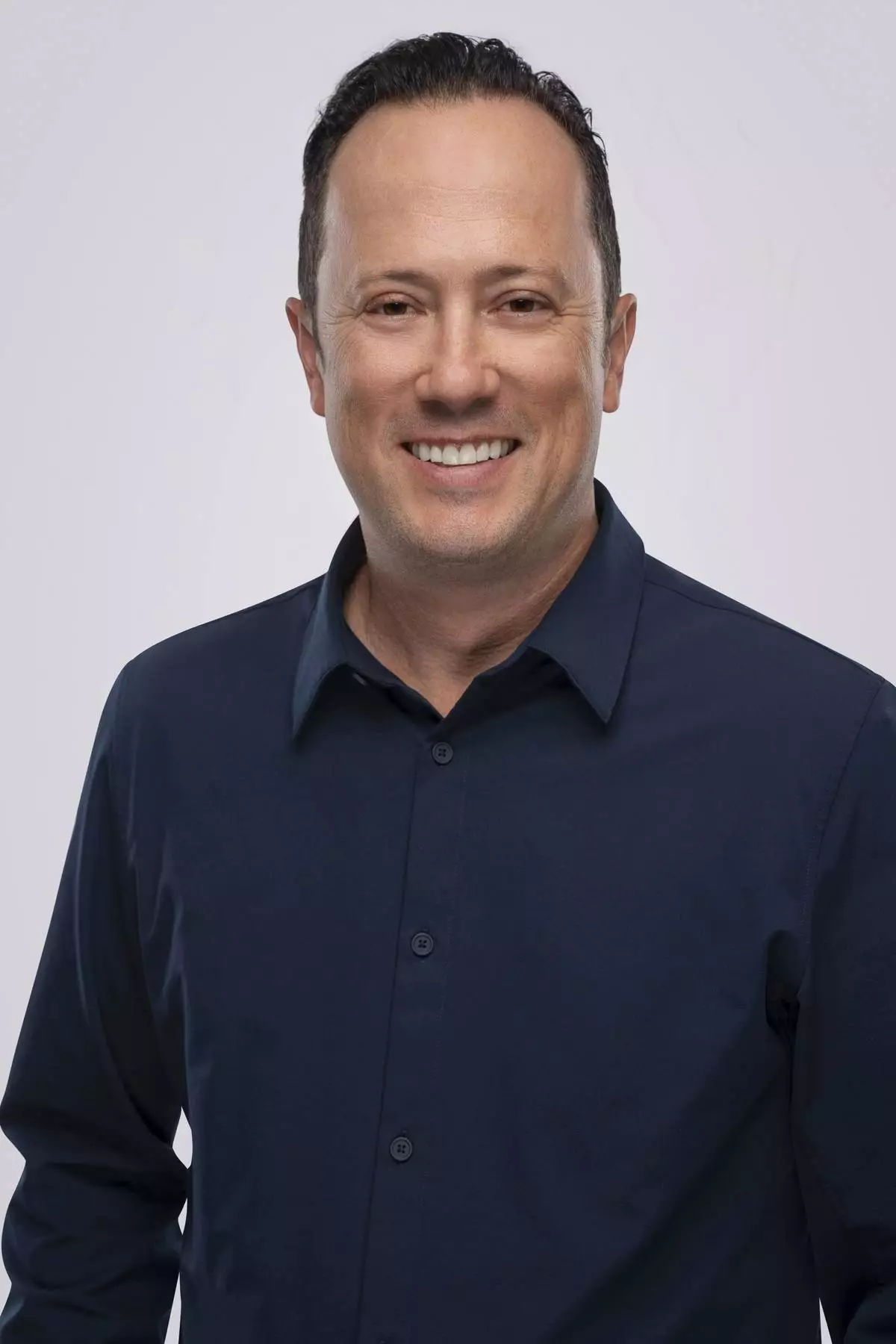
Berkley Egenes, Chief Marketing & Growth Officer at Xsolla

Graphic: Xsolla
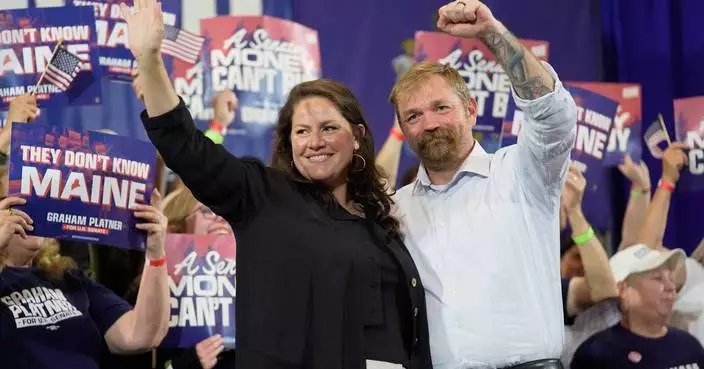
PORTLAND, Maine (AP) — This election year is déjà vu for Sen. Susan Collins — the Maine Republican is running for reelection as Democrats pin their hopes on a new candidate to defeat her. Last time, it was state lawmaker Sara Gideon. This time, it's combat veteran and oyster farmer Graham Platner.
But Collins has proven to be a hard target for Democrats over the years — even for candidates without the baggage of Platner, who has faced criticism for his relationships with women, inflammatory online posts and a previous tattoo recognized as a Nazi symbol. Collins is seeking her sixth term with sky-high name recognition, a record-breaking run of consecutive Senate votes and a history of bringing back federal funding for her state for years.
She is also the rare Republican who sometimes can boost her own popularity back home by keeping her distance from President Donald Trump, and she has perfected that delicate dance even as his tightening grip on the party has cost two of her Senate Republican colleagues their reelection.
Sens. John Cornyn of Texas and Bill Cassidy of Louisiana lost their primaries when facing Trump-endorsed opponents. But despite the president's complaints about Collins, he did not campaign against her. Years of practice have made her adept at staying close — but not too close — to the president when it is politically advantageous, and moving away when showing an independent streak is helpful.
“She’s shown time and time again where her state’s electorate is. She understands what’s too far, she understands where she needs to be,” said political consultant Matt Mackowiak, who worked for Cornyn's failed reelection campaign. Trump endorsed Cornyn's opponent, Texas Attorney General Ken Paxton.
The Democrats need to flip four seats to take control of the Senate in November and hope that Trump's falling approval ratings and the war in Iran — as well as its subsequent effect on oil prices and the economy — could buoy their chances. Maine is among the top targets, along with Alaska, Ohio and North Carolina.
Platner wants to make the case that Collins isn't as independent of Trump as her reputation suggests — repeatedly noting that she allowed his Supreme Court nominations to go through, which in 2022 led to the overturning of Roe v. Wade, a landmark 1973 decision that legalized abortion, among other major issues.
"Susan Collins may have started her career decades ago in Washington with good intentions, but she has become just as spineless and corrupt as the establishment she now serves," Platner said at a victory party on Tuesday.
Platner supporters are ready for change, said John Keenan, of Sullivan, Maine.
“I think Maine has grown tired of the same old system,” he said. “And putting youth into the campaign, with new instead of a rubber stamp, is very refreshing.”
Even as she faces Platner in November, Collins may have to stay wary of Trump. The president has spent years singling her out for daring to occasionally defy him on some issues.
However, he's refrained from doing so more recently — especially as Collins failed to draw a credible challenger and cruised to a Republican primary victory.
The White House declined to comment. Political advisers close to Trump, however, said the president understands how critical it is that Republicans maintain control of Congress after November, which requires accommodating Collins. Trump understands the need to avoid a Republican wipeout like 2018's “blue wave” midterms that saw Democrats flip the House and derail much of the last two years of his first-term plans.
“Senator Susan Collins represents the people of Maine first and foremost and has proven herself to be a dedicated public servant," said Republican National Committee spokesperson Kristen Cianci in a statement.
Collins spokesperson Blake Kernen said the senator “has worked with five different Presidents throughout her Senate tenure, and has never agreed with any of them on every issue.”
“When she agrees with an effort, she will support it; when she disagrees, she does not hesitate to speak up for what she believes is the right outcome for Maine and for America,” Kernen said in a statement.
That didn't work out for some Republican senators.
Cornyn was among his party's top voices, rising through the ranks after joining the Senate in 2002. Paxton trounced him in a runoff race days after Trump endorsed the attorney general.
In office since 2015, Cassidy voted to convict Trump during his impeachment trial after the U.S. Capitol siege on Jan. 6, 2021. He lost his primary to Trump-endorsed state Rep. Julia Letlow.
Maine figures to be a more competitive race in November — as evidenced by Trump recently refraining from singling out Collins. That's despite her voting last week with Democrats to block the nearly $1.8 billion fund the president wanted to create to benefit allies that he claims were unfairly targeted by law enforcement.
“She’s always down in the polls and she survives,” Trump conceded when asked about Collins in an interview with the New York Post last week.
Collins defeated Gideon, the Maine House speaker, by almost 9 points in 2020, the same year that Biden beat Trump by a similar margin in the state.
Mackowiak said "there’s just no pathway to a MAGA senator from Maine.”
“It does appear that the Trump political operation is soberly analyzing the electoral environment in Maine and really kind of follows her lead as it relates to that state and that race, particularly this cycle,” he said.
Chuck Ellis, a Republican from Westbrook who runs a digital marketing company, said Collins' reluctance to move in lockstep with Trump can be a plus.
Although there are some “hard-line” voters who may disapprove, Ellis said, "ultimately a lot of your conservatives, your Republicans, are people who are a bit more pragmatic.”
After Collins opposed the White House’s signature tax cut and spending package last year, and voted against a proposal to claw back $9 billion in foreign aid and public media funding, the president complained about her on social media.
“Republicans, when in doubt, vote the exact opposite of Senator Susan Collins," he wrote.
Then, in January, Trump lashed out at the “stupidity” of Collins and four other Senate Republicans who joined Democrats to start a debate over restricting the president’s use of force in Venezuela.
She later received a profanity-laced call from Trump.
As chair of the powerful Senate Appropriations Committee, Collins last week cast her 10,000th Senate vote in a row, setting a record.
“She has been able to do and show that ‘I am bringing money and resources from the federal government to Maine to help Maine,’” Ellis said.
The president is unlikely to travel to Maine ahead of November despite visiting other states with key Senate races, like Iowa and Michigan. He could even campaign personally for Paxton.
Vice President JD Vance has been to Maine, where he promoted his anti-fraud task force. Collins didn’t attend Vance’s speech in Bangor last month where he acknowledged the senator's distance from the Trump administration.
“If she was as partisan as I sometimes wish that she was,” Vance said, "she would not be a good fit for the people of Maine.”
This story has been corrected to show the spelling of Collins’ spokesperson’s surname is Kernen, not Kernan.
Weissert reported from Washington.
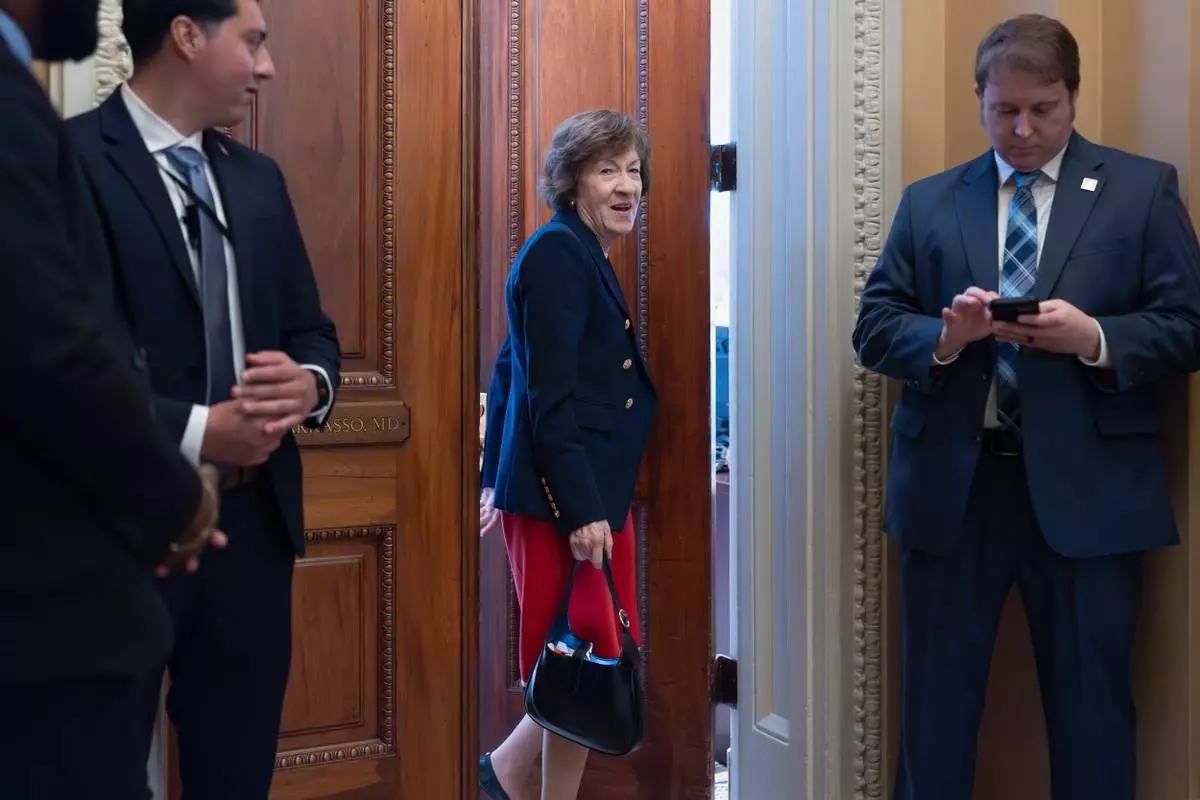
Sen. Susan Collins, R-Maine, chair of the Senate Appropriations Committee, heads to the chamber before votes on the immigration enforcement funding package, at the Capitol in Washington, Thursday, June 4, 2026. (AP Photo/J. Scott Applewhite)