Skip to Content Facebook Feature Image

Nearly 118 million people were displaced by conflict and persecution last year, UN says

News

Nearly 118 million people were displaced by conflict and persecution last year, UN says
News

News

Nearly 118 million people were displaced by conflict and persecution last year, UN says

2026-06-11 20:35 Last Updated At:20:40

The U.N. refugee agency said forced displacement of people due to conflict or persecution fell in 2025 for the first time in a decade. But the agency warned in its annual report Thursday that 118 million people who had to flee their homes or nations is still alarmingly high.

A look at the agency's Global Trends Report on refugees and displaced people, by the numbers:

More Images
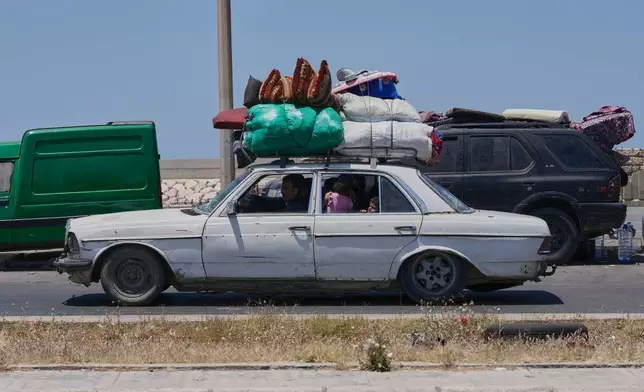
FILE - A Lebanese displaced family who fled their village in south Lebanon, arrive in the southern port city of Sidon, Lebanon, Wednesday, June 10, 2026. (AP Photo/Mohammed Zaatari, File)
FILE - A Lebanese displaced family who fled their village in south Lebanon, arrive in the southern port city of Sidon, Lebanon, Wednesday, June 10, 2026. (AP Photo/Mohammed Zaatari, File)

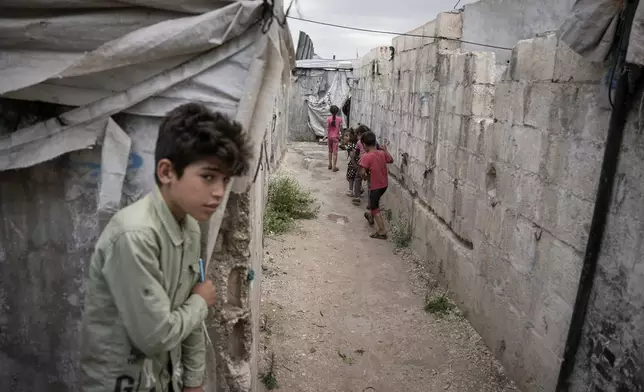
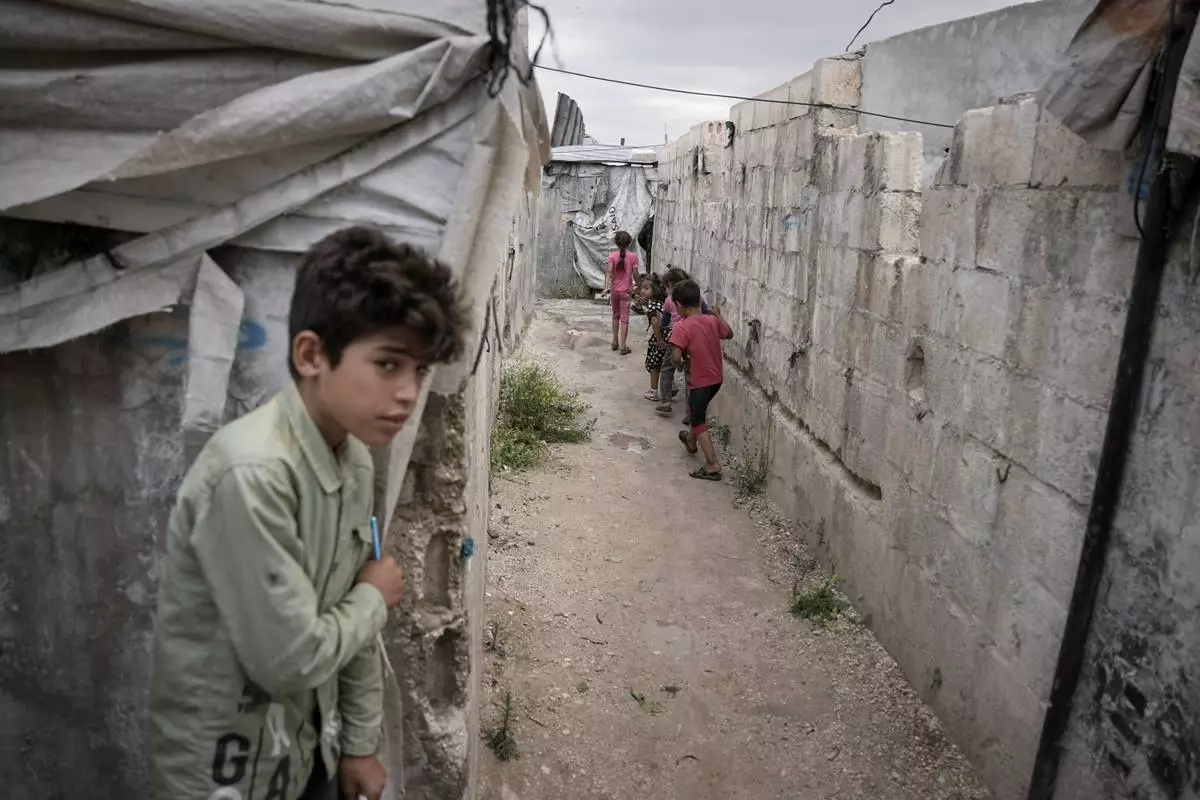
FILE - Children play through al-Karama camp, established in the early years of the Syrian conflict and built from scratch with light-brick structures covered with fabric to house internally displaced Syrians near the village of Atmeh, Idlib province, Syria, May 19, 2026. (AP Photo/Omar Albam, File)

FILE - Children play through al-Karama camp, established in the early years of the Syrian conflict and built from scratch with light-brick structures covered with fabric to house internally displaced Syrians near the village of Atmeh, Idlib province, Syria, May 19, 2026. (AP Photo/Omar Albam, File)

FILE - Hussein Mohamed Shareef shows the scar on his head where he said an RSF sniper shot him in Omdurman, as he poses for a photo at the Al Heshan camp for internally displaced people in Port Sudan, Sudan, Wednesday, April 15, 2026. (AP Photo/Bernat Armangue, File)
FILE - Hussein Mohamed Shareef shows the scar on his head where he said an RSF sniper shot him in Omdurman, as he poses for a photo at the Al Heshan camp for internally displaced people in Port Sudan, Sudan, Wednesday, April 15, 2026. (AP Photo/Bernat Armangue, File)

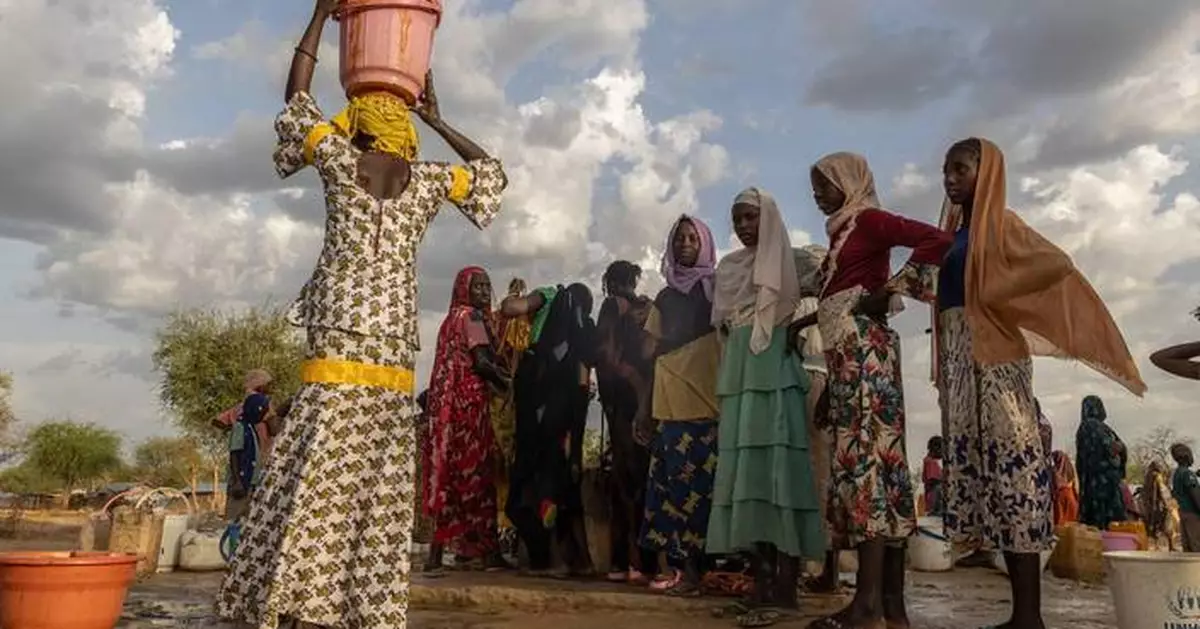
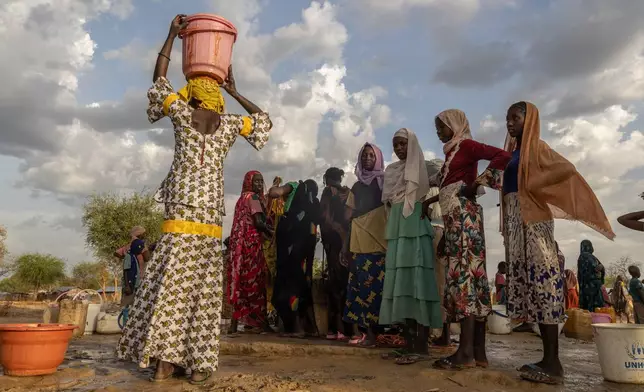
FILE - Women and children fetch water at dusk in the Korsi Refugee Camp in Birao, the Central African Republic, Friday, March 27, 2026. (AP Photo/Caitlin Kelly, File)

FILE - Women and children fetch water at dusk in the Korsi Refugee Camp in Birao, the Central African Republic, Friday, March 27, 2026. (AP Photo/Caitlin Kelly, File)

The total number of people forcibly displaced by conflict, violence or persecution at the end of 2025 was 117.8 million. The figure includes refugees, asylum seekers, internally displaced and other groups in need of international protection. It's the first time in a decade the statistic fell. Behind the decline is both an increase in people who returned home and the fact that many refugees acquired citizenship of their host countries, among other reasons, said Tarek Abou Chabake, the U.N. agency's chief statistician. The U.N. High Commissioner for Refugees warned the number of those displaced globally, mostly by conflict, was unacceptably high.

Percentage of children among 41.6 million refugees last year. While Colombia, Germany and Turkey hosted more than 2 million refugees each, the majority live in low- to middle-income countries. Despite a 3% fall from the previous year, 5.4 million people crossed an international border in 2025 seeking refuge.

Seven out of 10 refugees have lived in exile for five years or more, often trapped in sprawling camps in poor nations. “Humanitarian assistance has saved lives,” High Commissioner for Refugees Barham Salih said, adding that "it was never intended to sustain generations of people indefinitely." The agency aims to slash by half the number of refugees in protracted displacement who are dependent on humanitarian assistance by 2035.

There were 68.7 million people displaced within their countries last year. The ongoing war in Sudan was behind the largest displacement in the world with 9.1 million people forced to flee their homes. Colombia, Syria, Yemen and Afghanistan also have large displaced populations.

Projections for 2026 did not look much better. With the Iran war erupting in February, 3.2 million people had been displaced by March inside Iran, and by mid-May, 1 million were displaced inside Lebanon. “This is truly unacceptable and we must make sure this doesn't become a new normal,” Salih said.

Three countries — Syria, Afghanistan and Sudan — saw 90% of the 4.4 million refugee return home in 2025. The number was the second highest since UNHCR began keeping records six decades ago. Another 10.3 million internally displaced people returned to their areas of origin last year. But Salih warned that many of those who went back did so under pressure and without basic infrastructure and conditions for a dignified life. “Voluntary returns to post-conflict Syria and returns under pressure to Afghanistan are not the same thing,” Salih said.

The number of stateless people, of which the Rohingya from Myanmar make up the largest group. The majority of the stateless people live in Bangladesh, Ivory Coast, Thailand and Myanmar. Only 46,000 acquired citizenship in 2025.

The number of refugees resettled, which fell sharply from 188,000 in 2024. That's a fraction of those in need, Salih said, as he urged governments to expand legal pathways for refugees to be relocated. “Every dangerous sea crossing and every death in the desert represents a failure of the international community,” Salih said. “The human cost of the failure is measured not with statistics but with lives.”
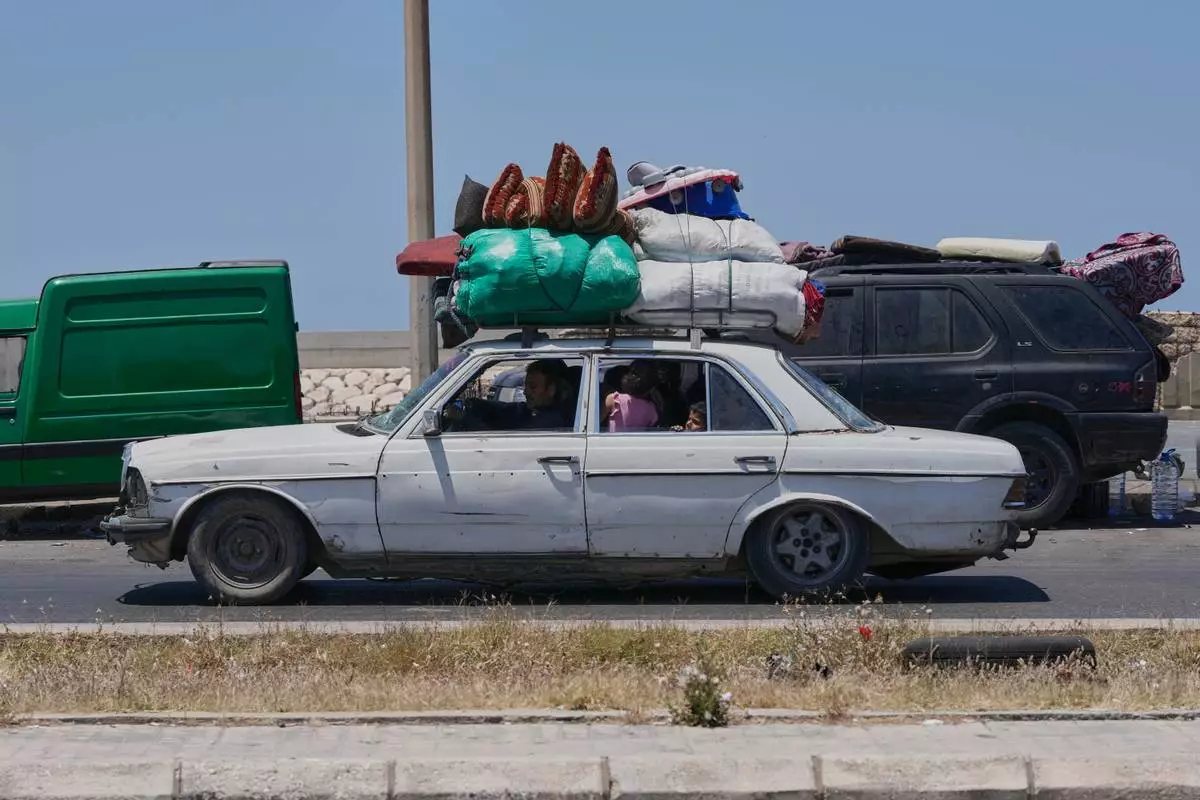
FILE - A Lebanese displaced family who fled their village in south Lebanon, arrive in the southern port city of Sidon, Lebanon, Wednesday, June 10, 2026. (AP Photo/Mohammed Zaatari, File)
FILE - A Lebanese displaced family who fled their village in south Lebanon, arrive in the southern port city of Sidon, Lebanon, Wednesday, June 10, 2026. (AP Photo/Mohammed Zaatari, File)

FILE - Children play through al-Karama camp, established in the early years of the Syrian conflict and built from scratch with light-brick structures covered with fabric to house internally displaced Syrians near the village of Atmeh, Idlib province, Syria, May 19, 2026. (AP Photo/Omar Albam, File)

FILE - Children play through al-Karama camp, established in the early years of the Syrian conflict and built from scratch with light-brick structures covered with fabric to house internally displaced Syrians near the village of Atmeh, Idlib province, Syria, May 19, 2026. (AP Photo/Omar Albam, File)

FILE - Hussein Mohamed Shareef shows the scar on his head where he said an RSF sniper shot him in Omdurman, as he poses for a photo at the Al Heshan camp for internally displaced people in Port Sudan, Sudan, Wednesday, April 15, 2026. (AP Photo/Bernat Armangue, File)
FILE - Hussein Mohamed Shareef shows the scar on his head where he said an RSF sniper shot him in Omdurman, as he poses for a photo at the Al Heshan camp for internally displaced people in Port Sudan, Sudan, Wednesday, April 15, 2026. (AP Photo/Bernat Armangue, File)

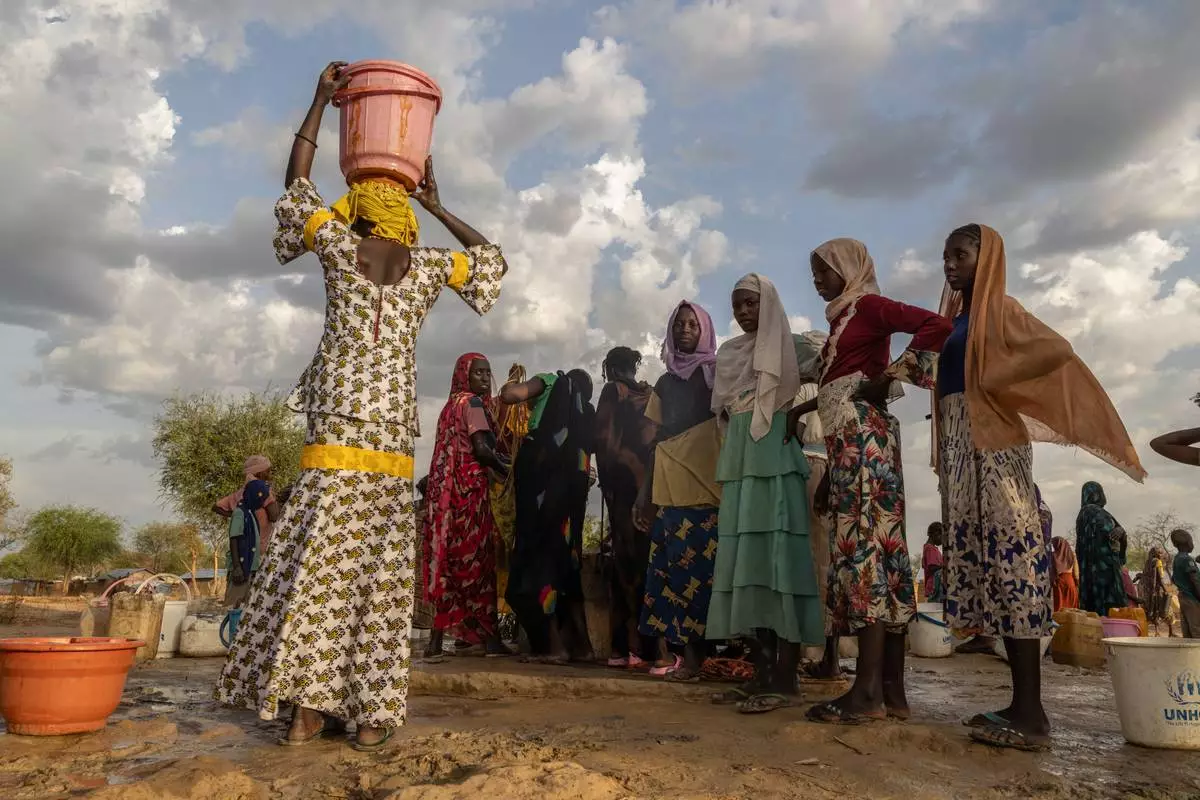
FILE - Women and children fetch water at dusk in the Korsi Refugee Camp in Birao, the Central African Republic, Friday, March 27, 2026. (AP Photo/Caitlin Kelly, File)

FILE - Women and children fetch water at dusk in the Korsi Refugee Camp in Birao, the Central African Republic, Friday, March 27, 2026. (AP Photo/Caitlin Kelly, File)

FRANKFURT, Germany (AP) — The European Central Bank on Thursday became the first major central bank to raise interest rates in response to the Iran war as policymakers around the world including new U.S. Federal Reserve Chair Kevin Warsh wrestle with how to confront the inflation fed by sharply higher oil prices.

The ECB’s rate-setting council raised its benchmark rate to 2.25% from 2%, where it had been for a year. The move comes ahead of rate-setting meetings next week at the Fed, the Bank of Japan, and the Bank of England.

Oil prices have risen sharply due to Iran choking off the flow of crude oil through the Strait of Hormuz, the sea passage for a fifth of the world’s oil and fuel products during normal times. Raising rates aims to dampen the consumer price inflation fed by higher costs for products made from crude such as gasoline, diesel fuel, cooking gas and heating oil.

International benchmark Bent crude was trading just below $92 per barrel on Thursday, up from around $73 on the eve of the war. That has helped push inflation to 3.2% in May in the 21 countries that use the euro currency, above the ECB’s target of 2%.

But ECB policymakers must also consider the impact of higher borrowing costs on an economy showing only mediocre growth. That has led analysts to think Thursday’s hike will be a one and done affair, aimed mainly at signaling to financial markets that the bank is determined not to get behind the curve if inflation spirals higher.

Central banks in Australia and the Philippines have raises rates since the start of the war, and attention is focusing now on decisions in larger economies. For its part, the U.S. Federal Reserve is expected to keep its key interest rate unchanged when it meets next week with new chair Warsh, appointed earlier this year by President Donald Trump.

Warsh advocated for rate cuts last year and Trump repeatedly attacked Warsh’s predecessor, Jerome Powell, for not cutting borrowing costs deeply enough. Yet with inflation jumping to a three-year high as gas prices have spiked in the wake of the Iran war, even Trump and his officials have started to shift their focus more to a push to keep rates unchanged.

The Fed is likely to change the statement it issues after each meeting by removing language that had suggested that its next move would be a cut. That would open the door for a rate hike down the road. Many Fed officials have warned that if inflation doesn’t begin to cool soon, a rate hike may be necessary by the end of the year.

Raising benchmark rates influences what lenders charge throughout the economy, increasing the cost of borrowing money to buy things and thus dampening demand for goods. Higher central bank rates can send interest costs higher for home purchases, investment in new factories, and government borrowing.

The ECB may be able to get by with only one or two increases because the inflationary surge may be milder than feared, said Carsten Brzeski, global chief of macro at ING bank.

That is because consumers burned by the post-pandemic spike in inflation are in no mood to pay higher prices, leaving businesses little choice but to swallow higher energy costs: “The pass-through of higher energy and input prices to final consumption will be limited due to a lack of ability and willingness of consumers to actually pay for these higher prices,” he wrote in an emailed comment.

——

Rugaber reported from Washington.

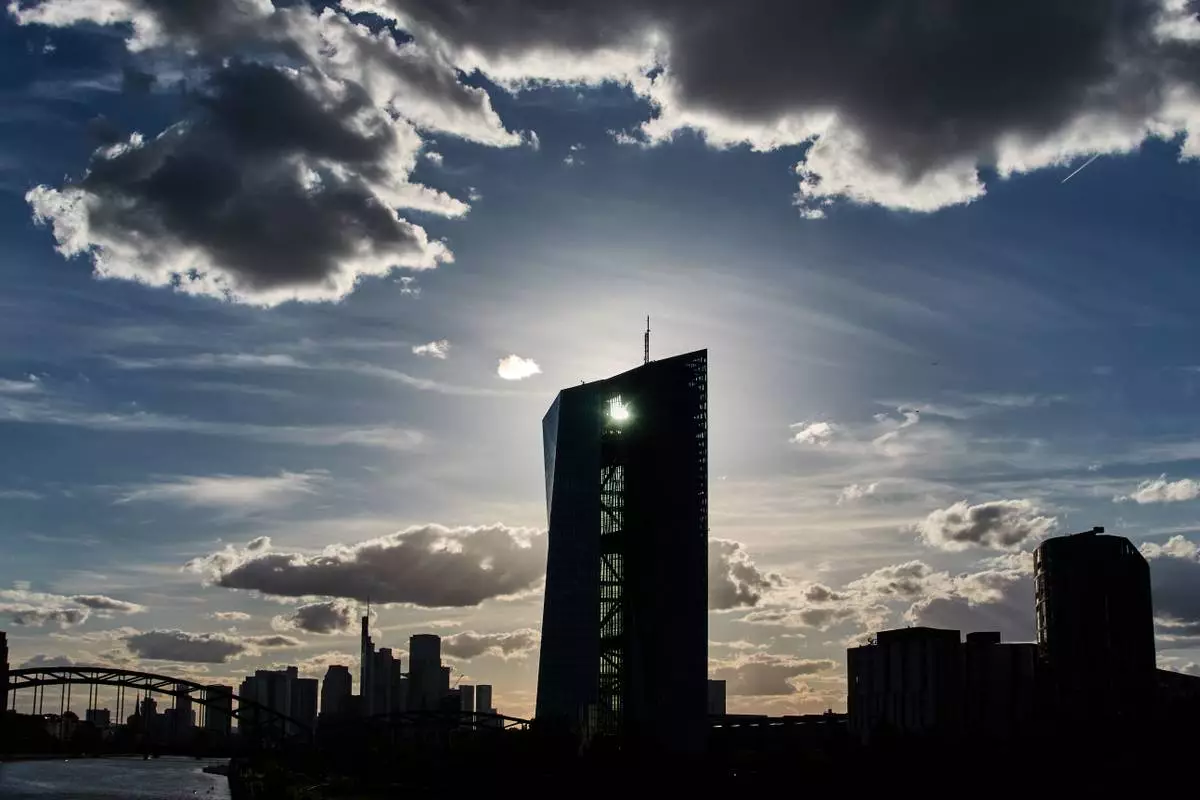
The European Bank is pictured in Frankfurt, Germany, Tuesday, June 9, 2026. (AP Photo/Michael Probst)

The European Bank is pictured in Frankfurt, Germany, Tuesday, June 9, 2026. (AP Photo/Michael Probst)

Recommended Articles