SANTA CRUZ DE TENERIFE, Spain (AP) — Even popes have travel delays. Lucky for Pope Leo XIV, King Felipe VI offered a way out, and a way home.
Leo's Iberia charter, due to take him back to Rome after a weeklong visit to Spain, was grounded by a technical problem Friday, prompting Spain's king to offer his private jet instead.
Click to Gallery
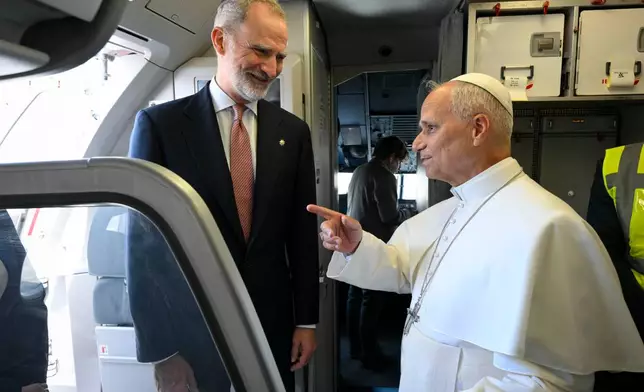
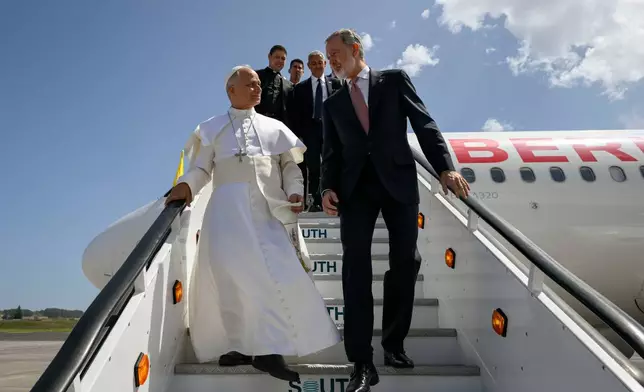
In this handout photo provided by Vatican Media, Pope Leo XIV speaks with King Felipe VI of Spain before deplaning after a technical problem at Tenerife Norte-Los Rodeos International Airport in Tenerife, Spain, Friday, June 12, 2026. (Vatican Media via AP)
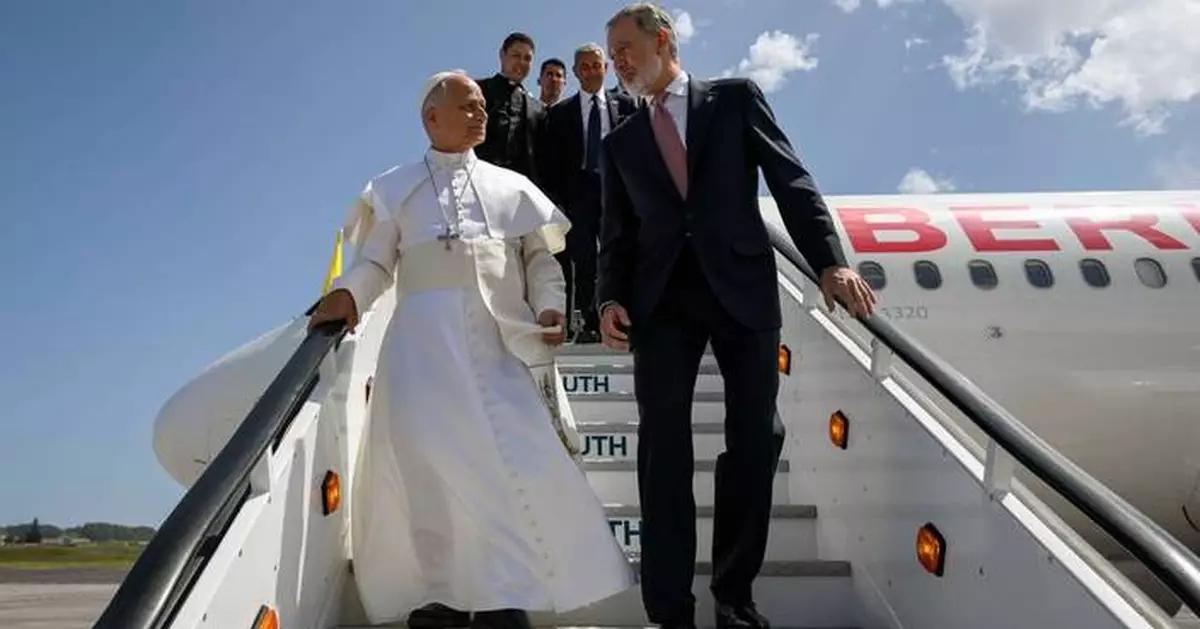
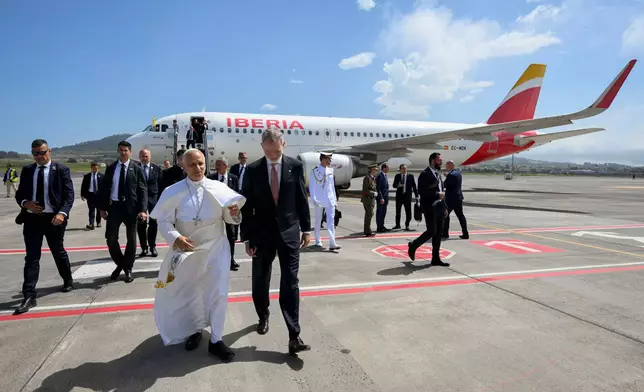
In this handout photo provided by Vatican Media, Pope Leo XIV is accompanied by King Felipe VI of Spain as he deplanes after a technical problem at Tenerife Norte-Los Rodeos International Airport in Tenerife, Spain, Friday, June 12, 2026. (Vatican Media via AP)
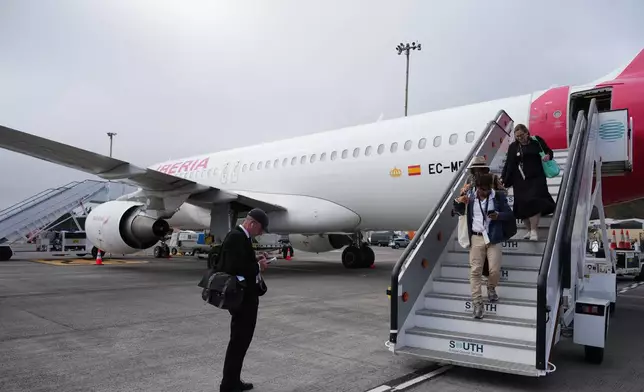
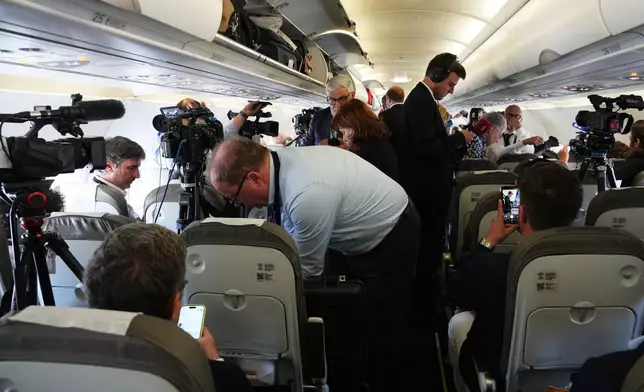
Journalists leave the papal flight after takeoff was delayed at Los Rodeos International Airport, at the Canary Islands, Spain, Friday, June 12, 2026. (AP Photo/Alessandra Tarantino)
Journalists attend into the papal flight after takeoff was delayed at Los Rodeos International Airport, at the Canary Islands, Spain, Friday, June 12, 2026. (AP Photo/Alessandra Tarantino)
In this handout photo provided by Vatican Media, Pope Leo XIV is accompanied by King Felipe VI of Spain as he deplanes after a technical problem at Tenerife Norte-Los Rodeos International Airport in Tenerife, Spain, Friday, June 12, 2026. (Vatican Media via AP)
Felipe escorted Leo to his Falcon on the tarmac at the airport in Santa Cruz de Tenerife, in the Canary Islands. Leo and members of his delegation boarded the plane and took off, more than three hours after he was originally due to leave.
The glitch marked an unusual end to an otherwise successful trip to Madrid, Barcelona and the Canary Islands. Leo pressed his migration message and also inaugurated the new tower of the Sagrada Familia basilica.
The Iberia pilot said the engine had failed to start after Leo had boarded. Initial efforts to fix it failed, forcing all passengers to disembark. Iberia said it was sending another plane from Madrid to fetch the Vatican officials and journalists who were not with Leo on the Falcon. The Spanish archipelago is closer to Africa than the Iberian Peninsula.
It was the first time in decades that a papal flight had experienced a problem so serious that it required the pope to change planes.
Veteran Vatican reporters, some of whom were on the Iberia plane, recalled a few plane-related incidents during the pontificate of St. John Paul II. During a 1986 return trip from India, John Paul’s plane was forced to land in Naples because of a snowstorm in Rome. The passengers and pope took a special train back to Rome.
In 1988 en route to Lesotho, bad weather forced John Paul’s plane to land in South Africa, a country he had excluded from his African trip at the time because of apartheid. He was later driven into the kingdom.
Typically on papal trips, the Italian national carrier ITA Airways brings the pope to his destination and that country’s national carrier brings him home, with ITA sometimes doing the round trip if the voyage is particularly long or to a place that doesn’t have the capacity.
The flights are charters, with the pope, Vatican delegation and security occupying the front of the plane and the 70 or so journalists seated in coach.
Iberia had proudly provided video earlier in the trip of Leo seated in the cockpit, smiling broadly as the plane carried him from Madrid to Barcelona, and then Barcelona to the Canary Islands. In both cases, Spanish military aircraft provided an airborne escort, a sign of respect for visiting dignitaries, and in one clip of the video Leo is seen waving to the escorting pilot.
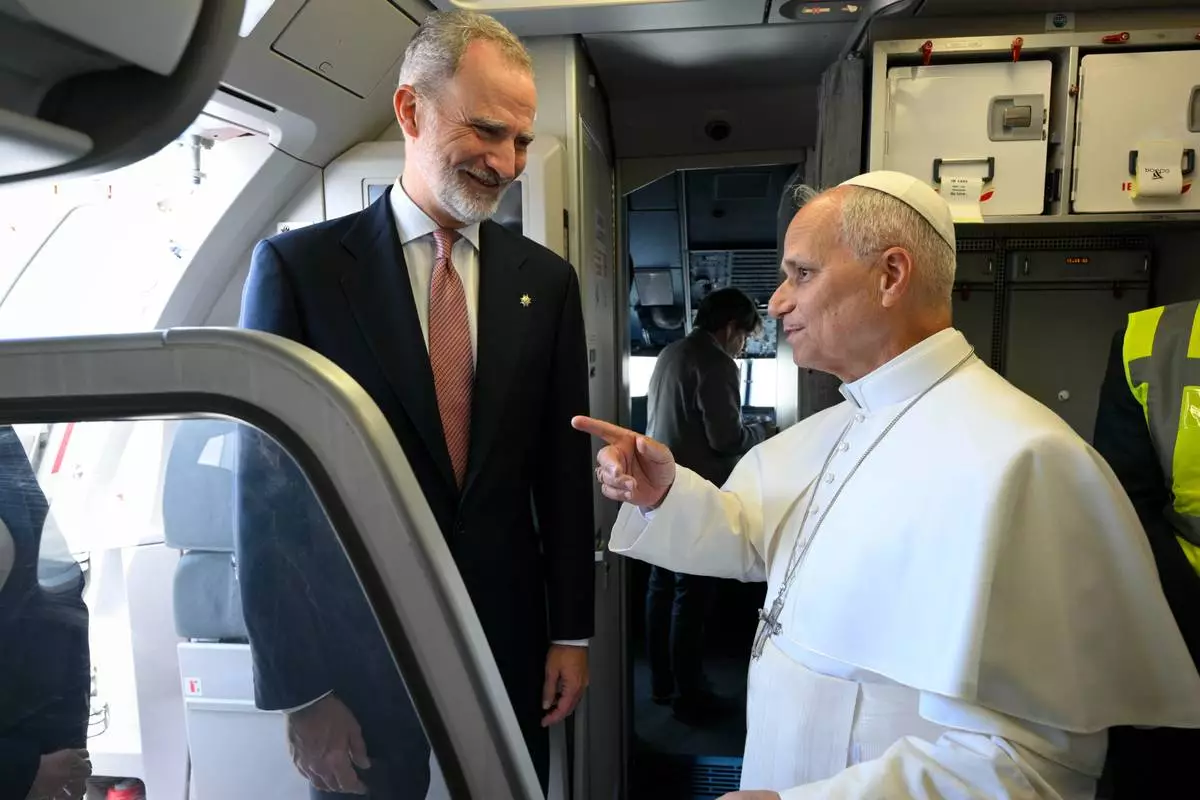
In this handout photo provided by Vatican Media, Pope Leo XIV speaks with King Felipe VI of Spain before deplaning after a technical problem at Tenerife Norte-Los Rodeos International Airport in Tenerife, Spain, Friday, June 12, 2026. (Vatican Media via AP)
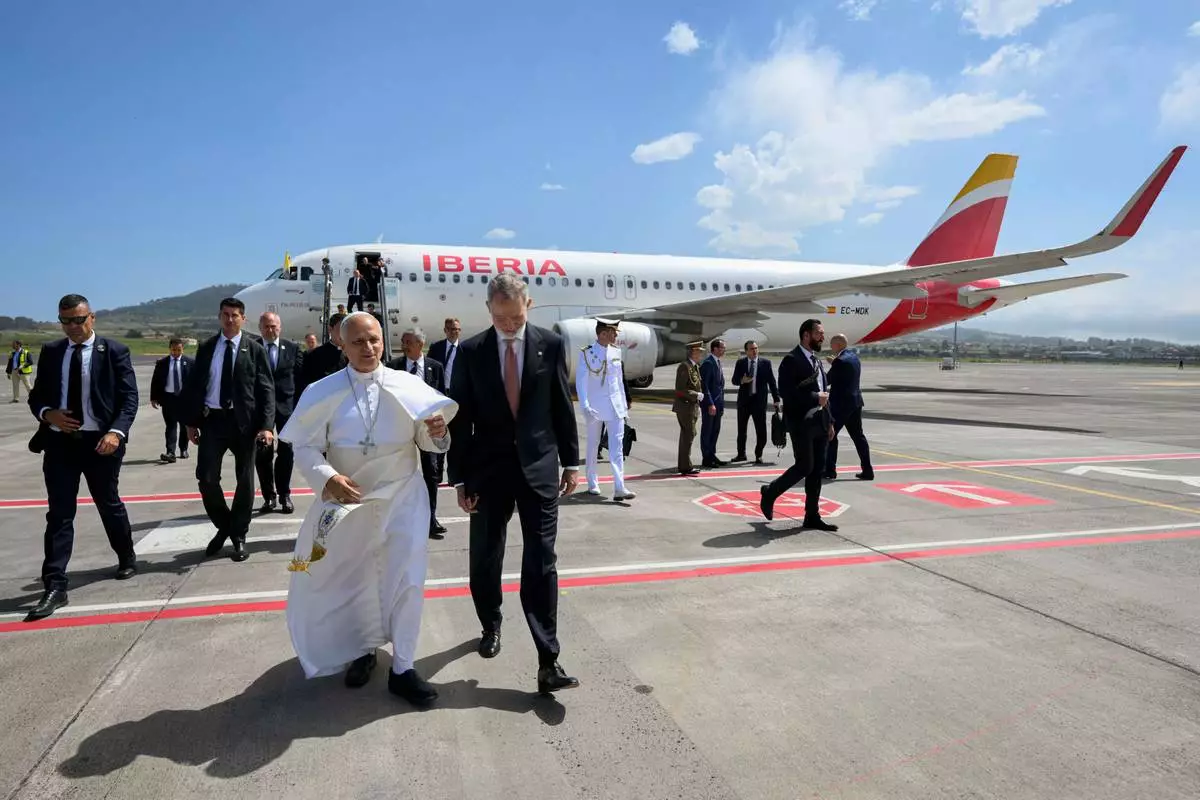
In this handout photo provided by Vatican Media, Pope Leo XIV is accompanied by King Felipe VI of Spain as he deplanes after a technical problem at Tenerife Norte-Los Rodeos International Airport in Tenerife, Spain, Friday, June 12, 2026. (Vatican Media via AP)
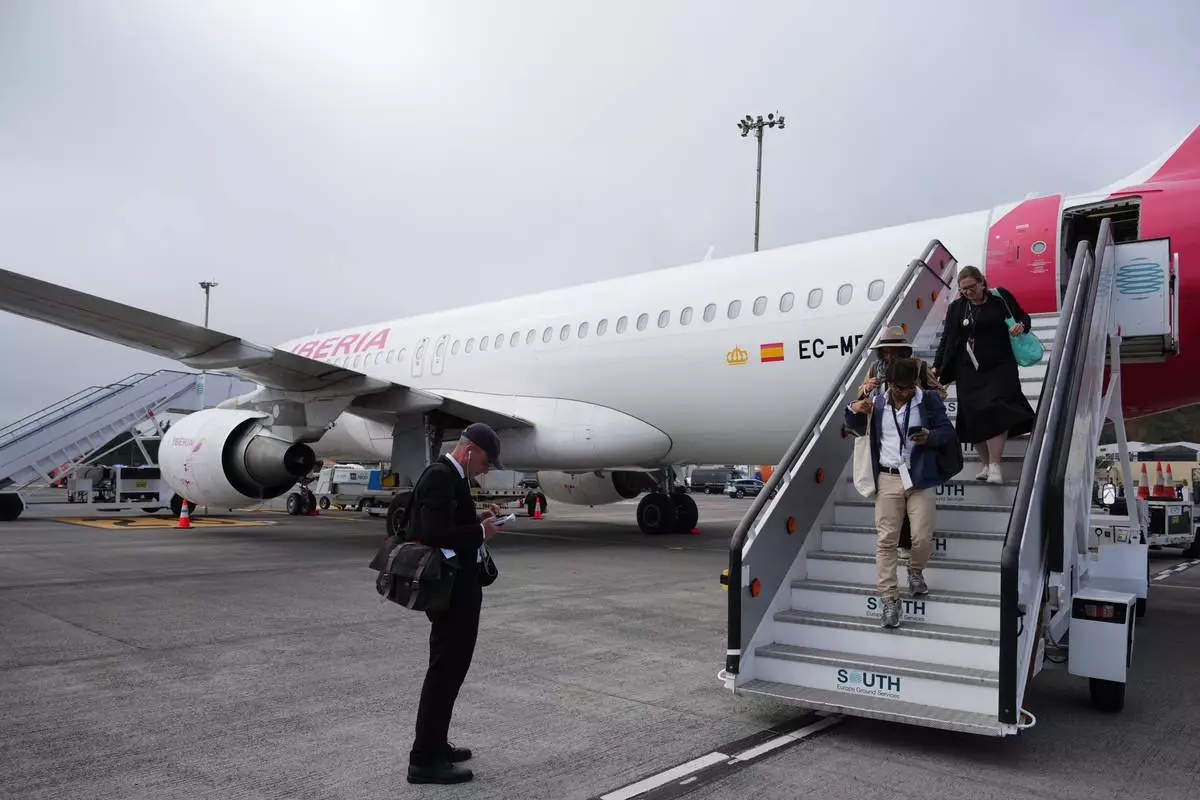
Journalists leave the papal flight after takeoff was delayed at Los Rodeos International Airport, at the Canary Islands, Spain, Friday, June 12, 2026. (AP Photo/Alessandra Tarantino)
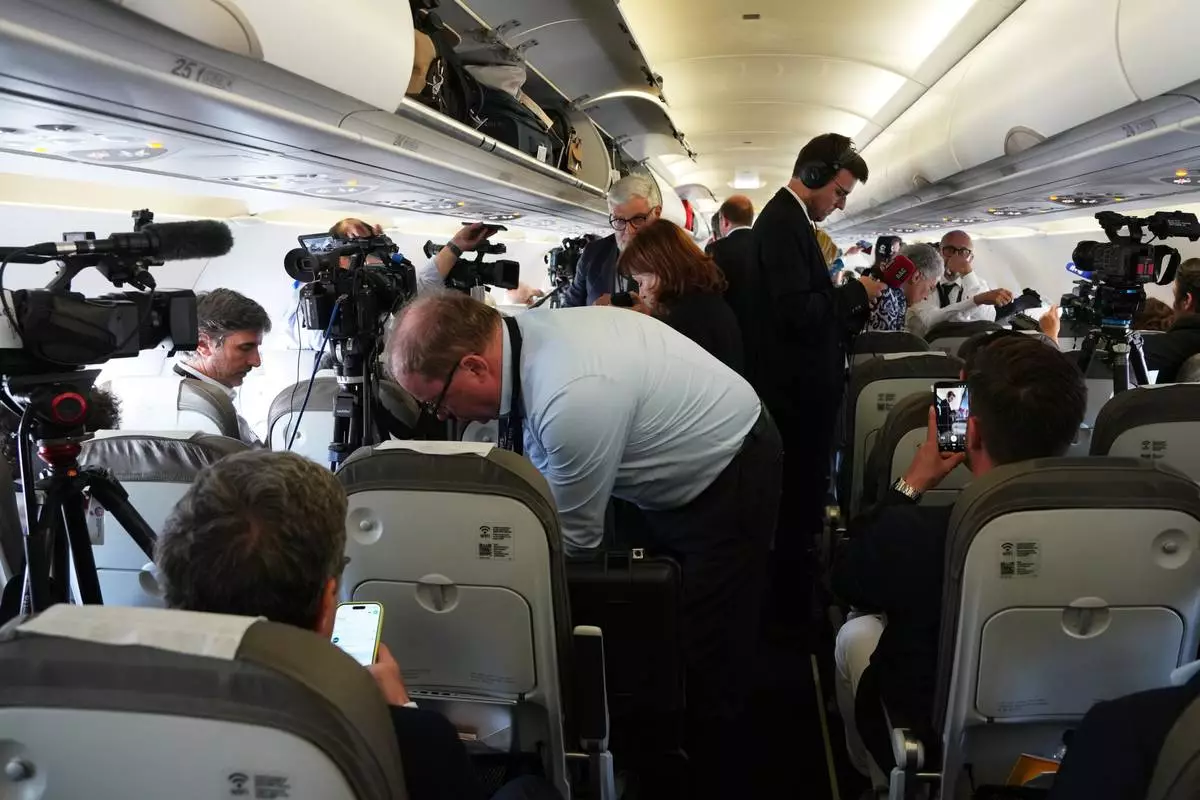
Journalists attend into the papal flight after takeoff was delayed at Los Rodeos International Airport, at the Canary Islands, Spain, Friday, June 12, 2026. (AP Photo/Alessandra Tarantino)
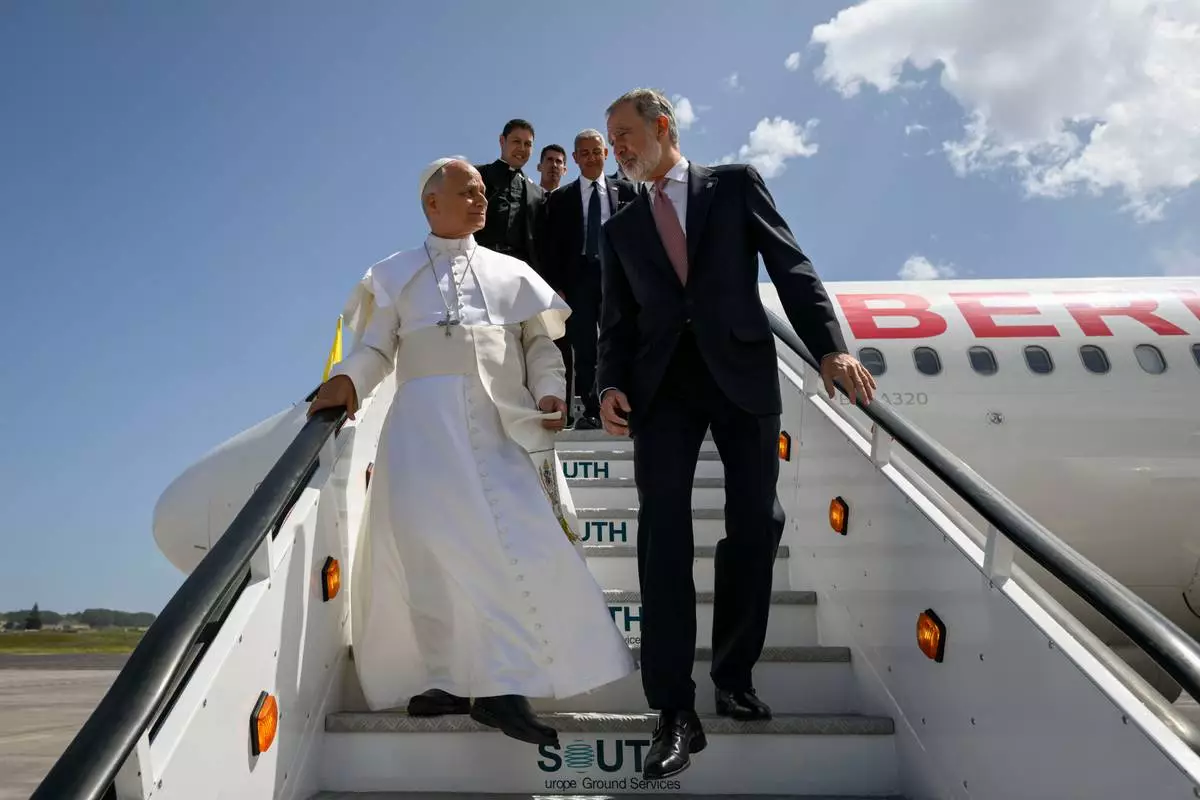
In this handout photo provided by Vatican Media, Pope Leo XIV is accompanied by King Felipe VI of Spain as he deplanes after a technical problem at Tenerife Norte-Los Rodeos International Airport in Tenerife, Spain, Friday, June 12, 2026. (Vatican Media via AP)
NEW YORK (AP) — Elon Musk became the world’s first trillionaire after shares of his rocket company SpaceX soared in Wall Street's biggest initial public offering of stock.
Shares in SpaceX jumped more than 19% after opening for trading at noon Friday, a sign that investors are looking past the billions the company is losing and instead betting that its massive investments in satellites, orbital data centers and artificial intelligence will pay off in the future.
SpaceX opened at $150 a share, then rose to around $168, before finishing the day just above $161. That price gave the company a market value of $2.1 trillion, making it the sixth largest public U.S. company — larger even than its founder and CEO's other big business, the electric vehicle maker Tesla.
Between his holdings in SpaceX and Tesla, where he is also CEO, Musk is now worth an estimated $1.1 trillion, according to Forbes.
Musk says SpaceX, founded in 2002, is going public now because it needs money to fund its ambitions of putting satellites and data centers in space and eventually establishing a colony of people on Mars.
He marked the opening of trading on Nasdaq by joining a ceremonial bell ringing from Starbase, the South Texas home of SpaceX.
He reiterated his lofty goals “to make life multiplanetary.”
“Not just a few astronauts, I mean literally you,” Musk said. “Whoever you are watching this, SpaceX wants to be able to take you to the moon, take you to Mars and ultimately beyond.”
Known for his technological breakthroughs, as well as wild claims and missed deadlines, Musk was able to whip up enthusiasm for the IPO. The typical company going public has seen a 7% jump in its first day of trading, from 1980 through 2025, according to Jay Ritter, a professor at the University of Florida’s Warrington College of Business.
Institutional and retail investors alike jumped at the opportunity to buy a piece of the company at $135 per share before trading began. The $75 billion in proceeds SpaceX raised easily topped the previous record IPO from oil giant Saudi Aramco in 2019.
In addition to establishing a one-million person Martian colony, the company has promised to save humanity by establishing other outposts in space, launch data centers the size of football fields into orbit and outdo rivals Anthropic and OpenAI in the race to make money from artificial intelligence.
To reach its goals, SpaceX needs billions more than it currently takes in from its rocket and satellite business. Between the start of 2025 and March 31, 2026, the company, formally known as Space Exploration Technologies Corp., lost $8.7 billion.
Betting on SpaceX is in many ways a bet on Musk himself. In an unusual arrangement that has drawn criticism from shareholder watchdogs, he holds 82% interest in a special B class of shares, giving him sweeping power to control the company even though his ownership stake is about half that.
“There’s a lot of hype, but I see the faith that investors have in Musk,” said Yordys Coro, an IT support contractor in Miami as he watched his $14,000 investment in SpaceX shoot up to $17,000 in just a few hours. “I’m going to hold on.”
Wall Street bankers that helped take SpaceX public are also enthusiastic about the company — and the big fees they will earn — but not everyone thinks the stock price is justified.
Analysts at research firm Morningstar, which doesn't earn any investment banking fees, wrote that the IPO is “significantly overvalued." Citing SpaceX's unproven technology and massive capital needs, they estimated the company is only worth $780 billion — less than half its IPO value.
SpaceX itself has hinted at the challenges, conceding in regulatory documents that some of its business plans rest on “unproven technologies.” It also indicated that another part of the company, its artificial intelligence business called xAI, has no clear path to profitability and is burning cash to catch up with rivals.
On a livestreamed conference Thursday with the CEO of JPMorgan Chase, one of the investment banks making big money off the IPO, Musk offered few details.
He entertained the crowd with talk of “moon hotels,” a future Martian colony and a network of Earth-orbiting data centers powered by the sun. But when asked about plans for his flagship chatbot offering Grok, he pivoted to talking about his satellites.
Still, Musk has pulled off the seemingly impossible before.
The now-trillionaire — on paper at least — made his initial fortune by creating two companies, Zip2 and PayPal, that netted him about $200 million at sale. He used that money to start SpaceX and invest in Tesla, and defied the odds by creating a space company that figured out how to reuse rockets and a car company that made electric vehicles cool.
Musk has realized vast sums of wealth for himself, much of it in stock he has yet to cash in or grants for shares he’ll only receive if Tesla or SpaceX hit ambitious performance targets.
His recent pay package from Tesla was so large it even drew criticism from the Vatican. At Tesla, he’s worried shareholders by fighting with regulators or dividing his attention between multiple companies and last year by taking a role in the Trump administration.
But a rising stock price has cured all ills: Since it went public in 2010, Tesla has returned 20,000% for shareholders, or more than $1.2 trillion in investor wealth.
SpaceX is the first of three “megacap” companies expected to go public this year, with Anthropic and OpenAI to follow. Nasdaq even revised its rules to allow SpaceX to gain entry into funds tied to its indexes in 15 days, which means investors will end up buying the rocket maker's shares much earlier.
Not all investors are thrilled about SpaceX potentially showing up in their holdings of index funds.
Officials from pension funds for firefighters, teachers and other workers in California and New York sent a letter to SpaceX last month decrying some of the provisions in its IPO, including mandatory arbitration of shareholder claims and how much power Musk will hold over the company.
__
AP reporters Stan Choe and Wyatte Grantham-Philips contributed from New York and reporter Matt O'Brien contributed from Providence.
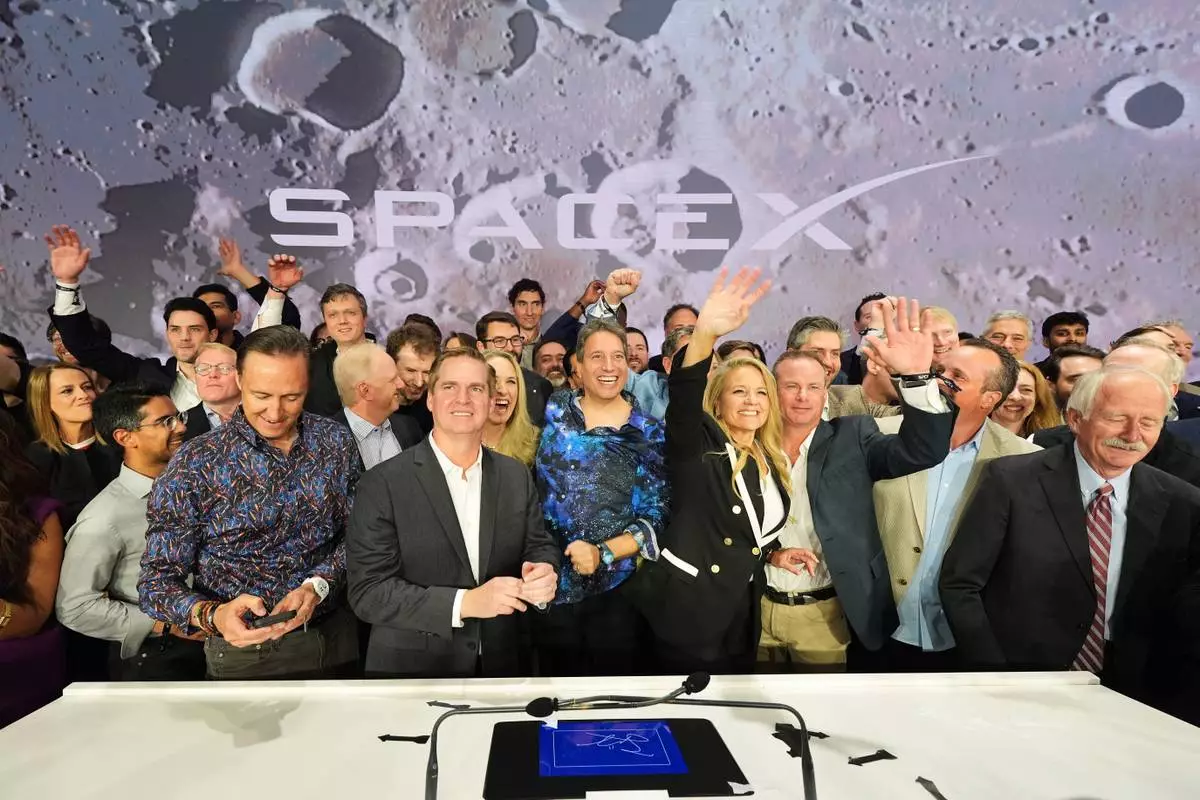
Gwynne Shotwell, President and COO of SpaceX, third from right, celebrates with colleagues during a bell ringing ceremony for the IPO of SpaceX at the Nasdaq MarketSite in New York, Friday, June 12, 2026, in New York. (AP Photo/Frank Franklin II)

A large inflatable figure depicting Elon Musk stands in Times Square in New York on Thursday, June 11, 2026. (AP Photo/Seth Wenig)

Gwynne Shotwell, President and COO of SpaceX speaks during a bell ringing ceremony for the IPO of SpaceX at the Nasdaq MarketSite in New York, Friday, June 12, 2026, in New York. (AP Photo/Frank Franklin II)
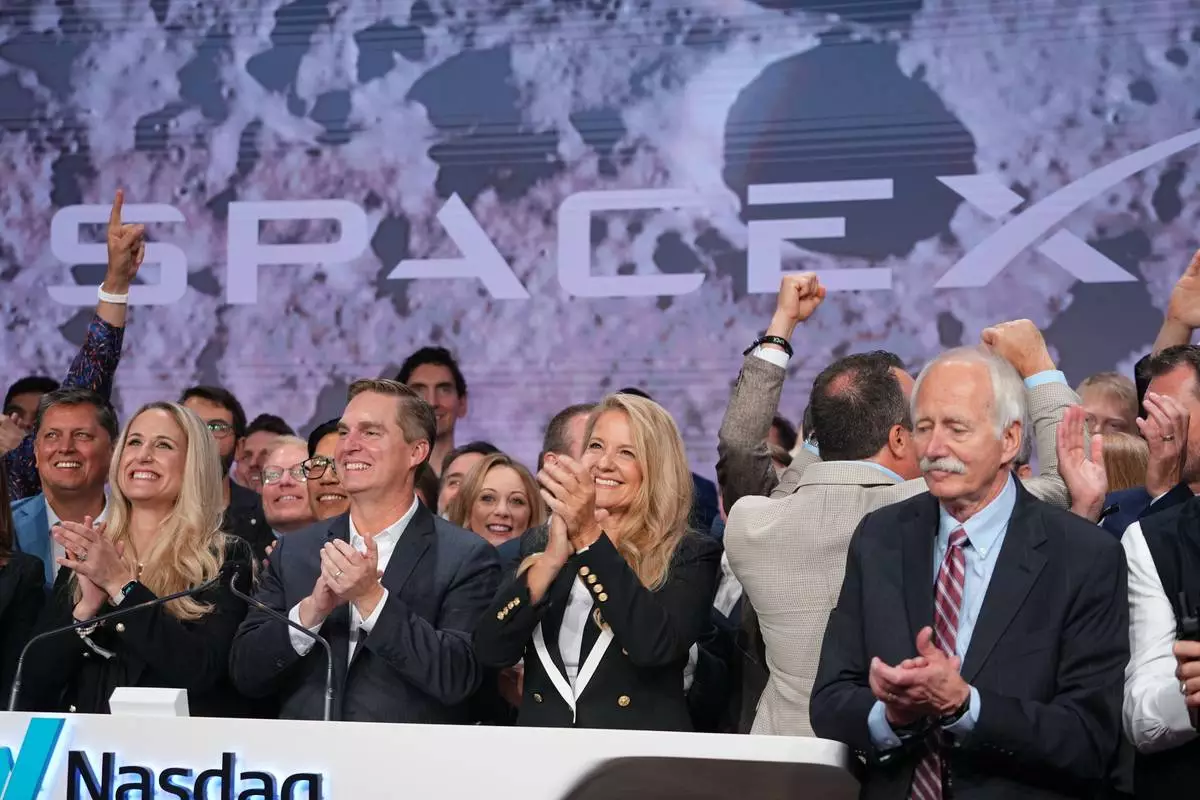
Gwynne Shotwell, President and COO of SpaceX celebrates with colleagues during a bell ringing ceremony for the IPO of SpaceX at the Nasdaq MarketSite in New York, Friday, June 12, 2026, in New York. (AP Photo/Frank Franklin II)
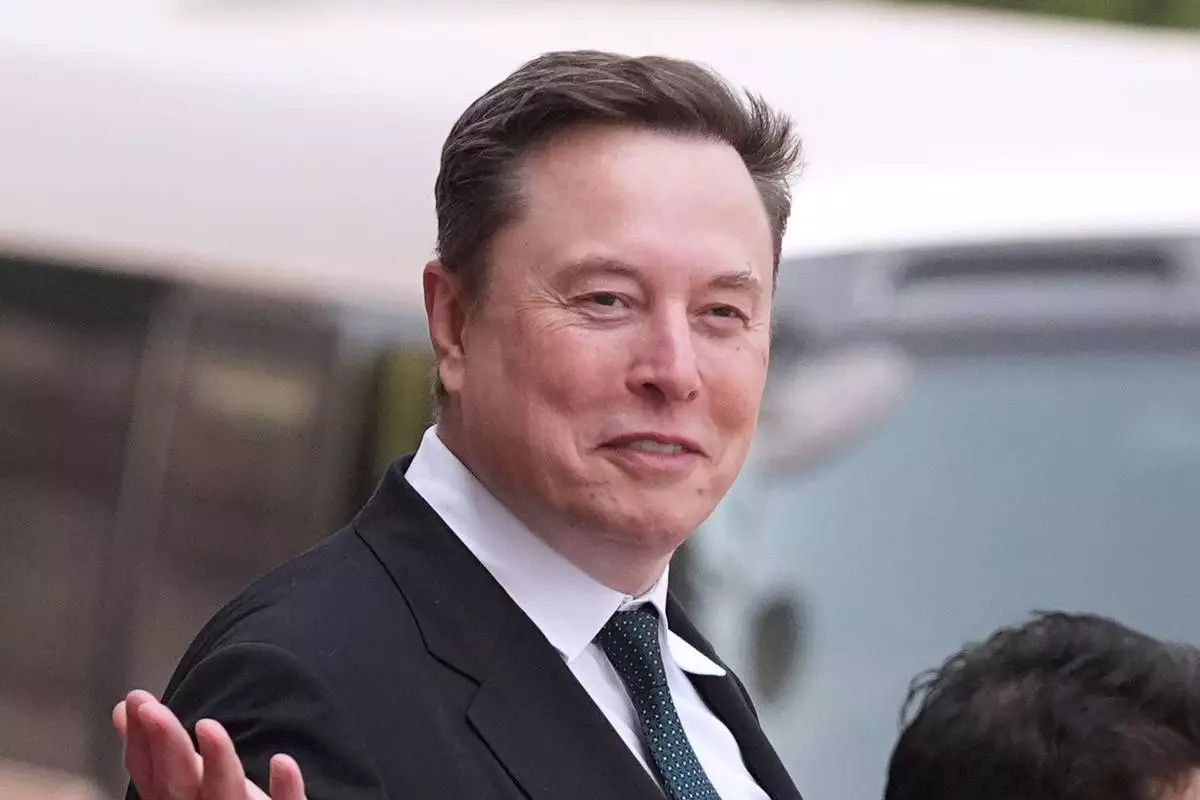
FILE - Elon Musk departs after a welcome ceremony with President Donald Trump and China's President Xi Jinping at the Great Hall of the People, Thursday, May 14, 2026, in Beijing. (AP Photo/Mark Schiefelbein, File)