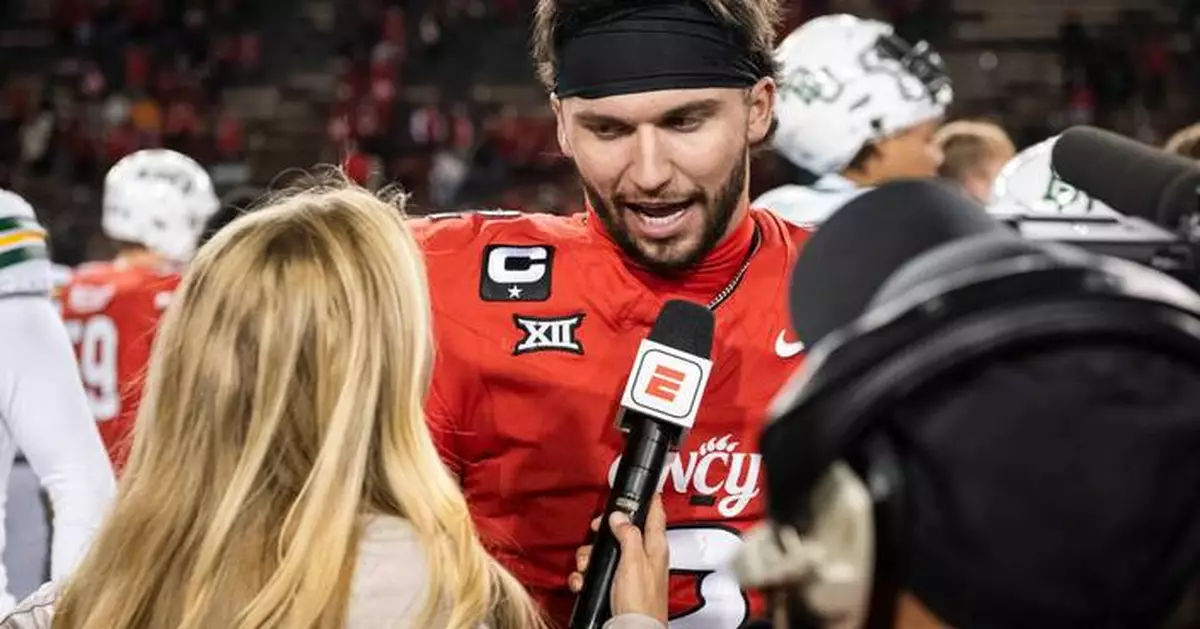
OKLAHOMA CITY (AP) — Oklahoma Attorney General Gentner Drummond called on the Big 12 Conference to suspend Brendan Sorsby after the Texas Tech quarterback won a court order that restored his eligibility and set aside a ban by the NCAA for gambling on pro and college sports.
“If Texas Tech will not do the right thing, the Big 12 should,” Drummond wrote Friday in a letter to the conference. “Texas Tech should be sanctioned. I also note that the injunction granted to Sorsby applies only to the NCAA. It does not impede the Big 12 from suspending Sorsby.”
The office of Texas Attorney General Ken Paxton warned the Big 12 on Thursday of potential legal action from Texas Tech as the conference considers its options. Big 12 Commissioner Brett Yormark said the notice came shortly before the start of the league’s executive board meeting to discuss Sorsby's situation.
Drummond said claims that sanctions against Texas Tech would violate antitrust laws are meritless.
“By adopting and enforcing its bylaws, the Big 12 Conference is simply upholding integrity and fair play among membership," he said.
A Texas district court's temporary injunction that was issued Monday prevents the NCAA from enforcing its permanent ban of Sorsby, a decision that sent shock waves across college sports.
The transfer quarterback had been ruled ineligible after he acknowledged years of gambling that included more than $90,000 in wagers and at least 40 bets on his own team while he was a freshman at Indiana.
NCAA rules call for a permanent loss of eligibility for any player who wagered on his own team.
Drummond weighed in because Oklahoma State is a member of the Big 12. He suggested the conference could act under a bylaw that says a supermajority of the league’s athletic directors can sanction a member school if that school has “engaged in any action or a course of conduct materially adverse to the best interests of the conference as a whole.”
“Sadly, that fits Texas Tech to a ‘T’,” Drummond wrote. “Its actions in obtaining eligibility for Brendan Sorsby ... have constituted a shameful chapter in the story of college football. Texas Tech has acted in a manner adverse to the Big 12 and the integrity of college football as a whole."
Texas Tech says Sorsby has completed a month-long inpatient treatment program and will have to meet stipulations laid out in the court ruling if he is going to play this fall.
The school posted a 21-minute video Thursday night in which school president Lawrence Schovanec, athletic director Kirby Hocutt and coach Joey McGuire defended Texas Tech's approach with Sorsby. Hocutt said the school wasn't party to Sorsby's lawsuit against the NCAA and hasn't helped him with legal fees.
“There’s no reason whatsoever to question the integrity of our athletics department, or the competitive product that we put on the fields or on the courts each and every time that we go out,” Hocutt said. “Integrity of the game is sacred, and that’s why we’ve gone to such great lengths to ensure the monitoring and the compliance measures are in place for Brendan’s return.”
Big 12 athletic directors in a conference call Tuesday expressed strong opposition to Sorsby playing for the Red Raiders in what will be his final college season. Some of those athletic directors suggested not playing Texas Tech if he does.
The Big 12's board of directors, which is made up of presidents and chancellors from the league’s 16 schools, is set to meet Monday.
Sorsby transferred to Texas Tech in January for a reported multimillion-dollar deal after playing the past two seasons at Cincinnati, another Big 12 school. The 22-year-old Texas native first spent two seasons with the Hoosiers.
The Red Raiders, with one of college football’s most expensive rosters, won their first Big 12 title last season, set a school record with 12 wins and made the 12-team College Football Playoff.
AP college football: https://apnews.com/hub/ap-top-25-college-football-poll and https://apnews.com/hub/college-football
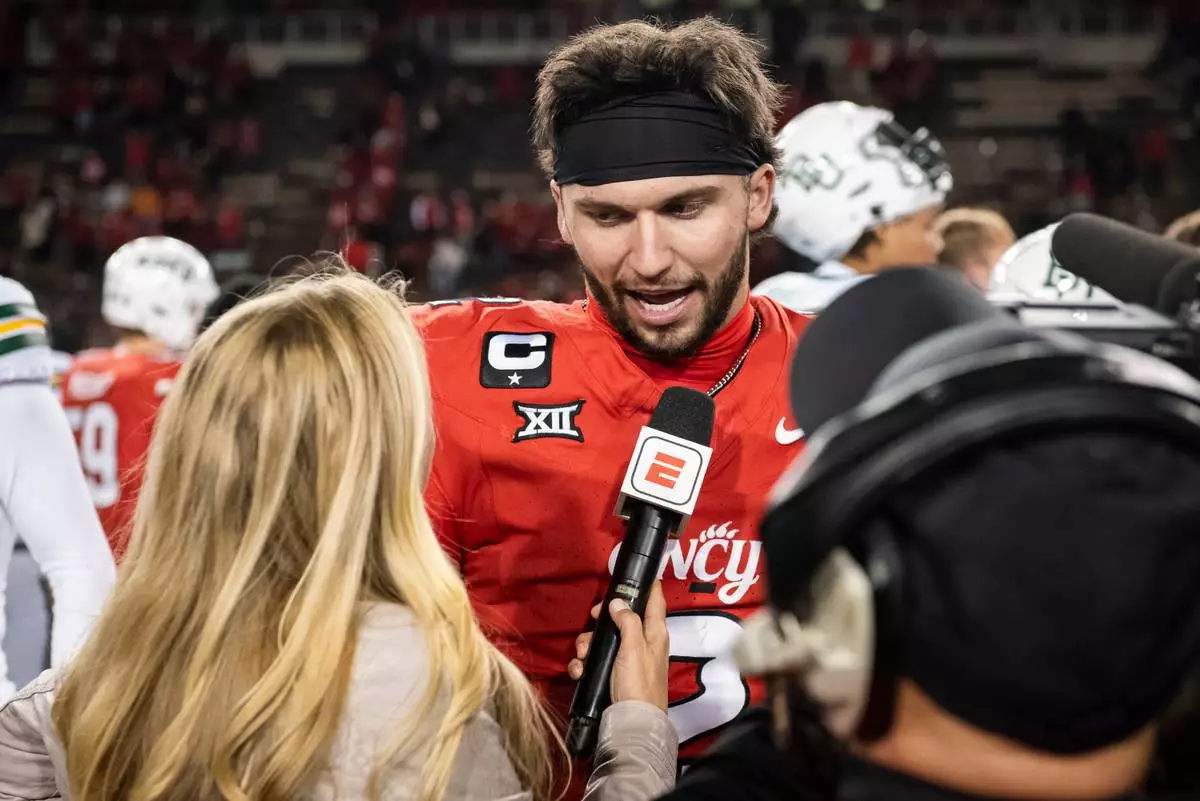
FILE - Cincinnati quarterback Brendan Sorsby (2) is interviewed after a NCAA college football game against Baylor, Oct. 25, 2025, in Cincinnati. (AP Photo/Tanner Pearson, File)
PARIS (AP) — Moments after being announced as France's new coach on Tuesday, Zinedine Zidane clenched his fists and his usually measured voice trembled a little.
“I’m excited,” he said. “The France team makes you dream. We have extraordinary players, an extraordinary team.”
Zidane coached Real Madrid until leaving in 2021. He replaces Didier Deschamps at the helm of France team he led to glory as arguably its greatest ever player.
“I’ve waited five years for this chance, so that’s why I’m a bit emotional,” said Zidane, adding that it was the happiest day of his career as coach.
“I’ve always watched this side as a fan and also as a future coach, I won’t hide it.” Zidane added. “That’s why I didn’t take a club side. I told myself that the only thing I wanted to do after Madrid was taking the France team.”
French Football Federation president Philippe Diallo announced Zidane’s appointment at the FFF headquarters in Paris on Tuesday, saying he has been given a 4-year contract.
Diallo called the hiring of Zidane “an exceptional moment,” calling Zidane “one of the legends of French soccer.”
The 54-year-old Zidane could have gone to another club after leaving Madrid in 2021. But there was no way he would.
“I had some offers during the five years I was away to take charge of a club,” he said. “I turned them all down for the France team. It was the only thing I wanted to do.”
Zidane called it “an immense joy” taking charge.
“I have so many emotions,” he said. “I am ready for the challenge.”
Zidane praised Deschamps, who won the 2018 World Cup and stepped down after the recent edition, where Les Bleus lost in the semifinals to Spain.
“I will give everything so that this team can win,” Zidane said. “I would also like to congratulate DD (Deschamps) for these remarkable years.”
Diallo said he met Zidane for talks in February, 2025 after Deschamps said he would stand down following the 2026 World Cup. Zidane said France would play differently to how it did under Deschamps.
“What motivates me is the game, I was a No. 10, I like goals,” Zidane said. “I was a leader on the field and now I want to be a leader by experience.”
His first game will be away to Turkey in the Nations League on Sept. 25, followed by a match in Belgium three days later.
Home fans need to wait until Oct. 2 for a glimpse of Zidane at Stade de France, when France plays Italy, 20 years after he was sent off against Italy in the 2006 World Cup final for headbutting Italy defender Marco Materazzi.
“I’ve noted all of the four matches to come,” Zidane said, tapping his forehead. “Italy is special, because I played there, because I know people, because I speak Italian. All of those things.”
After the announcement, Zidane greeted a large gathering of fans outside the federation headquarters and they cheered loudly when he arrived.
France lost the World Cup final on penalties in 2022 and lost the European Championship final on home soil in 2016. Some Deschamps critics, among them former France teammate Christophe Dugarry, said he should have won more with the players he had.
Deschamps described an “an unbreathable atmosphere” at the end of his tenure, without detailing what the tensions were.
Zidane and Deschamps were different types of midfielders, but are forever linked by glory.
The industrious Deschamps was France’s captain and the mercurial Zinedine was the creative force when France won the 1998 World Cup and Euro 2000.
Affectionately nicknamed “Zizou” his face was beamed onto the Arc de Triomphe the night France celebrated its first World Cup triumph in ’98. An inspired Zidane scored two headers in the final in a 3-0 win against Brazil at Stade de France and later that year he won the Ballon d’Or.
Born in Marseille to Algerian parents, Zidane grew up playing in the estate of La Castellane, which has a giant mural of Zidane on one its tower blocks. It was on the estate's concrete pitches where Zidane nurtured his incredible balance, to avoid falling on the rock-hard ground.
Zidane’s club career took him from Cannes to Bordeaux and then to two of the world’s biggest clubs: Italian giant Juventus and Madrid.
His international career began in 1994, when he scored two stunning goals against the Czech Republic after coming on as a substitute, in front of his home fans in Bordeaux.
He won league titles with Juve and Madrid and scored a brilliant volley to help Madrid win the Champions League in 2002.
With Zidane carrying an injury, France flopped at the 2002 World Cup — going out in the group stage — but reached the 2006 final after Zidane came out of international retirement.
His performance in a 1-0 victory over Brazil in the quarterfinals was Zidane at his balletic best: a hypnotic combination of drag-backs, stepovers, spins on the ball, and flicks over the shoulder.
The Brazilians were in awe and even Ronaldinho — a Ballon d'Or winner himself — seemed captivated.
His 108th and final game for France was against Italy in the final and he scored early with a deft Panenka-style penalty for his 31st, and last, international goal.
Then, with millions watching around the world, an infamous moment saw him walk back up the field and slam his forehead into Materazzi’s chest, sending the tall defender flying backward.
Zidane trudged past the gold-tinted World Cup trophy as he left the field in Berlin, his international career over.
Now he has another chance to lead Les Bleus to glory.
AP soccer: https://apnews.com/hub/soccer
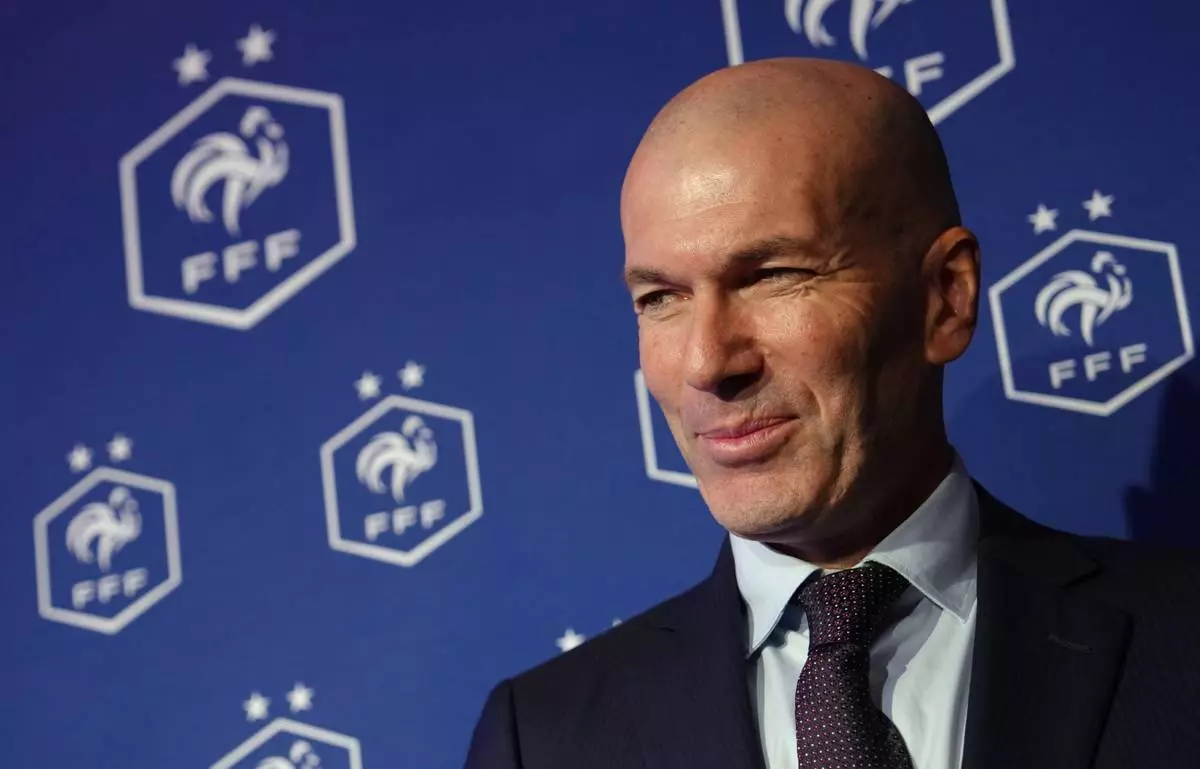
Zinedine Zidane, newly appointed coach of the France national soccer team, attends a media conference at the headquarters of French Football Federation headquarters in Paris, Tuesday, July 28, 2026. (AP Photo/Aurelien Morissard)
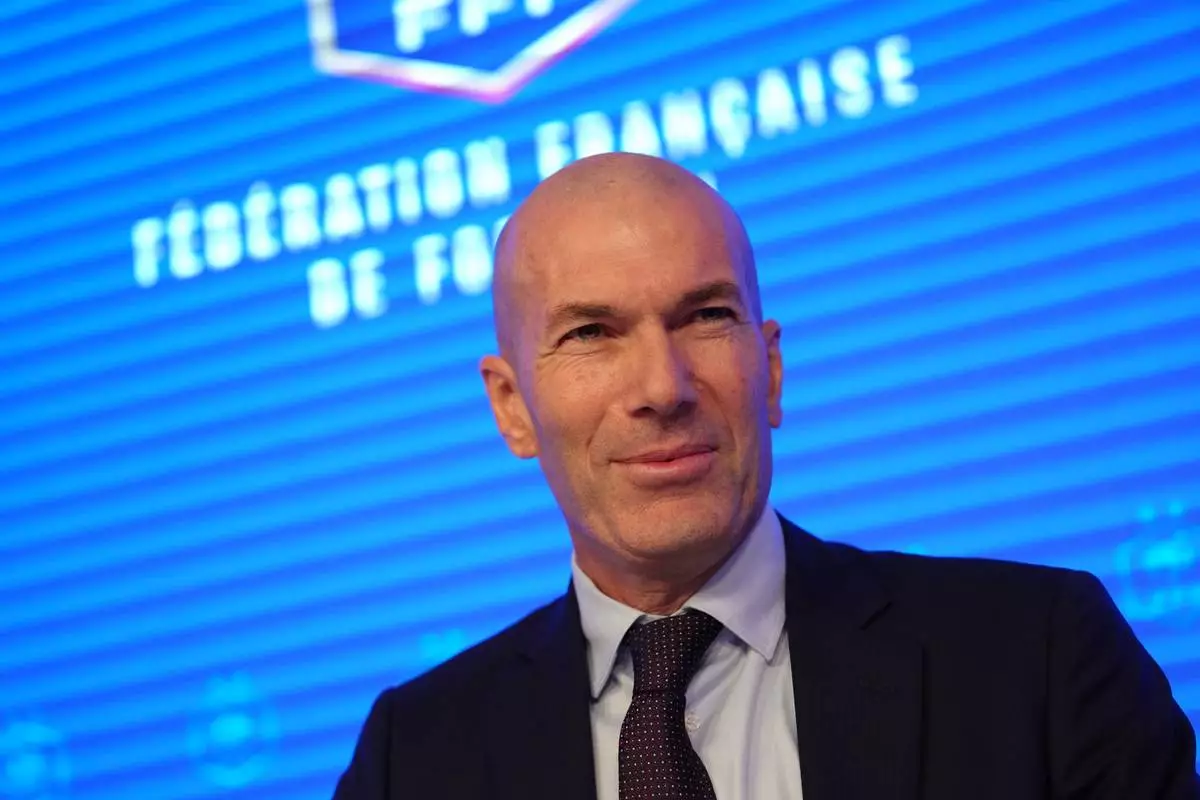
Zinedine Zidane, newly appointed coach of the France national soccer team, smiles during a media conference at the headquarters of French Football Federation headquarters in Paris, Tuesday, July 28, 2026. (AP Photo/Aurelien Morissard)
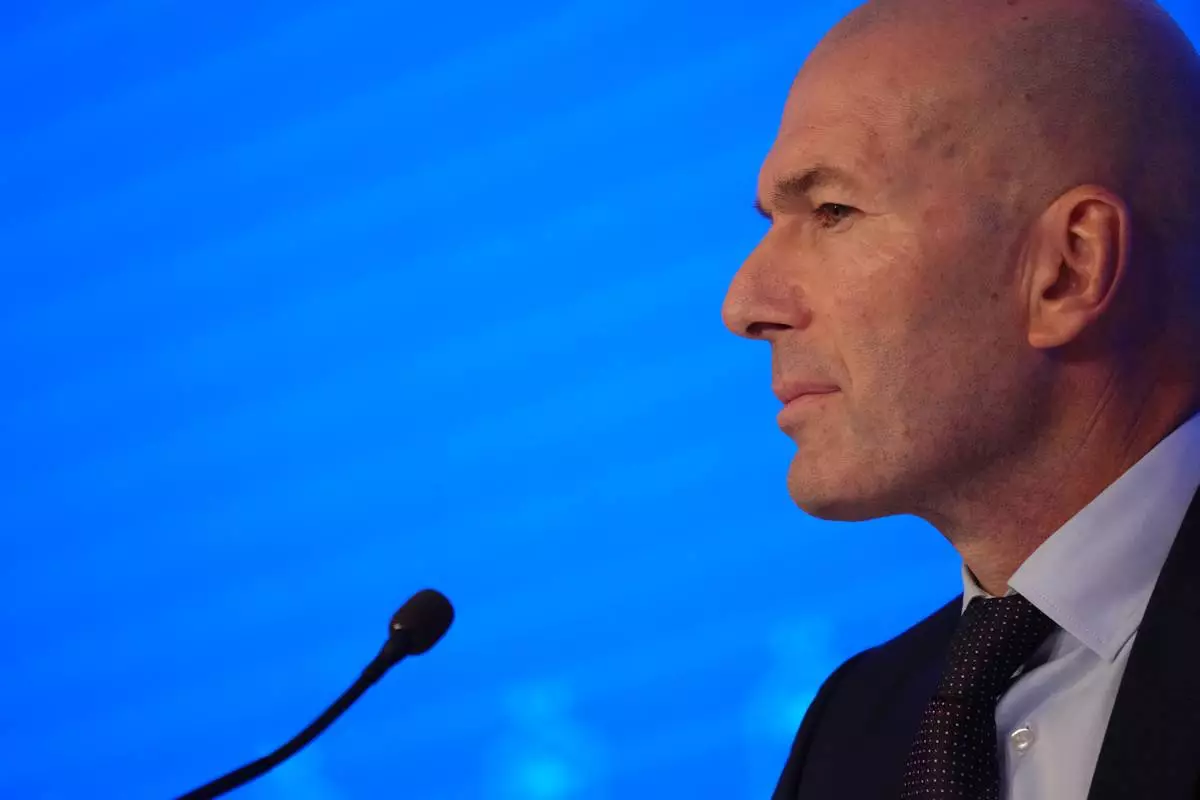
Zinedine Zidane, newly appointed coach of the France national soccer team, attends a media conference at the headquarters of French Football Federation headquarters in Paris, Tuesday, July 28, 2026. (AP Photo/Aurelien Morissard)
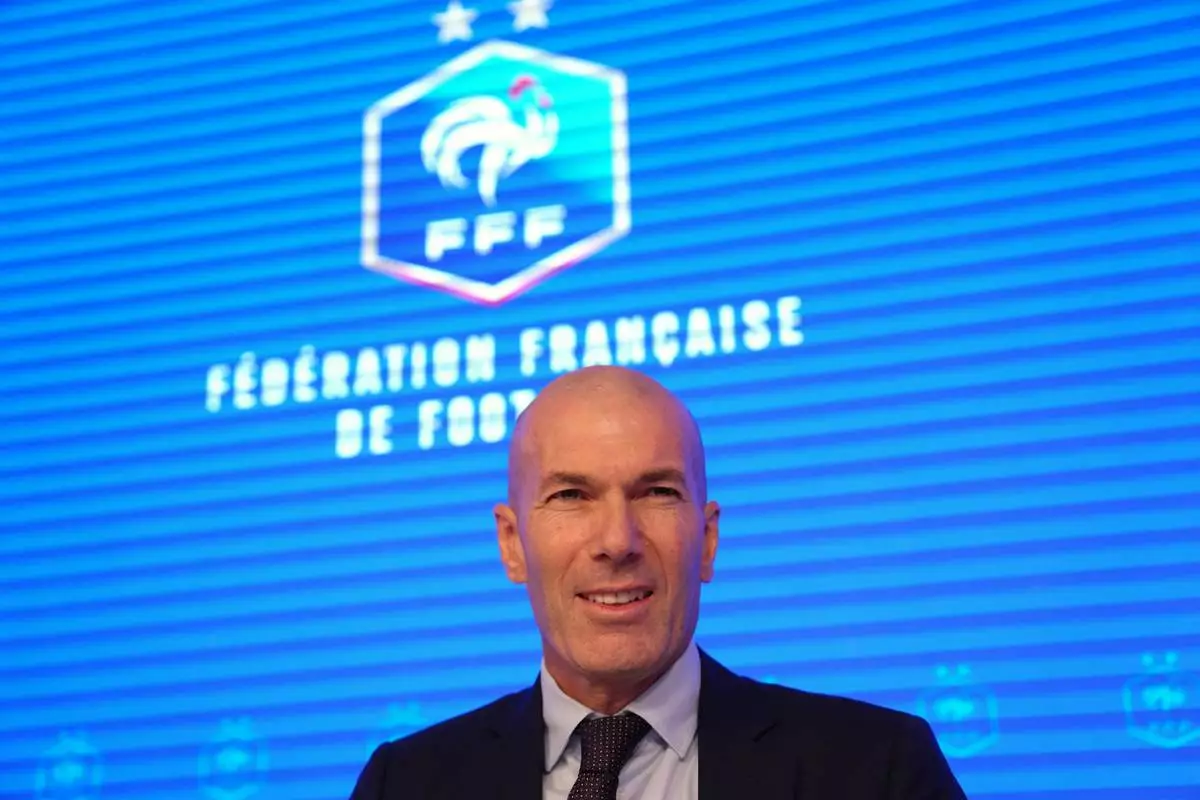
Zinedine Zidane, newly appointed coach of the France national soccer team, smiles during a media conference at the headquarters of French Football Federation headquarters in Paris, Tuesday, July 28, 2026. (AP Photo/Aurelien Morissard)
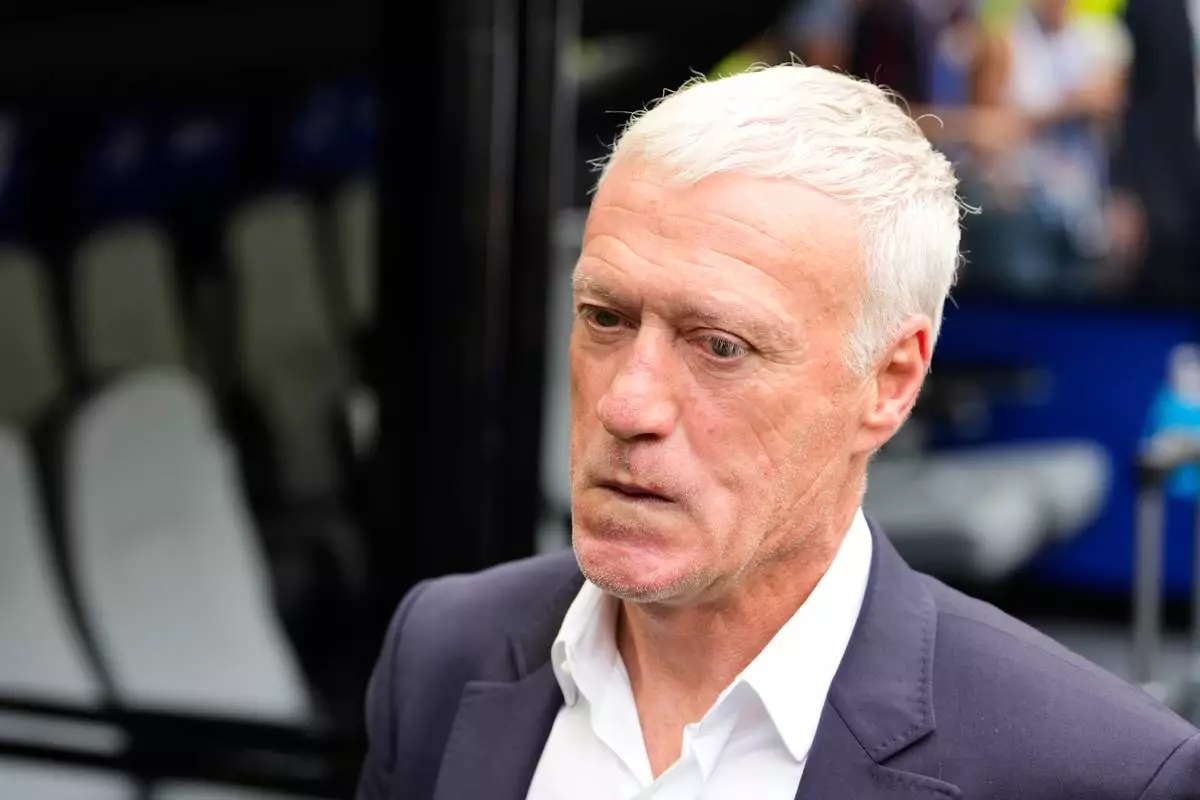
France head coach Didier Deschamps stands by the bench during the World Cup third-place playoff soccer match between France and England in Miami Gardens, Fla., Saturday, July 18, 2026. (AP Photo/Rebecca Blackwell)
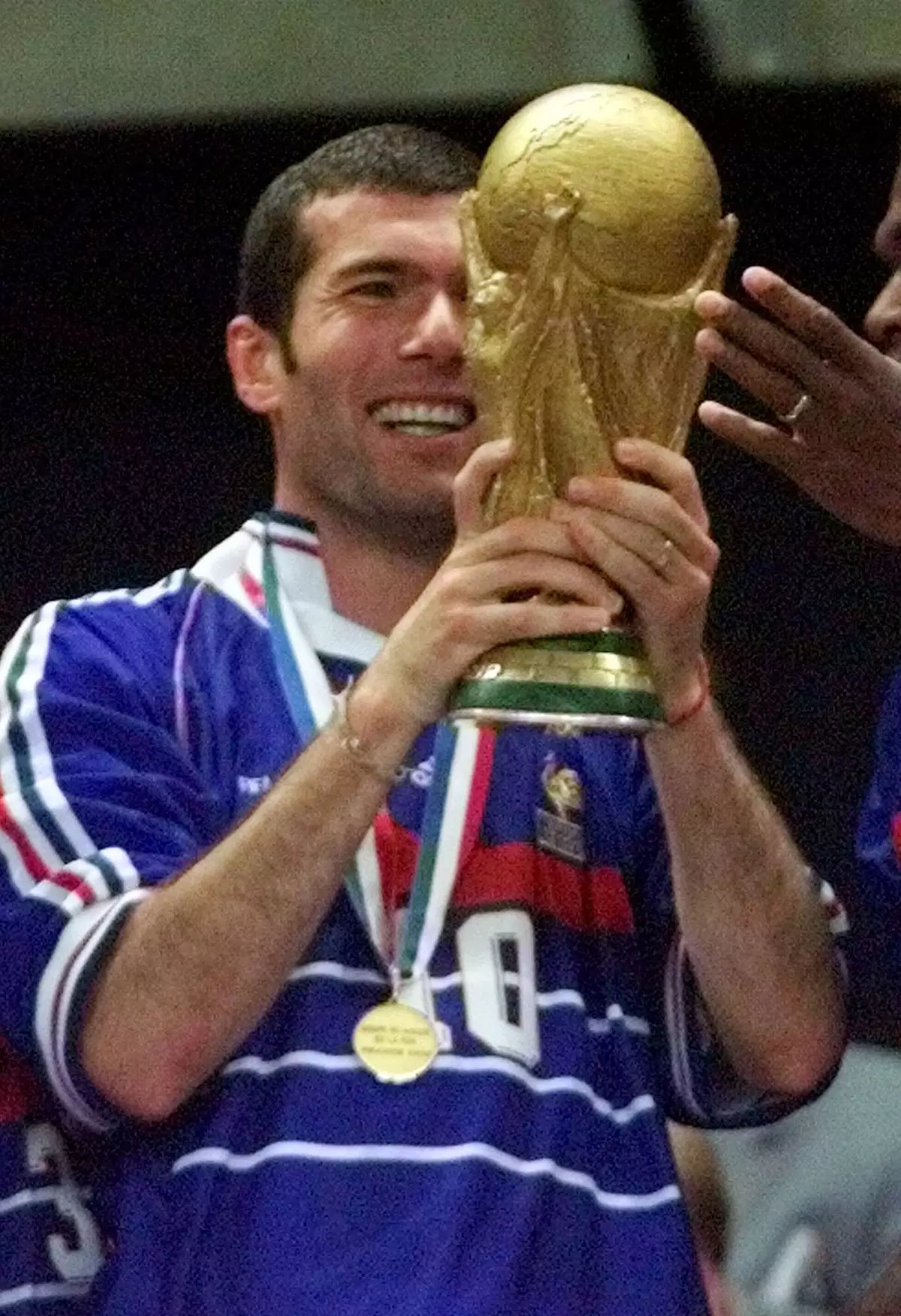
FILE - Zinedine Zidane of France displays the World Cup after the final of the soccer World Cup 98 between Brazil and France at the Stade de France in Saint Denis, north of Paris, Sunday, July 12, 1998. (AP Photo/Thomas Kienzle, file)
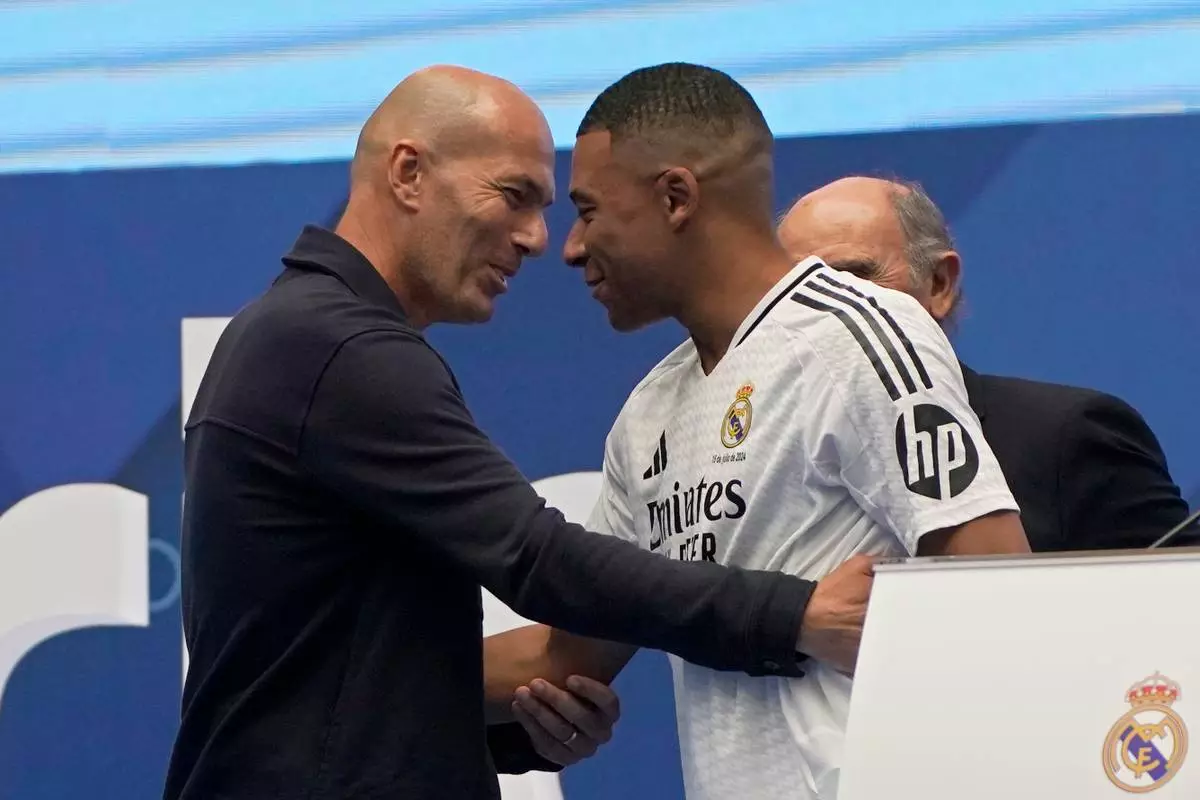
FILE - Former French player Zinedine Zidane, left, embraces Kylian Mbappe of France, as he is being presented to fans as a new Real Madrid player in Madrid, July 16, 2024. (AP Photo/Andrea Comas, File)