Ahead of Australia’s opening World Cup match, the Socceroos are celebrating the immigrants on the squad.
The message is simple: Soccer is for everyone. But it comes at a time when anti-immigrant sentiment is on the rise in Australia and in many places around the world.
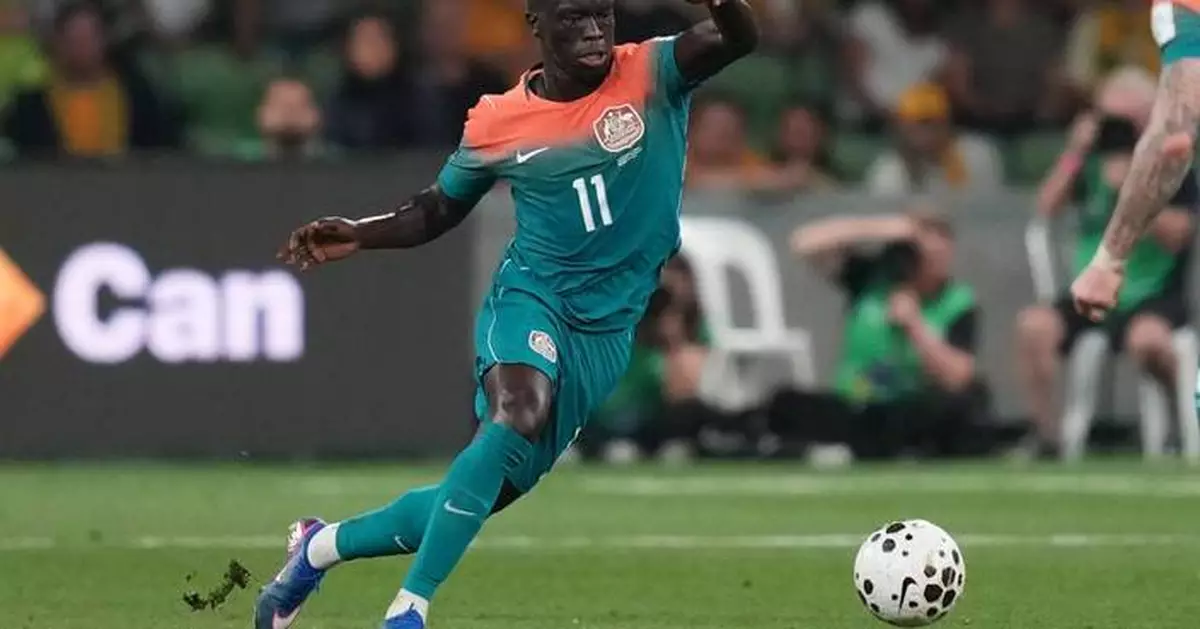
Among those featured in a video released by Professional Footballers Australia is Awer Mabil, who was born in a refugee camp in Kenya to South Sudanese parents.
"There's a lot of journeys behind the jersey, so to be a Socceroo has many different meanings, but with one purpose, and that is to do the country proud," Mabil said.
Mabil is one of three Socceroos who were born in refugee camps. Fellow forward Mohamed Touré was born in a camp in Guinea to Liberian parents before his family settled in Adelaide. And attacker Nestory Irankunda was born in a Tanzanian refugee camp after his parents fled Burundi. The family moved to Perth but later settled in Adelaide, where Irankunda and Touré became friends.
Both Touré, who plays for Norwich, and Irankunda, who plays for Watford, are making their World Cup debuts. Mabil plays in Spain for Castellón, and is making his second World Cup appearance.
Milos Degenek's family left Croatia when he was a baby and they lived as refugees in Serbia before moving to Sydney.
The Socceroos' message comes at a fraught time for immigrants around the world. A knife attack in Northern Ireland earlier this month set off two nights of fiery riots, stoked by anti-migrant rhetoric.
In the United States, President Donald Trump has implemented a widespread immigration crackdown. Visa restrictions have touched the World Cup, with Somali referee Omar Artan denied entry into the country.
There have also been a series of anti-immigrant marches and rallies under the label “March for Australia.” The events have been marked by arrests for hate speech and clashes with counter protesters.
“At a time when some seek to divide us and question who belongs, the Socceroos stand as a powerful reminder of who we truly are as a nation and as Australians," PFA chief executive Beau Busch said. “The Socceroos highlight the profound impact of multiculturalism on our country. People who have come from all corners of the world have shaped football, our community and our sense of self in the world.”
The Socceroos have played in the last five World Cups and have advanced to the round of 16 twice, including in 2022. Australia opens Group D play on Saturday against Turkey in Vancouver, British Columbia.
Australia has been training in Oakland, California. Touré, one of 17 new players on the team, caused concern when he was absent from practice on Wednesday, but his teammates reported he was back on Thursday.
AP World Cup coverage: https://apnews.com/hub/fifa-world-cup

FILE - Australia forward Nestory Irankunda runs during the second half of an international friendly soccer game against Switzerland, June 6, 2026, in San Diego. (AP Photo/Gregory Bull, File)
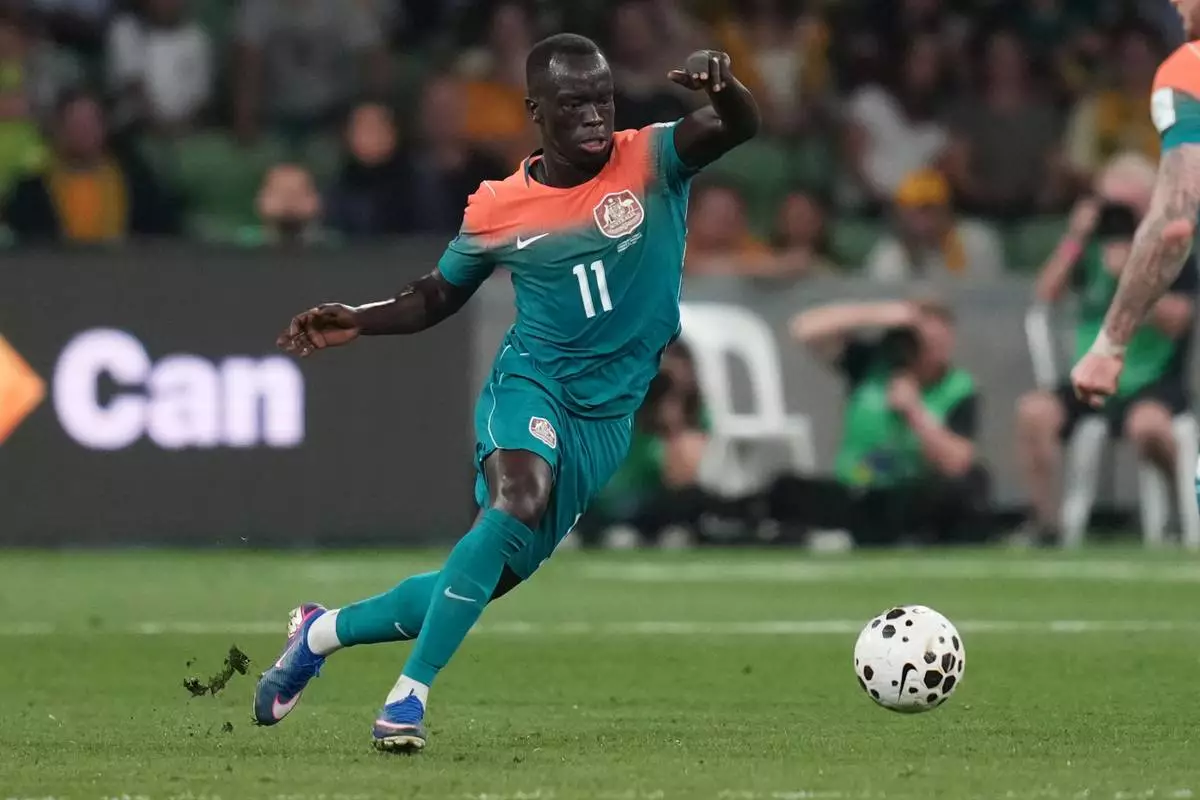
FILE - Australia's Awer Mabil during their international soccer friendly against Curacao in Melbourne, Australia, March 31, 2026. (AP Photo/Asanka Brendon Ratnayake, File)
NEW YORK (AP) — The Treasury Department moved Friday to enlist the nation’s banks more deeply in President Donald Trump’s immigration crackdown, including issuing fresh guidance that lets banks rapidly share information about suspected customers and an advisory steering them to flag signs that one of their customers may lack legal immigration status.
These changes are part of the administration’s push to remove undocumented workers from the nation’s banking system without explicitly mandating that banks do so. In order to get banks to participate, the administration has framed these actions as a crackdown on fraud and crime, not explicitly about immigration.
“The information in your purview can help stop a cartel financier, disrupt a money laundering network, uncover labor exploitation, or protect taxpayers from fraud,” Treasury Secretary Scott Bessent said in prepared remarks at a banking conference in Houston.
Bessent's remarks and the Treasury Department's new guidelines come from an executive order signed in May by Trump that requires banks to take a closer look at the citizenship of their customers as well as directs bank regulators and government departments to look for signs that people without legal status are opening accounts or obtaining loans or credit cards. But that executive order did not include an explicit mandate that banks collect citizenship information, which the industry for months lobbied against.
Banks have long been able to share information about their customers with other banks under the Patriot Act program when they suspect money laundering or fraud, part of the post-9/11 effort to combat terrorism and other crimes.
Friday’s actions widened that system on two fronts. Banks can now share such information with one another in real time and more freely, the Treasury Department said.
Secondly, the Trump Administration is giving banks a wider variety of reasons to share information, which now include flags historically tied to immigration status. One example is a customer having an individual taxpayer identification number (ITIN), which are disproportionally used by undocumented immigrants when applying for work.
Bessent told bankers that the new guidance is simply part of what the banking system needs to do as part of their routine operations.
“The advisory does not ask banks to become immigration officers,” Bessent said. “It asks banks to do what they do best: know their customers, identify risk, recognize suspicious patterns, and report illicit activity when they see it.”
Bankers have been wary about sharing customer information with the federal government as part of immigration enforcement. Bankers never collected citizenship information on their customers, so any effort to do so would require a massive effort by banks and significant amounts of paperwork. There's also the fact that banks send millions of what are known as Suspicious Activity Reports to the federal bank regulators under the Bank Secrecy Act. Last week, the Treasury Department expanded the reasons why a bank might file a SAR to include potential undocumented workers.
“The administration is saying they don't want banks to be immigration officials, but they are trying to get as close to the line as possible,” said Nicholas Anthony, who focuses on bank regulation issues at the libertarian-leaning Cato Institute.
At the time Trump signed the order, the White House framed the effort on the premise of combating fraud, but also it said undocumented workers introduce risk to the overall financial system by taking out loans that could potentially never be repaid because the borrowers could be deported. Since banks haven't historically collected citizenship data on their customers, it's hard to quantify how much of a risk undocumented workers are to banks. One study by the left-leaning Urban Institute estimated that between 5,000 and 6,000 mortgages were issued to customers with ITINs, which would be a tiny fraction of the millions of mortgages written each year.
Immigration advocates have previously said any order that would order banks to collect citizenship information would likely result in undocumented immigrants moving out of the financial system, increasing the number of “unbanked” individuals.
The White House has taken other measures to discourage undocumented workers from using the financial system. The Treasury last November announced that it would reclassify certain refundable tax credits as “federal public benefits,” which bars some immigrant taxpayers from receiving them, even if they file and pay taxes and would otherwise qualify.
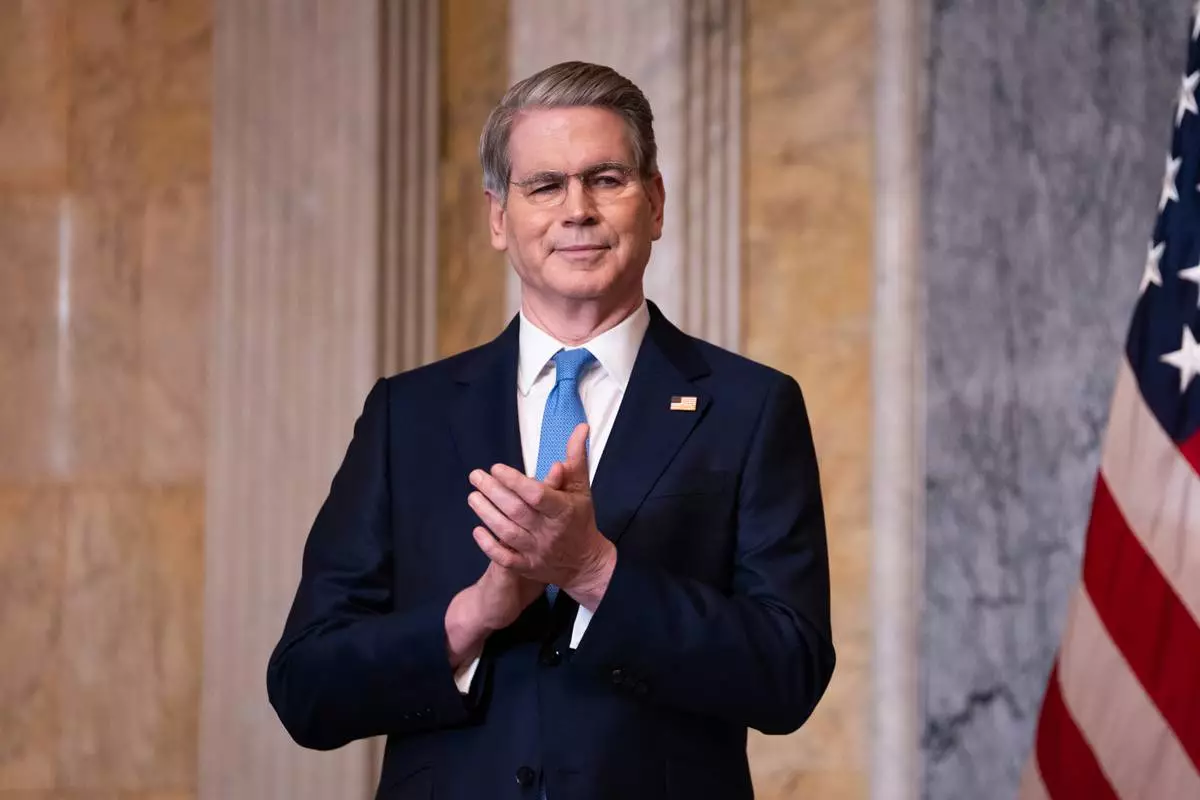
Treasury Secretary Scott Bessent applauds during an event about Trump Accounts for children in foster care at the Department of Treasury, Thursday, June 11, 2026, in Washington. (AP Photo/Allison Robbert)