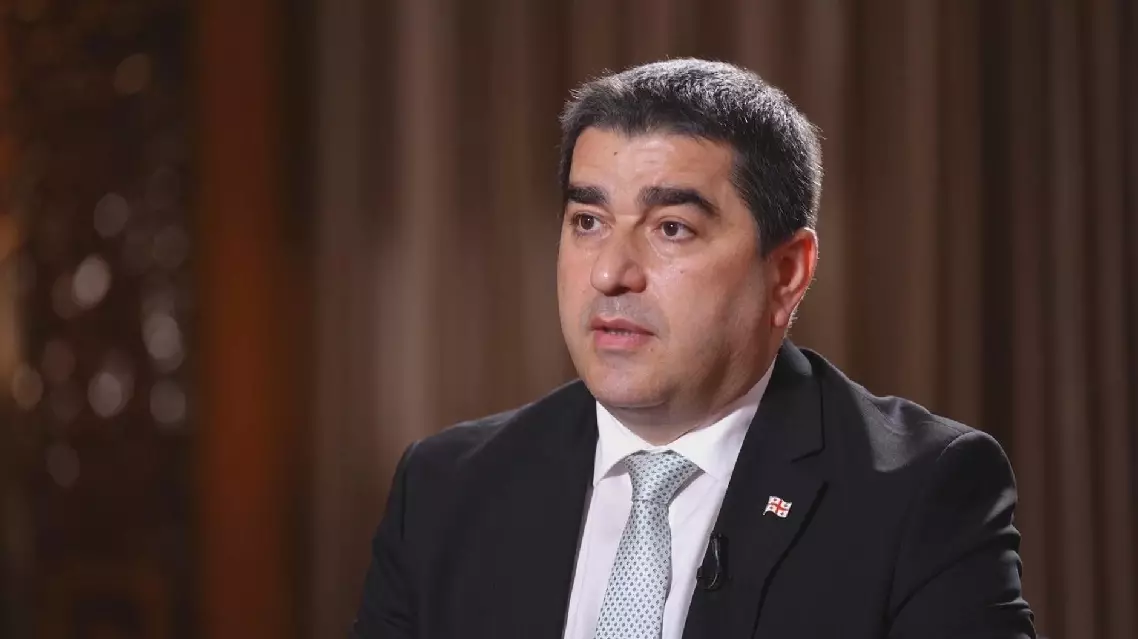
Georgia, a long-standing supporter of the Belt and Road Initiative (BRI), hopes to deepen cooperation with China in logistics infrastructure to boost connectivity and create shared benefits, the country's parliament speaker said.
In an exclusive interview with China Media Group (CMG), Georgian Parliament Speaker Shalva Papuashvili stressed Georgia's steadfast support for the BRI, which promotes trade connectivity worldwide.
Expressing hope for closer cooperation with China to promote shared development among countries along the route, Papuashvili highlighted Georgia's strategic position as a bridge between China and Europe.
"Georgia is one of the huge supporters of the Belt and Road Initiative and Georgia traditionally had a role of connecting Europe with Asia. We see nowadays that the historic role Georgia always had has also (been its) role nowadays. Georgia, and generally the South Caucasus, offers the fastest and cheapest way to connect Europe with Asia, to connect China with the European Union. This is why we see ourselves as a part in supporting this initiative," he said.
As a result of BRI projects, China and Europe are now connected through a multimodal transport route known as the Middle Corridor, which runs through Georgia.
The speaker said Georgia hopes to leverage its geographical advantages to deepen cooperation with China and help make the Middle Corridor a route that benefits all participating countries.
"Most importantly for us is the development of the logistic infrastructure. Where we hope to have a more intensive change in cooperation with China would be the development of the logistical infrastructure in Georgia, which at the end will benefit all participants, who will use the so-called Middle Corridor or Caspian Corridor. So this is why it's mutually beneficial to be part of this idea," Papuashvili said.
Georgian Parliament speaker hails mutual benefits of Middle Corridor
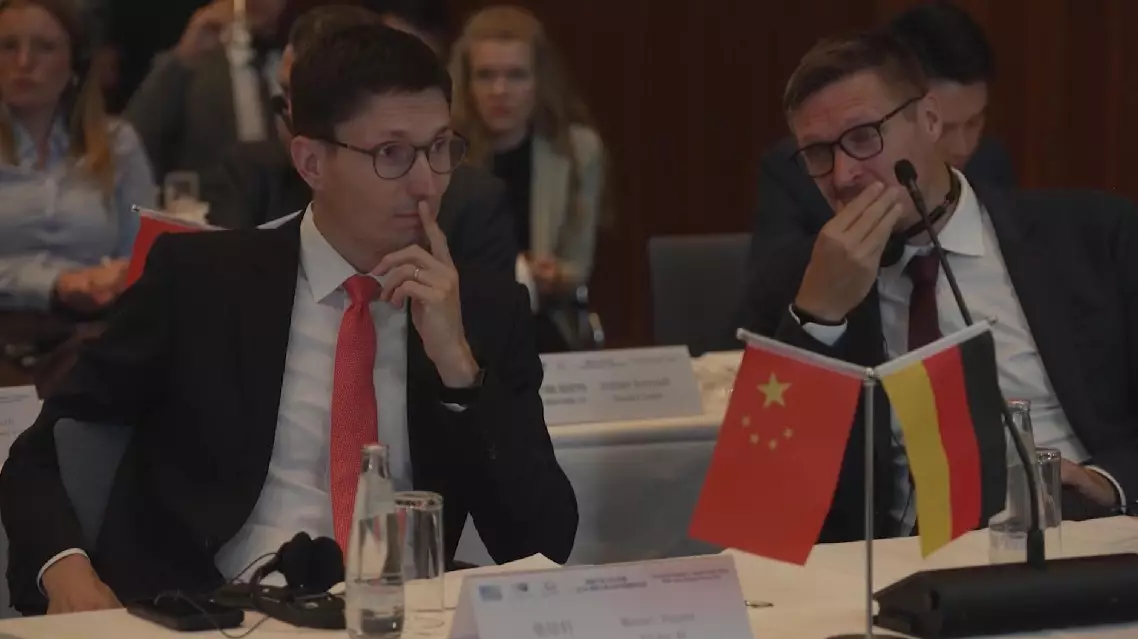
Germany is looking to strengthen cooperation with China as officials and business leaders from both sides met at a forum in Berlin on Thursday to discuss expanding trade and investment ties.
The forum, hosted by the German Chamber of Commerce and Industry alongside a promotion event for the ninth China International Import Expo (CIIE), focused on ways to keep the trading relationship relevant and to explore new areas of cooperation ahead of the next edition of expo scheduled in Shanghai in November.
"The [bilateral] trading relationship, first and foremost, is essential. And it has been for decades. And you know, our event today is all about also figuring out how we can keep it relevant and how we also can develop new areas of cooperation. This event is also all about exporting more to China again," said Thomas Konig, director China at the German Chamber of Commerce and Industry (DIHK).
Germany and China have maintained strong trade ties for decades, with Germany remaining one of China's key economic partners in Europe.
Officials at the forum said expanding imports from Germany could create new opportunities for cooperation in sectors including aviation, automotive manufacturing, healthcare and industrial equipment.
Ling Ji, vice minister of commerce of China and deputy China international trade representative, said China is willing to increase imports of high-quality German products, technologies and services as part of efforts to promote more balanced bilateral trade.
China, home to the world's largest middle-income population and the world's second-largest consumer market, launched its "Export to China" initiative last year to help foreign companies access the Chinese market, Ling said.
The discussions come at a time of global economic uncertainty, trade tensions and concerns over trade imbalances.
German officials stressed that cooperation must continue, but future growth depends on balance.
"In the end, there cannot be winners on only one side. We must make sure there are winners on all sides," said Thomas Steffen, state secretary with the German Federal Ministry for Economic Affairs and Energy.
He stressed the need to make the cake bigger for everyone.
Industry groups pointed to opportunities in medical technology, artificial intelligence, advanced manufacturing and the green transition.
"Just look into the future, med-tech. You have the waste management, you have the circular economy, you have AI, you have quantum technology, you have smart manufacturing. German innovators are ready to do their part and to contribute," said Konig.
According to the organizers, the CIIE will once again bring together thousands of companies from around the world, all hoping to turn today's conversations into tomorrow's contracts.
Germany expects stronger trade ties with China at Berlin forum