The agricultural sector in India is facing rising cost due to issues such as fertilizer shortages and soaring fuel prices as the conflict in the Middle East sends shock waves across global supply chains.
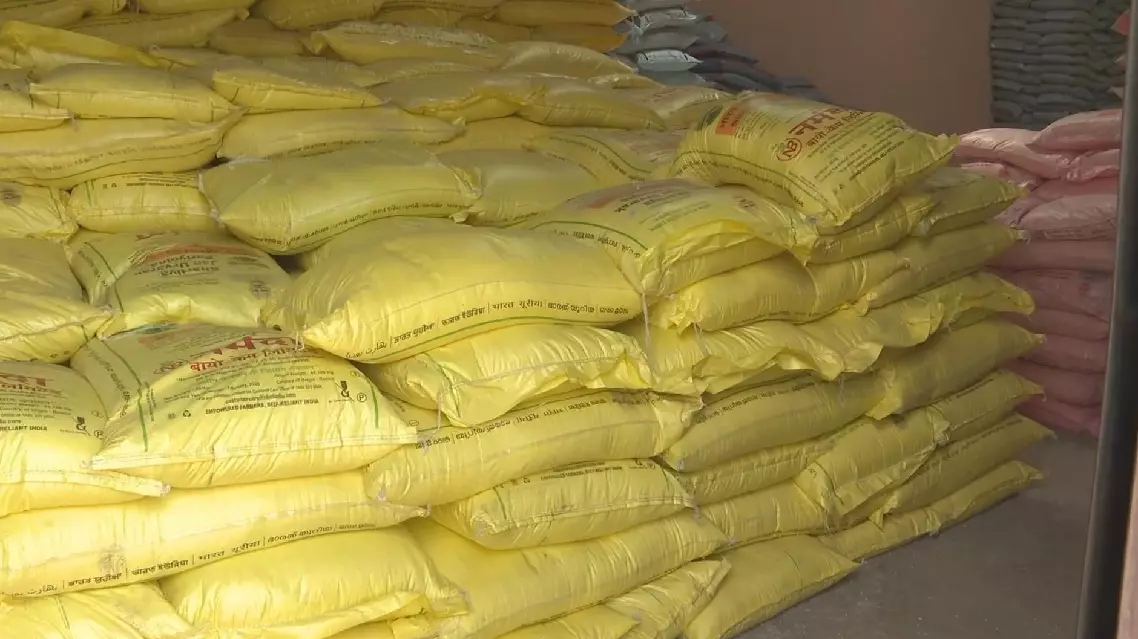
Indian farmers said they are confronting a severe shortage of basic fertilizers such as urea, and in some regions local agricultural authorities have introduced rationing to tackle the crisis.
"The agricultural sector is facing a cutoff in supplies of urea and diammonium phosphate. Previously, each household in our village could receive 10 to 20 bags of the two kinds of fertilizers. Now the quota has been cut to just one or two bags. Local agricultural cooperatives also say they have run out of urea," said Jagdeep Singh, a local farmer.
Supply chain disruptions have also affected India's imports of raw materials for fertilizer and pesticide production, and this has pushed prices of compound fertilizers higher.
Agricultural supplies dealers in India's Maharashtra said the situation of local farmers has been further deteriorated.
"Most raw materials for pesticide manufacturing are imported. Frequent disruptions to import due to the [Middle East] conflict have driven pesticide prices up by 20 percent to 25 percent. Because of insufficient imports, diammonium phosphate and urea are completely out of stock and prices of other compound fertilizers have also soared, pushing up cost to an unaffordable level for farmers," said Rajendra Wagh, an agricultural supplies dealer.
Analysts said the rising energy prices on the international market have also been driving the cost of mechanized agricultural production.
"The Middle East conflict has pushed up prices of gasoline, diesel and natural gas. As a result, transportation costs in our region have risen sharply, further driving up the cost of using farm machinery such as tractors, as well as labor expenses," said Anil Rajaram Chavan, vice chairman of the Agricultural Produce Market Committee, Lasur.
Experts said the rising costs of agricultural production will finally be passed down to consumers, who may face increasing prices of agricultural products.
"Fertilizer shortages will lead to lower crop yields. Once output declines, the market will see less grain. A tighter supply will likely push up grain prices and rising fuel costs will also drive the prices up, leaving ordinary people in a difficult situation," said Deepak Chandly, director of local grain market.
Middle East conflict pushes up agricultural production cost in India
A leading Japanese economist has warned that the Bank of Japan's anticipated interest rate hike will not address the country's fundamental economic problems, calling instead for structural reforms and stronger support for small and medium-sized enterprises.
The economist's comments come as the yen exchange rate continues to hover near 160 yen per U.S. dollar, with Japanese media and financial markets widely expecting the Bank of Japan to announce a rate hike at its monetary policy meeting on June 15 and 16.
"Japanese political and economic scholar Hamada Kazuyuki said: "The future trend of the Japanese economy is also affected by factors such as rising crude oil prices and inflation, and there are no signs of these problems being resolved anytime soon. If left unchecked, they will develop into a serious inflationary trend. This will not only affect enterprises but also the daily lives of ordinary people. Therefore, in order to curb these impacts, the Bank of Japan is taking countermeasures and adjusting toward the direction of raising interest rates. However, whether these measures can truly be effective still remains highly uncertain," he said.
He also noted that the operations of small and medium-sized enterprises in Japan continue to face pressure, and the overall recovery of the Japanese economy is filled with uncertainty. The Japanese government's model of relying on debt to rescue the market only addresses symptoms rather than root causes and cannot solve the fundamental problems of the Japanese economy, he added.
"More than 80 percent, or even 90 percent, of Japanese enterprises are small and medium-sized enterprises. Only a small number of large enterprises have gained profits from exchange rate fluctuations. The vast majority of small and medium-sized enterprises are already on the edge of life and death. Therefore, without more adequate support policies for small and medium-sized enterprises, it will be very difficult for the Japanese economy to achieve recovery or restoration. The current government is in a rather difficult situation. Originally, it said no supplementary budget was needed, but as the economy deteriorates, it has no choice but to rely on supplementary budgets and deficit financing to barely cope. But this is not a fundamental solution. Continuing down this path will only make Japan's situation further deteriorate. Therefore, if the government truly wants to improve the economy, it must cut waste within the existing fiscal scope and concentrate resources into truly effective areas. This is the necessary direction," he said.

Japanese economist warns rate hike inadequate, urges structural reform