The biological attacks conducted by the Imperial Japanese Army during World War II left enduring, generational scars on Chinese soil, representing one of the darkest and most haunting chapter in China's wartime memory.
The attacks were not carried out by bullets, but by bacteria that killed hundreds of thousands of Chinese people and devastated numerous families.
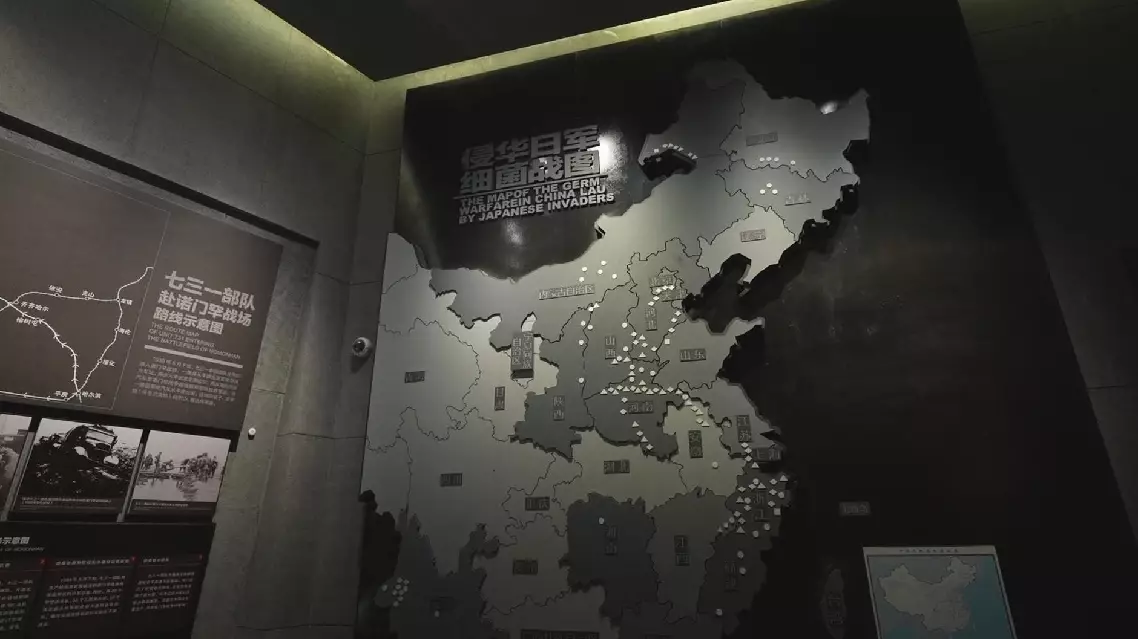
Maps of the assaults and other historical materials preserved at the Exhibition Hall of Evidences of Crime Committed by Unit 731 of the Japanese Imperial Army in Harbin City, northwest China's Heilongjiang Province, reveal the scale of the campaign. Circles mark plague, triangles indicate typhoid fever, squares in Shandong represent cholera, and diamonds denote glanders.
Most of the strikes were concentrated along China's east coast, though some reached the southwest.
Together, the symbols illustrate the breadth of the bacteria unleashed and the severity of the biological war Japan waged against China.
Quzhou in east China's Zhejiang Province was a key target during the Japanese invasion of China. Unit 731, the notorious Japanese germ-warfare unit, was ordered to attack the city.
In October 1940 and again between April and August 1942, the Japanese military launched two large-scale biological attacks there.
Furuto Yoshio, a former aidman with Unit 731, later gave three pieces of testimony about one of the attacks.
The task for the expedition team was infecting the reservoir, wells and buildings with typhoid and paratyphoid, according to his testimony.
"They put the bacteria into empty bottles that were originally filled with digestion factors. Then they put these bottles into boxes and wrote 'water supply' on the boxes, and transported them to Nanjing City by air. We took out some bacteria from the glass bottles and put them into the light iron bottles, which were normally filled with drinking water, while keeping the remaining portion in the glass bottles. Then we packed these light iron bottles and glass bottles together into the boxes and transported the boxes to the place we planned to attack," said Furuto.
"We would throw the light iron bottles and glass bottles into wells, marshes, and villages. The empty glass bottles, which were originally filled with protein digestion factors, were prepared for manufacturing special liquid for bacterial reproduction," Furuto said.
Nearly 9,300 people died in Quzhou during these attacks, data showed.
Similar atrocities struck Changde City in central China's Hunan Province.
On November 4, 1941, Unit 731's Aviation Squad dropped 1.6 kilograms of plague-infected fleas and contaminated materials such as cloth, silk, paper, beans and wheat across the city.
The human toll of these biological assaults was devastating, and villages were left shattered and families broken. Two survivors from Changde later recalled the suffering in stark detail, their testimonies bearing witness to the scale of the tragedy.
"In our village, there were 14 victims of biological warfare, most of them were working on the docks. Within just three days, all those dockworkers were dead," said Yi Xiaoxin, a survivor in the germ warfare in Changde.
"My own family originally had 12 members. Five of them perished. My father was only 31 at the time, my uncle was just 29 - both in the prime of their lives. They both died [of the germ warfare]. My grandfather wept through the nights, utterly heartbroken. He cried so much that he eventually went completely blind," said Xu Wanzhi, another survivor.
Japan's germ warfare leaves enduring, generational scars on Chinese soil