NABATIYEH, Lebanon (AP) — Starting in the early hours of Tuesday, Aida Jleilati and her daughter dug through the pile of rubble that was once their home in the city of Nabatiyeh in southern Lebanon picking up some of their belongings that survived a late May airstrike by Israel.
They were among a trickle of residents who returned to the city to check on their homes after the announcement of a deal between the U.S. and Iran to end their war. Iranian officials have said the deal will also mandate an end to the Israel-Hezbollah war in Lebanon.
Click to Gallery
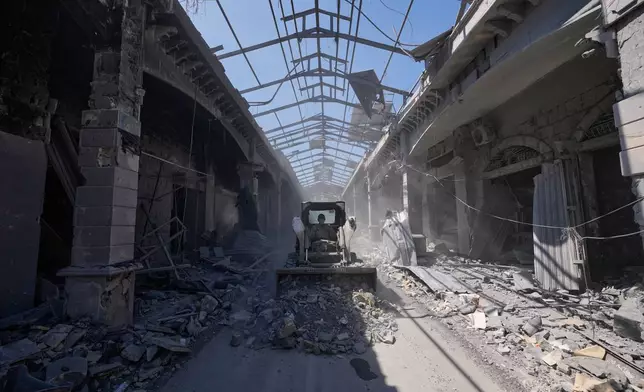
A municipality worker uses a skid loader as he cleans a destroyed market shop following the announcement of an initial ceasefire agreement between the United States and Iran, in Nabatiyeh town, southern Lebanon, Tuesday, June 16, 2026. (AP Photo/Hussein Malla)
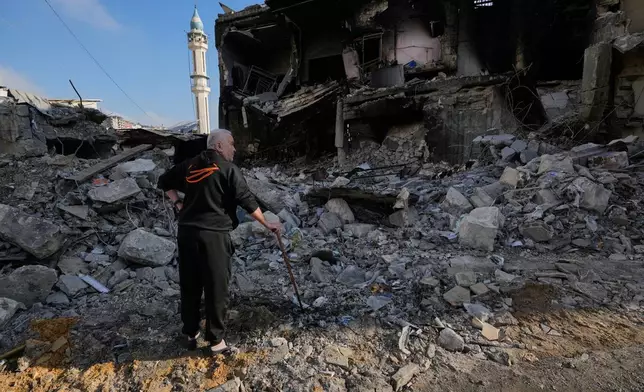
Kamal al-Kamal, 75, who returned to his village following the announcement of an initial ceasefire agreement between the United States and Iran, checks his destroyed supermarket in Nabatiyeh town, southern Lebanon, Tuesday, June 16, 2026. (AP Photo/Hussein Malla)
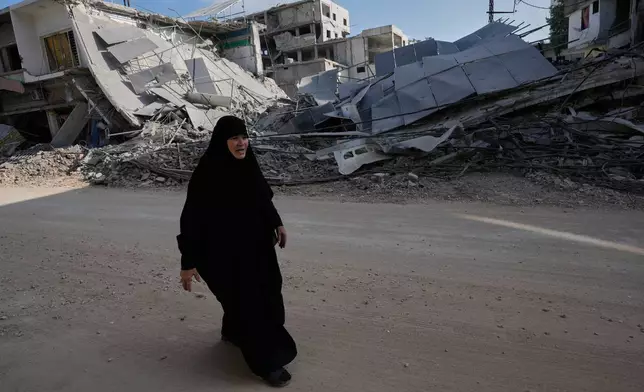
A woman returns to her village following the announcement of an initial ceasefire agreement between the United States and Iran, walks at her destroyed neighbourhood in Nabatiyeh town, southern Lebanon, Tuesday, June 16, 2026. (AP Photo/Hussein Malla)
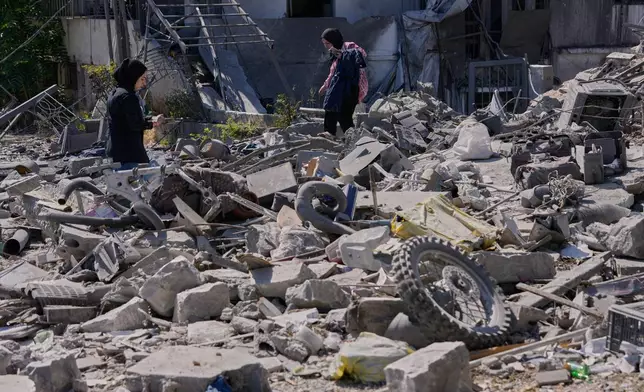
Sukaina al-Muhtadi, left, and her mother Aida who returned to their village following the announcement of an initial ceasefire agreement between the United States and Iran, search for their belongings between the rubble of their destroyed house in Nabatiyeh town, southern Lebanon, Tuesday, June 16, 2026. (AP Photo/Hussein Malla)
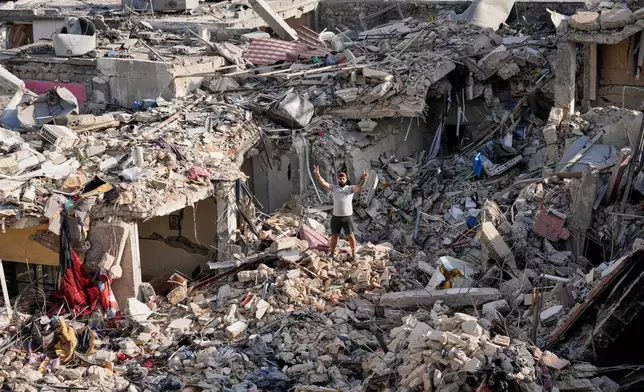
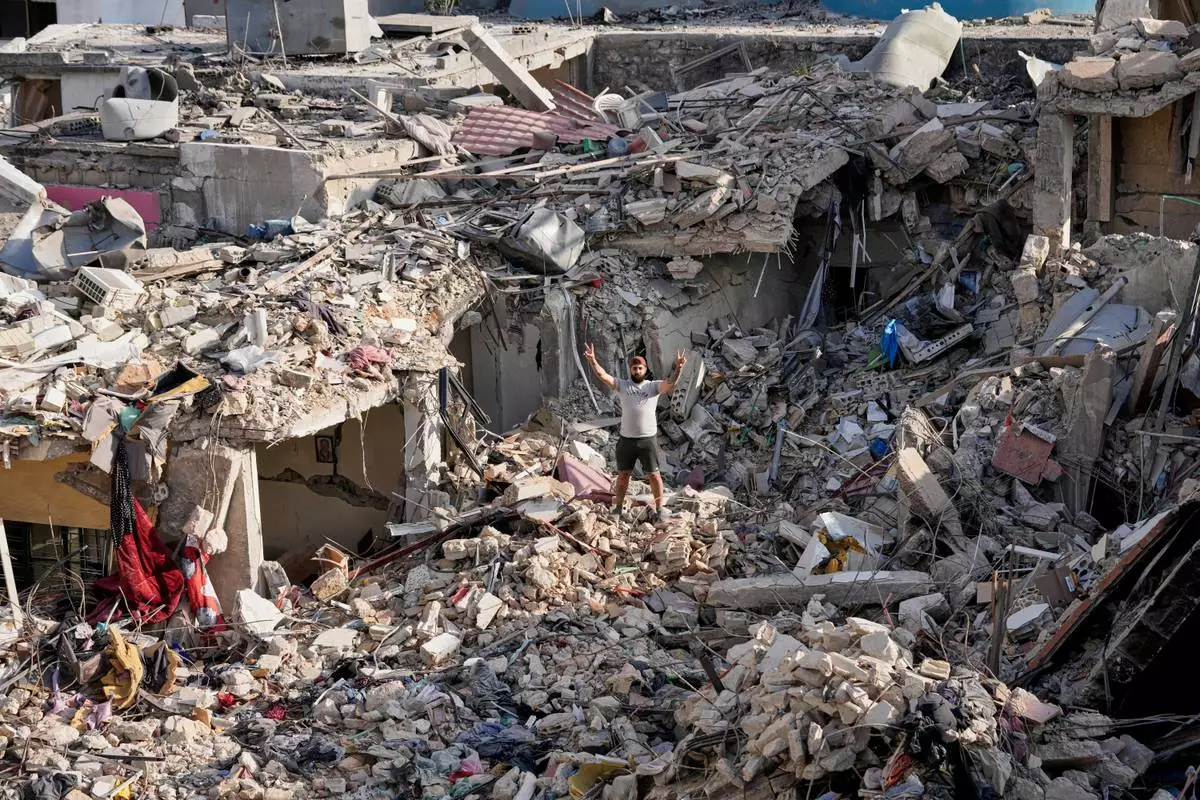
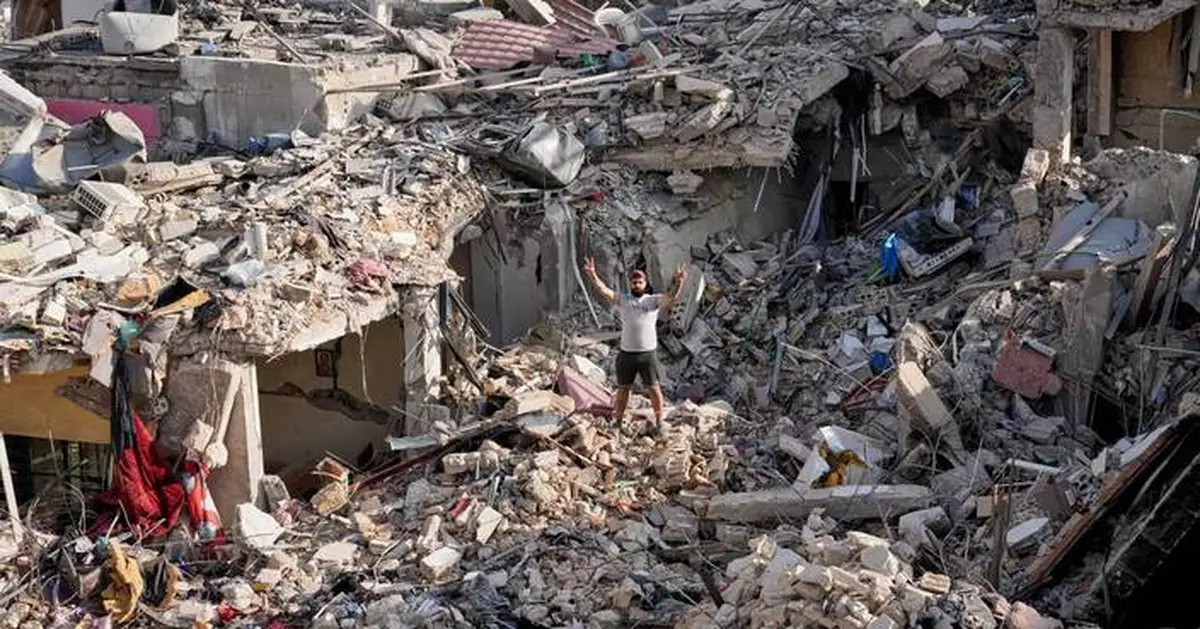
A man who returns to his village following the announcement of an initial ceasefire agreement between the United States and Iran, flashes victory sign as he stands on the rubble of his destroyed house in Nabatiyeh town, southern Lebanon, Tuesday, June 16, 2026. (AP Photo/Hussein Malla)
Although the fighting in southern Lebanon has not stopped, the strikes have been more limited since the U.S.-Iran deal was reached, and many people displaced from the area have taken the opportunity to check on their houses.
Jleilati and her 22-year-old daughter, Sukaina al-Muhtadi, lived on the first floor of a three-story building consisting of six apartments that collapsed as a result of the airstrike.
Jleilati managed to pull out most of her husband’s scuba diving equipment, as well as some clothes, while her daughter’s main hope was to find a photo album that had pictures taken when she was a little girl.
“What can I say? All that we have gathered in our life has been wasted,” Jleilati said, adding that they knew that their home was destroyed on May 26, when al-Muhtadi saw the destroyed building on a social media platform.
Since the early days of the latest Israel-Hezbollah war, the ancient city of Nabatiyeh has been subjected to intense airstrikes and shelling that have killed and wounded scores of people.
The once bustling market of Nabatiyeh suffered wide destruction and on Tuesday, several bulldozers were removing rubble and debris as some people returned following the late Sunday deal reached between the U.S. and Iran to end the conflict.
Jleilati and other residents in the city are not sure whether the truce will last since previous ceasefires that first went into effect on April 17 have been fragile with Israel and Hezbollah continuing their attacks.
Over the past few weeks, Israeli troops have pushed deep into southern Lebanon reaching about 4 kilometers (2.5 miles) southeast of the city that has been a trade hub for centuries. It's famous for its Monday market when residents of nearby villages came to sell products in the city.
Since the state of Lebanon was created in 1920 after the fall of the Ottoman Empire, Nabatiyeh and its surroundings have been a center for religious and cultural activities, with Shiite clerics having strong links with the Shiite holy cities of Najaf and Karbala in modern day Iraq.
Nabatiyeh historically was the capital of the predominantly Shiite Jabal Amel region from where some religious scholars went to Iran in the 16th century and helped its Safavid rulers convert much of Iran’s population to Shiite Islam.
Nabatiyeh is also a main center in Lebanon where Shiite Muslims mark Ashoura, a solemn day marking the 7th-century martyrdom of the Prophet Muhammad’s grandson Imam Hussein. The 10-day mourning period that culminates on the 10th of the Muslim month of Muharram, begins on Wednesday.
At the center of Nabatiyeh, 75-year-old Kamel al-Kamel looked in shock at his giant business consisting of a supermarket and a coffee roastery burned to ashes while the century-old building housing it crumbled.
Walking with the help of a cane, al-Kamal estimated his losses at $2.5 million. He said that unlike previous wars he has lived through — from the 15-year civil war that broke out in 1975 to Israel’s 1982 invasion of Lebanon to various rounds of Israel-Hezbollah wars — the latest one has been the worst.
“Thank God we are still alive,” he said, adding that he wept as he walked into Nabatiyeh on Thursday.
Samar Zuraik was happy to find that her house is still standing but damaged and will need some repairs. But she said nothing can compensate her for the loss of her son Ali, 27, who was killed in an Israeli airstrike on the edge of the city.
She said that despite the Iran-U.S. agreement, Nabatiyeh is unlivable at the present time, still subjected to shelling and without electricity, telephones or internet.
“I wish I lost my house and my son stayed alive,” Zuraik said.
There are three major hospitals in the Nabatiyeh area the oldest of which is the Najdeh El Chaabiyeh Hospital on the edge of the city, where hundreds of people wounded in the latest war were treated.
The hospital’s medical director, Dr. Shafi Fouani, said the latest Israel-Hezbollah war was similar to the previous war in 2024.
“It was a very harsh war,” he said about the latest one that broke out on March 2, when Hezbollah fired rockets into northern Israel two days after the U.S. and Israel launched their attacks against Iran.
He said that during the current war, the hospital dealt with about 500 deaths and treated nearly 1,200 patients, some of whom who were in critical condition and were referred to medical centers in Beirut or the southern city of Sidon.
More than 3,800 people have been killed in Lebanon in the latest fighting, according to the Lebanese Health Ministry. Also, 30 Israeli soldiers and a defense contractor have been killed in or near southern Lebanon, and two civilians have been killed in northern Israel, according to Israeli Prime Minister Benjamin Netanyahu’s office.
On Tuesday, Israeli troops fired artillery shells toward the outskirts of Nabatiyeh while Hezbollah fired rockets at Israeli positions near the city. Thuds of the blasts could be clearly heard in Nabatiyeh as Israeli troops have fought for days in an attempt to capture the Ali Taher hill that overlooks large parts of the city.
Lebanese troops closed some roads that lead to areas where Israeli troops are inside Lebanon.
As Jleilati and al-Muhtadi searched through the rubble of their former home, the young woman found a watch that her mother gave her when she was a child. The women were planning to head back to a Beirut suburb later Tuesday where they have been staying, saying they are waiting to see if the truce will hold in order to come back to Nabatiyeh and rent an apartment until their building is rebuilt.
“We cannot live outside Nabatiyeh,” al-Muhtadi said.
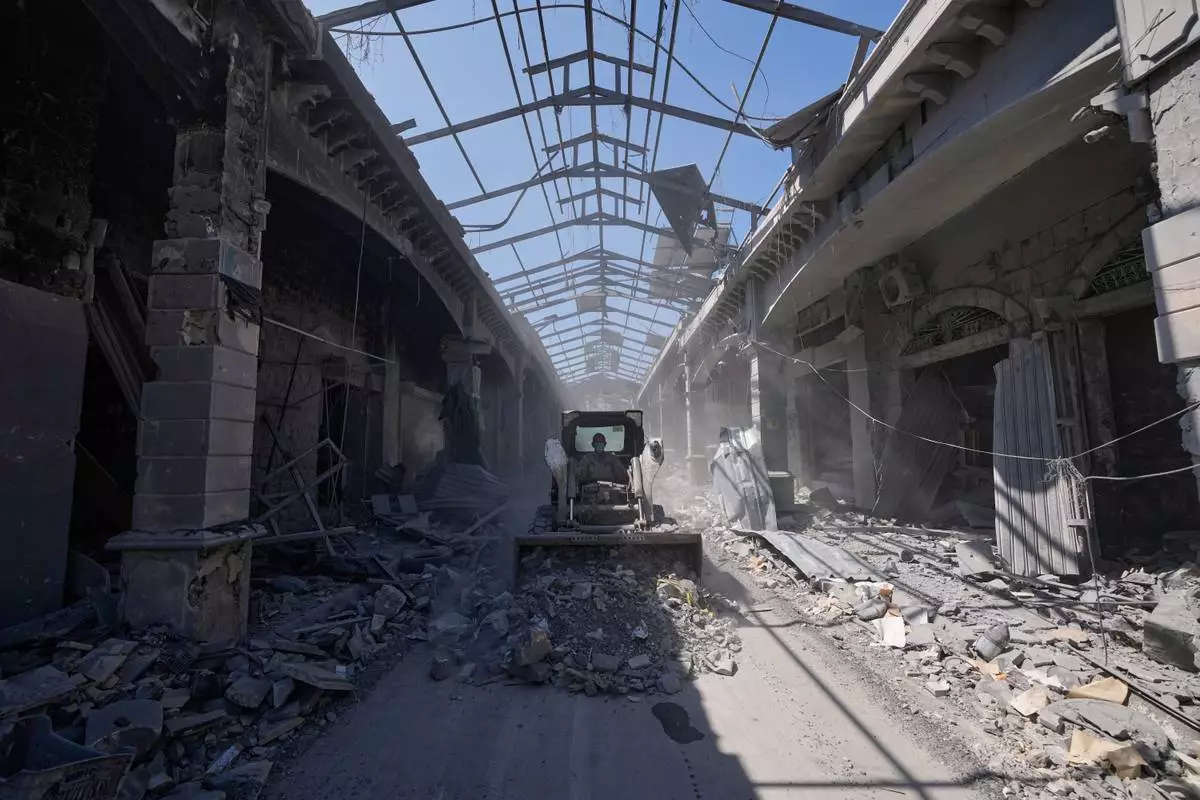
A municipality worker uses a skid loader as he cleans a destroyed market shop following the announcement of an initial ceasefire agreement between the United States and Iran, in Nabatiyeh town, southern Lebanon, Tuesday, June 16, 2026. (AP Photo/Hussein Malla)
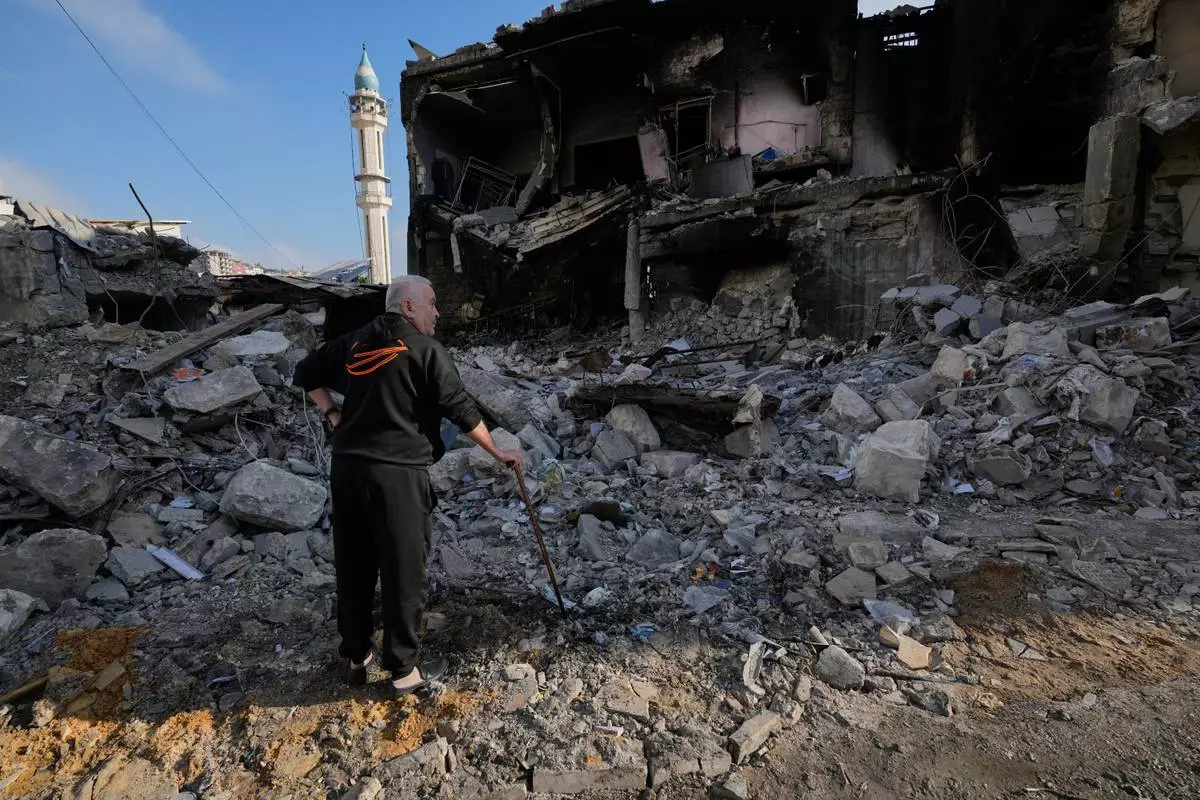
Kamal al-Kamal, 75, who returned to his village following the announcement of an initial ceasefire agreement between the United States and Iran, checks his destroyed supermarket in Nabatiyeh town, southern Lebanon, Tuesday, June 16, 2026. (AP Photo/Hussein Malla)
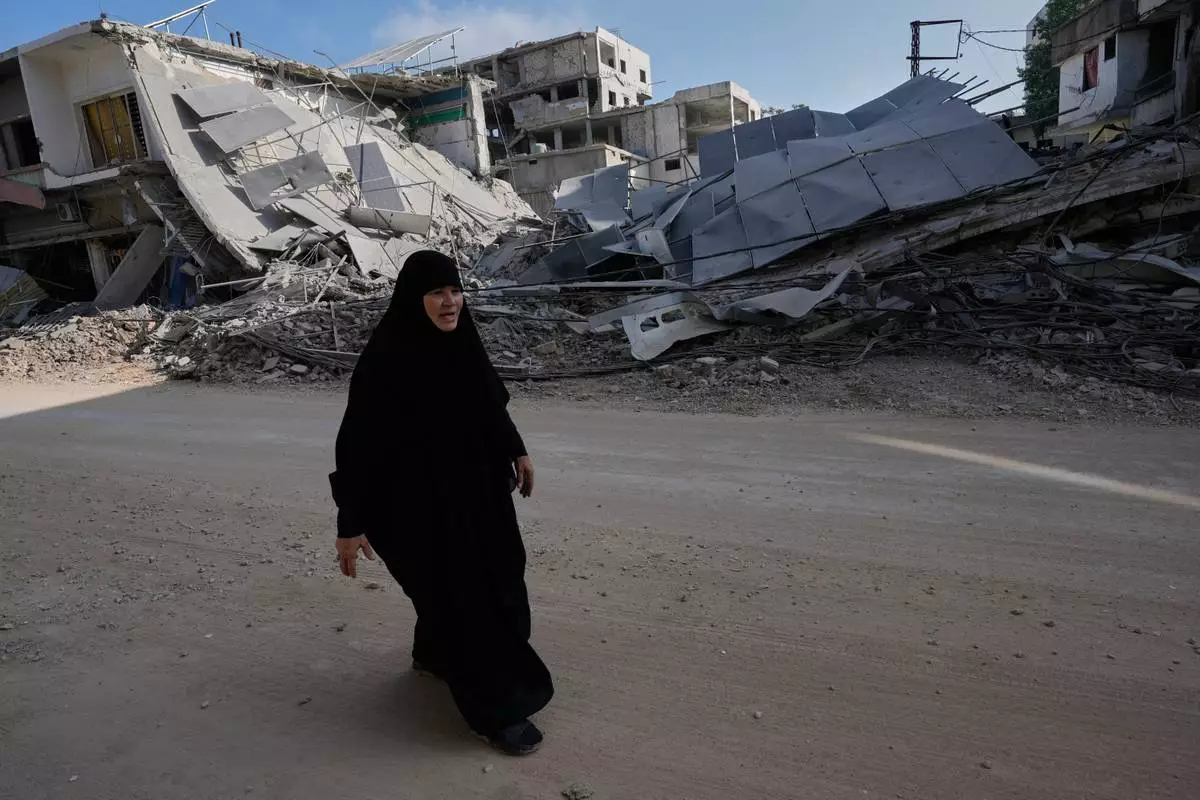
A woman returns to her village following the announcement of an initial ceasefire agreement between the United States and Iran, walks at her destroyed neighbourhood in Nabatiyeh town, southern Lebanon, Tuesday, June 16, 2026. (AP Photo/Hussein Malla)
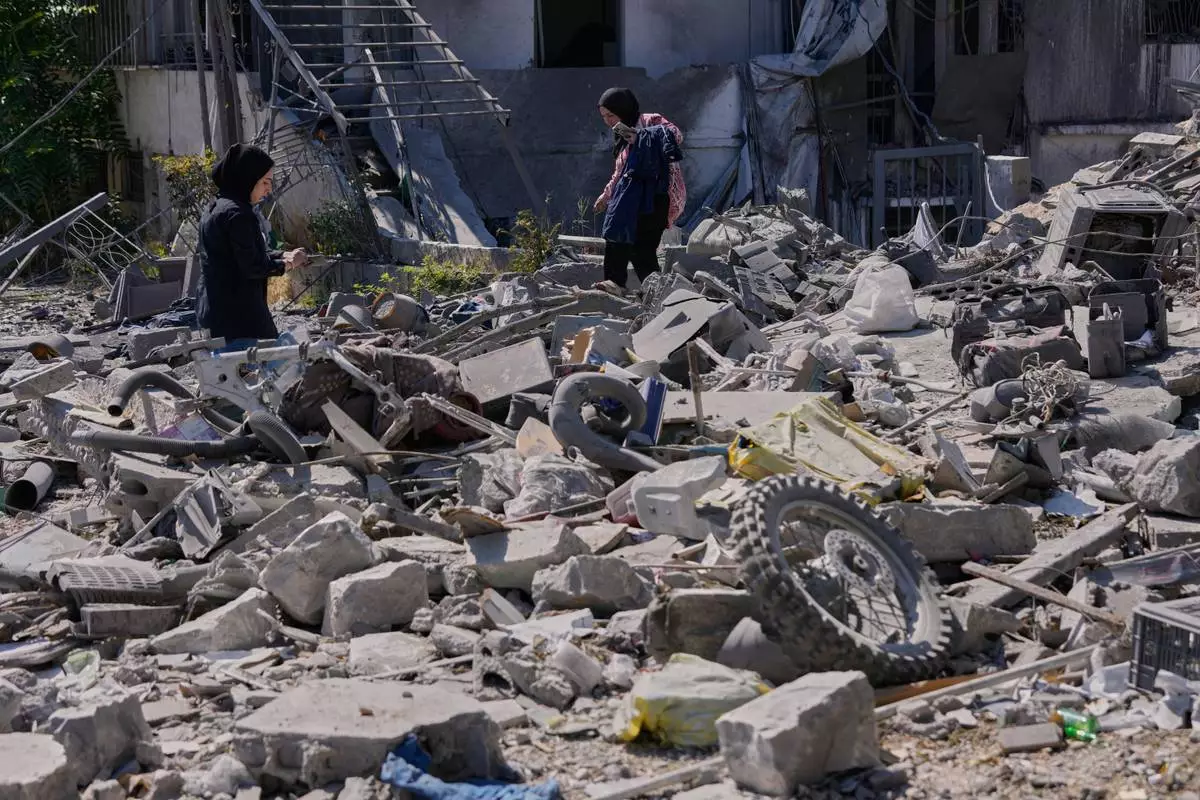
Sukaina al-Muhtadi, left, and her mother Aida who returned to their village following the announcement of an initial ceasefire agreement between the United States and Iran, search for their belongings between the rubble of their destroyed house in Nabatiyeh town, southern Lebanon, Tuesday, June 16, 2026. (AP Photo/Hussein Malla)
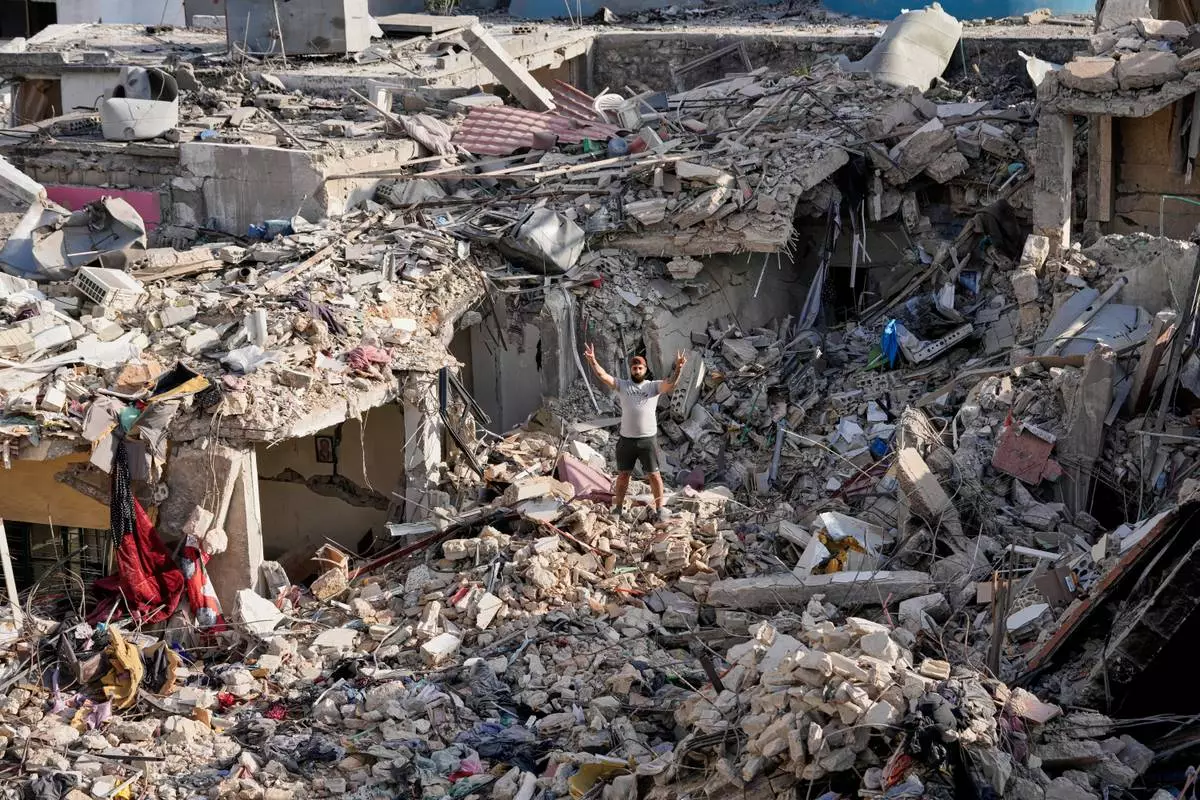
A man who returns to his village following the announcement of an initial ceasefire agreement between the United States and Iran, flashes victory sign as he stands on the rubble of his destroyed house in Nabatiyeh town, southern Lebanon, Tuesday, June 16, 2026. (AP Photo/Hussein Malla)