Skip to Content Facebook Feature Image

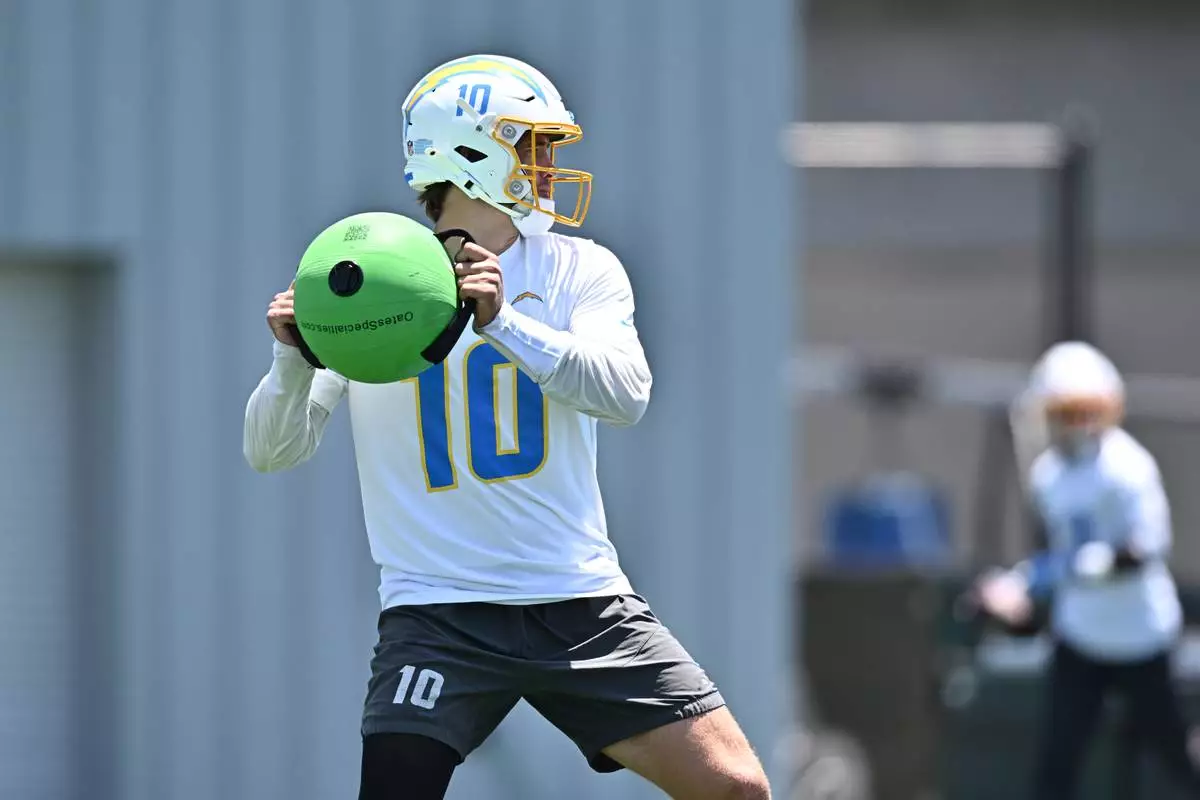
Chargers' Justin Herbert adjusting footwork during offseason program

Sport

Chargers' Justin Herbert adjusting footwork during offseason program
Sport

Sport

Chargers' Justin Herbert adjusting footwork during offseason program

2026-06-19 00:08 Last Updated At:00:10

EL SEGUNDO, Calif. (AP) — New Los Angeles Chargers offensive coordinator Mike McDaniel wanted to change Justin Herbert’s footwork, so he has taken the football out of his star quarterback’s hands for parts of the offseason program.

While it might seem counterintuitive, McDaniel believes Herbert can better focus on learning those adjustments when not throwing.

“To change it, and in one offseason, make it something that’s in the unconscious that you’re not thinking about where you have to think about a lot of other things, you really have to take an intentional attack on it. So I think he understood the extreme measures,” McDaniel said.

McDaniel is teaching Herbert to lead with his non-dominant left foot, with the right-handed passer having put his right foot forward when first handling the football in each of his previous six seasons in the NFL.

McDaniel initially took notice of the off-foot technique as an assistant to Kyle Shanahan with Houston in 2007. Brett Favre had been using it throughout his Hall of Fame career, and Tom Brady adopted it for the 2007 season when he threw 50 touchdowns passes, setting a then single-season league record that has since been broken.

Shanahan, who was the Texans quarterbacks coach at the time, and McDaniel extensively studied the possible benefits in the approach before adopting it, including when they continued worked together in Washington and San Francisco. McDaniel also took it to Miami when he was the Dolphins head coach for four seasons until being fired in January, leading the left-handed Tua Tagovailoa to start with his right foot forward.

“You have your pros and cons for anything that you do from a technique perspective, but having the non-throwing-hand foot forward, there was some advantages that I kind of lean toward. By the time we got to Washington (in 2010), we started training quarterbacks that way,” McDaniel said.

With McDaniel installing a quicker passing game that emphasizes allowing receivers to accumulate yards after catch, the tweak in footwork is intended to maximize the timing Herbert needs to get the most out of those opportunities.

“I kind of look at it like you’re trying to find the margins where you can improve, and you have a quarterback of high achievement like Justin, who wants to make gains in this game. You find the most margin that you can improve upon, and identifying that, and it being shorter time throws and footwork, there’s a necessity to really focus on footwork from the ground up,” McDaniel said.

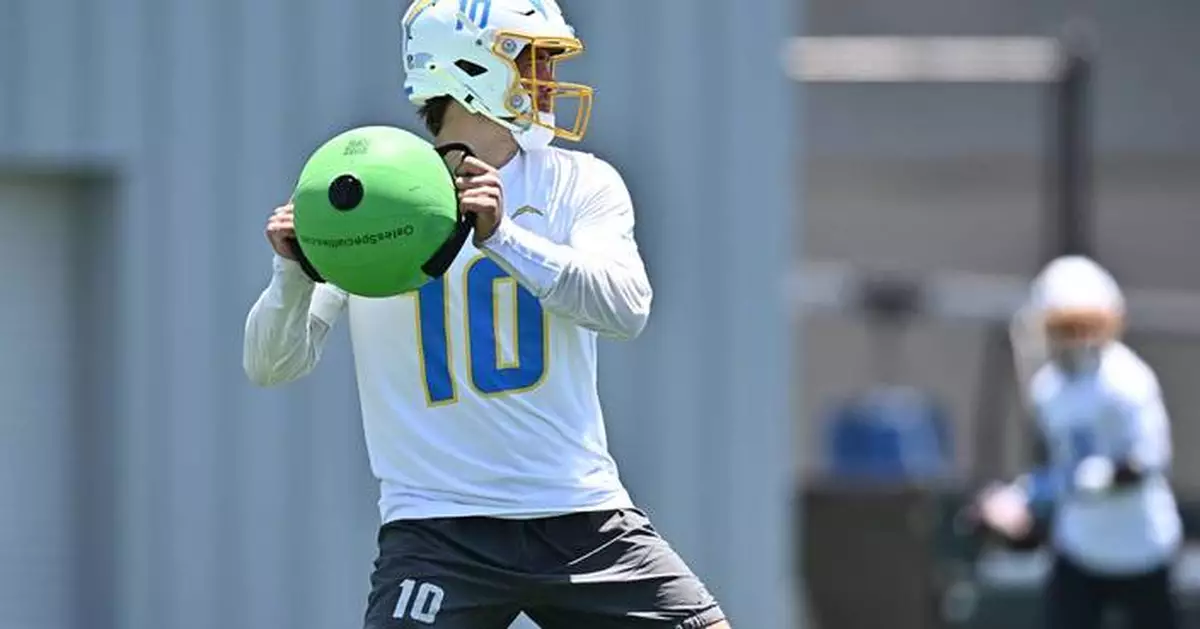
That meant asking Herbert to spend portions of organized team activities working with a large green exercise ball instead of a football. He also ceded throws in 7-on-7s and other periods to backups Trey Lance and DJ Uiagalelei, leaving Herbert to simulate drop-backs.

McDaniel’s aim was to put the emphasis on process rather than result.

“It’s as simple as where your focus is, and when you don’t watch a ball go, you don’t attribute any emotions toward, ‘Oh, that was a good throw. Oh, that was a bad throw.’ You only can really lean into one thing, and that’s the footwork that you’re doing. And if you make that the end-all, be-all — at the quarterback position, you have 900 things to think about — and in a short period of time, you can really master it to where you’re not thinking about it at all,” McDaniel said.

Herbert was receptive to the request to change his footwork, having spent his college career at Oregon operating in a neutral stance with his feet placed evenly.

As for the reduction in passing, Herbert accepted it, a minor surprise given his past insistence on getting lots of extra throws in before and after practices. Herbert said the new approach is as much about making sure his arm is fresh when the Chargers get to the stretch run of the season as mastering the new footwork.

“I’ve thrown a lot of footballs, and it’s May and June, and I didn’t think it was as necessary to throw as much now. I’m doing everything I can to get the footwork ready and get the offense down, and the throws, they’ll be there,” Herbert said.

AP NFL: https://apnews.com/hub/nfl
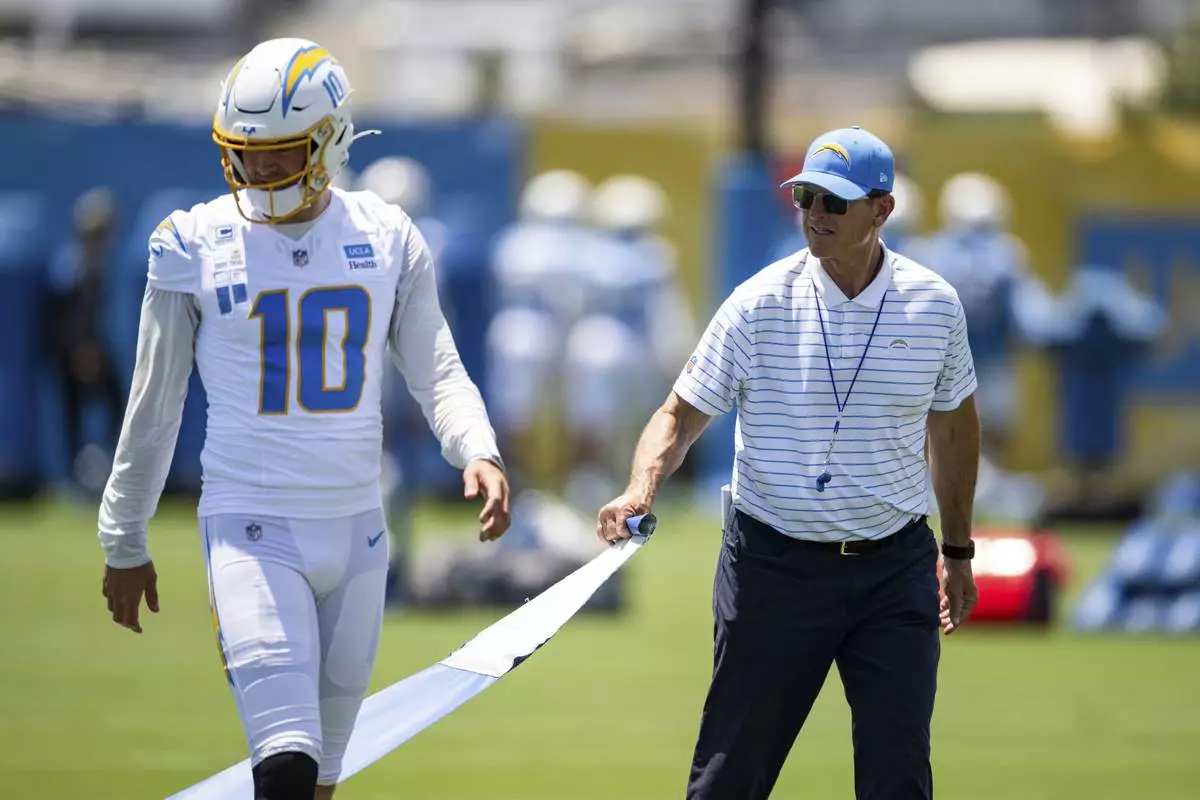
Los Angeles Chargers head coach Jim Harbaugh, right, drags a mat next to quarterback Justin Herbert during the NFL football team's practice, Tuesday, June 16, 2026, in El Segundo, Calif. (AP Photo/Kyusung Gong)
Los Angeles Chargers head coach Jim Harbaugh, right, drags a mat next to quarterback Justin Herbert during the NFL football team's practice, Tuesday, June 16, 2026, in El Segundo, Calif. (AP Photo/Kyusung Gong)

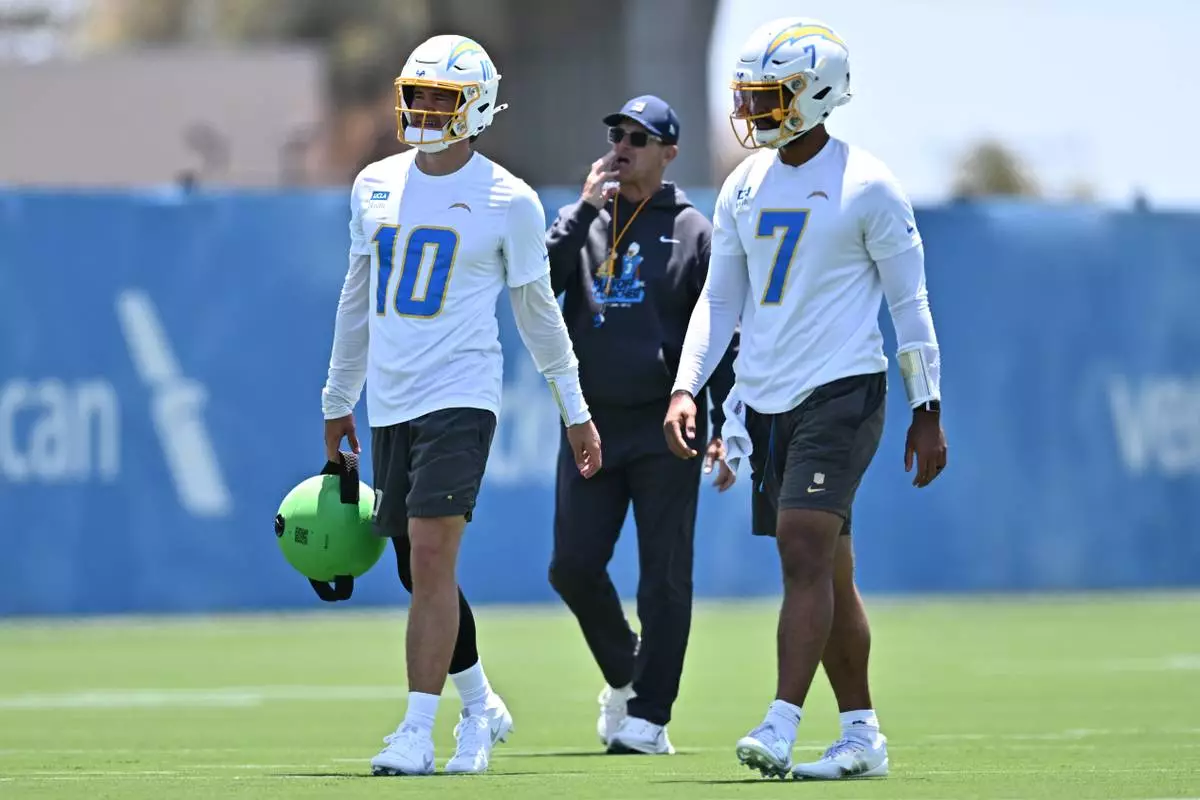
Los Angeles Chargers quarterbacks Justin Herbert (10) and DJ Uiagalelei (7) walk during the NFL football team's practice, Monday, June 8, 2026, in El Segundo, Calif. (AP Photo/William Liang)
Los Angeles Chargers quarterbacks Justin Herbert (10) and DJ Uiagalelei (7) walk during the NFL football team's practice, Monday, June 8, 2026, in El Segundo, Calif. (AP Photo/William Liang)


Los Angeles Chargers quarterback Justin Herbert runs a drill during the NFL football team's practice, Monday, June 8, 2026, in El Segundo, Calif. (AP Photo/William Liang)

Los Angeles Chargers quarterback Justin Herbert runs a drill during the NFL football team's practice, Monday, June 8, 2026, in El Segundo, Calif. (AP Photo/William Liang)

WASHINGTON (AP) — A new kind of flu vaccine moved a step closer to the U.S. market Thursday as federal health advisers recommended approval of the first made with the same mRNA technology that was key to ending the COVID-19 pandemic.

The Food and Drug Administration is evaluating Moderna's new shot, dubbed mFlusiva, for older Americans ahead of the winter flu season. Moderna is seeking full approval for the vaccine's use in people ages 50 to 64 — along with authorization for use in those 65 and older while it conducts additional testing.

The FDA's independent advisory committee evaluated Moderna's studies of the vaccine and voted unanimously that its benefits appear to outweigh any risks for both age groups. The FDA will consider that recommendation in making a final decision by early August.

Tens of thousands of Americans die from influenza every year, and older adults are among the most vulnerable. There are various types of flu vaccines already available in the U.S., including three specifically recommended for people 65 and older. But vaccines made with the Nobel Prize-winning mRNA technology are faster to manufacture than other types — something experts say might help if the shape-shifting flu virus mutates in a way that requires suddenly brewing new doses to match.

“Having this technology available puts us in a better position to be prepared for emerging strains in the future,” said Dr. Flor Munoz-Rivas of Texas Children’s Hospital, one of FDA's advisers.

In a study of 40,000 people age 50 and older, Moderna’s mRNA vaccine reduced flu cases by about 27% compared with those given another routinely used vaccine brand. In a smaller study of people 65 and older, Moderna's shot also generated a strong protective immune response compared to a high-dose flu vaccine already recommended for that age group.

Moderna is seeking full approval for the vaccine’s use in the 50- to 64-year-old population — along with authorization for use in those 65 and older while it conducts additional testing. If the vaccine is cleared for use, Moderna plans a follow-up study of 400,000 people 65 and older, half given the mRNA version and the rest given today’s senior-targeted flu vaccines.

Moderna’s Dr. Rituparna Das told panelists that the company’s ability to quickly manufacture mRNA vaccines that closely match the latest flu strains could prevent thousands of hospitalizations in older Americans.

Severe flu cases in the U.S. generally rise in years when the flu shot doesn’t closely match the circulating virus. Moderna officials said flu strains for the fall vaccines now are chosen in February -- several months sooner than the yearly recipe update for COVID-19 shots that mostly are mRNA-based — and there can be a mismatch if the flu virus mutates after the recipe is made.

At the meeting, FDA vaccine reviewer Dr. Timothy Brennan suggested the agency was open to approving the vaccine for older adults ahead of the coming flu season, despite the need for more information about its use in frail seniors or people with weak immune systems.

Earlier this year, Moderna’s data was at the center of a highly unusual public dispute as a then-top FDA official blocked the company’s application for its first-of-its-kind shot.

The embattled vaccine chief at the time, Dr. Vinay Prasad, said the company should have compared its shot to a high-dose flu vaccine recommended for seniors rather than a standard-dose brand. It was a sign of FDA’s heightened vaccine scrutiny under Health Secretary Robert F. Kennedy Jr.

Moderna challenged that decision, noting that FDA staff had approved that main study’s design and citing a separate, smaller study comparing the mRNA shot with a high-dose vaccine for seniors. Days after the spat, the FDA accepted Moderna’s application.

The Associated Press Health and Science Department receives support from the Howard Hughes Medical Institute’s Department of Science Education and the Robert Wood Johnson Foundation. The AP is solely responsible for all content.

FILE - A sign marks an entrance to a Moderna building in Cambridge, Mass., May 18, 2020. (AP Photo/Bill Sikes, File)prnto

FILE - A sign marks an entrance to a Moderna building in Cambridge, Mass., May 18, 2020. (AP Photo/Bill Sikes, File)prnto

Recommended Articles