SAN JUAN, Puerto Rico (AP) — The mother of a teenage girl who died after doctors in the Dominican Republic delayed treating her for cancer because she was pregnant is challenging the country’s strict abortion ban.
Civil society groups including a Christian organization joined the challenge, arguing that the ban violates the rights to life, health, dignity and equality, and that such protections should be extended to pregnant girls and women.
The challenge was filed Wednesday in the country’s Constitutional Court.
The Dominican Republic has one of the strictest abortion bans in the region, criminalizing it without exception and regardless of circumstance. Women face up to two years in prison for having an abortion, while doctors or midwives could face five to 20 years.
“My daughter died because she was denied the medical care she needed. No other mother should have to go through this,” Rosa Herminia Hernández said in a statement.
Rosaura Almonte died in 2012 from leukemia while three weeks pregnant. She was 16 years old, according to the court filing.
The challenge seeks that abortions be allowed in rape or incest cases; when the life or health of a woman or girl is in danger; or when a fetus has fatal abnormalities.
“This action seeks something very simple: that no woman or girl should have to choose between her life, her health and the law,” attorney Patricia Santana Nina said in a statement.
At least 67,455 abortions were recorded from 2019 through late 2024 in the public health sector, according to government data. It did not differentiate between spontaneous and induced abortions.
Meanwhile, from June 2017 to October 2022, prosecutors filed 62 criminal cases for abortion and 16 cases for attempted abortion. The Prosecutor General’s Office has stopped publishing such data since November 2022.
“Is it legitimate to maintain a permanent criminal threat against women in medical emergencies solely to legally express a moral stance?” the challenged filed Wednesday stated.
In 2023, a woman with three children, one of whom was product of a rape, had an incomplete and spontaneous abortion while pregnant, according to the challenge. It noted that authorities detained her for 10 days in inhumane conditions despite her condition, adding that she did not receive adequate medical care.
“The woman went to a health center seeking care and ended up being deprived of her freedom,” it stated.
Human rights activists say that it’s often health providers who report women to authorities.
There are no reliable statistics on how many women in the Dominican Republic have died during or after a clandestine abortion.
In 2024, at least 585 girls from 11 to 14 years old became mothers, according to government data. Meanwhile, at least 681 rapes were reported from January to July 2025, with activists noting that unreported cases are much higher.
The challenge noted that the ban worsens existing inequalities: women with resources can seek private medical care in or outside the country, while those who are impoverished face higher health risks and are more exposed to criminal prosecution.
“The women who are persecuted often share conditions of socioeconomic vulnerability, job insecurity, low educational level, or migratory status,” the challenge read.

FILE - Rosa Hernández shows a photo of her late daughter Rosaura Almonte in Santo Domingo, Dominican Republic, Dec. 10, 2023. Hernández asked for an exception for her daughter to get an abortion in order to use chemotherapy as her leukemia treatment, but was denied because that would put the fetus at risk of death in the Dominican Republic where abortion is criminalized without exceptions. Both her daughter and daughter's 13-week-old fetus died in 2012. (AP Photo/Ricardo Hernandez, File)
NEW YORK (AP) — The average U.S. price for a gallon of gas fell below $4 on Thursday, hitting a level not seen since the first full month of the war with Iran and providing a bit of relief to consumers squeezed by soaring costs.
Although the tentative peace deal between the U.S. and Iran and the resumption of oil shipments through the Strait of Hormuz are pushing energy prices downward, the cost of gas is still much higher than before the war began on Feb. 28.
According to motor club AAA, a gallon of regular gasoline averaged $3.999 on Thursday. It was the first time since late March that prices were that low. And the drop aligns with easing crude oil costs overall, with markets expressing optimism in recent weeks about the prospect of a peace deal.
Even with prices dropping, American drivers are collectively paying about $1 more per gallon than they were before the war, and gas is 25% more expensive than it was this time last year. That has caused many households to tighten their budgets and rethink how they want to spend their money.
Research has shown that short-term swings in the cost of gas leads consumers to adjust their driving and wider spending, with some even pulling back on core necessities such as groceries when gas prices get high, said Dylan Brewer, an assistant professor in Georgia Tech’s School of Economics.
If costs continue to fall in the coming weeks, he said, more people may be able to “loosen their belts a little bit.” Businesses that rely on gas and diesel to transport their goods will also benefit, but it could take a few months for that to trickle through the supply chain, Brewer added.
Gas isn't the only thing that's gotten more expensive during the war. Groceries, airline tickets and even condoms and shoes cost more amid global supply chain disruptions. Even if oil and other core necessities such as fertilizer begin flowing from the Middle East again, experts warn that the high costs will likely persist long after the fighting ends.
“Product prices across the United States are projected to keep climbing for the rest of 2026," Pat Penfield, a professor of supply chain practice at Syracuse University, said Thursday.
Penfield pointed to depleted inventories and supply chain problems caused by the war, noting that farmers, for example, had to pay more for fertilizer and other supplies this spring, which will “ripple through to increased food prices by autumn.” At the gas pump, meanwhile, limited refinery capacity in the U.S. “remains a significant bottleneck” toward bringing down prices further, he said.
Steep fuel costs have already pushed U.S. inflation to its highest level in three years. And many consumers are still paying much more than $4 per gallon to fill their tanks.
That price is a national average, with costs varying between states due to factors like proximity to supply and differing tax rates. In California on Thursday, the average price for regular gas was about $5.64, according to AAA. Next costliest was Hawaii, at $5.57. Meanwhile, prices in Indiana and Texas sat at about $3.40 and $3.49 a gallon, respectively.
Recent relief for fuel prices arrived with a drop in costs for crude oil, the main ingredient in gasoline.
Brent crude, the international standard, sat under $80 per barrel Thursday. And U.S. benchmark crude tumbled to below $76 per barrel. That's still a little higher than the roughly $70 price tag before the war, but far below the $100-plus price from just a few weeks ago.
Prices fell overnight Wednesday into Thursday after President Donald Trump signed the tentative agreement with Iran. It calls for Tehran to dilute its stockpile of highly enriched uranium and, in a significant concession from Washington, waives U.S.-backed sanctions on the country, immediately allowing Iran to sell its oil freely.
Major ship owners have also begun moving vessels through the Strait of Hormuz since the memorandum of understanding was signed Wednesday, according to maritime data from Lloyd’s List Intelligence, although some reported that only more limited side routes were open. And U.S. Vice President JD Vance said Thursday that the U.S. Navy has lifted its own blockade to allow some transit to and from Iranian ports.
Still, it could take weeks or months for traffic to return to prewar levels. Before the war, the strait carried a fifth of the world’s crude oil. And Gulf oil producers that throttled back production will need time to get the oil moving again.
Some ship captains may take their time to determine if the passage is safe. The agreement between the U.S. and Iran calls for a permanent end to hostilities and starts a 60-day negotiating clock to reach a final deal on the future of Iran’s nuclear program, though Trump left the door open to resume attacks.
Refineries also typically pay for crude oil a month or more in advance, so even after oil prices drop, they won’t immediately be processing cheaper products. Energy shocks have been even starker in places that rely more heavily on imports from the Middle East — notably countries across Asia and Africa.
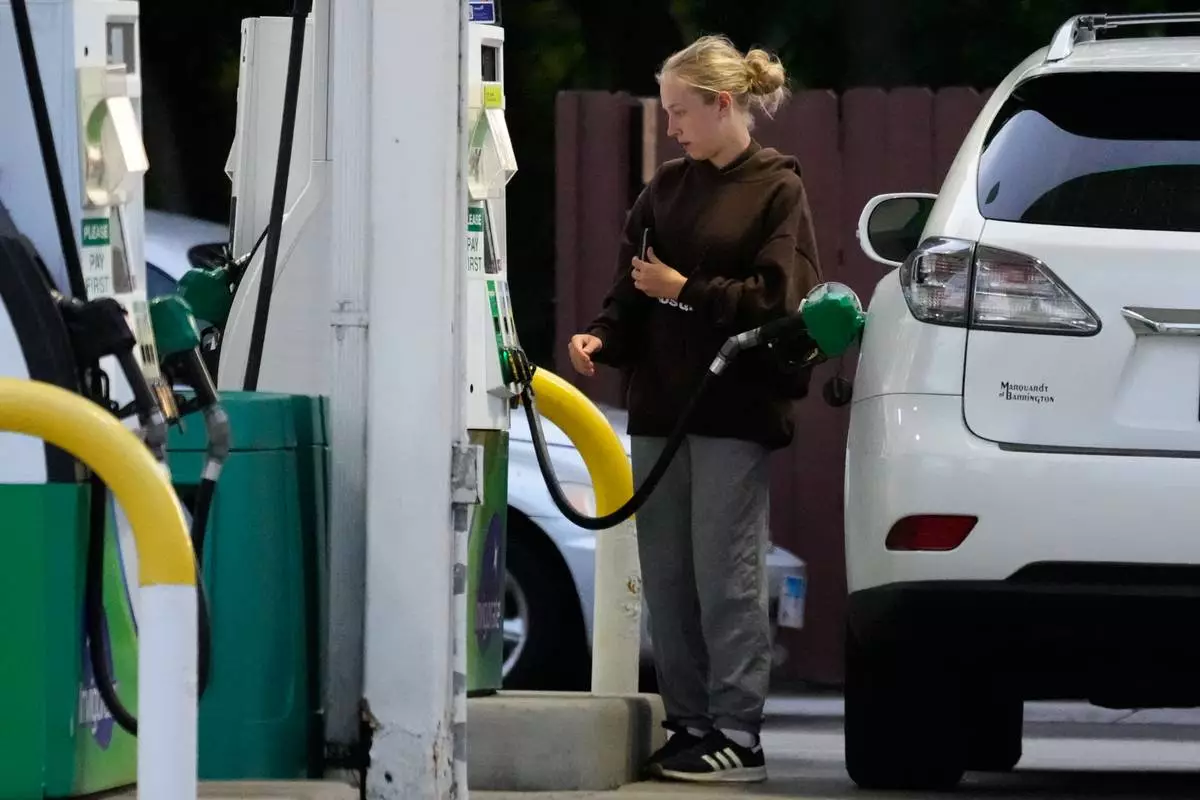
Customer checks gas price before she fills up her vehicle's tank at a gas station in Lincolnshire, Ill., Monday, June 8, 2026. (AP Photo/Nam Y. Huh)
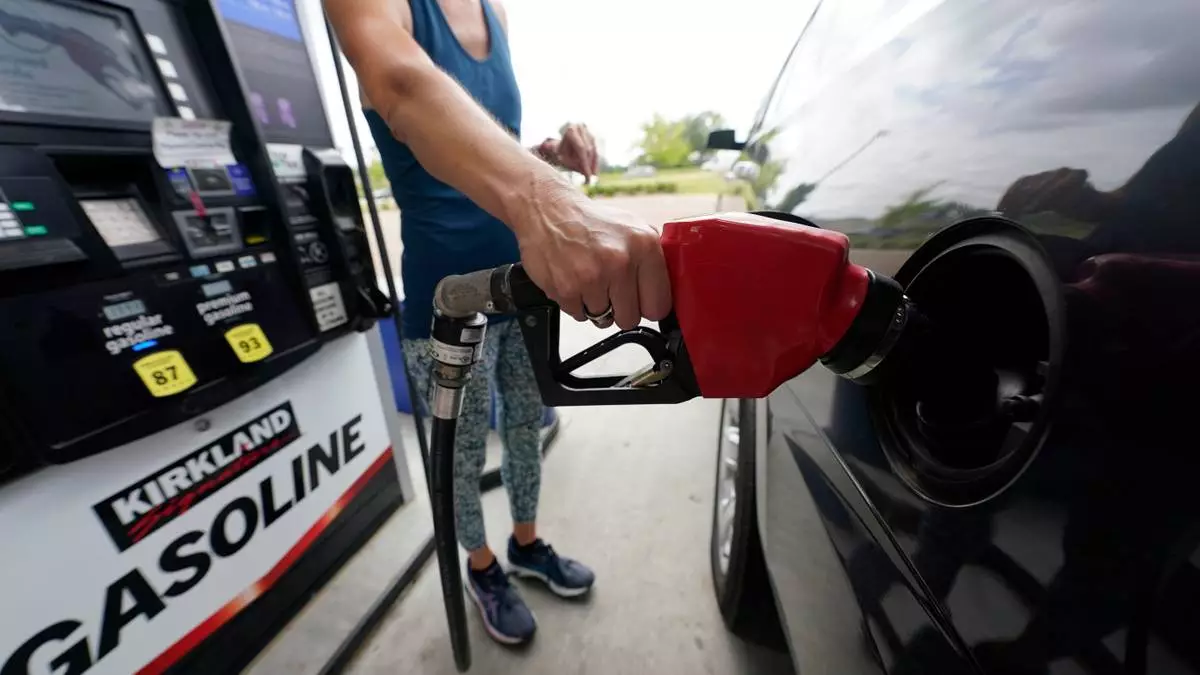
FILE - A customer readies to pump gas at this Ridgeland, Miss., Costco, Tuesday, May 24, 2022. s. (AP Photo/Rogelio V. Solis, File)