Skip to Content Facebook Feature Image

Rescue dog Osito steals hearts at the World Cup, one bike ride at a time

Sport

Rescue dog Osito steals hearts at the World Cup, one bike ride at a time
Sport

Sport

Rescue dog Osito steals hearts at the World Cup, one bike ride at a time

2026-06-19 15:14 Last Updated At:16:41

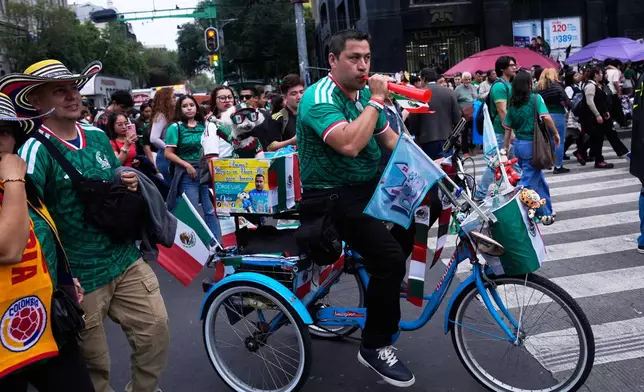
MEXICO CITY (AP) — As World Cup fever sweeps Mexico City, one of the tournament’s biggest fan favorites isn’t a player, coach or official mascot. Joining Merlin the duck in the pantheon of heart-stealers is Osito, an 8-year-old rescue poodle mix who's become an unlikely sensation after arriving at Mexico’s opening match perched on the back of a cargo bicycle, dressed in a Mexico jersey, sunglasses and a cap.

As thousands of fans streamed toward the stadium last week for the tournament opener, many stopped to snap photos, pet the dog and post videos online. Within hours, Osito was appearing on international broadcasts and spreading across social media, transforming the bicycle-riding dog into one of the World Cup’s most charming viral stars.

More Images
Jorge Rangel rides a bicycle accompanied by his dog, Osito, both wearing Mexico national team jerseys before their World Cup match against South Korea in Mexico City, Thursday, June 18, 2026. (AP Photo/Marco Ugarte)
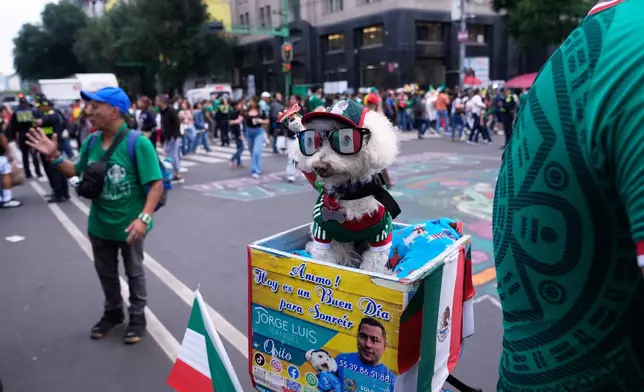
Jorge Rangel rides a bicycle accompanied by his dog, Osito, both wearing Mexico national team jerseys before their World Cup match against South Korea in Mexico City, Thursday, June 18, 2026. (AP Photo/Marco Ugarte)

A dog named Osito wears a Mexico national team jersey and rides in a bicycle basket of Jorge Rangel before a World Cup Group A soccer match against South Korea in Mexico City, Thursday, June 18, 2026. (AP Photo/Marco Ugarte)
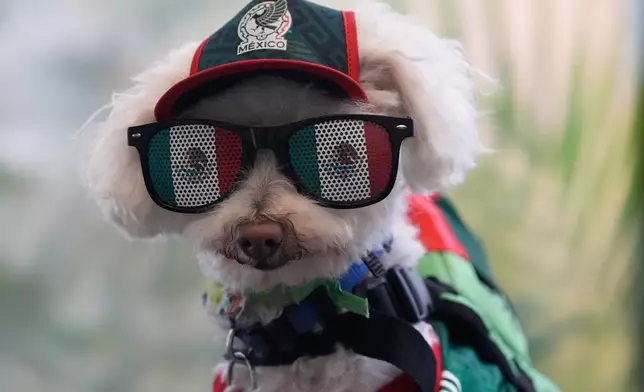
A dog named Osito wears a Mexico national team jersey and rides in a bicycle basket of Jorge Rangel before a World Cup Group A soccer match against South Korea in Mexico City, Thursday, June 18, 2026. (AP Photo/Marco Ugarte)
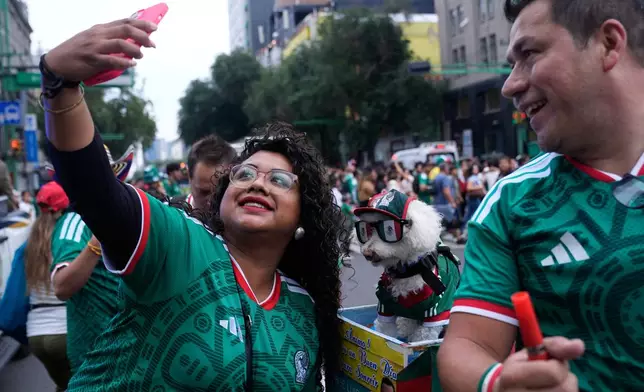
A dog named Osito wears a Mexico national team jersey and rides in a bicycle basket of Jorge Rangel before a World Cup Group A soccer match against South Korea in Mexico City, Thursday, June 18, 2026. (AP Photo/Marco Ugarte)

A dog named Osito wears a Mexico national team jersey and rides in a bicycle basket of Jorge Rangel before a World Cup Group A soccer match against South Korea in Mexico City, Thursday, June 18, 2026. (AP Photo/Marco Ugarte)

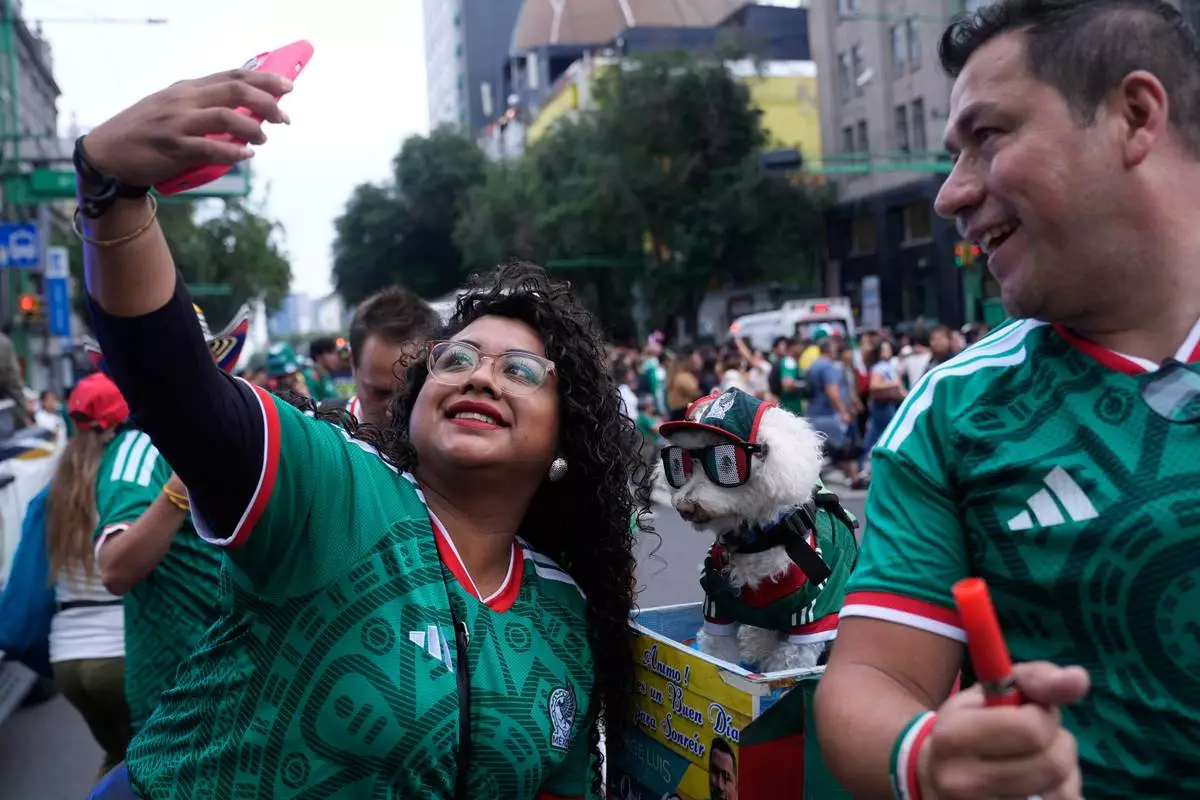
A fan, left, takes a photo with a dog named Osito, wearing a Mexico national soccer team jersey, next to Jorge Rangel before the World Cup Group A soccer match against South Korea in Mexico City, Thursday, June 18, 2026. (AP Photo/Marco Ugarte)

A fan, left, takes a photo with a dog named Osito, wearing a Mexico national soccer team jersey, next to Jorge Rangel before the World Cup Group A soccer match against South Korea in Mexico City, Thursday, June 18, 2026. (AP Photo/Marco Ugarte)

For his owner, Jorge Rangel, the attention is less about internet fame than the companionship he shares with the dog who accompanies him almost everywhere. For the past two years, Osito has joined Rangel on his daily rounds delivering household products across Mexico City.

“More than a dog, he’s my daily companion,” Rangel, 50, said.

They travel together on a specially adapted cargo bicycle, where Osito sits calmly in a back compartment, greeting passersby and drawing smiles from strangers.

The arrangement began by chance. One day, Rangel placed the dog in a delivery box attached to his bicycle and took him for a short ride. Osito seemed to enjoy it. Over time, Rangel added cushions, adjusted the setup and gradually brought him along on longer trips through the city. Before long, the pair became a familiar sight.

Now, children rush over to greet Osito, strangers stop to take photographs and some initially mistake him for a stuffed animal because he sits so still, often dressed in one of his many outfits.

“He has a very gentle temperament. Everybody wants to meet him,” Rangel said.

When the World Cup arrived, Rangel saw an opportunity to introduce Osito — whose name means “little bear” — to an even larger audience.

A devoted soccer fan, he spent weeks preparing for the tournament, gathering accessories and adapting a pair of sunglasses to fit the dog. He dressed Osito in a national team jersey and decorated the bicycle, hoping to stand out among the crowds heading to the stadium.

“It exceeded all my expectations,” Rangel said of the response.

What appears to resonate most with fans is not the costume or the viral fame, but the relationship between the man and the dog. Rangel adopted Osito years ago, during a difficult period in his life, and describes him as an emotional lifeline.

“I didn’t know what it meant to love an animal until Osito came into my life,” Rangel said.

Today, the two spend nearly every day together. If Rangel leaves without him, Osito protests with something he rarely does: bark.

Their bond is evident to the strangers who encounter them on the streets. Rangel recalls people approaching him to say that seeing Osito had brightened an otherwise stressful day. Some have thanked the pair simply for making them smile.

Now, as World Cup celebrations continue, videos of Osito keep circulating and requests for photographs remain constant. Yet each morning, Rangel and Osito climb aboard their bicycle and head back into the streets of Mexico City, where they continue working, greeting strangers and spreading moments of joy.

For Rangel, that remains the most meaningful part of the story.

The television appearances and viral fame are gratifying, he said. But what matters most is that people see the affection between a man and his dog — a bond that has unexpectedly become one of the World Cup’s most endearing images.

AP World Cup coverage: https://apnews.com/hub/fifa-world-cup
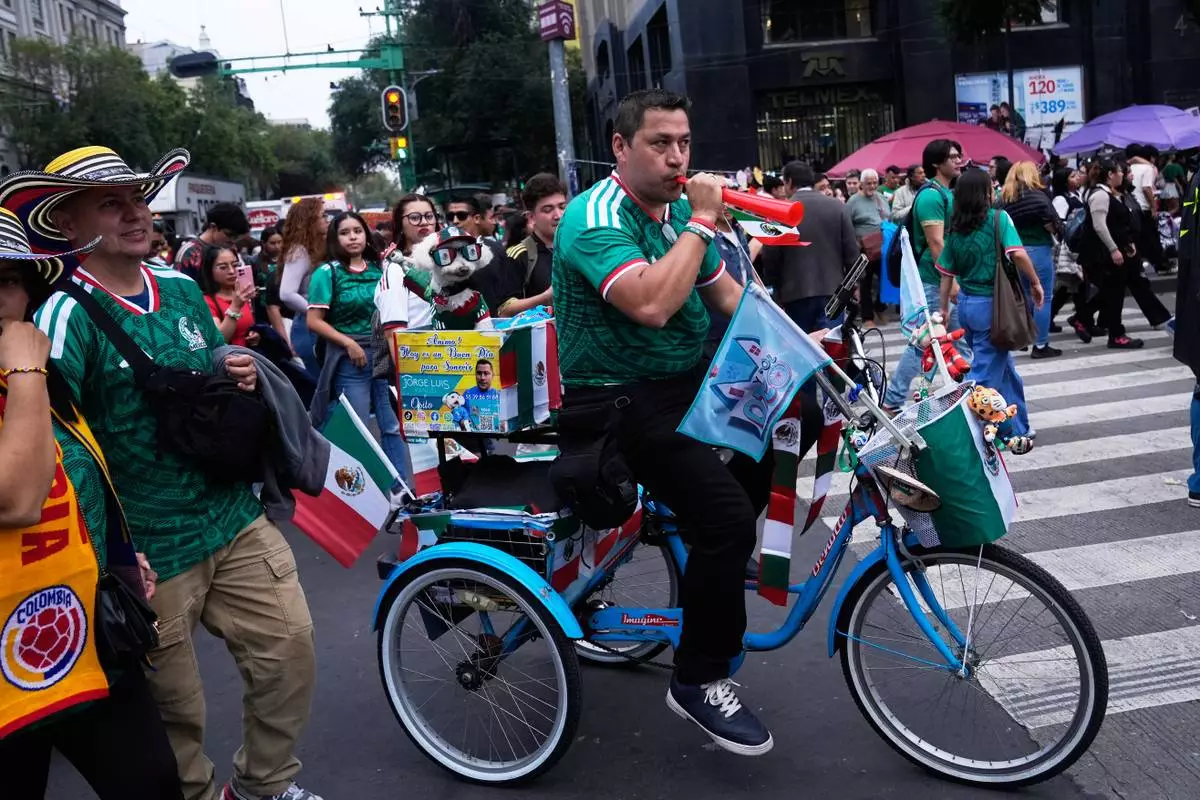
Jorge Rangel rides a bicycle accompanied by his dog, Osito, both wearing Mexico national team jerseys before their World Cup match against South Korea in Mexico City, Thursday, June 18, 2026. (AP Photo/Marco Ugarte)
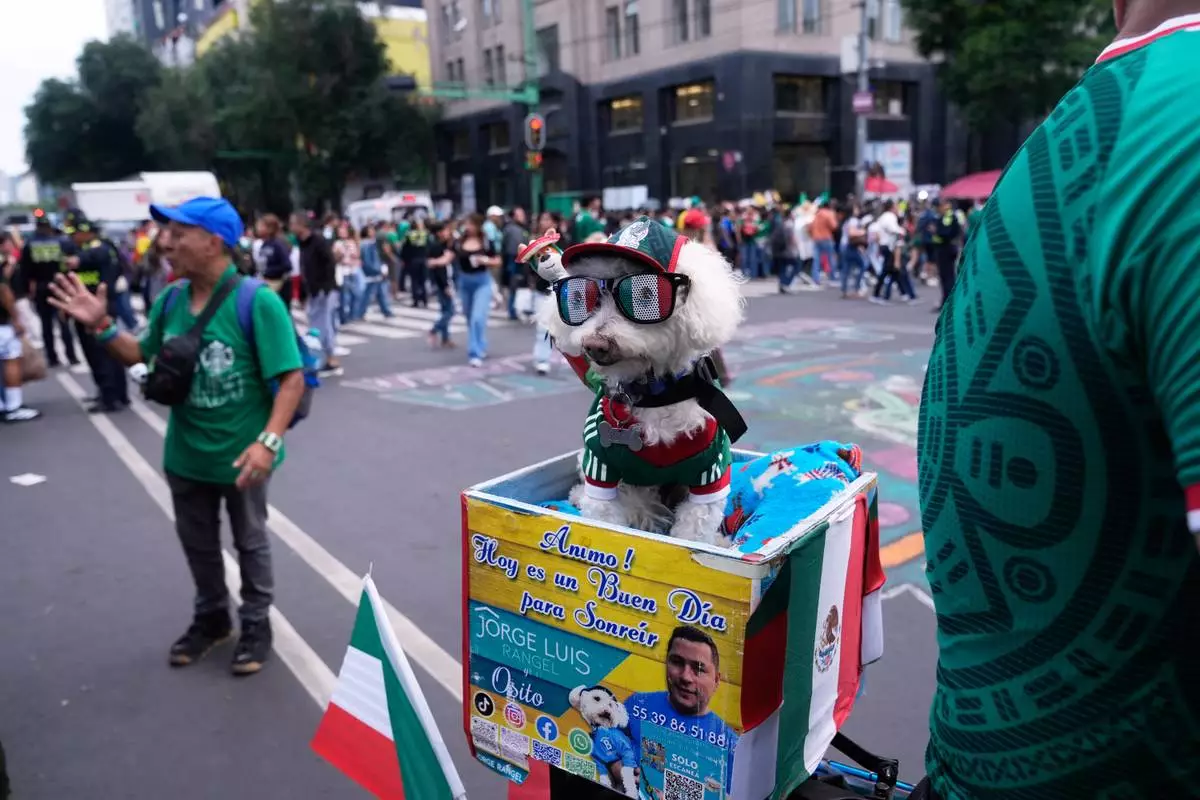
Jorge Rangel rides a bicycle accompanied by his dog, Osito, both wearing Mexico national team jerseys before their World Cup match against South Korea in Mexico City, Thursday, June 18, 2026. (AP Photo/Marco Ugarte)

A dog named Osito wears a Mexico national team jersey and rides in a bicycle basket of Jorge Rangel before a World Cup Group A soccer match against South Korea in Mexico City, Thursday, June 18, 2026. (AP Photo/Marco Ugarte)
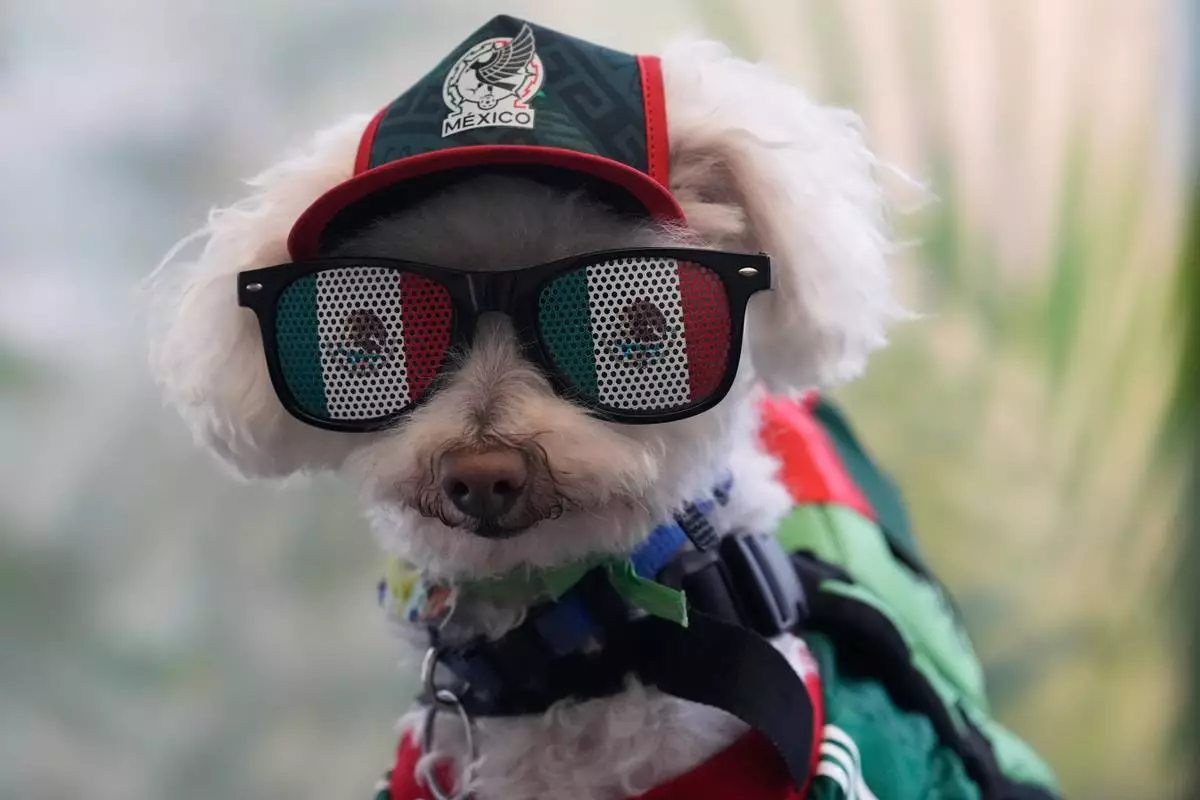
A dog named Osito wears a Mexico national team jersey and rides in a bicycle basket of Jorge Rangel before a World Cup Group A soccer match against South Korea in Mexico City, Thursday, June 18, 2026. (AP Photo/Marco Ugarte)
A dog named Osito wears a Mexico national team jersey and rides in a bicycle basket of Jorge Rangel before a World Cup Group A soccer match against South Korea in Mexico City, Thursday, June 18, 2026. (AP Photo/Marco Ugarte)

A dog named Osito wears a Mexico national team jersey and rides in a bicycle basket of Jorge Rangel before a World Cup Group A soccer match against South Korea in Mexico City, Thursday, June 18, 2026. (AP Photo/Marco Ugarte)

A fan, left, takes a photo with a dog named Osito, wearing a Mexico national soccer team jersey, next to Jorge Rangel before the World Cup Group A soccer match against South Korea in Mexico City, Thursday, June 18, 2026. (AP Photo/Marco Ugarte)
A fan, left, takes a photo with a dog named Osito, wearing a Mexico national soccer team jersey, next to Jorge Rangel before the World Cup Group A soccer match against South Korea in Mexico City, Thursday, June 18, 2026. (AP Photo/Marco Ugarte)

This is the sun's time to shine: Sunday is the longest day of the year in the Northern Hemisphere.

Sunday is the solstice, marking the start of astronomical summer north of the equator. It’s the opposite in the Southern Hemisphere, where it is the shortest day of the year and winter will start.

The word “solstice” comes from the Latin words “sol,” for sun, and “stitium,” which can mean “pause” or “stop.” The summer solstice is the end of the sun’s annual march higher in the sky, when it makes its longest, highest arc. The bad news for sun lovers: It then starts retreating and days will get a little shorter every day until late December.

People have marked solstices for eons with festivals and monuments, including Sweden's midsummer eve celebrations and Stonehenge, which was designed to align with the sun’s paths at the solstices.

Here’s what to know about the Earth’s orbit.

As the Earth travels around the sun, it does so at an angle, making the sun’s warmth and light fall unequally on the northern and southern halves of the planet for most of the year.

The solstices mark the times when the Earth is tipped most extremely either toward or away from the sun. This means the hemispheres are getting very different amounts of sunlight, and days and nights are at their most unequal.

At the Northern Hemisphere’s summer solstice, the Earth’s upper half is leaning toward the sun, creating the longest day and shortest night of the year. The summer solstice falls between June 20 and 22. This year it’s June 21.

The opposite happens at the Northern Hemisphere winter solstice: the Earth’s upper half leans the furthest away from the sun, leading to the shortest day and longest night of the year. The winter solstice falls between Dec. 20 and 23.

During the equinox, the Earth’s tilt is neither toward the sun nor away from the sun, so both the northern and southern hemispheres get an equal amount of sunlight. The sun rises almost exactly due east and it sets almost exactly due west.

The word equinox comes from two Latin words meaning equal and night. That’s because on the equinox, day and night last almost the same amount of time — though one may get a few extra minutes, depending on where you are on the planet.

The Northern Hemisphere’s fall — or autumnal — equinox can land between Sept. 21 and 24, depending on the year. Its spring — or vernal — equinox can land between March 19 and 21. The exact time of the equinox is the moment the sun is directly overhead at the equator.

These are just two different ways to carve up the year.

While astronomical seasons depend on how the Earth moves around the sun, meteorological seasons are defined by the weather. Meteorologists break down the year into three-month seasons based on annual temperature cycles. By that calendar, spring starts on March 1, summer on June 1, fall on Sept. 1 and winter on Dec. 1.

The Associated Press Health and Science Department receives support from the Howard Hughes Medical Institute’s Department of Science Education and the Robert Wood Johnson Foundation. The AP is solely responsible for all content.

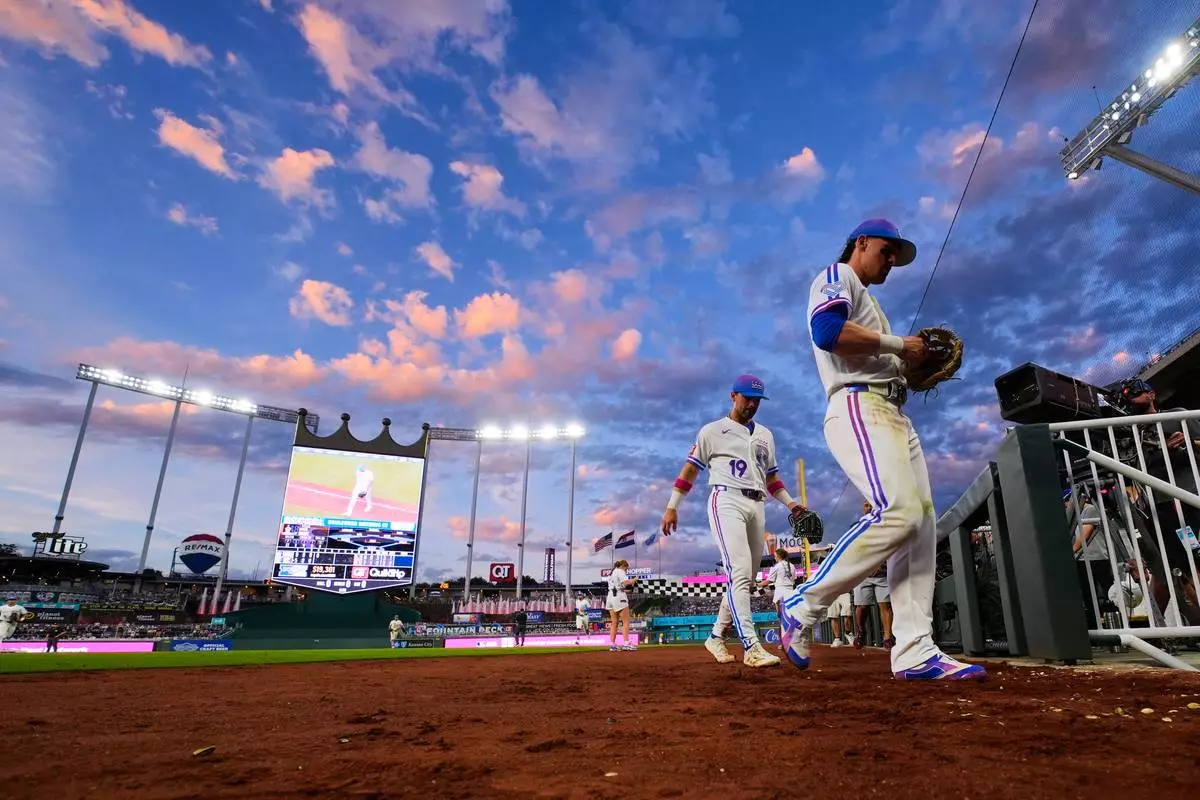
FILE - Kansas City Royals second baseman Michael Massey (19) and shortstop Bobby Witt Jr., right, return to the dugout during the fourth inning of a baseball game against the Houston Astros, Friday, June 12, 2026, in Kansas City, Mo. (AP Photo/Charlie Riedel, File)

FILE - Kansas City Royals second baseman Michael Massey (19) and shortstop Bobby Witt Jr., right, return to the dugout during the fourth inning of a baseball game against the Houston Astros, Friday, June 12, 2026, in Kansas City, Mo. (AP Photo/Charlie Riedel, File)

FILE - Soccer fans sit on a bench overlooking Lumen Field stadium at sunset during the 2026 World Cup in Seattle, Saturday, June 13, 2026. (AP Photo/Manu Fernandez, File)

FILE - Soccer fans sit on a bench overlooking Lumen Field stadium at sunset during the 2026 World Cup in Seattle, Saturday, June 13, 2026. (AP Photo/Manu Fernandez, File)

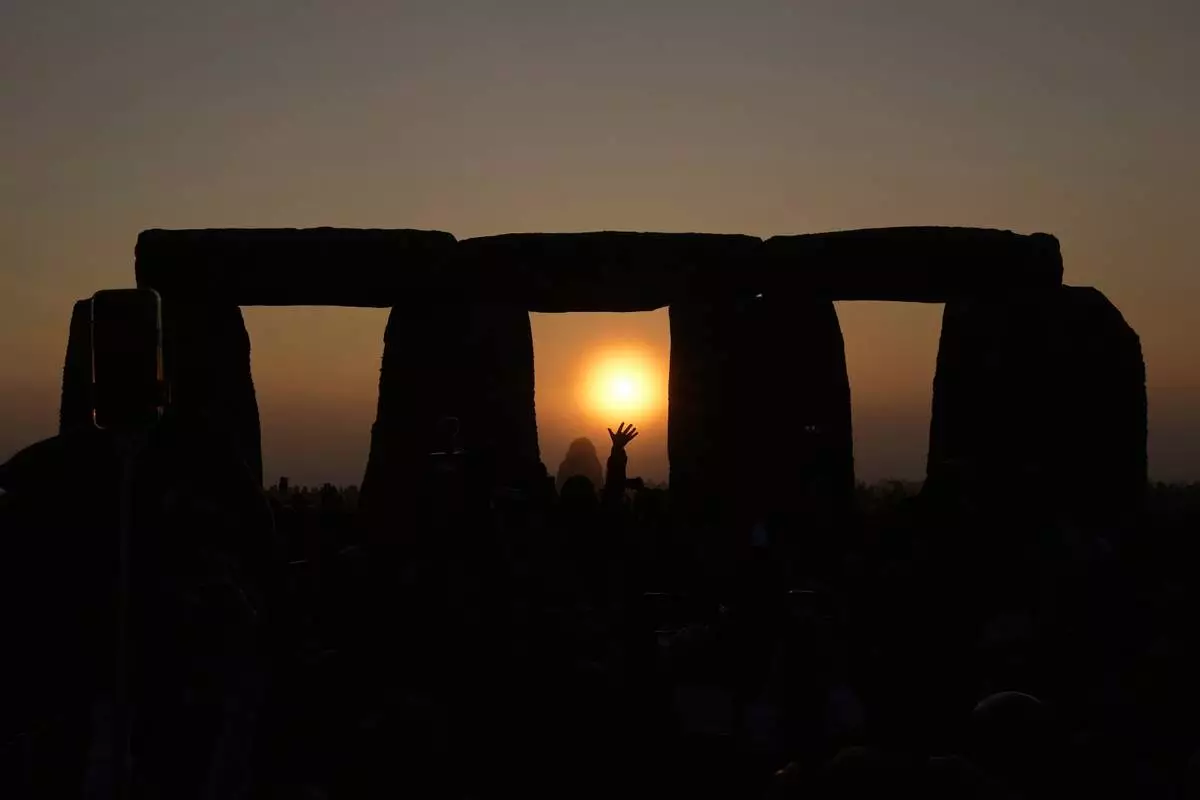
FILE - Revelers gather at the ancient stone circle Stonehenge to celebrate the Summer Solstice, the longest day of the year, near Salisbury, England, Wednesday, June 21, 2023. (AP Photo/Kin Cheung, File)

FILE - Revelers gather at the ancient stone circle Stonehenge to celebrate the Summer Solstice, the longest day of the year, near Salisbury, England, Wednesday, June 21, 2023. (AP Photo/Kin Cheung, File)

Recommended Articles