A Chinese foreign ministry spokesperson said Monday that Japan is backtracking by pursuing remilitarization, treading a path of no return. Spokesperson Guo Jiakun urged Japan to renounce militarism at a regular news briefing in Beijing when asked to comment on a recent Japanese media report, which said that a report from a Japanese military medical conference held in March 1940 suggests that the Imperial Japanese Army may have repeatedly conducted experiments in China involving the transfusion of animal blood into humans during its invasion.
"We noted relevant reports. Japanese invaders, who conducted large-scale and gruesome human experimentation and germ warfare, shall forever be nailed to the eternal pillar of shame. The Khabarovsk Trial in 1949, an extension and complement to the Tokyo Trials, left behind numerous well-preserved audio recordings, transcripts and physical evidence. They form a complete chain of solid evidence that brings to light the crimes of the Japanese military’s germ warfare. Discoveries like these have opened the eyes of many in the world, including the Japanese public, to this dark and horror-filled chapter of history," he said.
"Japan's remilitarization is retrogression, and a path of no return. We urge Japan to sincerely reflect on its war crimes, make a clean break with militarism, and take concrete measures to earn trust from its Asian neighbors and the international community," he said.
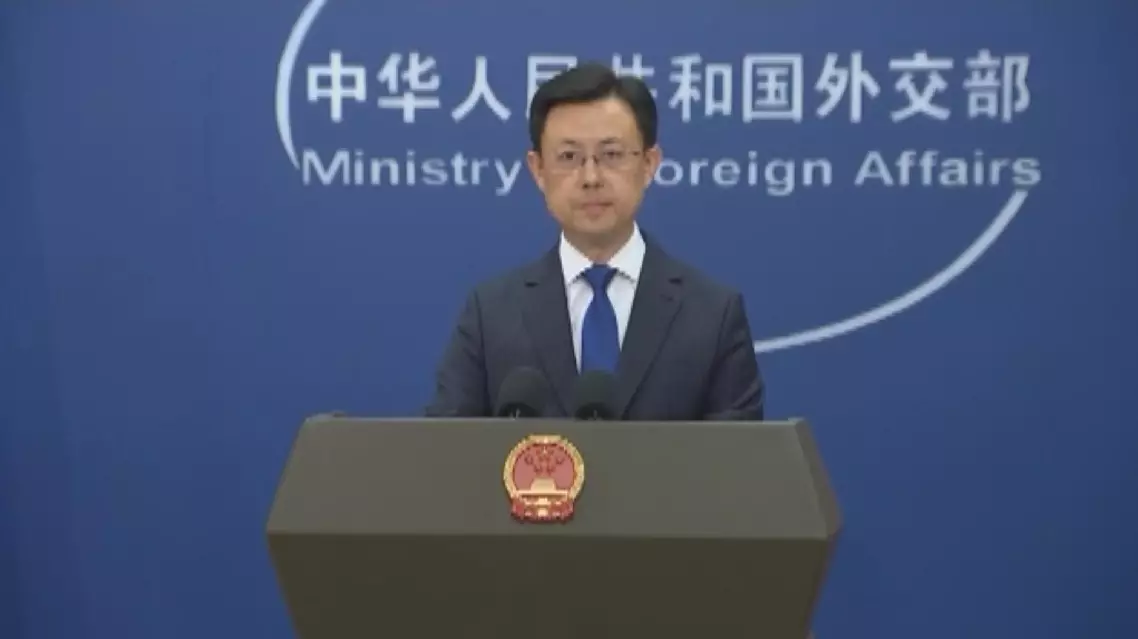
China calls Japan's remilitarization as retrogression, path of no return
China calls Japan's remilitarization as retrogression, path of no return
China calls Japan's remilitarization as retrogression, path of no return
New energy vehicles (NEVs) accounted for 56.9 percent of all new car sales in China in May, against 50.8 percent in 2025 and 40.9 percent in 2024, according to the latest data from the China Association of Automobile Manufacturers (CAAM).
With nearly 1.5 million units sold last month, the country's NEV market is growing at a pace that continues to outstrip global expectations.
Chen Shihua, deputy secretary-general of CAAM, attributed the momentum to a combination of falling costs, rapid technological upgrades and a fundamental change in consumer preferences. Even as traditional gasoline car sales soften, NEVs have carved out an independent growth trajectory.
For Chinese buyers, the appeal of NEVs goes far beyond cost savings. The battleground has shifted to the software-defined cabin. Domestic AI models are increasingly being integrated into vehicles, transforming the driving experience from a mechanical task into something highly intuitive.
Some models now use sensors and facial recognition to detect a driver's mood, automatically adjusting ambient lighting, music and even cabin fragrances. As a dealership manager in Chongqing noted, consumers are no longer obsessing over horsepower; they are prioritizing smart features and the overall user experience.
This tech-heavy push is happening alongside a dramatic drop in prices. As battery material costs stabilize and advanced manufacturing techniques, such as integrated die-casting, become standard, automakers are passing the savings directly to consumers.
Brands like BYD and Leapmotor are now offering vehicles with advanced driver-assistance systems for under 100,000 yuan, with some entry-level NEVs priced around 80,000 yuan.
Charging infrastructure, long cited as a potential bottleneck, is also keeping pace with demand. According to the National Energy Administration, China had deployed nearly 22 million charging facilities nationwide as of April.
The network now spans from urban centers to remote rural areas, making the promise of charging as convenient as refueling a tangible reality for millions of drivers. Government incentives, including trade-in subsidies, are further fueling this momentum.
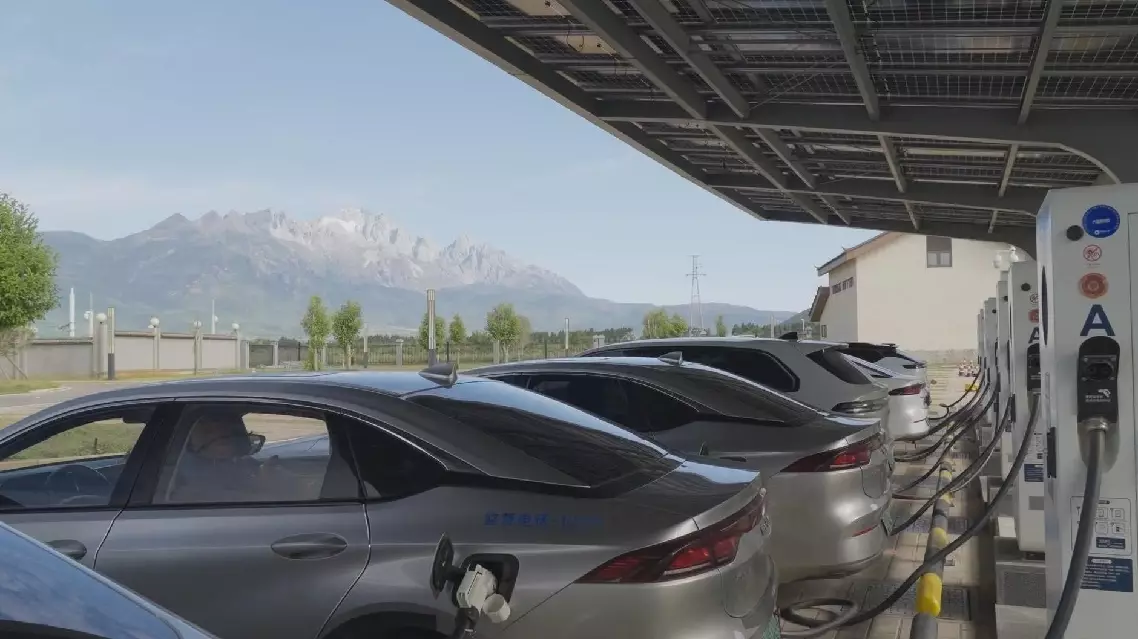
Chinese consumers embrace NEVs