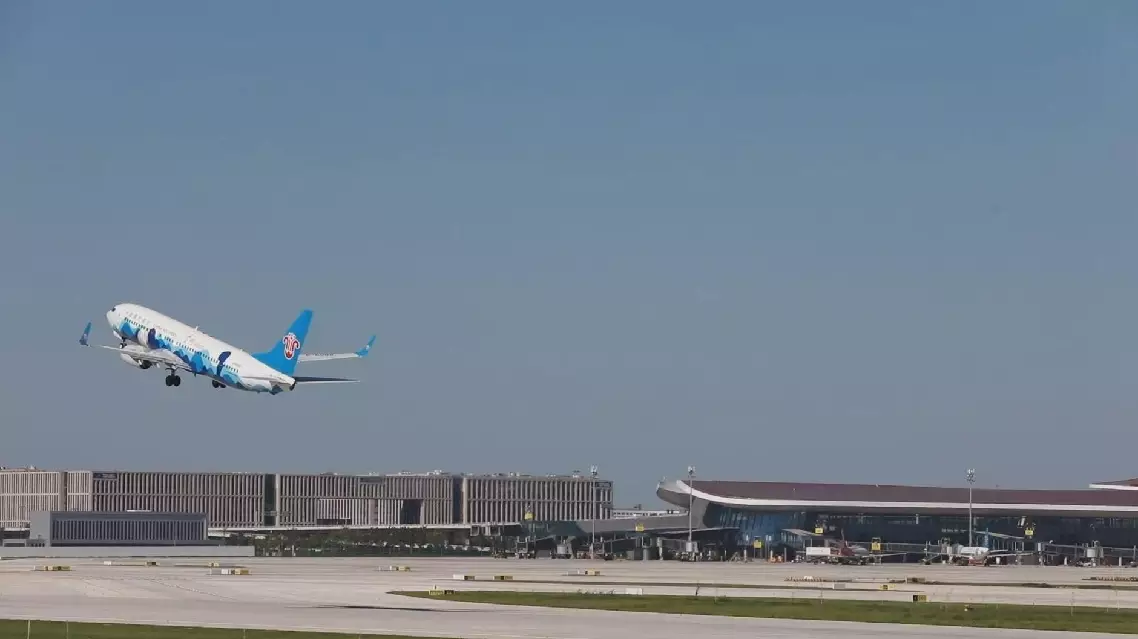
China's civil aviation sector is steadily scaling up its international network, with 50 new international routes launched in June alone.
Last Thursday, China Eastern Airlines flight MU255 departed from Shanghai Pudong International Airport on its inaugural journey to Zurich, Switzerland, marking the carrier's second Swiss route following the Shanghai-Geneva service launched in 2025.
"Between June and July this year, we will launch routes from Shanghai Pudong to Adelaide, Stockholm, Tbilisi, Dublin, and Cheongju in South Korea. Work to launch a new route to Mumbai is also underway," said Shi Yanyan, senior manager of the Network Revenue Department of China Eastern Airlines.
In addition, Air China have inaugurated services from Beijing Daxing International Airport to Germany's Frankfurt and Italy's Milan over the past two months.
On Saturday, Hainan Airlines incorporated a new route linking the tropical island province's capital city of Haikou, southwest China's Chongqing Municipality, and Spain's capital of Madrid into its China-Europe network.
Meanwhile, China Southern Airlines has opened or resumed routes including Guangzhou-Urumqi-Frankfurt and Urumqi-Bishkek, integrating more airports into China's global aviation map.
"The airplane was awesome. The airport [was also awesome] when we landed. Everyone has been amazing here in China. So, amazing country, amazing people," said Edward Guerra Ⅲ, an American tourist.
"Everything has been very convenient, like the public transportation. Everything has been great. We've been getting on the light rail," said Edward Guerra Junior.
With both direct and connecting flights, China has built a multi-tiered route network spanning 86 countries.
During the summer-autumn 2026 aviation season, China's international flights are expected to increase steadily, with 191 airlines scheduled to operate 21,047 international flights per week, an increase of 1.8 percent year on year.
Chinese airlines launch new routes to expand international network
International observers have welcomed the recent summit between Chinese President Xi Jinping and U.S. President Donald Trump, calling deepened China-U.S. cooperation vital for global stability and positive development.
Xi concluded a three-day state visit to the United States on Friday, where he and Trump reaffirmed their commitment to a constructive, strategically stable relationship guided by fairness, reciprocity, and mutual respect.
In separate interviews with China Central Television, leaders and experts from around the world underscored that efforts to find a proper way for major countries to coexist not only benefit China and the U.S., but also inject much-needed stability and positive energy into global peace and development.
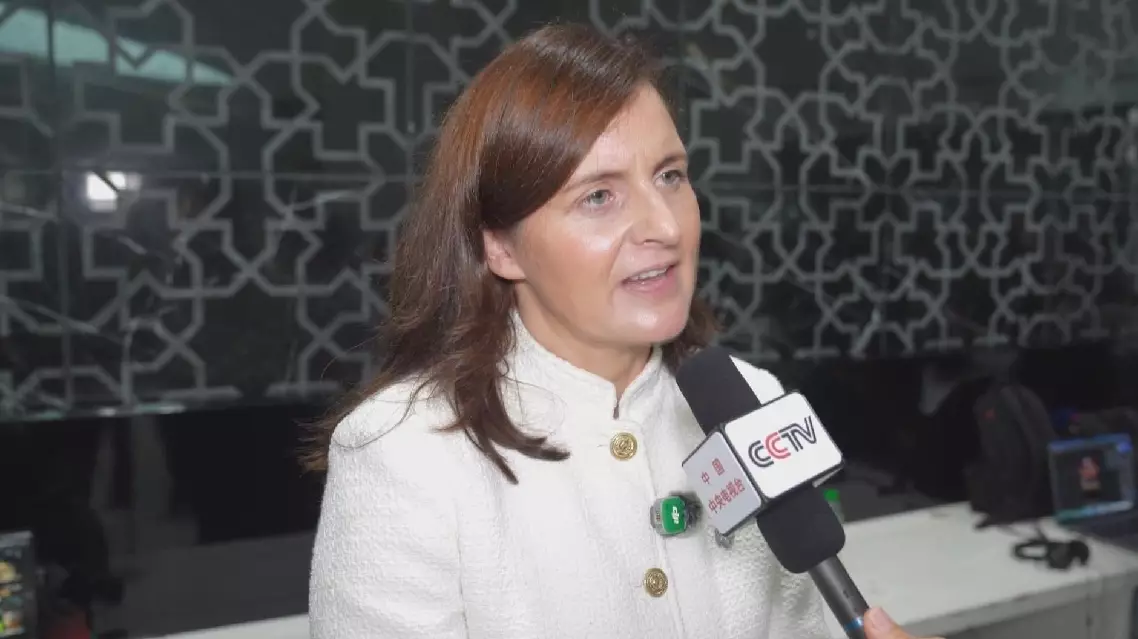
"And having that framework [for cooperation built on the constructive China-U.S. relationship of strategic stability] rolled out between China and the U.S. is really important. We know that type of relationship works and it's successful. So we have to ensure that we see more cooperation between states on a global basis," said Catherine Ardagh, Minister of State at the Department of Justice, Home Affairs and Migration, Ireland.
"After 11 years, President Xi is the first Chinese president to visit the United States of America. [For] the number of takeaways in this visit we see, as far as the outcomes, there are more than eight outcomes -- around eight outcomes are there. The world is looking toward this historic meeting," said Tahir Malik, head of the Department of International Relations, the National University of Modern Languages in Islamabad, Pakistan.
"So this mutual collaboration and respect between the United States and China sort of sets a standard for stability, growth and development. Certainly, the joint collaborations that the two presidents have set up for continual communication, I think, will be important," said Richard A. Black, the Schiller Institute's representative at the United Nations.
"Strong message of President Xi: The biggest investment of China is friendship, is cooperation, partnership, and not armed -- peaceful solutions for actually the world's problems," said Zijad Becirovic, director of International Institute for Middle East and Balkan Studies in Slovenia.
"President Xi Jinping's emphasis about sincerity and communication, coexistence as well as effective communication, is timely and I think we are heading for a stable world when these superpowers speak like that and continue coexisting," said Fabian Mutale, political analyst from Zambia.
Xi's visit was at the invitation of U.S. President Donald Trump. It followed Trump's state visit to China back in May.
Xi’s U.S. visit boosts cooperation, world stability: international observers