Six domestically developed steel cables for the Five-hundred-meter Aperture Spherical radio Telescope (FAST), known as China's "Sky Eye" based in southwest China's mountainous Guizhou Province, have been replaced recently and have passed the experts' appraisal for technical acceptance.
The upgrade began in early May. Upon completion of the replacement project, FAST now has officially resumed its observations.
Since its commissioning in 2016, FAST had been using imported steel cables for the feed cabin, which were replaced once in 2021. However, the impurities gradually seeping out from the imported steel cables were affecting the normal operation of the telescope.
Therefore, the team decided to develop and use domestic steel cables, in order to achieve better stability and operation maintenance. They have finally made a breakthrough after more than a thousand days of research and development.
"We have completed an entire chain-based research and development process from the material making, manufacturing process to the entire performance test of the steel cables. All the indicators have met our requirements," said Yao Rui, director of the measurement and control engineering department at the FAST operation and development center.
This year marks the 10th anniversary of the official entry into operation of FAST. Over the past 10 years, it has discovered more than 1,200 pulsars, far exceeding the combined discovery number of other similar telescopes during the same period. It has provided crucial technical support for the development of China's radio astronomy.
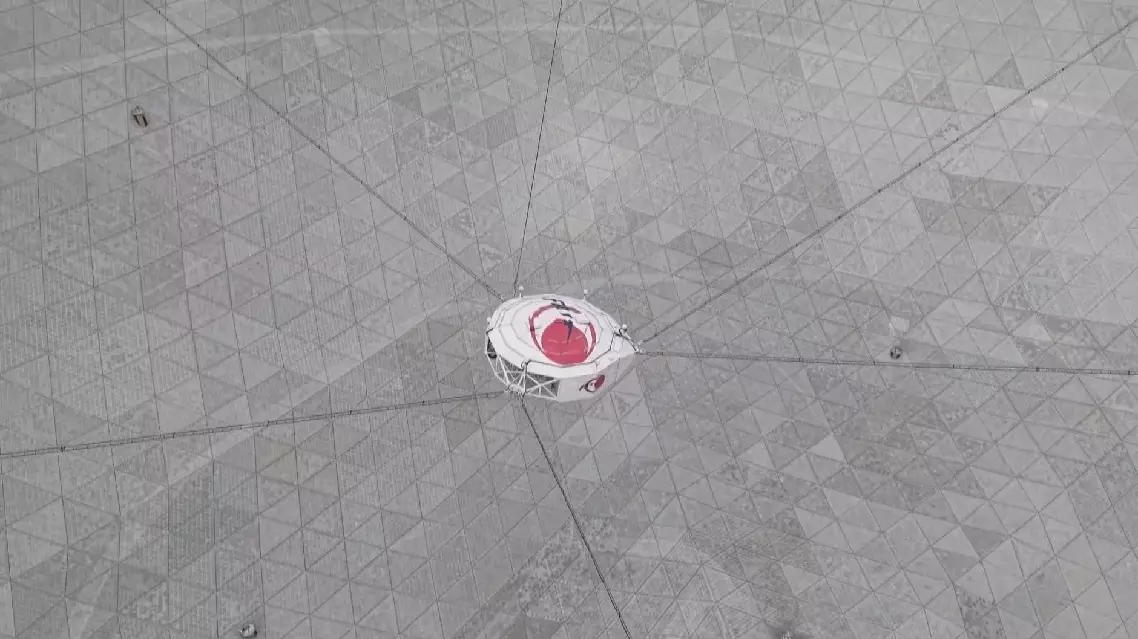
China's FAST telescope completes overhaul with domestic steel cables
Breaking long-standing Western heroic narrative conventions in filmmaking, the trending Chinese anti-war film "Once Upon a Time in the Middle East", is reshaping global cinematic discourse on war and peace.
The summer blockbuster was released on Tuesday nationwide and had earned box office revenue of more than 536 million yuan (around 79.5 million U.S. dollars) as of 22:00 Friday.
The story centers on Xu Fu, a down-on-his-luck Chinese chef portrayed by celebrated comedian Shen Teng, who travels to the Middle East to settle his debts. There, he joins forces with a local restaurant manager to operate a bustling restaurant, bringing authentic Chinese culinary traditions to a war-torn foreign land.
As a distinct Chinese anti-war feature, "Once Upon a Time in the Middle East" abandons timeworn Western heroic storytelling. The film adopts the humble viewpoint of Xu Fu, an ordinary cook. Through his eyes as a neutral bystander, it portrays the struggles and sufferings of ordinary people trapped in conflict and uses food and everyday life to explore survival, compassion and the value of peace, rather than focusing on the battlefield.
Such a narrative perspective is quite pioneering among global anti-war film productions.
"It realistically reflects the turmoil of war. Therefore, we desire peace and oppose the suffering that wars of aggression inflict upon the people," a moviegoer praised.
Meanwhile, the blockbuster has garnered massive overseas anticipation prior to its international debut. Many global film enthusiasts agree that the production epitomizes a transformative shift in Chinese film industry, which is overhauling Hollywood's established narrative paradigms and reinterpreting the global narrative of war and peace at a higher level.
"Just imagine how this story would unfold if Hollywood were to film it. It would almost certainly follow the standard formula of superheroes, super-soldiers, or elite operatives swooping in, resolving the crisis in a flash, and then disappearing. What does the 'Once Upon a Time in the Middle East' offer? The idea that the best days are those spent sharing a meal together. Conversely, what drives people to fight instead of dining together? Anyone who has seen the film knows the answer. That is why some netizens have said that if this movie were to compete for a U.S. Oscar award, it would be a voice representing the Global South," said Zuo Heng, a researcher at the China Film Archive.
Many scholars also hold the view that war narratives on international screens have long revolved around contests of victory and military conquest, but "Once Upon a Time in the Middle East" does not stoke hatred nor glorify victory by force. Instead, it hides the key to peace amid the mundane routines of daily meals.
This vision of peace, rooted in the moderation and inclusiveness of Chinese civilization, blazes a new trail of expression for global anti-war films.
It constitutes an innovation in film creation and enables the world to see perceptions of peace different from those of the West.
"The film delivers an anti-war perspective that diverges from the Hollywood paradigm. It abandons Hollywood-style individualism, and quietly challenges the 'America First' mindset. 'Once Upon a Time in the Middle East' keeps exploring innovative approaches to shape contemporary Chinese discourse and narrative systems," said Sun Jiashan, a researcher with the Department of Chinese Culture Education and Research under the Central Institute of Socialism.
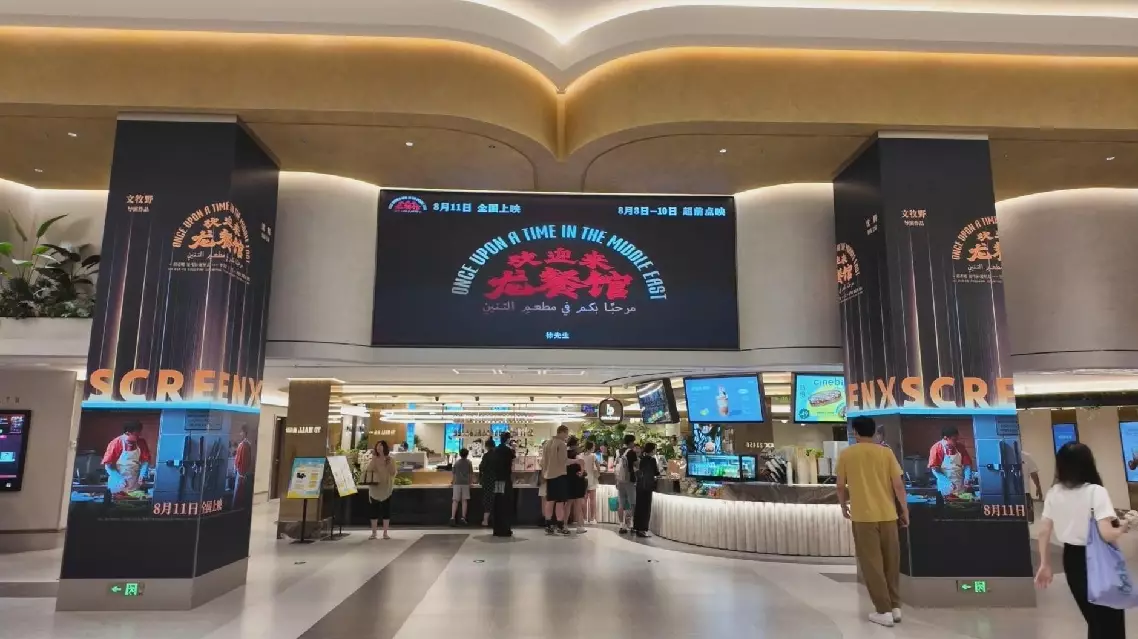
Chinese anti-war film offers new cinematic narrative on war and peace