The long-awaited G217 Duku Highway project in northwestern China’s Xinjiang Uygur Autonomous Region has entered its mainline construction phase, with A 185-km northern section officially adopting a reservation-based traffic control system starting Thursday.
The move comes with combined safety and capacity concerns, prompting traffic restrictions on the scenic but narrow alpine route.
The 561-kilometer highway connects Dushanzi in northern Xinjiang with Kuqa City in the south, running through varied landscapes that include canyons, glaciers, lakes and grasslands.
During the 15-day trial, which could also be canceled depending on the construction progress, only passenger cars with seven seats or fewer and trucks weighing below five tons may enter via the Wusuyi, Qiao'erma, and Nalati checkpoints,with advance online reservations, while military, police, emergency and other special vehicles, as well as local vehicles that have completed long-term registration, are allowed free passage.
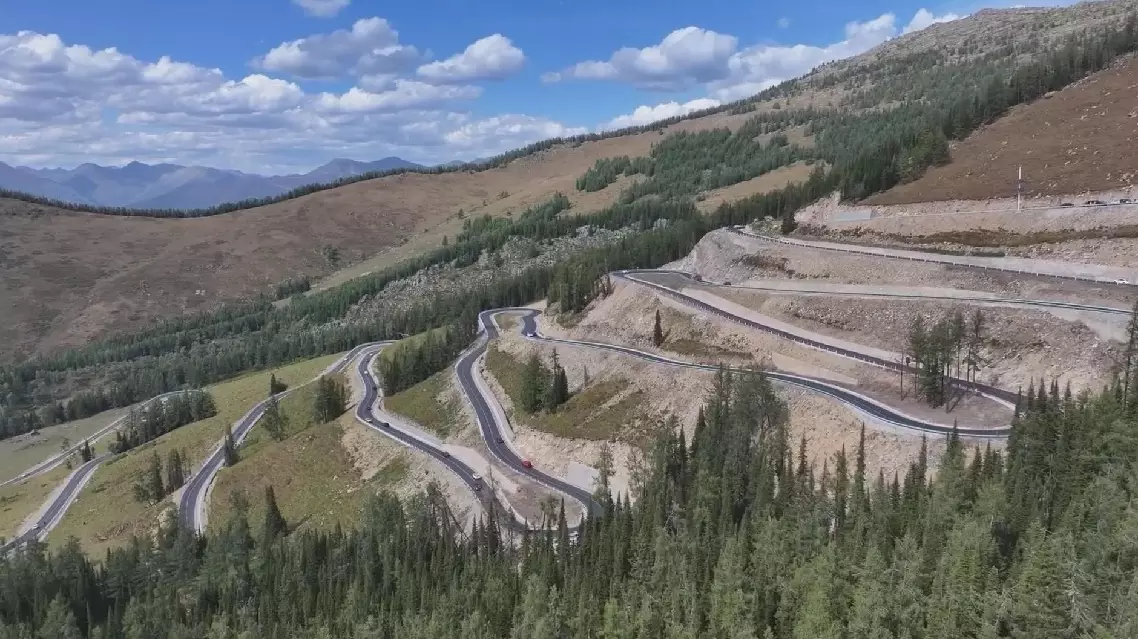
Duke Highway in Xinjiang starts reservation-based traffic control in its north section