The United States announced last week that it will suspend funding programs in South Africa intended to tackle the spread of HIV and AIDS, in a move expected to wipe out years of progress in the field and cost lives.
The U.S. had been helping South Africa with its response for over two decades through an initiative called the U.S. President's Emergency Plan for AIDS Relief (PEPFAR).
However, relations between the two countries have deteriorated since Donald Trump took office early last year.
The U.S. side has criticized South Africa's genocide case against Israel. It also claims a white Afrikaner minority is being mistreated. Pretoria rejects both allegations.
Community health organization 'Shout It Now' was among the first casualties when the United States abruptly cut HIV funding to South Africa following President Donald Trump's return to the White House last year.
The organization was forced to lay off 350 staff and shut services to 50,000 patients beyond the reach of doctors and clinics.
"We were servicing a lot of clients that were needing HIV testing, but also initiation on PrEP, also initiation on contraceptives. We were able to reach not just difficult communities, challenging communities, but where people were really in desperate conditions in terms of the economy, but also where the actual health facilities are," said Nomaxabiso Tata, national programme co-ordinator of Shout It Now.
The U.S. has now threatened to seal those cuts by withdrawing 400 million dollars amid the diplomatic rift between the two countries.
The United Nations said the curtailments risk lives and break a global commitment made 25 years ago to fight HIV until the disease is eradicated.
South Africa currently carries the world's largest HIV burden, with nearly 8 million people living with the virus.
While PEPFAR does not fund the medication itself, experts said the support is critical to the quality of the country's HIV response, one of the most effective public health programs in the world.
"Although PEPFAR paid for 17 to 20 percent of the total budget, it was the funding that improved the quality of our program. And so without this, we have supply chain management issues, we have issues with HIV testing, we have issues with getting people onto treatment and keeping them in care and virally suppressed. We also needed these programs to help us with infant diagnosis and to make sure that we can try and control pediatric HIV," said Glenda Gray, chief scientific officer of the South African Medical Research Council.
The South African government is working to insulate its HIV response from geopolitical shocks, such as the sudden U.S. withdrawal of funding. The National Treasury has committed more than 1.6 billion dollars to bolster provincial health systems.
On June 5, South African President Cyril Ramaphosa launched the national rollout of Lenacapavir, a twice-yearly HIV prevention injection.
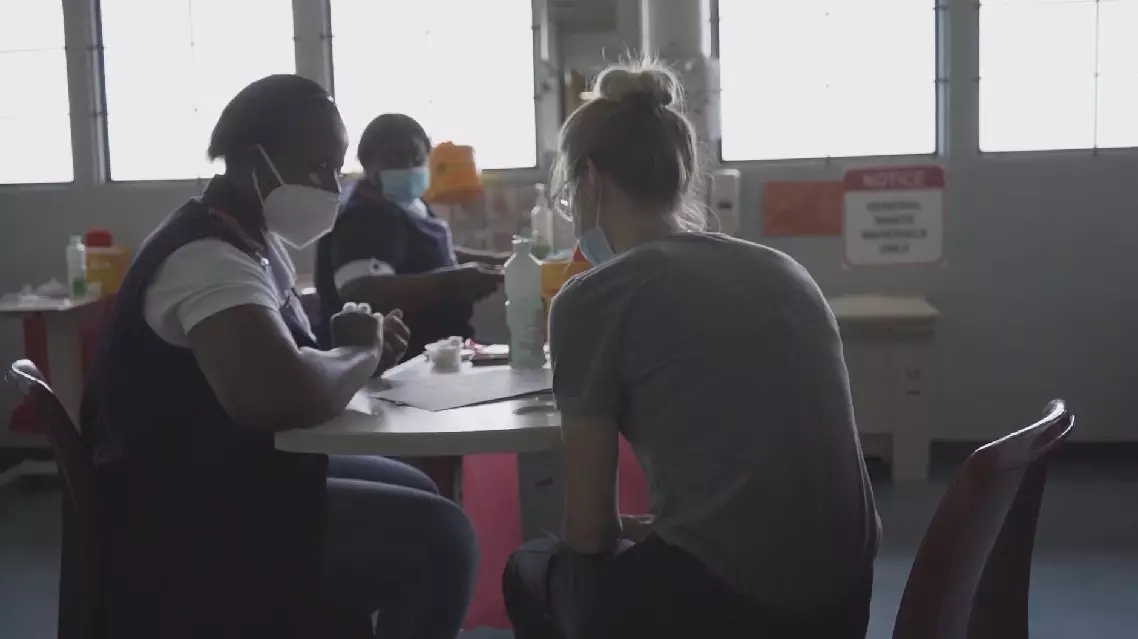
US funding cuts leave South Africa's fight against AIDS in crisis