WASHINGTON (AP) — Maryland Sen. Chris Van Hollen is backing progressive Abdul El-Sayed in Michigan’s Democratic Senate primary, breaking with party leadership and intensifying a battle over the party’s direction in one of the most important Senate races of 2026.
Van Hollen’s endorsement, shared first with The Associated Press on the day early voting begins in Michigan, makes him the first senator to back El-Sayed since Sen. Bernie Sanders endorsed him shortly after he launched his campaign last year. It also comes on the heels of big wins for progressive challengers in New York U.S. House races on Tuesday.
The Aug. 4 race in Michigan has increasingly split Democrats along ideological lines, with Senate Democratic Leader Chuck Schumer backing U.S. Rep. Haley Stevens and state Sen. Mallory McMorrow drawing support from other prominent senators.
Democrats will need to hold the Michigan seat if they want a shot at winning the majority this year. It opened by Democratic Sen. Gary Peters’ retirement and former Rep. Mike Rogers has an uncontested path to the Republican nomination.
In an interview with the AP, Van Hollen said he believed El-Sayed was the “strongest” candidate who can win in November, and “the candidate who’s willing to take on the status quo.”
“When I say the status quo, I mean not just the lawless Trump administration, but take on the Democratic establishment that has not fought hard enough for working people," said Van Hollen.
Schumer last week publicly backed Stevens, a fourth-term congresswoman from suburban Detroit who is seen as the more moderate candidate in the race. She has also been endorsed by other senators from battleground states, including Arizona Sen. Ruben Gallego and Nevada Sen. Catherine Cortez Masto, and former Michigan Sen. Debbie Stabenow. Stevens has also benefited from heavy outside spending, including nearly $8 million this month from United Democracy Project, a super PAC affiliated with the American Israel Public Affairs Committee.
McMorrow, a state senator, has tried to carve out her own lane between Stevens and El-Sayed as an anti-establishment candidate with a reform-focused agenda. She has won endorsements from other senators, including Connecticut Sen. Chris Murphy and Massachusetts Sen. Elizabeth Warren, while also drawing millions in outside support.
El-Sayed, the former Wayne County health director, has run furthest to the left on issues including Medicare for All and halting all U.S. weapons transfers to Israel, making him a favorite of the party’s progressive wing. He has campaigned with popular-yet-controversial streamer Hasan Piker, who has millions of followers online but has said things such as that “America deserved 9/11.”
Earlier this month, the United Auto Workers endorsed him, saying its members “want a fighter in Washington, D.C. who isn’t afraid to push forward a strong working-class agenda with moral clarity.”
Van Hollen said he believes El-Sayed is best positioned to compete in a battleground state because he is running on affordability and against what he described as a political system too influenced by wealthy donors and special interests.
“This is not about left versus right. This is about very concentrated economic and political power at the top, and everybody else,” Van Hollen said. “And he’s fighting for everybody else.”
El-Sayed praised Van Hollen after receiving the endorsement, calling it the “culmination of an ongoing conversation” and describing the senator as a “mentor.”
With progressives coming off a string of wins in New York, El-Sayed said the results reflected the same frustrations he has heard from voters across Michigan.
“It’s not surprising to me that candidates who buck that system win,” El-Sayed said. “I really hope that folks in D.C., like Chuck Schumer, decide to pay attention, finally.”
Asked whether backing El-Sayed amounted to a broader rebuke of Democratic leadership, Van Hollen said the endorsement was “not about personalities” but about backing a candidate who would take on both President Donald Trump and “the establishment Democratic Party” that he said is “too cozy with big money special interests.”
Van Hollen has not called on Schumer to step aside. Asked if he would be interested in leading Democrats in the Senate, Van Hollen told the AP that he has “not thought about doing that.”
But his endorsement lands at a moment of growing friction between Democratic leadership and the party’s left flank over how aggressively to confront Trump and what kind of candidates can win in battleground states.
Those tensions were exacerbated earlier this month in Maine, where Schumer had backed Gov. Janet Mills in the Democratic Senate primary before she suspended her campaign and progressive Graham Platner won the nomination.
Van Hollen has also been among the Senate Democrats urging the party to rethink its approach after the 2024 election. He framed his endorsement of El-Sayed at odds with leadership as a “difference of opinion with respect to which candidates will best connect with voters.”
“I think it's pretty clear that Abdul is the candidate who can build a grassroots movement and others are not," said Van Hollen.
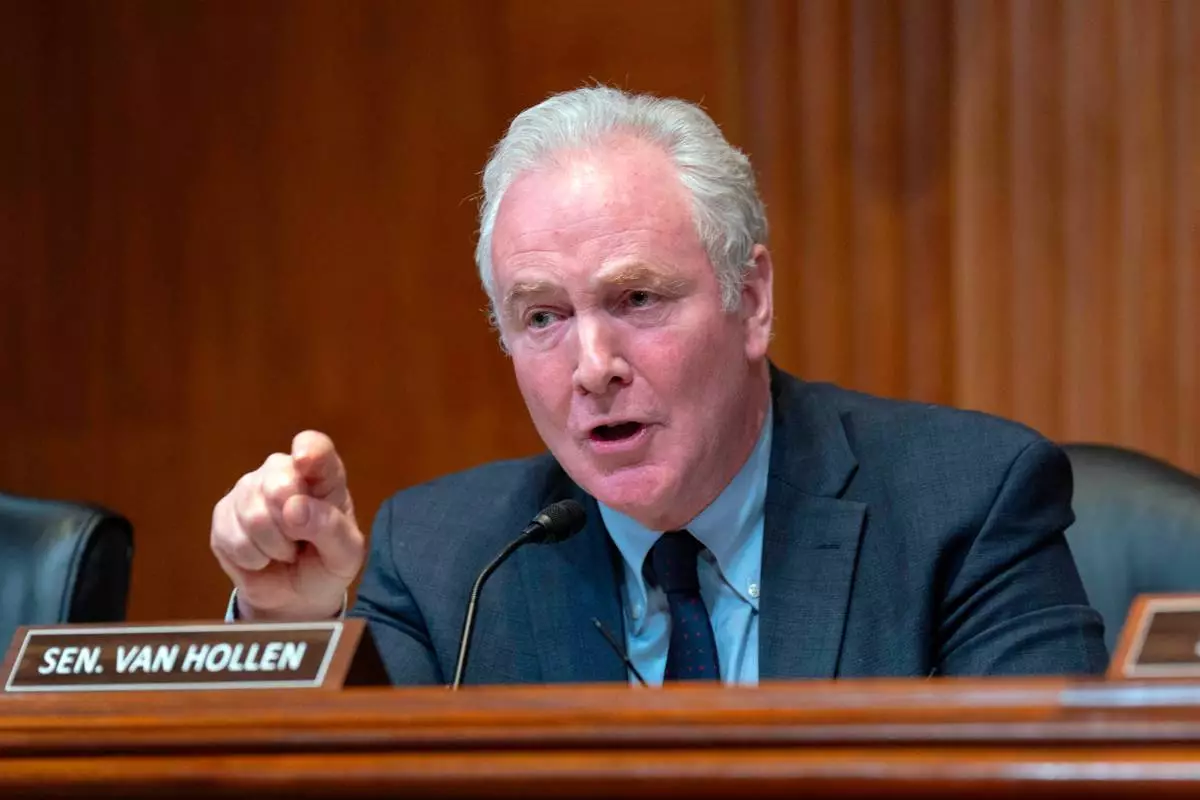
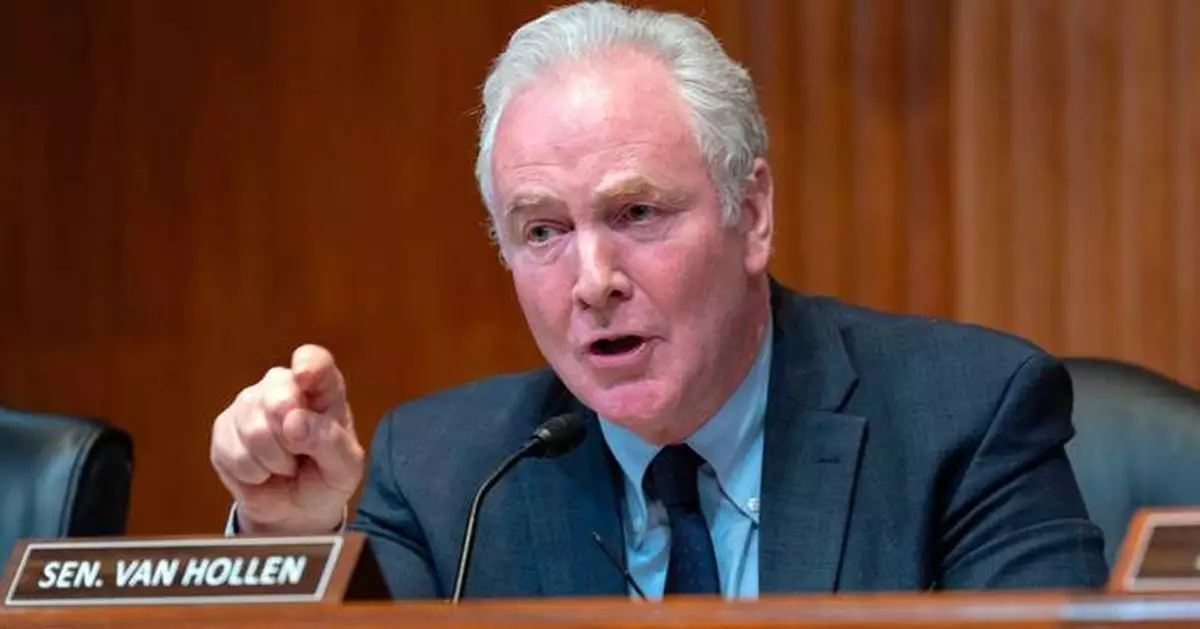
FILE - Sen. Chris Van Hollen, D-Md., speaks during the Senate Subcommittee on Commerce, Justice, Science and Related Agencies hearing on Capitol Hill, May 12, 2026, in Washington. (AP Photo/Jose Luis Magana, File)