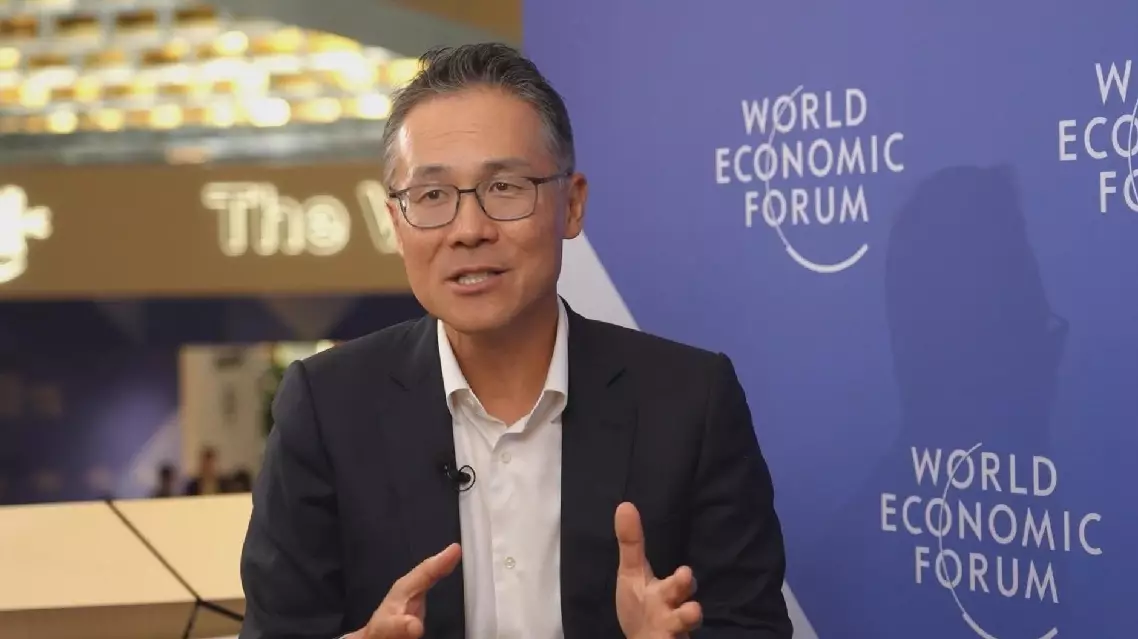
China's competition is an underrated opportunity, rather than a threat, McKinsey's Greater China Chairman Joe Ngai said on Wednesday, calling on multinational corporations to reframe their thinking and integrate Chinese competitiveness into their own ecosystems.
Some have expressed anxiety over China's advances in technology and industrial innovation, even promoting the narrative of a so-called "China Shock 2.0" that frames China's development as a shock to the global economy.
Yet a growing number of voices instead point to a "China Opportunity 2.0," aptly used to summarize China's more open, inclusive and tech-powered economic interaction with the rest of the world.
For enterprises worldwide, "China Opportunity 2.0" represents comprehensive innovation-driven empowerment and high-return investment prospects, Premier Li Qiang stressed while addressing the opening plenary of the 17th Annual Meeting of the New Champions, also known as the Summer Davos, in northeast China's coastal city of Dalian.
Reacting to the premier's remarks at the forum, Ngai offered a pointed reassessment of how global businesses should approach China's rising industrial prowess.
"I think that he (Premier Li Qiang) has always said that China is open for business, we want more collaboration, we are a stabilizing force for the world. And I think today when they said that there's no China shock, but look, it's a chair for you, I think that's very consistent with what he has been saying all along, and which I think is a very interesting one. If I were a multinational company, and then look at all these very competitive Chinese companies, of course you can think about, 'oh, they are a threat to me.' But I think that the most underrated opportunity is how do I think about the competitiveness of China as part of my ecosystem, how do all these things make me better. And that's where I think the premier has a right in terms of you're going to flip your thinking," he said in an interview with China Global Television Network (CGTN) on the sidelines of the Summer Davos.
Ngai also challenged a long-held perception that China excels primarily at scaling existing technologies -- taking innovations from "one to one hundred" -- while lagging in original breakthroughs from "zero to one."
"I think in the AI world, I think that if we think about like the world's leading, I think we are almost there, maybe six months behind. But then if I think about things like physical air, robotics, if I think about pharmaceutical innovation, if I think about many of this material science, if I think about some of these green energy, look, I think that China is no longer only one to 100, of course it is, and of course the one to 100 is still going much faster. But there are plenty of zero to one also happening, so I think, just like everything else in China, I think that you see progress on both ends," he said.
Original research and breakthrough discoveries are increasingly emerging from Chinese laboratories and research centers, even as the country's legendary capacity for rapid scaling continues to outpace most of the world, he added.
China's competition is underrated opportunity not threat: McKinsey Greater China chairman