Skip to Content Facebook Feature Image

Ecuador coach Sebastián Beccacece shares an emotional moment with his family at the World Cup

Sport

Ecuador coach Sebastián Beccacece shares an emotional moment with his family at the World Cup
Sport

Sport

Ecuador coach Sebastián Beccacece shares an emotional moment with his family at the World Cup

2026-06-26 08:28 Last Updated At:08:41

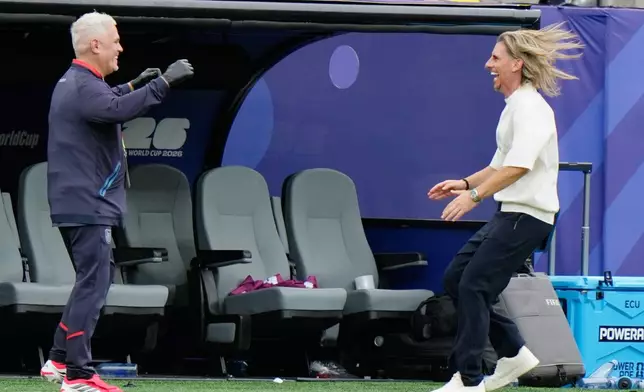
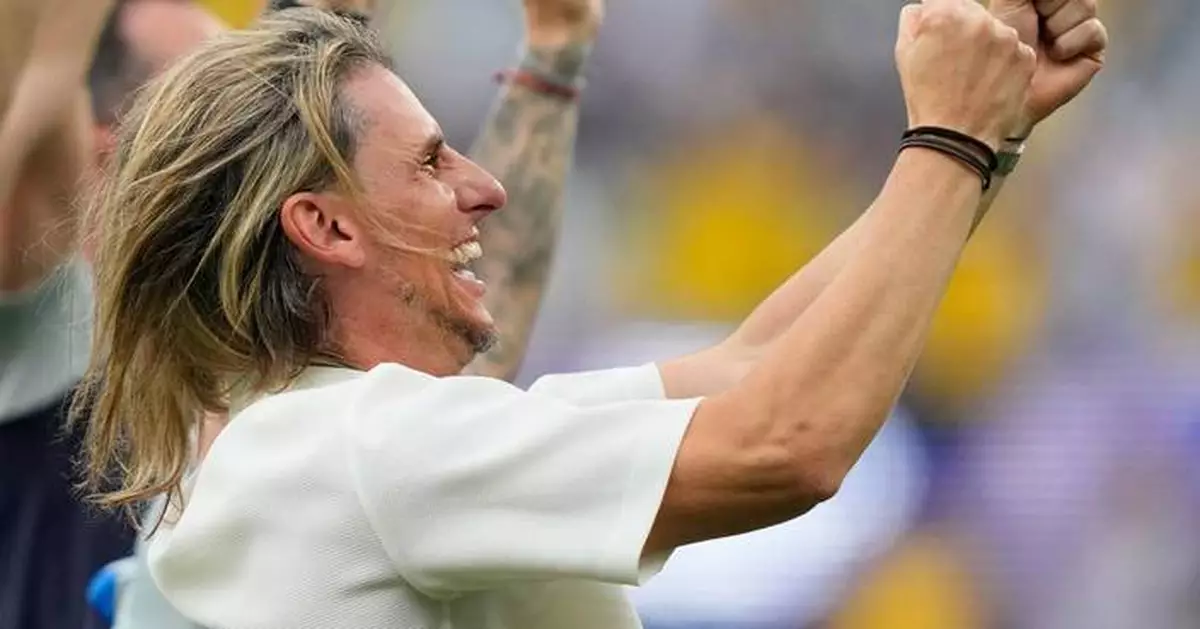
EAST RUTHERFORD, N.J. (AP) — With his long blonde hair flowing in the wind, Ecuador coach Sebastián Beccacece made a beeline for the stands.

The 45-year-old Argentine climbed up from the field to embrace his wife and other loved ones, while the yellow-clad World Cup fans within reach patted him on the back and tens of thousands around the stadium jumped and cheered.

More Images
Ecuador head coach Sebastian Beccacece, right, celebrates after during the World Cup Group E soccer match between Ecuador and Germany in East Rutherford, N.J., near New York, Thursday, June 25, 2026. (AP Photo/Steve Luciano)
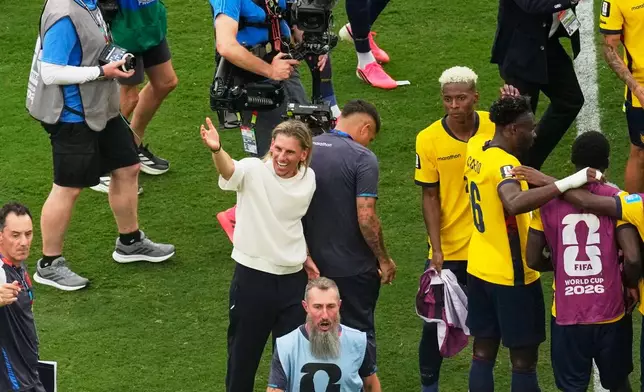
Ecuador head coach Sebastian Beccacece, right, celebrates after during the World Cup Group E soccer match between Ecuador and Germany in East Rutherford, N.J., near New York, Thursday, June 25, 2026. (AP Photo/Steve Luciano)

Ecuador head coach Sebastian Beccacece celebrates their victory over Germany during the World Cup Group E soccer match in East Rutherford, N.J., near New York, Thursday, June 25, 2026. (AP Photo/Seth Wenig)
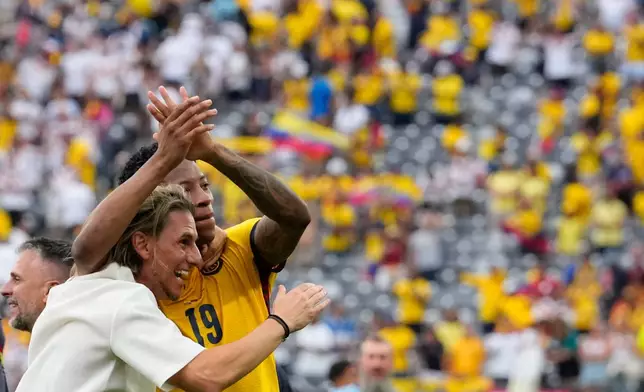
Ecuador head coach Sebastian Beccacece celebrates their victory over Germany during the World Cup Group E soccer match in East Rutherford, N.J., near New York, Thursday, June 25, 2026. (AP Photo/Seth Wenig)

Ecuador head coach Sebastian Beccacece, left, celebrates with player Gonzalo Plata after the World Cup Group E soccer match against Germany in East Rutherford, N.J., near New York, Thursday, June 25, 2026. (AP Photo/Yuki Iwamura)
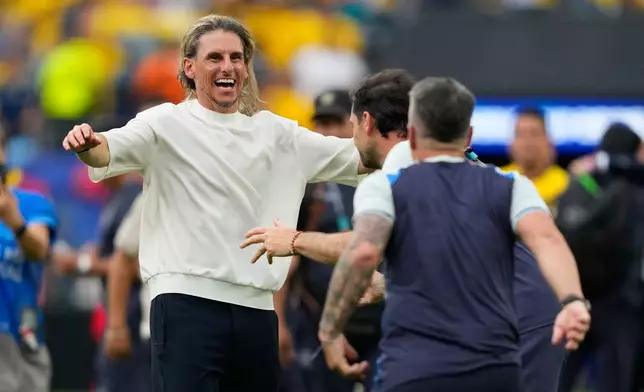
Ecuador head coach Sebastian Beccacece, left, celebrates with player Gonzalo Plata after the World Cup Group E soccer match against Germany in East Rutherford, N.J., near New York, Thursday, June 25, 2026. (AP Photo/Yuki Iwamura)
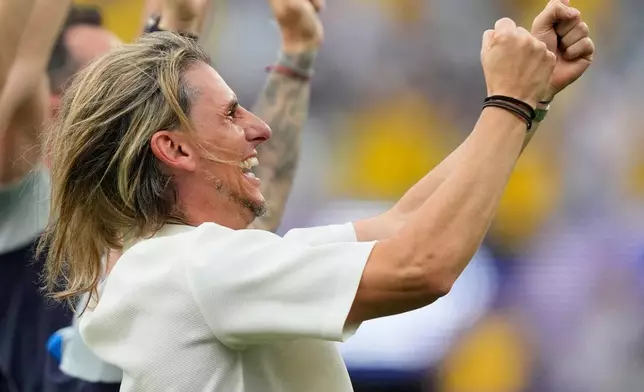
Ecuador head coach Sebastian Beccacece celebrates after the World Cup Group E soccer match against Germany in East Rutherford, N.J., near New York, Thursday, June 25, 2026. (AP Photo/Yuki Iwamura)

Ecuador head coach Sebastian Beccacece celebrates after the World Cup Group E soccer match against Germany in East Rutherford, N.J., near New York, Thursday, June 25, 2026. (AP Photo/Yuki Iwamura)

Ecuador head coach Sebastian Beccacece celebrates after the World Cup Group E soccer match against Germany in East Rutherford, N.J., near New York, Thursday, June 25, 2026. (AP Photo/Yuki Iwamura)

Ecuador head coach Sebastian Beccacece celebrates after the World Cup Group E soccer match against Germany in East Rutherford, N.J., near New York, Thursday, June 25, 2026. (AP Photo/Yuki Iwamura)

The emotional moment after Gonzalo Plata scored the go-ahead goal against Germany on Thursday was the release of intense pressure the coach was mired in, criticized for what was veering toward Ecuador's worst showing at a World Cup. Beccacece instead is being celebrated for helping get the South American country into the knockout stage — and he wants everyone else to celebrate, too.

“We came to life to feel,” Beccacece said through an interpreter after the 2-1 victory over an opponent that was heavily favored but already assured of first place in the group. “Sometimes we feel the pain of defeat but sometimes also the satisfaction of a victory. What is important is to strike a balance. This will not change my life. It will not. But we must indulge ourselves in this joy.”

Beccacece said he has fallen in love with Ecuador since taking the job and took joy in the style of his players making the country fall in love with them as a team. He also said there are things bigger than soccer in this world and that prioritizing family was most important.

“It’s all about understanding that life brings about these moments that you can share with your family, with your man, with your mom, with your sister, with your friends,” Beccacece said. “My dad is missing. He’s watching us from above. But, anyway, I think we need to celebrate these moments. I’m thinking of the Ecuadorian people, 19 million people celebrating hugging each other, having a beer and celebrating this historical victory.”

If not for Plata's left-footed shot into the net after a header by Kevin Rodriguez off a corner kick from Pedro Vite, Ecuador was in danger of going home. A loss would have meant certain elimination, but even a draw would have made it mathematically near impossible to reach the round of 32.

Rodriguez was subbed into the game by Beccacece in the 64th minute and provided just the spark needed with the assist in the 77th. Beccacece called beating Germany a tipping point but did not want to be satisfied with only moving on.

He set the expectations even higher.

“Ecuador never got to the quarterfinals,” Beccacece said. “It would be beautiful if we qualified for the quarterfinal, wouldn’t it? Why not? Well, we work for that. I wish that we can do that as this team and these people deserve that.”

See more of AP’s World Cup coverage here
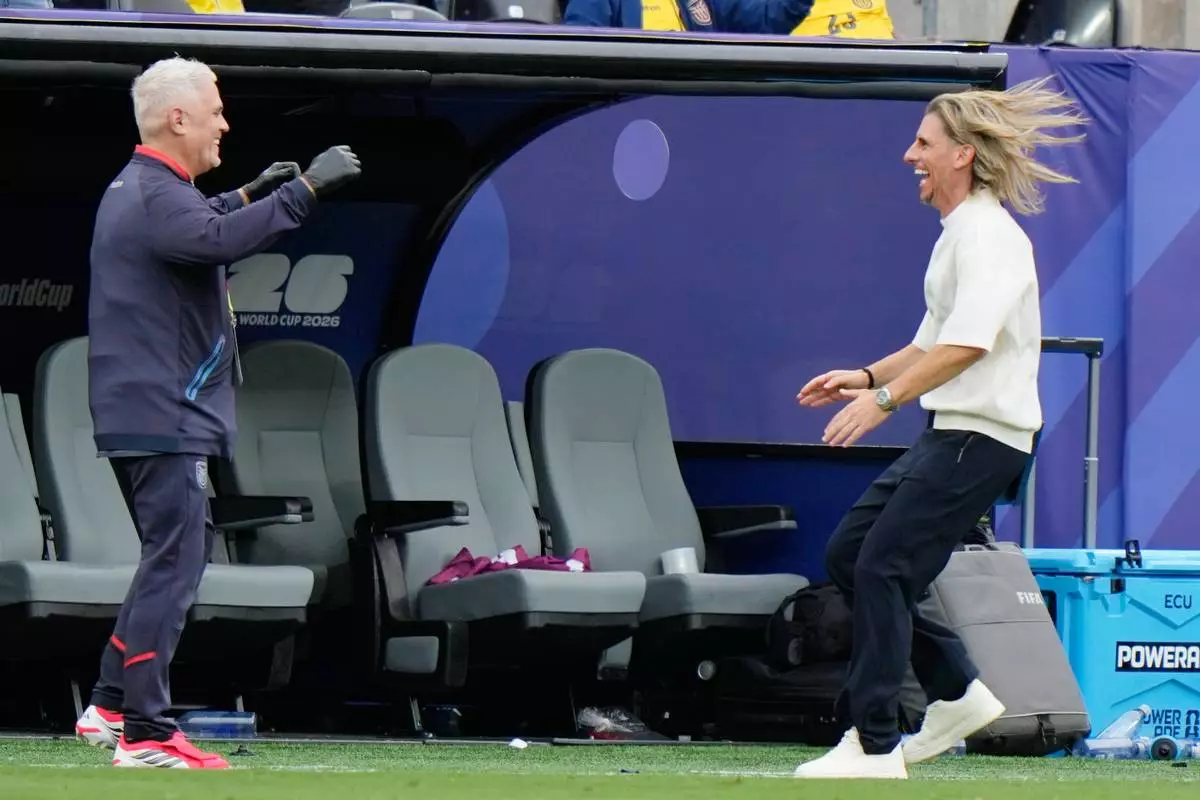
Ecuador head coach Sebastian Beccacece, right, celebrates after during the World Cup Group E soccer match between Ecuador and Germany in East Rutherford, N.J., near New York, Thursday, June 25, 2026. (AP Photo/Steve Luciano)
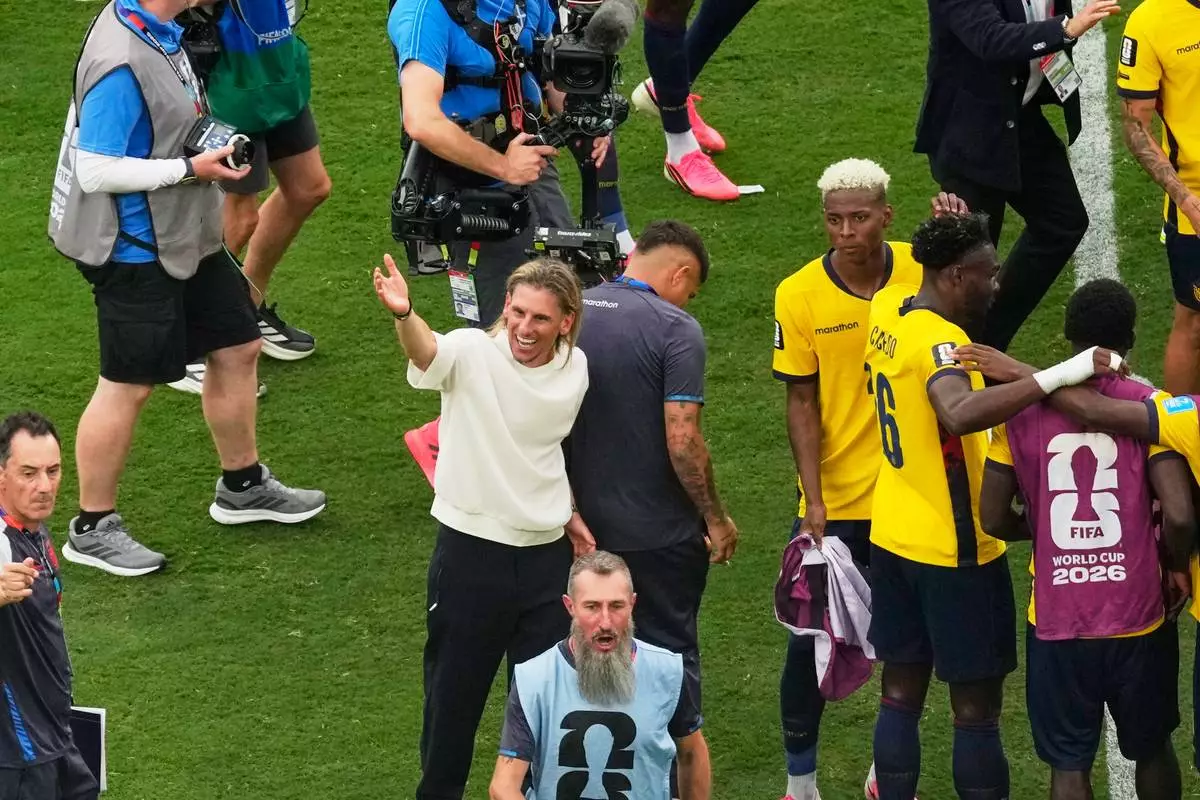
Ecuador head coach Sebastian Beccacece, right, celebrates after during the World Cup Group E soccer match between Ecuador and Germany in East Rutherford, N.J., near New York, Thursday, June 25, 2026. (AP Photo/Steve Luciano)

Ecuador head coach Sebastian Beccacece celebrates their victory over Germany during the World Cup Group E soccer match in East Rutherford, N.J., near New York, Thursday, June 25, 2026. (AP Photo/Seth Wenig)
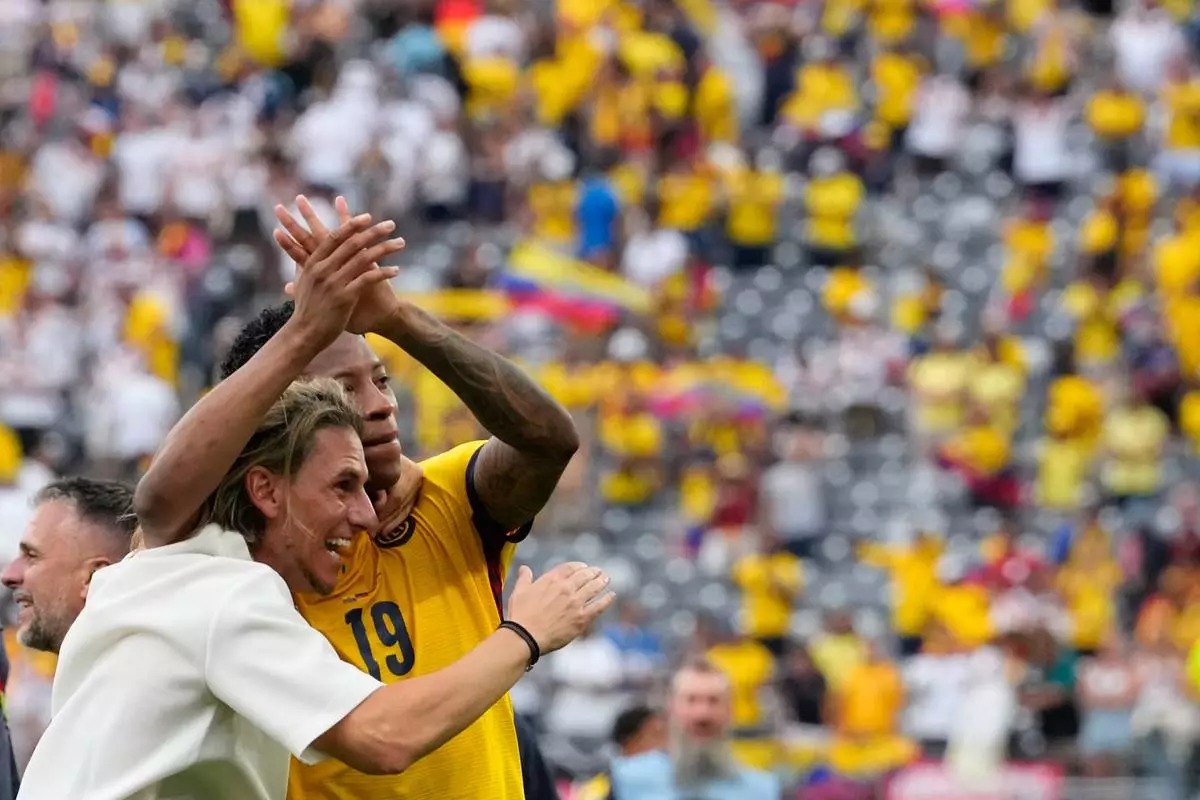
Ecuador head coach Sebastian Beccacece celebrates their victory over Germany during the World Cup Group E soccer match in East Rutherford, N.J., near New York, Thursday, June 25, 2026. (AP Photo/Seth Wenig)

Ecuador head coach Sebastian Beccacece, left, celebrates with player Gonzalo Plata after the World Cup Group E soccer match against Germany in East Rutherford, N.J., near New York, Thursday, June 25, 2026. (AP Photo/Yuki Iwamura)
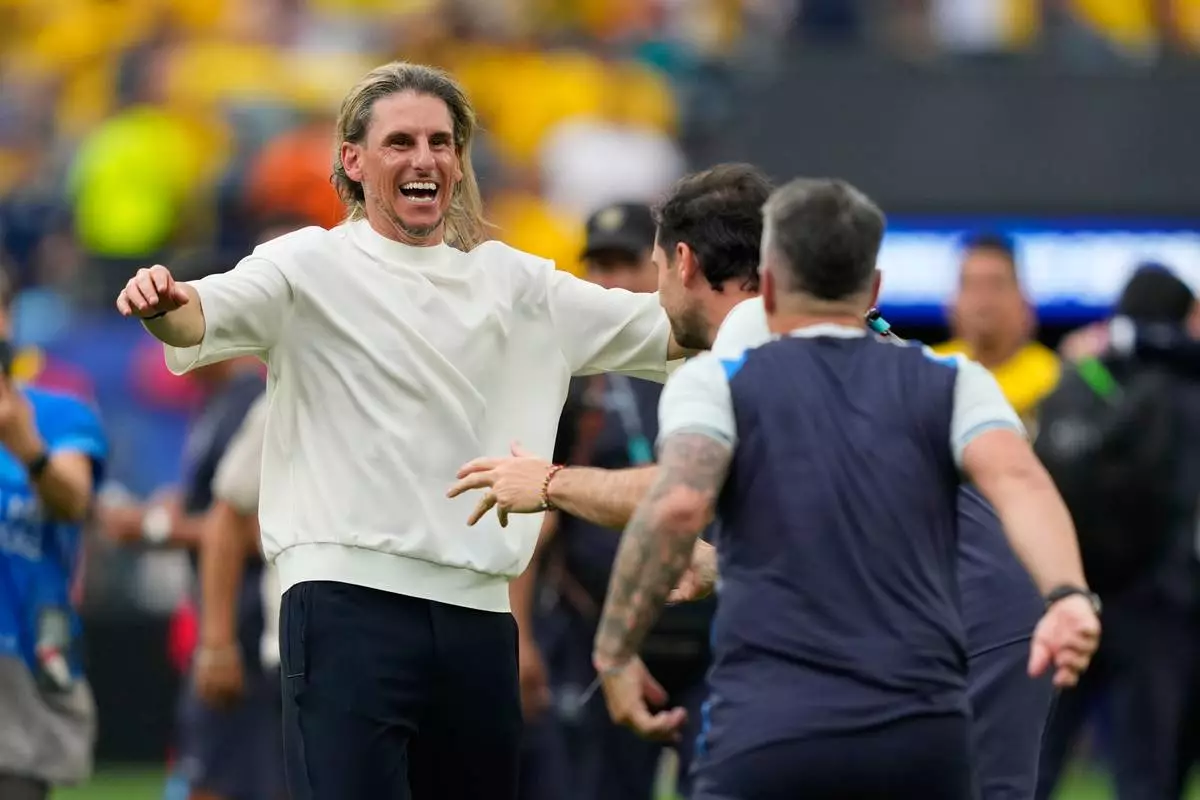
Ecuador head coach Sebastian Beccacece, left, celebrates with player Gonzalo Plata after the World Cup Group E soccer match against Germany in East Rutherford, N.J., near New York, Thursday, June 25, 2026. (AP Photo/Yuki Iwamura)
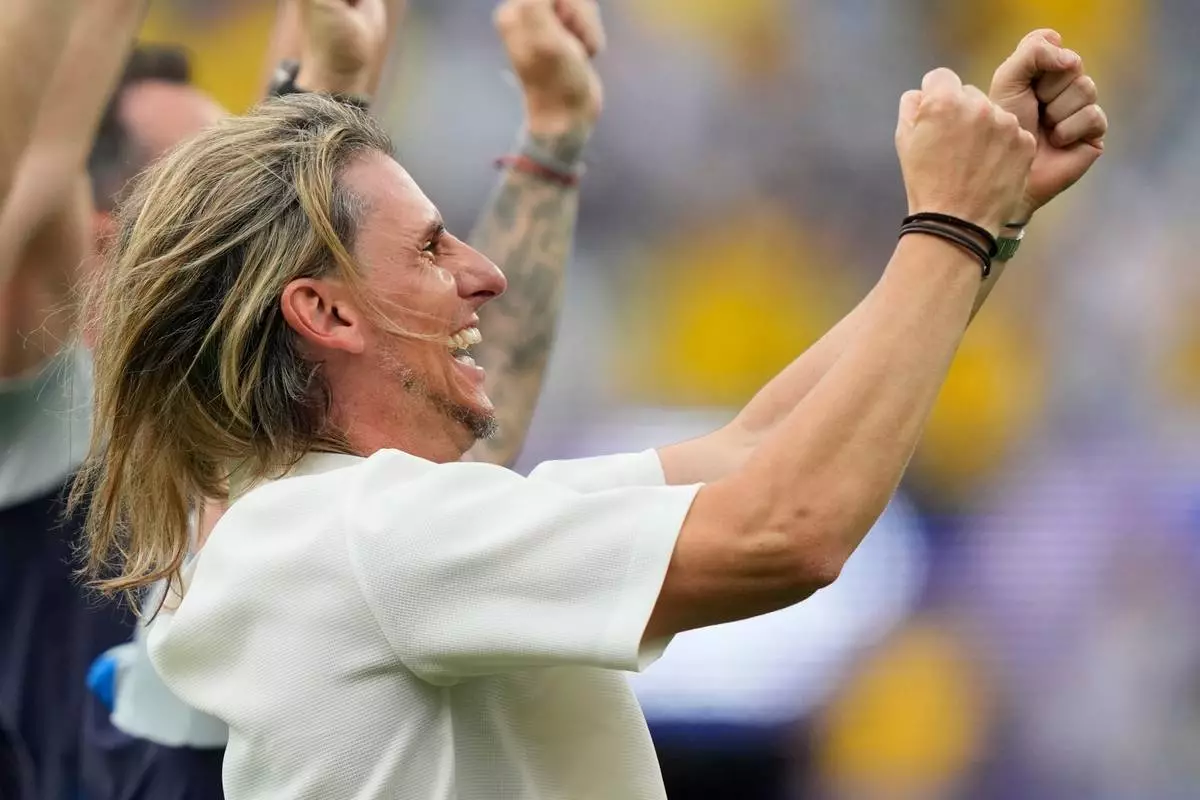
Ecuador head coach Sebastian Beccacece celebrates after the World Cup Group E soccer match against Germany in East Rutherford, N.J., near New York, Thursday, June 25, 2026. (AP Photo/Yuki Iwamura)

Ecuador head coach Sebastian Beccacece celebrates after the World Cup Group E soccer match against Germany in East Rutherford, N.J., near New York, Thursday, June 25, 2026. (AP Photo/Yuki Iwamura)
Ecuador head coach Sebastian Beccacece celebrates after the World Cup Group E soccer match against Germany in East Rutherford, N.J., near New York, Thursday, June 25, 2026. (AP Photo/Yuki Iwamura)
Ecuador head coach Sebastian Beccacece celebrates after the World Cup Group E soccer match against Germany in East Rutherford, N.J., near New York, Thursday, June 25, 2026. (AP Photo/Yuki Iwamura)
They've died from artillery fire, aircraft crashes, gunfire, disease — even by execution — in conflict zones and elsewhere around the world.

Over the 180-year history of The Associated Press, 38 journalists have fallen on the job while working for the independent not-for-profit news organization.

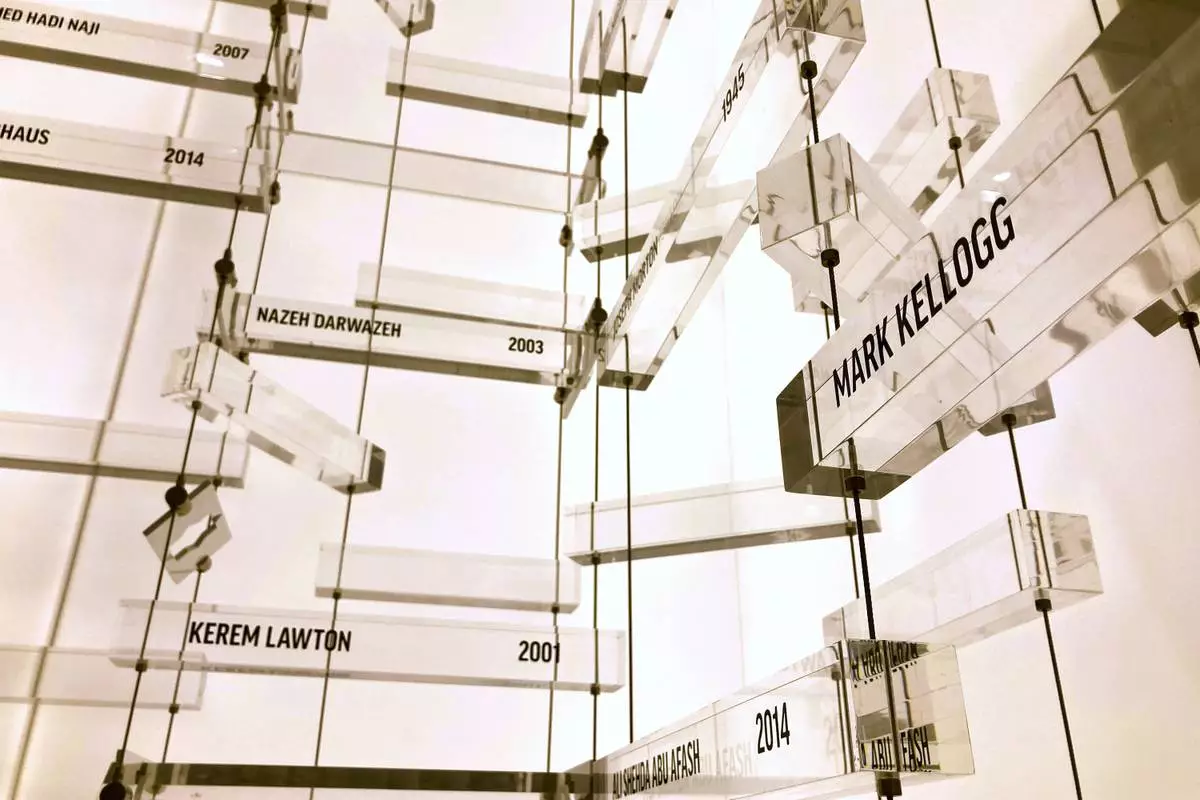
Thursday marked the 150th anniversary of the very first: Mark Kellogg, one of five civilians killed alongside Lt. Col. George Armstrong Custer and his men at the Battle of Little Bighorn.

Kellogg, 43, was embedded with Custer's troops. He was reporting for The Bismarck Tribune and New York Herald — the AP circulated his reports across the country — when Custer underestimated the size of a Sioux village that he attacked.

Custer and his outnumbered men made a last stand on a hill. There, they were annihilated by Native American defenders. Kellogg's scalped body was found not far away.

His last published dispatch read in part: “I go with Custer and will be at the death.”

It was more of an attempt at poetry than prophecy. “At the death” is a foxhunting term for the end of the hunt, suggesting Kellogg expected Custer to prevail.

Still, Kellogg's final words and fate circulated far and wide through his employers and the AP. It gave the obscure, part-time journalist — a widower who worked a variety of jobs to support his two daughters — fame in death.

He got to know Custer. He covered the campaign. He mingled with the soldiers and interviewed them at their camps, historian Sandy Barnard said.

“While his record as a journalist might be very small compared to modern reporters who go into combat, he certainly was doing exactly what they are doing,” Barnard said.

Yet in other ways, Kellogg was much different from modern journalists. He carried a rifle into action, Barnard pointed out. And he made no attempt to avoid not just bias but racism against Native Americans, whom he called “red devils.”

“During the last stages of the campaign, Kellogg was probably more of a soldier than he was a newspaper man,” said Barnard, author of a Kellogg biography and other books on the Battle of the Little Bighorn.

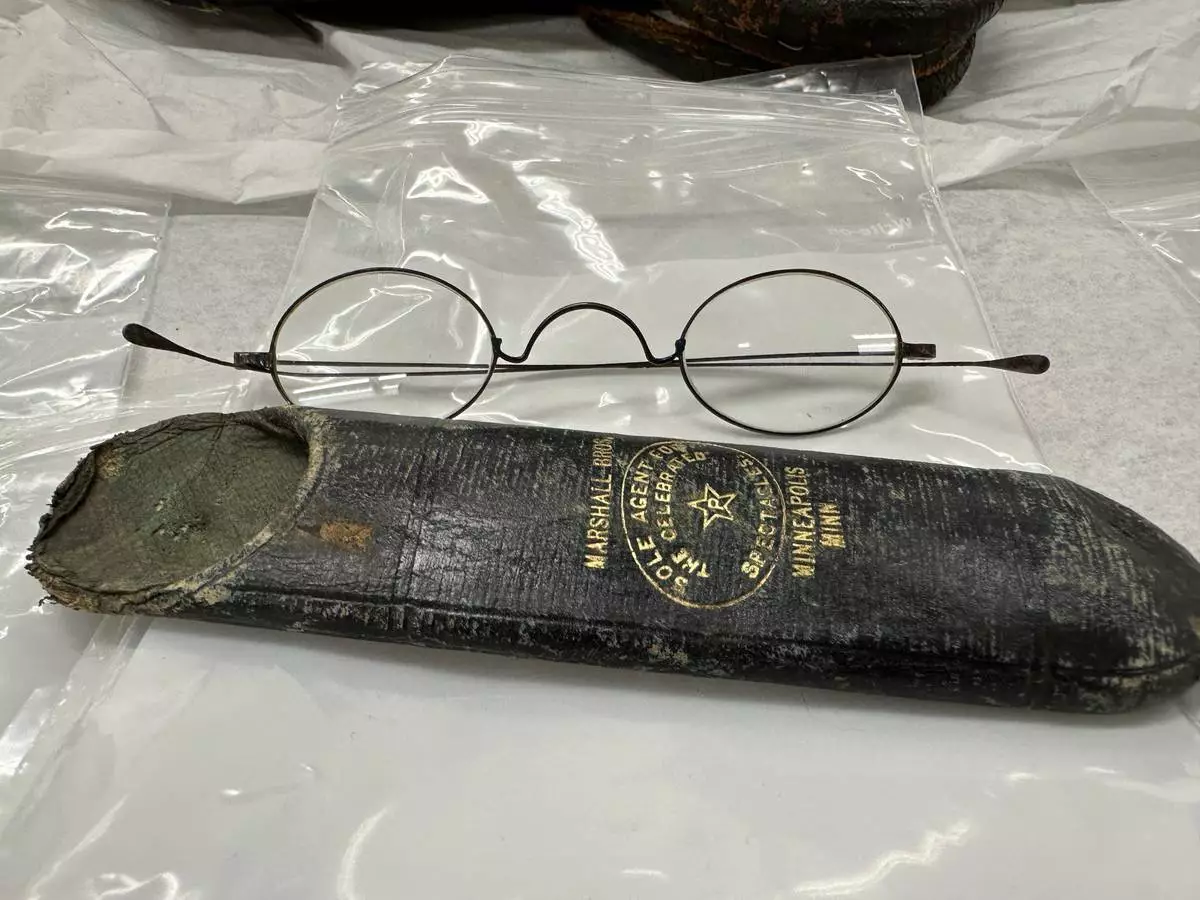
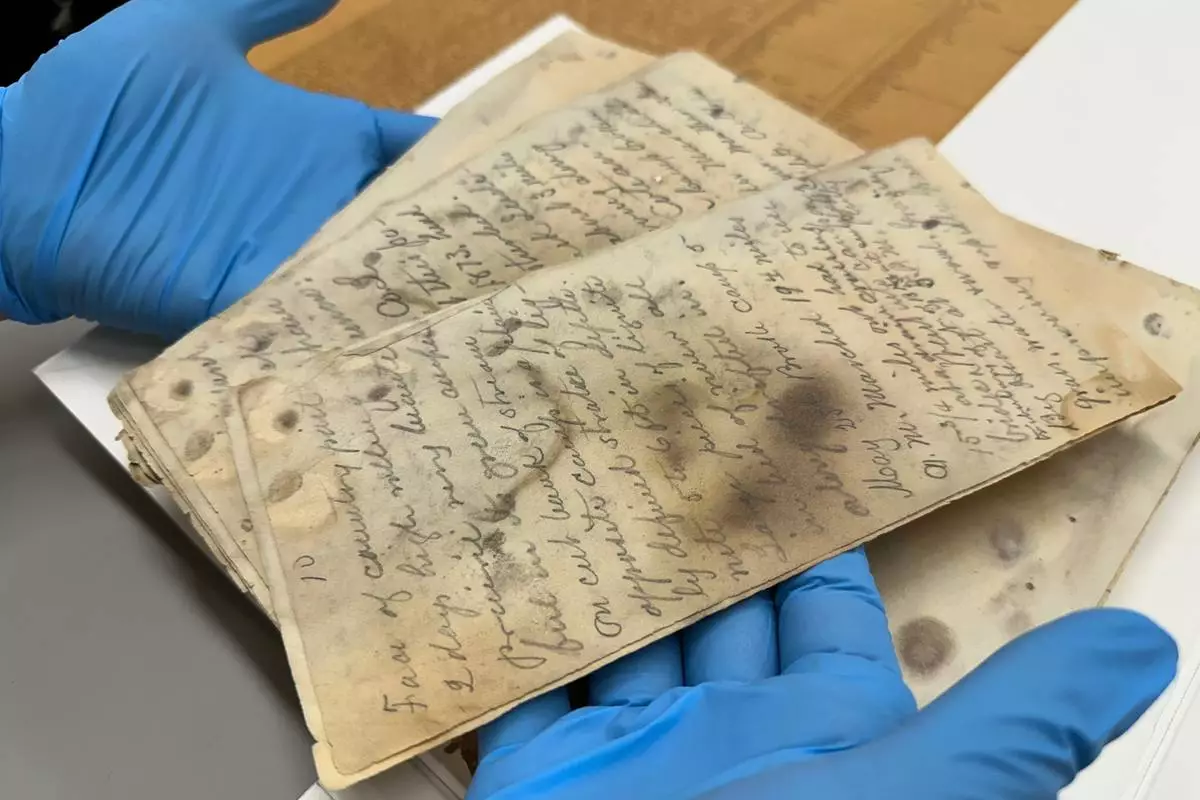
The State Historical Society of North Dakota preserves Kellogg’s diary and various belongings, including eyeglasses, tobacco, clothing and a mosquito head net. The fragile diary, now digitized online, documents weather, distances covered, who was riding in front and in back, how many antelope they saw and other day-to-day operations, Deputy State Archivist Lindsay Meidinger said. The diary ends before the battle.

“It’s a primary source of the historical event, that not many other primary sources remain from that time period related to the Seventh Cavalry and Custer,” Meidinger said.

Others who have perished while reporting for AP in war zones include:

— Mariam Dagga, a freelance visual journalist who was killed in an Israeli strike on a hospital in the Gaza Strip last August;

— Anja Niedringhaus, a photographer shot by a police officer as she sat in her car in Afghanistan in 2014;

— Myles Tierney, a videojournalist killed while traveling in a convoy that came under fire in Freetown, Sierra Leone, in 1999;

— Joseph Morton, a war correspondent who was the only U.S. reporter known to have been executed by the Nazis following his capture alongside Slovakian partisans in 1944.

This story has been updated to restore correct attribution in final quote to Meidinger, not Barnard.

Associated Press corporate archivist Sarit Hand in New York and Jack Dura in Bismarck, North Dakota, contributed to this report.

The eyeglasses and case belonging to Mark Kellogg, a reporter killed during the Battle of the Little Bighorn in 1876, are displayed Wednesday, June 24, 2026, at the North Dakota Heritage Center and State Museum in Bismarck, N.D. (AP Photo/Jack Dura)

The eyeglasses and case belonging to Mark Kellogg, a reporter killed during the Battle of the Little Bighorn in 1876, are displayed Wednesday, June 24, 2026, at the North Dakota Heritage Center and State Museum in Bismarck, N.D. (AP Photo/Jack Dura)

A commemorative marker with the name of reporter Mark Kellogg, who died in 1876 while covering the Battle of Little Bighorn, is displayed with fellow journalists and others who have fallen on the job of newsgathering for The Associated Press, at its New York headquarters, on Wednesday, June 24, 2026. (AP Photo/Patrick Sison)

A commemorative marker with the name of reporter Mark Kellogg, who died in 1876 while covering the Battle of Little Bighorn, is displayed with fellow journalists and others who have fallen on the job of newsgathering for The Associated Press, at its New York headquarters, on Wednesday, June 24, 2026. (AP Photo/Patrick Sison)

State Historical Society of North Dakota Deputy State Archivist Lindsay Meidinger holds pages of the diary of Mark Kellogg, a reporter killed during the Battle of the Little Bighorn in 1876, at the North Dakota Heritage Center and State Museum in Bismarck, N.D., Wednesday, June 24, 2026. (AP Photo/Jack Dura

State Historical Society of North Dakota Deputy State Archivist Lindsay Meidinger holds pages of the diary of Mark Kellogg, a reporter killed during the Battle of the Little Bighorn in 1876, at the North Dakota Heritage Center and State Museum in Bismarck, N.D., Wednesday, June 24, 2026. (AP Photo/Jack Dura

Recommended Articles