

Trump continues to declare victory after losing the war in Iran. He is playing out a modern version of The Emperor’s New Clothes, parading naked while boasting of fine garments. But in this real-life fable, more than one child see through the illusion, as over 70% of the global population has called his bluff.
The US Pew Research Center surveyed 42,000 people across 36 countries and regions between February and mid-May this year. The sweeping poll reveals a stark reality: 57% of respondents hold no favorable view of the US, and over 70% condemn the American attack on Iran.

A global poll across 36 nations reveals nearly 60% hold no favorable view of the US, and over half deem America untrustworthy. Canadians showed the sharpest spike in distrust, pictured here staging an anti-US demonstration.
This collapse in goodwill stems directly from Trump's knack for alienating people. A staggering 76% of respondents have "no confidence" in him, with many of those critics hailing from allied G7 nations. A recent commentary in Singapore's Lianhe Zaobao outlined four primary reasons for this massive erosion of global support. Chief among them is Trump’s own inferior character, a flaw that has dragged down America’s national standing on the world stage.
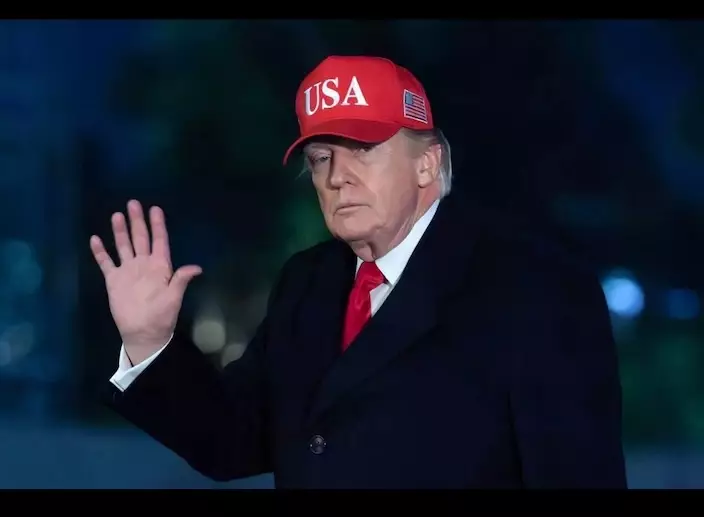
Donald Trump is the prime culprit behind America's crashing global support, with a staggering 76% of respondents branding him untrustworthy.
The survey captured a world reacting to Trump's frenzied military assault on Iran. Iran fiercely counterattacked by completely shutting down the Strait of Hormuz, choking off vital shipments of oil, natural gas, and petrochemicals. The disruption plunged numerous countries into crisis, leaving billions of people to suffer the bitter consequences.
Under these dire conditions, skyrocketing international distrust and resentment naturally turned the US into a universal pariah.
A Global Crisis of Confidence
Digging into the data reveals the sheer scale of the damage. Fully 57% of the over 40,000 respondents reported holding no favorable view of the United States. Citizens across Canada, France, Germany, and South Korea proved especially critical of American leadership. In these allied nations, the proportion of people maintaining a favorable opinion of the US plummeted to fresh lows.
America can now claim majority favorability in just 8 nations. Unsurprisingly, this small fraction includes ironclad partners like Israel and the Philippines, but they remain a tiny minority within the 36 countries surveyed. Consider the situation in Japan, a nation that prides itself on being a close US ally. The share of Japanese citizens holding a favorable view dropped by 5 percentage points from last year, barely scraping the 50% mark. This figure now mirrors the percentage holding an unfavorable view, signaling a steady erosion of Japanese fondness for America.
Public trust in Trump proved even more dismal, generating entirely one-sided results. A massive 76% of respondents expressed distrust in his handling of international affairs, compared to a mere 23% who still trust him. The reality is that over 70% of citizens in allied G7 nations now fundamentally distrust the US president. Labeling Trump as untrustworthy has hardened into a global consensus that bridges the divide between friends and foes alike.
This profound distrust in Trump has directly infected America's own credibility. The poll results highlight a significant decline in the number of Europeans, Canadians, and Japanese who still consider the US trustworthy. Canada experienced a particularly brutal collapse, plummeting from a robust 83% to a mere 35%. Japan similarly saw its trust in the US fall by a steep 17 percentage points.
Global public opinion is overwhelmingly clear on the prospect of an American war with Iran. The survey shows that a decisive 73% of respondents firmly disapprove of the US attacking the Middle Eastern nation. Furthermore, 63% concluded that the US has made absolutely no contribution to world peace and stability.
Four Pillars of Global Backlash
Why has the global public turned so fiercely against the US? The answer to Trump’s bankrupt credibility lies in four distinct failures. Peter Ong, Editorial Consultant for Singapore's Lianhe Zaobao, pointed out four major reasons driving this global backlash.
First, the US launching this war has inflicted immense suffering on people worldwide. Asia relies heavily on Middle Eastern oil and will become the hardest-hit disaster zone, pushing hundreds of millions toward poverty. If this economic catastrophe unfolds, Trump will stand as the primary culprit, ensuring the US remains widely despised.
Second, American leaders have actively committed war crimes. They flagrantly ignored both international human rights law and humanitarian law after initiating the conflict. The heinous act of firing missiles at an Iranian school, which tragically killed 170 teachers and students, stands as a horrifying testament to this brutality.
Third, America's circle of international friends has drastically shrunk, leaving Washington isolated on the global stage. This unnecessary war has forced European allies to suffer collectively alongside the US. Gulf countries have even drawn fire upon themselves, suffering destructive bombings and severe economic damage that bred intense resentment and frustration.
Fourth, Trump's deeply inferior personal qualities have systematically degraded America's national character. His defining traits of arrogance, capriciousness, loose lips, nepotism, and completely unprofessional decision-making have dragged the nation's reputation into the mud.
This analysis is spot on. America’s loss of global support is the direct, undeniable consequence of Trump's arrogant madness. Ironically, the very helmsman promising to "Make America Great Again" has become the nation's ultimate saboteur. Yet for China, this spectacular American failure has delivered an unexpected windfall, driving a noticeable surge in favorable views toward Beijing from global citizens.
Consider the shifting tides in Australia as a prime example. A recent poll shows that 51% of the Australian public now believes Sino-Australian relations hold more importance than US-Australian relations. This crucial metric has surged by 8 percentage points compared to just last year in 2025.
We got to thank Trump for this geopolitical gift.
Lai Ting-yiu
What Say You?
** 博客文章文責自負,不代表本公司立場 **