"Color revolutions" have long been an American specialty. Many countries have been thrown into turmoil and suffered greatly because of them. Yet history has a way of turning the tables. Albania has now erupted in a "Flamingo Revolution." Tens of thousands have taken to the streets to protest what they call American "economic hegemony."
The movement targets Jared Kushner, Trump's son-in-law, and the anger is fast spreading to Prime Minister Edi Rama, Trump’s close political ally. Protesters want the government brought down.
The uprising has also exposed Kushner's disturbing track record. He allegedly attempted an illegal land grab in Serbia to build a "Trump International Hotel." Critics argue this reveals the ugly face of American influence. Although Kushner eventually dropped the development, Anti-American "color revolutions" may now be on the verge of spreading far and wide.
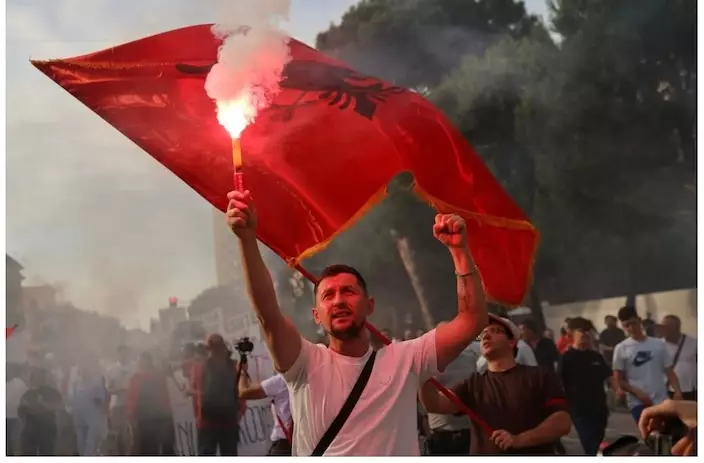
Albania's "Flamingo Revolution" puts Jared Kushner in the crosshairs — accused of using American muscle to seize land.
What began as a small environmental protest soon snowballed. This crisis began as a nonpolitical environmental protest against a real estate project for damaging local nature. But it has rapidly escalated. Once word spread that Trump's son-in-law was the project's biggest backer — and that he had transplanted Trump-style money politics into Albania, with suspiciously open ties to Prime Minister Rama — public fury ignited beyond control.
Kushner and the Trump family made their fortunes in real estate. Immersed in that environment, Kushner is portrayed as having inherited a willingness to pursue profit at all costs. The current controversy traces back to 2021, when he and his wife Ivanka Trump traveled to Albania. They sailed near Sazan Island along the country's southeastern coast and were captivated by the untouched natural scenery. A luxury resort idea was born on the spot.
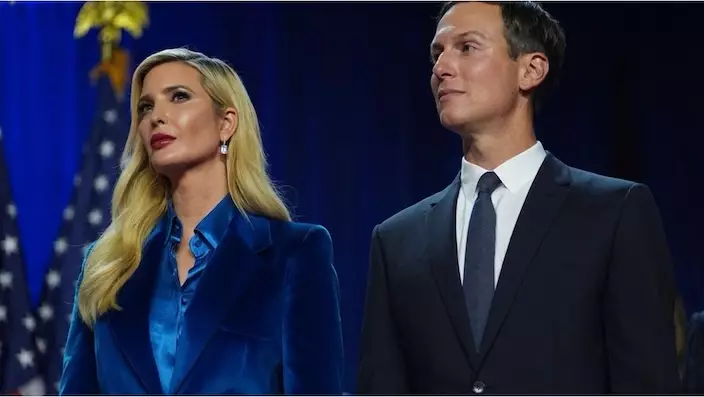
Kushner and Ivanka: profit over everything — even another country's natural environment.
At another yacht gathering, Kushner met Prime Minister Rama alongside several local tycoons. He pitched a plan to transform the area into a large-scale luxury resort and pledged substantial investment. Rama saw lucrative prospects and quickly showed interest.
Kushner is not short of capital. In recent years he established private equity funds in the Middle East and, with Trump's backing, reportedly raised over $3 billion — primarily from sovereign wealth funds in Gulf states.
Armed with deep pockets, Kushner partnered with Albanian business elites. In 2024, he submitted a proposal for a coastal mega-resort, with total investment reaching 4 billion euros — approximately HKD 36.1 billion. Eyeing the massive rewards, Prime Minister Rama fast-tracked the project, clearing every obstacle and rubber-stamping approval at speed.
The plan immediately alarmed environmental groups and local residents. The target area contains pristine beaches and wetlands, serving as habitat for around 70 endangered bird species — including the iconic flamingo — as well as seals and sea turtles. Large-scale construction would severely damage the ecosystem. Scattered protests began almost immediately.
By late May, developers erected fences around protected zones, barring public entry, and brought in bulldozers to begin construction. Environmentalists and residents flooded in. As more people learned that Trump's son-in-law was the project's chief backer, anti-American and anti-Trump sentiments surged. The protest fire spread fast, driving angry crowds into the streets.
Further allegations about Kushner then surfaced. In 2025, he had pursued another real estate project in Serbia. Through high-level government connections, he reportedly secured prime land in the capital to build a six-star "Trump International Hotel". The government fast-tracked approval. But the deal was caught up in a corruption investigation involving officials, prompting Kushner to withdraw.
As the scandals linking the Albanian government with Kushner continued to unfold, street protests escalated. Organizers named the movement the "Flamingo Revolution," adopting the flamingo as its symbol. They deliberately echoed earlier uprisings like the "Rose Revolution" and the "Tulip Revolution" — with one critical difference: those movements targeted anti-American regimes, while this one points squarely in the opposite direction.
The protests target not only corrupt authorities but also what participants describe as the Trump family's "economic hegemony." The reality is that Kushner and Trump never shed their real estate developer instincts. Their minds run on profit calculations — proposing luxury housing and seaside resorts in Gaza to cash in on the conflict, and eyeing land in Greenland for large-scale development.
The "Flamingo Revolution" is still gathering momentum, and the movement continues to escalate. If Trump and his family keep aggressively pursuing profit abroad, similar anti-American "color revolutions" will erupt in more countries.
Karma has a long memory. The very nation that perfected the art of toppling governments may now find itself on the receiving end.
What Say You?
** 博客文章文責自負,不代表本公司立場 **
A demon has returned, and the world knows no peace. Israeli Prime Minister Netanyahu who ignited the war against Iran visited the US again on 27 July, to attend the funeral of "Jewish faction" politician Graham, and he will meet Trump at the White House the following day.
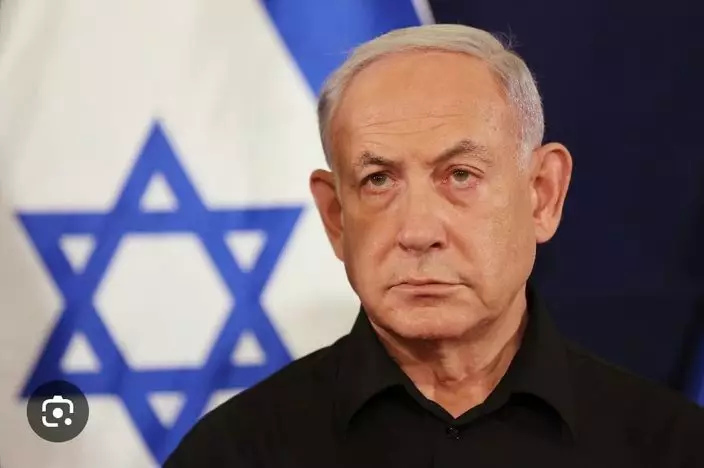
"War demon" Netanyahu met Trump on 28 July, pushing to escalate strikes on Iran.
Netanyahu has not even arrived, yet the killing intent is already on display. American media report that he plans to hand Trump a "latest top-secret report" on Iran's nuclear weapons development. The report includes details on how Tehran is accelerating its nuclear program, and Netanyahu will use it to try to persuade Trump to escalate the campaign against Iran.
Before he set off, the newly appointed head of Israel's intelligence agency Mossad, Gofman, had already secretly visited Washington. Gofman briefed American officials on the locations where Iran is storing enriched uranium and developing nuclear weapons, and he urged the US military to launch a massive bombing campaign. The Middle East will be plunged into bloodshed and chaos will engulf the world, should Trump be talked into it by this "demon" once again.
Hawkish Fangs Before Departure
Strikes against Iran have paused these past two days. War clouds have eased somewhat. But Netanyahu's US visit brings the shadow of war right back. Before he departed for Washington, he already showed his hawkish fangs.
He declared that the war will only end once Iran's regime collapses or is forced to abandon its nuclear program. In other words, he wants the US to fight this war to the finish. He will not rest until both goals are achieved.
This time, he is using the funeral as cover to visit the White House again and see Trump. His goal is to convince Trump that "there must be no ceasefire under any circumstances." Given how much is at stake, he came prepared, not with empty words.
According to sources on the Israeli side cited by American media, he intends to hand Trump the "latest top-secret intelligence" on Iran's military and nuclear program. This includes how Iran is speeding up nuclear weapons development, a threat he will argue endangers both the Middle East and the United States.
Armed with these "shocking facts," he intends to talk Trump into escalating military action. He will warn Trump not to be deceived by Iran again, and not to fall for the idea that the issue can be resolved at the negotiating table.
Leaks on Kuh-e Sang
He has also leaked word through pro-Israel American media that Iran has restarted nuclear weapons development in the Kuh-e Sang region within its territory. Centrifuges used for uranium enrichment have already been relocated there, he claims.
He further asserts that Supreme Leader Mojtaba has an even stronger desire to develop nuclear weapons than his father did. The purpose of bringing this "latest intelligence" is to use fear to drive Trump not to stop, but to keep fighting, and fight even harder.
Netanyahu's "push for war" visit is extremely important for Israel. That is why he had already sent Israel's spy chief ahead as an "advance party" weeks earlier, to pitch this "nuclear crisis theory" to senior officials in Washington.
Citing officials familiar with the matter, American media report that the newly appointed head of Mossad, Gofman, secretly traveled to Washington in mid-July. He briefed a group of officials, including CIA Director Ratcliffe, on intelligence about nuclear development taking place deep underground in the Kuh-e Sang mountain. He also disclosed the latest quantities of uranium material and Iran's recent political and economic situation.
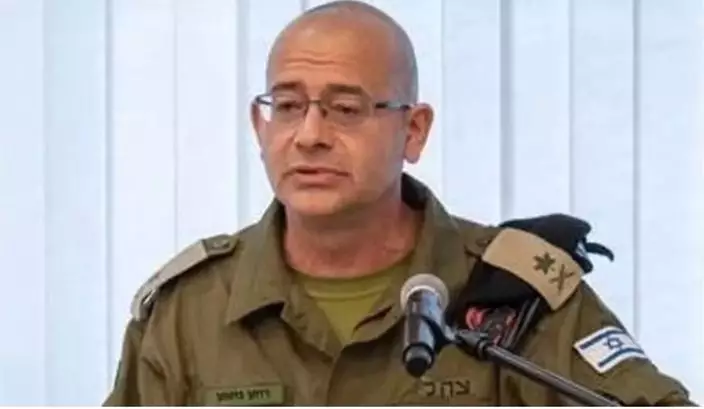
Mossad's new chief Gofman secretly urged Washington to expand bombing of Iran.
The Underground Target
Kuh-e Sang is located in central Iran, near the Natanz nuclear facility. Israeli intelligence indicates that Iran relocated thousands of uranium enrichment centrifuges there late last year. The site was installed deep underground where a hardened outer shell protects it.
This means the US and Israel would need to deploy multiple heavy bombers to have any chance of destroying it. Gofman's secret meetings with Washington officials this time were specifically aimed at pushing this massive airstrike plan.
Gofman came close to succeeding. Trump had reportedly been preparing to deploy heavy bombers for the first time to strike Iran's nuclear facilities at Kuh-e Sang, and Israel had already gone on alert.
However, a White House war-situation meeting last Friday led Trump to pause the operation. The reason was that US missile-interceptor stockpiles had dropped sharply. If Iran were to widen its retaliatory strikes, US military bases and Gulf allies would face enormous risk, so Trump was forced to hold back.
Netanyahu, of course, will not give up so easily. On this visit, he will keep pulling out every trick to convince Trump to launch a full-scale offensive. He is confident because his last trip to the White House successfully persuaded the US to strike Iran.
On February 11 this year, Netanyahu arrived in the US with an "Iran attack master plan." He pitched hard to Trump and senior officials that if the US and Israel joined forces in a lightning strike to "decapitate" Iran's supreme leader, the regime would inevitably collapse and be replaced by a pro-American government, thereby completing the mission against Iran.
Trump was captivated by the idea. He believed he could win a historic victory in one stroke, and he decided to go to war. But the course of the war did not unfold as planned. Netanyahu's "master plan" came to nothing, leaving Trump trapped in a dilemma where fighting on meant disaster and stopping also meant disaster, a bind he could not escape.
A World on Edge Again
Netanyahu will not let any opportunity slip by. This visit to the US is another repeat performance, secretly scheming to push the war toward escalation. Whether Trump, having been fooled once, has grown wiser and won't be easily talked into it again remains to be seen.
Otherwise, the Middle East will descend into chaos once more, and the whole world will suffer at the hands of this "demon."