
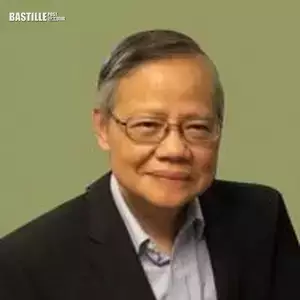
Hong Kong's exiled 'resistance fighters' from 2019 still haven't come to terms with a bitter truth. The Western governments that once hailed them as "heroes" have largely "flipped the pig's belly", now treating them as harbingers of plague.
Former Democratic Party chairman Wu Chi-wai traveled to the UK on his BNO passport last week to visit his wife and children, shortly after his release from prison. On arrival, border officers detained him for questioning. He was eventually let through, but authorities granted him only a 7-day temporary immigration bail, after which he may be deported back to Hong Kong.
Exactly what is going on inside the Home Office is anyone's guess. What is plain to see is the pig's belly flipped inside out, exposing its true intent to keep him out.
This is not the first such case, either. When fugitive Chloe Cheung applied for permanent residency in the UK, authorities threw up considerable obstacles and nearly rejected her outright. Only after "hawkish" politicians intervened was her application grudgingly approved, but not before the government's contempt was laid bare.
The circumstances of Wu Chi-wai's detention are decidedly strange. Before setting off, he had already met with officials at the British Consulate-General in Hong Kong and was told he could enter on his BNO passport, then apply for temporary leave to remain once inside the country.
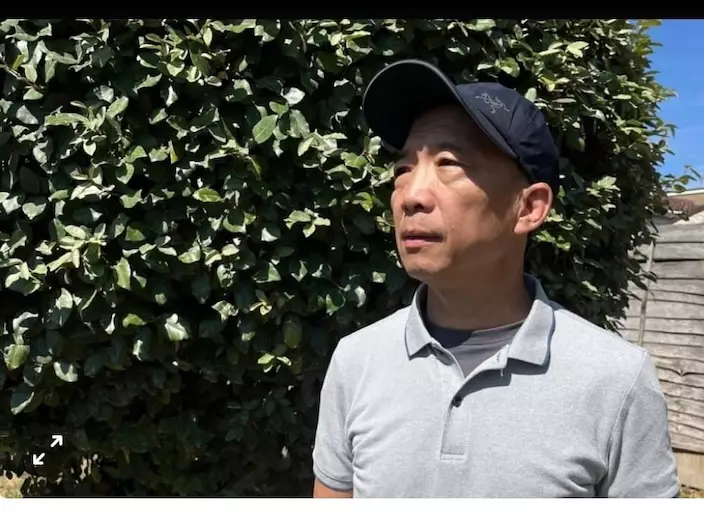
Wu Chi-wai's detention looks less like a border officer's error, more like a Home Office decision.
Many Hong Kong BNO holders have entered the UK this way before without incident. Yet Wu was held by border officers for several hours, facing possible immediate deportation. He was finally granted "bail" to stay for seven days, and what happens after that remains unknown.
Hong Kong diaspora groups and so-called "human rights organizations" in the UK sensed a shared fate. Naturally they were "deeply concerned," demanding the Home Office explain this "administrative error." The response was thoroughly bureaucratic: a standard line about not commenting on individual cases. It answered nothing and only deepened the mystery.
These groups still insist it was merely a border officer's mistake, not government policy. Simon Cheng, the "fugitive" who founded Hongkongers in Britain, suggested Wu's detention might stem from frontline staff misjudging the situation. Alternatively, he pointed to an erroneous alert triggered by the immigration system.
Whether that is really the case is doubtful, for two reasons.
First, Wu Chi-wai is a well-known figure in Hong Kong political circles, and his recent release from prison made headlines. Even if frontline border staff did not recognize him, they would surely have reported up the chain for instructions, suggesting the decision to deny him entry came from higher up in the Home Office.
Second, the British Consulate-General in Hong Kong must have been in contact with the Home Office beforehand. The Home Office would have had some understanding of who Wu is, and would not simply have treated him as an ordinary entrant with a criminal record, oblivious to the political considerations at play.
How the UK government treats these "troublemakers" can be glimpsed in its handling of fugitive Chloe Cheung's permanent residency application.
Cheung and her family submitted applications together this past May. Her family members were all approved, but the Home Office demanded she provide additional information about her "offence" in Hong Kong, including court documents related to her case, for a "full assessment."
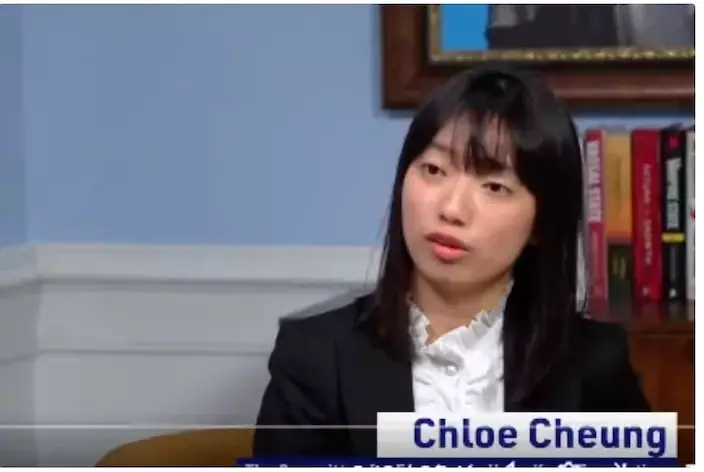
Chloe Cheung's stalled residency bid shows the UK "flipping the pig's belly" on Hong Kong rioters.
This is a rather odd approach. Cheung is a wanted "national security fugitive" from Hong Kong, and the nature of her alleged offence is already crystal clear, so there should be no need for "additional information." She has, moreover, kept a fairly high profile in the UK, so security services would certainly know which side she is on.
She also works for the US-based political organization Committee for Freedom in Hong Kong Foundation, whose chairman is James B. Cunningham, former US Consul-General to Hong Kong. That is hardly an innocuous background, and one British security services would likely have already flagged.
The reasonable explanation for the Home Office's obstruction is that the UK government does not want to grant permanent residency to politically complicated "anti-China, destabilize-Hong-Kong" figures, for fear of the trouble it might invite.
The political strategists behind Cheung, however, advised her to leak the story to British media first. Put the case in the public eye, so "hawkish" politicians could then pile pressure on the government.
The first to charge out this time was Lord Alton, a member of the Inter-Parliamentary Alliance on China (IPAC), notorious for its role in the Jimmy Lai case. Lord Alton wrote to the Home Office in his capacity as a member of the House of Lords, sharply criticizing the department for treating "speaking up for democracy" as a "crime."
The tactic worked: shortly afterward, the Home Office granted Cheung permanent residency.
With political backers to lean on, Cheung had succeeded in forcing the UK government's hand. But many nameless rioters seeking political asylum, without such connections, have waited years without approval. They remain stuck in grim asylum accommodation, scraping by on paltry allowances. Unable to work or study, many suffer from depression, their situation nothing short of miserable.
The UK government's policy is plain: refuse to let these troublemakers integrate into British society, leave them to fend for themselves, and hope they give up and go away. In recent years, as the Labour government competes with the anti-immigration Reform Party, its stance toward Hong Kong asylum seekers has only hardened. The chances of approval are growing slimmer by the day.
The pattern is unmistakable: Wu Chi-wai's recent moves to leak information to foreign media follow Chloe Cheung's playbook. An attempt to pressure the Home Office into letting him stay. But whatever the outcome in his case, the UK government's flipped attitude toward "resistance fighters," now treating them as a plague to be avoided, is not going to change.
Lai Ting-yiu
What Say You?
** 博客文章文責自負,不代表本公司立場 **