A New York Times writer asked a good question yesterday: "Why the United States Can’t Quit Its Wars?" Quite rightly so. From Iraq and Afghanistan to Iran, the United States can never escape the fate of "easy to start a war, hard to pull the troops out."
The harder it strikes, the stronger its enemies grow. The more allies those enemies attract, the deeper Washington sinks. It has no choice but to keep raising the stakes. The Iran war is now trapped in exactly this vicious cycle.
The Wall Street Journal reports today that Iran's "Axis of Resistance" has expanded further of late. The al-Qaeda branch entrenched in Somalia, Africa, has stepped up its alliance with the Houthis, Iran's "sworn brothers." The pair could choke off the Red Sea exit at any moment. That would sever the other oil shipping lane beyond the Strait of Hormuz. Should that happen, America's troubles will multiply, and pulling out will become harder still.
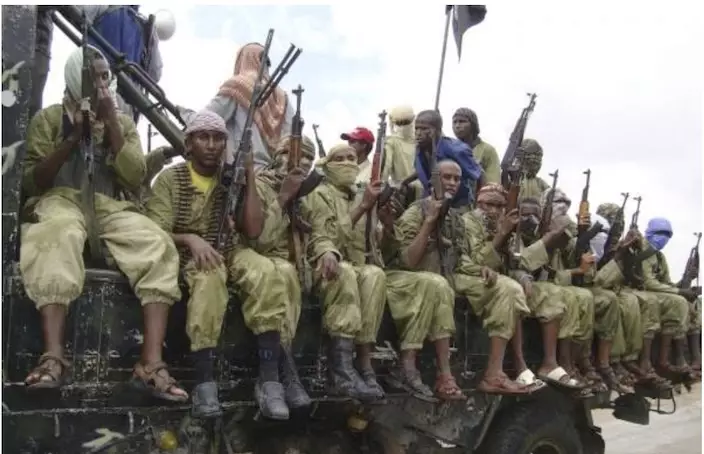
Al-Qaeda's Somali branch joins the Houthis. Washington's headache grows.
According to the report, al-Shabaab, al-Qaeda's branch in Somalia, is the wealthiest of them all. It controls local ports, roads and gold mines, and it is raking in money hand over fist. Annual revenue exceeds US$100 million.
Yet bulging coffers are not enough. The group lacks advanced weapons, and its fighters need proper military training. Which is why it has cut frequent "deals" in recent years with the Houthis in Yemen, Iran's "sworn brother." Since the US attacked Iran, the two have grown closer still, united by common enemies in America and Israel.
Al-Qaeda was founded by bin Laden in 1988. It began as a "jihadist organization" resisting the Soviet invasion of Afghanistan, covertly funded, no less, by the CIA. When the Soviets went down in defeat, the United States took over the role of "invader." Al-Qaeda promptly turned its guns on America.
In 2001 Al-Qaeda orchestrated 9/11, the terrorist attack of the century. Washington has regarded it as the greatest threat ever since.
In recent years, its leaders have been killed by the US one after another. Rival "jihadist groups" keep grabbing its turf, leaving it in steady decline. Yet al-Qaeda remains powerful in parts of the Middle East and Africa. The Somali branch is a case in point. The US has long seen it as a mortal danger, and the American military has struck it as many as 40 times.
The "Perfect Partners"
To build up its military muscle, the group has in recent years bought large batches of advanced weapons from the Houthis through intermediary arms dealers. It has also sent fighters to Yemen for military training, learning, among other things, how to operate attack drones. The Houthis, for their part, have dispatched instructors to Somalia to pass on combat skills.
The US went to war against Iran in late February this year. That pushed the "deadly duo" into even closer contact. Al-Qaeda belongs to Islam's Sunni branch, while the Houthis are Shia. The two are age-old foes. But faced with the common enemies of America and Israel, both are willing to set aside their feud and point their guns outward in unison.
What is more, each side of the "deadly duo" has something the other craves. The Houthis need hard cash to fund their war effort. Al-Qaeda, keen to sharpen its fighting power to consolidate its grip, must acquire advanced weapons and military technology. This mutually beneficial relationship has turned the two into "perfect partners."
To Washington, two "terrorist organizations" banding together is a real nightmare. It is enough to rob it of sleep and appetite. The Houthis are entrenched in Yemen, facing Somalia, home of the al-Qaeda branch, across the Gulf of Aden. That is the gateway through which oil is shipped via the Red Sea. If the pair join forces, they could lock down this shipping lane for good.
The Choke Point
The Strait of Hormuz is already firmly in Iran's grip. If this other lane is cut as well, Saudi Arabia and the rest will lose their alternative route for shipping oil. Global energy supplies will go from bad to worse. Remember: 12 percent of the Middle East's oil is transported through this passage. The impact must not be underestimated.
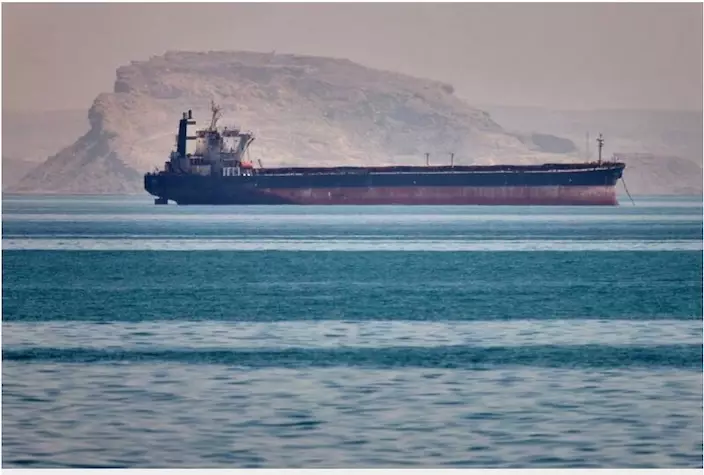
The "deadly duo" could shut Saudi Arabia's backup oil route.
Worryingly, the "deadly duo" genuinely possesses the capability to seal the strait. The Houthis have precision missiles and large fleets of attack drones. They are now helping al-Qaeda install radar in Somalia and supplying it with attack drones and more. The two could coordinate operations down the road, striking merchant vessels and US warships that try to force their way through.
Whether the American military could juggle that many fronts at once would then be a big question mark.
America's current predicament recalls 2010. President Obama decided then to send 30,000 more troops to Afghanistan to fight the Taliban. The deputy assistant secretary of defense at the time, Lavoy, raised doubts. "Afghanistan has countless tribes, and every one of them harbors resentment towards America," he said. "Even if the Taliban did not exist, there would still be an insurgency in Afghanistan."
No matter how many troops were poured in, the war could not be won. Better to simply withdraw.
Those words describe the Iran war today just as aptly. By attacking Iran, America has opened a "Pandora's box," and "demons" like al-Qaeda have come pouring out. How many of them, one has to ask, can America possibly fight at once?
Lai Ting-yiu
What Say You?
** 博客文章文責自負,不代表本公司立場 **
Five years ago, an emigration frenzy swept Hong Kong. Besides the Hong Kong BNO holders flooding into Britain, another group climbed aboard the Canadian government's "lifeboat." Back then Ottawa was full of righteous talk, promising Hong Kong people a way out and a safe harbor.
Five years on, the scheme officially ends today, but those who missed the boat need not sigh with regret. According to the latest figures, more than 40,000 Hong Kong people have been approved to come aboard. Yet over 35,000 of them are still adrift on the boat, permanent residency nowhere in sight, and they are expected to wait ten long years before reaching shore.

Canada's "lifeboat" ends; Hong Kong people protest 10-year PR wait.
Many are trapped in limbo, hanging in mid-air: hard to stay, hard to leave, utterly at a loss. Their misery has one root cause. The Canadian government long ago had a "change of heart," and the "promise" of yesteryear has been swept aside by the politics of hard self-interest, vanishing like smoke.
From Morality to Money
To understand the present, look first at the history. When the Black Riots erupted in Hong Kong in 2019, the Central Authorities enacted the Hong Kong National Security Law to quell the turmoil. Keen to keep the flames of the "color revolution" burning, the US and Britain made provocative moves, including opening an "escape hatch" so the Hong Kong people involved could find shelter. The Canadian government duly fell in line with the Five Eyes brigade and launched the "lifeboat" scheme, under which Hong Kong people could apply for temporary residence.
The scheme kicked off in February 2021, and Hong Kong people applied in droves. Many acted on a whim, while others hoped to fulfill an emigration dream, so they swarmed aboard.
At first Ottawa preached morality, but before long that talk quietly faded and the abacus of practical gain came out. The focus shifted to luring Hong Kong people who were young, educated and rich in human capital. Plainly, the goal became immigrants who would "contribute to the economy."
Yet after large numbers of Hong Kong people had been approved to board, Canada's political climate shifted. Confronted by surging anti-immigration sentiment, the government tightened its policy and placed the "lifeboat" Hong Kong people into the "humanitarian and compassionate" category. There they must queue alongside migrants who matter more to Ottawa politically, people from Ukraine, Sudan, Gaza and elsewhere, all competing with Hong Kong people for permanent residency places.
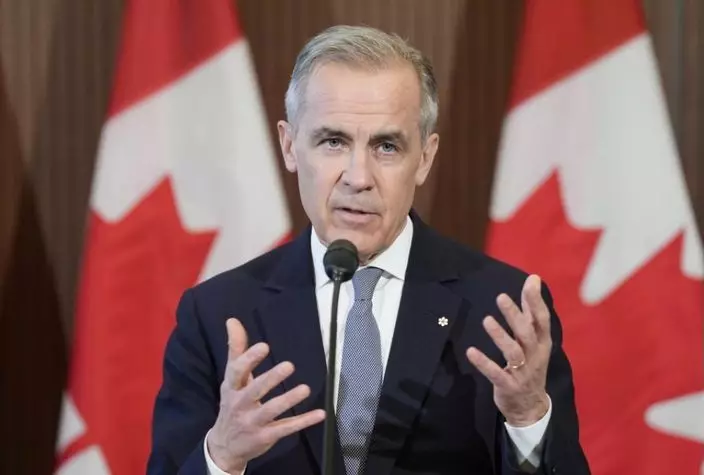
Under Carney's curbs, Hong Kong people queue behind Ukraine migrants.
Too many mouths, too little to go around.
Then Trudeau fell and Carney took over. PR places in this category were halved to 6,900, and over the next two years there will be only 5,000. Hong Kong people are left waiting wistfully for permanent residency, with no end in sight.
The latest immigration department figures show that by the end of June, a cumulative 30,315 applications from Hong Kong people had been received, covering 48,560 people. So far only 8,600 applications have been approved, with 13,370 people granted permanent residency. In other words, 35,000 people remain unsettled, dangling in mid-air.
The long-waiting Hong Kong people are fuming, but the Canadian government is as slippery as an eel, still processing applications at a snail's pace. It is clearly stalling on purpose to keep the PR tally down. At the current approval rate, and with others continuing to jump the queue, they face at least a 10-year wait to become permanent residents.
Every Word a Tear
The yellow (pro-democracy) media interviewed several of these stranded Hong Kong people, and every word was a tear. Mr. G arrived in Canada in September 2023. After clocking up a full year of work experience, he applied for permanent residency via Stream B in October 2024. By August this year, still not a peep.
He worries his work permit renewal will be refused, leaving him a jobless drifter. Going back to school would mean international student fees he simply cannot afford. Turning it all over in his mind, he lies awake night after night.
Another applicant, Ms. A, likewise submitted her PR application in May 2024, and it too has sunk like a stone into the sea. With her work permit about to expire, employers have reservations about hiring her, which hampers her job search. No wonder she is on tenterhooks.
They complained until they're blue in the face. Some describe themselves as trapped in "paperwork hell," able to move neither forward nor back. Yet the Canadian government keeps singing its slow tune, with no sign of speeding up approvals.
Money Buys the Fast Lane
In truth, Ottawa has not slashed immigration across the board; it all depends on the category. If you are a golden goose, arriving with bags of silver, that is another matter entirely.
The "humanitarian and compassionate" category to which Hong Kong people belong has a quota of just 6,900. The "economic class," by contrast, boasts 239,800 places. Clearly, money buys you the fast lane.
The end of Canada's "lifeboat" scheme symbolizes the end of the operation to "support Hong Kong's revolution." So it is with Canada, and so with Britain. Both have returned to hard interests, talking "gold" rather than "heart."
Hong Kong people still "riding the boat," with neither shore within reach, should see this plainly and harbor no more illusions. At the risk of sounding old-fashioned: life does not offer many more ten-year stretches. Better simply to head home.
Lai Ting-yiu