US Treasury Secretary Scott Bessent beat the war drums on Monday. He launched what he billed as the "largest economic offensive in history" against Iran, and swiftly sanctioned a batch of companies. The display looked thoroughly intimidating.
But most foreign media see him as bluffing. The Economist calls the campaign "more bark than bite". One former US diplomat puts it bluntly: "The words are fierce, but the punch packs little force."
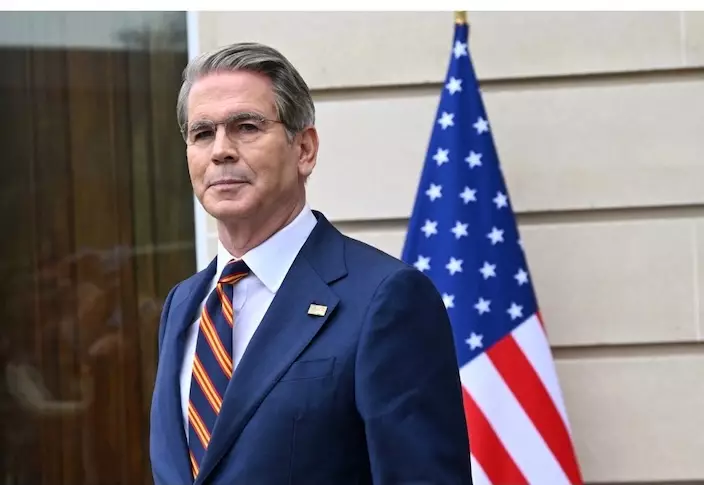
First sanctions hit small fry: "little punch", mere whack-a-mole.
The mockery is not without grounds. The first wave of action has so far taken aim only at smaller firms. Commentators liken the move to a game of "whack-a-mole", since a fresh crop of rebranded companies is expected to pop up soon and keep working for Iran. Three concerns are holding Bessent back, including diplomatic relations and risks to the international financial system. He is unwilling to strike directly at the core corporate giants. If he carries on this way, truly "cutting off Iran's lifeline" will remain out of reach.
A Game of Whack-a-Mole
No sooner had Bessent lifted the curtain on the campaign than he moved against a group of companies and individuals suspected of doing business on Iran's behalf. Some have ties to the Chinese Mainland and Hong Kong. Singapore also saw two companies and two individuals placed on the list. Foreign media understand that, for now, the operation focuses on smaller buyers, logistics firms, shippers, intermediaries and shell companies. Large institutions and corporations are nowhere to be seen.
Foreign media describe America's opening strike as a game of "whack-a-mole". Once these companies are "whacked dead" by sanctions, a new batch of "entities" will immediately pop up under different signboards. They will take over crude oil deals, money transfers and the import-export channels for Iran.
Erica Downs, a senior research scholar at Columbia University's Center on Global Energy Policy, points to some small local refineries in the Chinese Mainland as one example. These refineries operate entirely outside the US dollar system. Even if Washington sanctions them, there is no way to stop them from buying Iranian oil. Their transactions can run through small banks in the Chinese Mainland. There is no need to rely on the US dollar or enter the international financial system at all.
Bessent can hardly be blind to all this. He must know that dealing Iran a genuinely fatal blow would mean taking the knife to China's corporate giants and banks. Yet foreign media have so far seen no sign of him playing that trump card. Analysts say he has three concerns. First, China is bound to retaliate fiercely. As one former US diplomat puts it, Beijing would then go beyond threats on paper. It would hit back through critical minerals, trade and other arenas, throwing new variables into the US-China contest.
Second, sanctioning large Chinese banks plugged into the international system would pose risks to global finance. Before the campaign began, Bessent told reporters that America would first give the countries and companies concerned a chance to stop doing business with Iran. It would not immediately unleash "destructive financial sanctions". He even admitted with unusual candor: "Why would I blow up the financial system?" The remark makes one thing clear. He fears that turmoil in international finance would hurt America itself, so his strikes will never go "all out".
Above all, Bessent has to weigh one more fact. President Xi is due to visit the United States next month, the dearest wish of "Boss" Trump. He would never strike hard at a moment like this. Turning Beijing and Washington against each other would sour the mood for the "summit of the two heads of state".
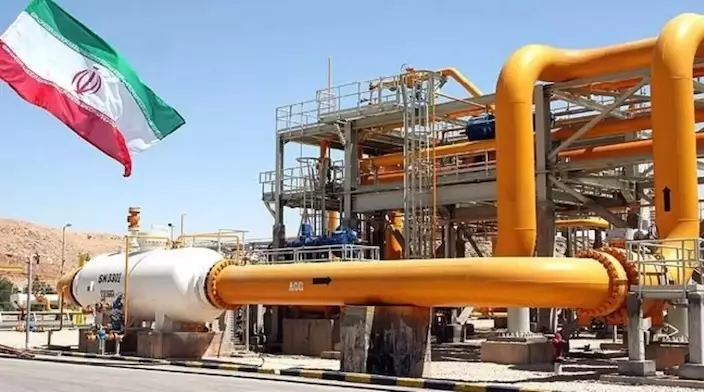
Three concerns stay Bessent's hand; Iran's oil trade limps on.
The Economist mocks Bessent for waging this war with "more bark than bite". The jab smacks of seeing through the emperor's new clothes. Indeed, his first round of action has given the game away. The magazine therefore expects the countries and companies involved to "wait and see" rather than fall in line with Washington's demands right away. They will think again only when he "really bites".
This chimes neatly with the words of Iranian parliament speaker Mohammad Bagher Ghalibaf. "Trading partners will not take America's threats seriously," he says. Different voices, much the same tune.
Lai Ting-yiu
What Say You?
** 博客文章文責自負,不代表本公司立場 **
Count the days. Trump ordered the attack on Iran on February 28, and by this Friday it has been half a year. Look back at what has happened: the rapid advance and triumphant victory he expected never appeared. Instead, he has gone around in circles and ended up right back where he started.
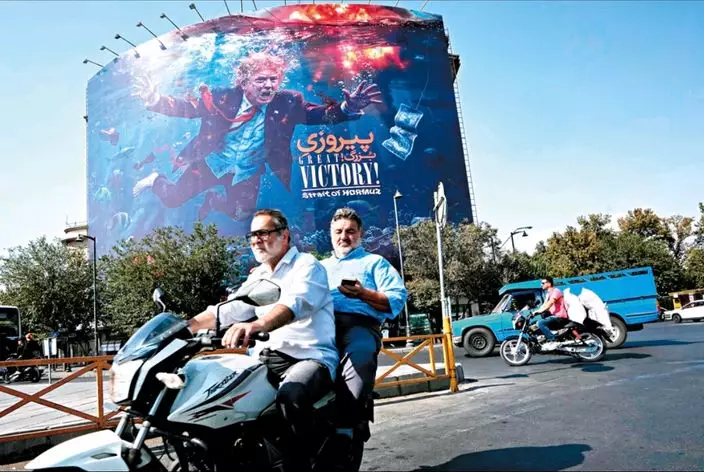
WSJ: Six months on, Trump's Iran war circles back to sanctions.
Back to Square One
Some commentators argue that for the United States to compel Iran's submission, the playbook should run as a straight-line 'three-step sequence.' First impose sanctions, then press for concessions through diplomatic negotiation, and only as a last resort deploy major military force to compel capitulation.
This time though, Trump started with military action. After circling around, he went back to square one this week, picking up the old tool of several previous presidents: economic sanctions. Absurdity of the highest order.
The Wall Street Journal reveals today that before the war began, senior figures in the government had already foreseen the many problems an attack on Iran would bring. They warned Trump, and every one of their predictions later came true.
He brushed the warnings all aside at the time and insisted on sending in the troops. The result: he tumbled into a vicious circle and wrapped himself in a cocoon of his own making.
The Warnings That Came True
Trump's predicament today is entirely self-inflicted. Had he listened to his subordinates' warnings and paused to think before deciding to go to war with Iran, this absurd battlefield would never have happened.
The Wall Street Journal learned from informed officials that after Israeli Prime Minister Benjamin Netanyahu pitched him hard on the plan to attack Iran, then-Director of National Intelligence Tulsi Gabbard delivered a warning. According to analyses by different intelligence agencies, if Iran's supreme leader, Ali Khamenei, were "surgically removed," the leadership would instead become even more hardline and even more determined to possess nuclear weapons.
In other words, killing the original leader would not deliver "regime change." It would deliver a new leader who is even harder to deal with, and the move would backfire.
Gabbard also said intelligence showed that Iran's new leadership would quickly close the Strait of Hormuz and disrupt global energy supplies. At the same time, it would attack US military bases in the Gulf region, along with allied facilities, to prove that US protection of the region is unreliable.
In hindsight, everything Gabbard said came true. Control of the Strait of Hormuz, in particular, has now become America's Achilles' heel.
The Wall Street Journal also revealed that senior military leaders at the time likewise warned Trump: once fighting broke out, US personnel would inevitably suffer casualties. Weapons stockpiles might not be enough, and manpower would be stretched thin, making deployments difficult.
The brass called it. Recent developments have proven that every one of those warnings was, unfortunately, borne out.
Doubts Ignored, War Chosen
Inside the White House's core team, not everyone was sold on war. Vice President JD Vance harbored serious doubts about military action. He wanted the nuclear issue settled through negotiations, arguing that Iran's economy was already at the end of its rope and there was a real opening to force concessions.
Trump, however, refused to budge. He was set on war. Since early this year, he had pushed hard internally to display American power abroad. Now he saw the chance to ride the momentum of last June's bombing of Iran's nuclear facilities and this January's capture of Maduro into another forceful military operation.
Enter Netanyahu. His "plan to attack Iran," pitched at just that moment, suited Trump perfectly.
Intelligence agencies and the military issued warning after warning. Trump turned a deaf ear. He brushed aside the predictions, insisting the military could handle any problem and there was no need for excessive worry.
The Wall Street Journal, citing informed officials, reported that Defense Secretary Pete Hegseth and several generals pounded their chests and assured Trump they could handle the many complex situations that would follow once the war started.
Their pro-war views were music to the ears of a president itching for a fight.
From Battlefield to Bargaining Table
Once the war started, the grim scenarios flagged by the intelligence agencies began coming true one after another. Gulf states lined up demanding a ceasefire, Republicans voiced deep alarm, and the pressure on Trump mounted by the day.
The Wall Street Journal reports he was privately furious that the war had met with opposition, and deeply baffled by it. He asked subordinates again and again: why wouldn't Iran back down?
Out of options, he turned back to diplomacy to untangle the deadlock. The breakthrough finally came on June 17, when the two sides reached a Memorandum of Understanding.
Why compromise? Reports say he had seen a private White House poll showing nearly 80 percent of Americans wanted a US-Iran ceasefire. That number told him how grim public sentiment was, and that he needed to cut a deal fast.
But Trump was the one in a hurry, not Iran. Tehran knew time was on its side and kept stalling and making trouble.
Trump's patience snapped. He at one point decided to launch "the largest attack since World War II."
Gulf states scrambled to phone him and talk him down. Under enormous pressure, Trump finally called off the offensive at the last moment.
Trump also knew at the time that military strikes were riddled with difficulties.
Sure enough, the military sank steadily deeper into trouble, confirming the many prewar worries of senior commanders: weapons stockpiles running dry, forces stretched thin, bases battered in attacks, casualties climbing. Continuing the fight was hardly an option any more.
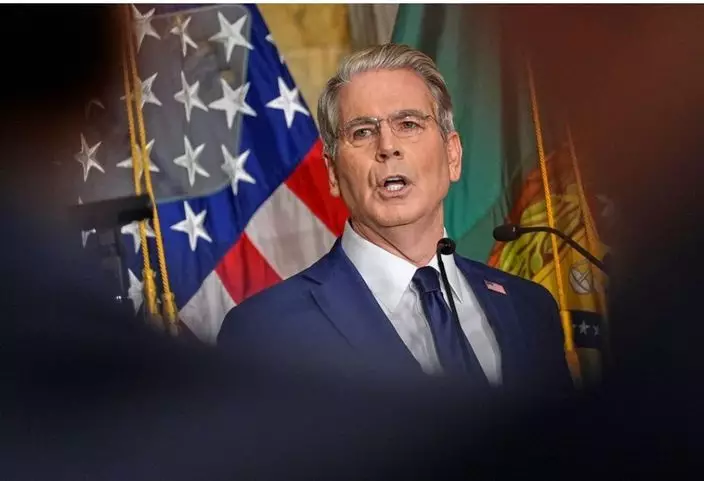
Bessent's 'biggest-ever economic war'? Just sanctions, rebranded.
Back to the Old Playbook: Sanctions, Again
With no way forward, Trump has to take a long detour, landing right back at the starting point: economic sanctions.
Months of fighting, and in the end it was all for nothing.
The problem? From Obama to Biden to Trump, the United States has kept "sanctioning" Iran, and Iran has never yielded.
Now Bessent pulls the same old trick. What makes anyone think it succeeds this time?
Lai Ting-yiu