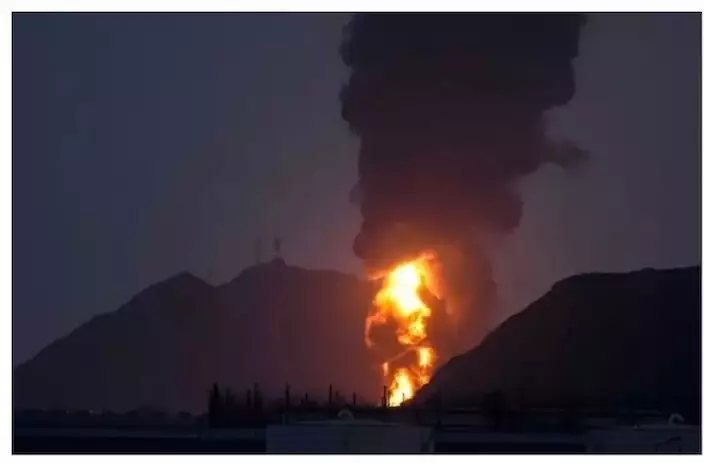

The Beef Bombshell
China is charging ahead on multiple fronts. The headline grabber is AI, where it's already neck-and-neck with the United States. But the real surprise? A wave of other sectors is rising without warning. These are things you'd never expect to hit the global stage.
The New York Times just dropped a bombshell. China has built a massive cattle farming hub on reclaimed grasslands at the edge of the Gobi Desert. Its beef production is now closing in on Brazil and the United States, making it the world's third-largest beef powerhouse. The growth is staggering.
And it's not just beef. Avocado cultivation in Yunnan is exploding, quickly catching up with Mexico, the avocado capital. Equally unbelievable? Caviar and foie gras are penetrating foreign markets and ranking number one globally. That's already old news.
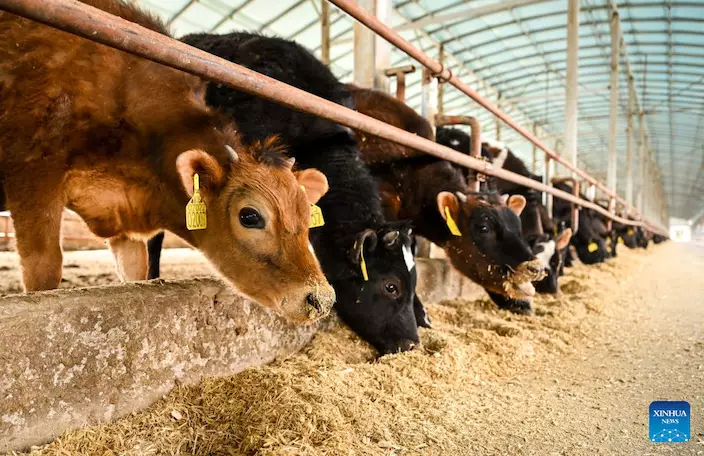
Inner Mongolia's desert has transformed into a cattle hub, propelling China to the world's third-largest beef powerhouse, after the United States and Brazil. The US media is stunned.
The cattle hub The New York Times describes sits in Tongliao, Inner Mongolia Autonomous Region. It's on the eastern fringe of the Gobi Desert. Not long ago, this was a barren wasteland of sand and rock.
After years of transformation, it's now a lush green grassland. Massive farms grow corn and pasture to feed the beef cattle.
Since 2018, China's national beef cattle inventory has jumped over 30%, hitting around 80 million head. Four million of those are raised right here in Tongliao.
Beyond land transformation, increased rainfall in northern China has given the country a boost. It's helping China grab a slice of the $500 billion global beef industry, putting it on par with beef powerhouses like the United States, Brazil, and Australia.
The Self-Sufficiency Strategy
The real engine behind China’s beef surge is its relentless push for self-sufficiency. As diets shift and wallets fatten, China has become the world’s top beef importer. In 2024, imports hit a record 2.87 million tons.
Argentina now sends two-thirds of its beef exports to China. And the traditional beef powerhouses, the United States, Brazil, and Australia, are cashing in big.
To flip the script, China is seizing a double advantage to aggressively expand its beef empire: heavier rainfall in the north and the transformation of desert into pasture. China is now breathing down the necks of the US and Brazil, ranking as the world’s third-largest beef producer.
But Beijing isn’t just building. It’s protecting. Late last year, it imposed import quotas on Brazil and Australia. Shipments above the quota now face tariffs, giving local producers room to grow.
Quality is the next frontier. China is systematically importing elite foreign cattle breeds and raising them on local farms to upgrade its herds. The New York Times, citing World Bank data, points to an unlikely battleground: bull semen. China and the European Union are racing to become the top importer, using it for artificial insemination to boost beef quality. The goal? Homegrown steaks that command premium prices.
Avocados from the East
China's agricultural ambitions don't stop at beef. Not even close. Consider the avocado. In Yunnan's Menglian region, farmers have spent over a decade perfecting a crop that is now taking on the world's top producers. These avocados are already shipped in bulk to Hong Kong, Thailand, Malaysia, Singapore, and beyond. They are competing directly with giants like Mexico and Peru.
Menglian sits on the same latitude as Uruapan, Mexico's famed avocado capital. The climate is perfect for the fruit that has exploded in popularity in recent years.
Local farmers have introduced over a hundred varieties in the past decade. The first commercial batch hit the market in 2017. After that, development kicked into high gear and production soared.
Today, Menglian's avocado farms cover 120,000 mu, or about 8,000 hectares. That's half of China's total avocado acreage.
By the latest season, homegrown avocados were already replacing 15% of imports. And earlier this year, they cleared Kunming Customs inspection for the first time. Now they can travel by land and air to Malaysia, Thailand, Singapore, Hong Kong, and beyond.
At this pace, it won't be long before Menglian earns the title 'China's avocado capital,' joining the ranks of the world's top producers.
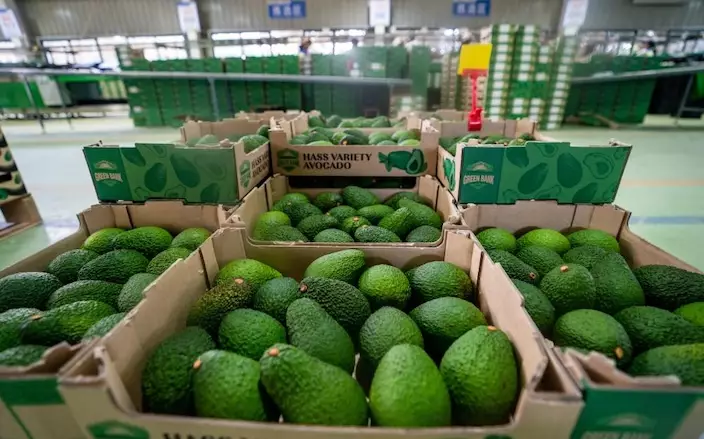
In recent years, Menglian in Yunnan has planted avocados on a massive scale. It's breaking into the global market, challenging Mexico's avocado capital, and earning the title 'China's avocado capital'.
The Bigger Food Fight
And the shocks keep coming. French media report that China is quietly taking over the high-end gourmet scene. Consider foie gras. This year, China's output will officially surpass France's. That makes China the world's top foie gras producer.
Then there is caviar. China's caviar exports already rank number one globally.
China's industrial explosion goes way beyond the obvious. Sure, it covers cars, AI, space. But it also spans thousands of things you never imagined conquering the world.
Even Chinese steak is about to top the global rankings. That is simply jaw-dropping.
Lai Ting Yiu
What Say You?
** 博客文章文責自負,不代表本公司立場 **

Former Democratic Party chairman Wu Chi-wai traveled to Britain after his release from prison to reunite with his wife and children. Border officers detained and questioned him upon arrival. They set a hard deadline allowing him to stay for only seven days, putting deportation squarely on the table.
After several twists and turns, he was eventually granted permission to remain for six months. What happens after that period will still depend on circumstances. What exactly happened over those few days? Why did the Home Office reverse its decision more than once? Did the Foreign Office actually help Wu?
Lee Wing-tat, a former Democratic Party heavyweight who went into exile in Britain five years ago, has spent recent days helping Wu Chi-wai fight to stay in the country. Lee disclosed the sequence of events in a Facebook post today. His account suggests the Home Office wanted to keep Wu out from the start.
Lee Wing-tat exposes the full story: Wu Chi-wai detained on arrival in Britain. The photo shows the two men together in Britain recently.
The British Consulate-General in Hong Kong, meanwhile, appeared to be "pulling the cat's tail," meaning it evaded responsibility rather than offering genuine support. In the end, hawkish politicians applying last-minute pressure were the only thing that temporarily saved him from deportation.
Lee Wing-tat has lived in Britain for several years and built up a network of contacts there. So when Wu Chi-wai ran into trouble, he immediately turned to this former “big brother" for help. A support team formed quickly and spent several consecutive days lobbying officials and devising solutions for Wu. That is why Lee knew exactly what Wu had gone through.
Had Wu made prior arrangements to smooth his entry before setting off for Britain? The answer is yes. According to Lee's post, Wu and his Democratic Party friends informed senior officials at the British Consulate-General in Hong Kong before his departure.
The consulate then notified border authorities at London Heathrow Airport. When Wu arrived at immigration, border officers checked their computer system and saw an "Alert" signal. A lengthy interrogation followed, after which officers ordered him to "leave within seven days."
This raised a question for Lee Wing-tat: what message had senior consulate officials actually sent to the border authorities? He suggested two possibilities. Option A was that they asked for Wu to be allowed in. Option B was that they simply flagged an "Alert" signal. Lee believes the answer was probably Option B.
The British Consulate-General in Hong Kong falls under the Foreign Office. A Foreign Office official was present when Wu was detained by airport border officers and fully aware of what was happening. Yet that official never asked to meet the border authorities' supervisor, nor took any action to resolve the problem.
Judging from this process, Home Office border officers likely assessed Wu Chi-wai's circumstances after seeing the "Alert" signal and may have sought instructions from superiors. They nonetheless ordered him to leave within seven days. This shows the Home Office had already decided not to let him into Britain. That is why it immediately confiscated his passport, allowed him only a brief stay, and then sent him back to Hong Kong.
Wu lined up support before flying to Britain. He reached out to senior consulate officials in Hong Kong, who then messaged UK border authorities. But Lee suspects that message was just a warning flag, not a green light.
The Foreign Office showed a similar attitude at every level. From consular officials in Hong Kong to the Foreign Office staffer at the airport, none of them had any intention of helping Wu Chi-wai secure entry. The two departments appeared merely to be "pulling the cat's tail," passing the matter between them and avoiding responsibility.
Lee Wing-tat said that after Wu Chi-wai was initially allowed to enter for seven days, his support team hoped to handle the matter discreetly and find room to maneuver. Their efforts vanished like a stone sinking into the sea during the first two days. No ministerial-level Home Office official contacted them, as though the matter did not warrant attention.
Lee realized they could not wait any longer. He proposed internally that they contact parliamentarians and the media to pressure the Home Office. He did not believe legal arguments alone could change the British government's decision.
Wu Chi-wai then began giving interviews to The Times, the Associated Press and the BBC. Lee, meanwhile, contacted a group of members from both the House of Commons and the House of Lords. He asked them to write to the Home Office to express concern.
This Sunday, Lee contacted Luke de Pulford, executive director of the Inter-Parliamentary Alliance on China, and asked him to seek help from Lord Alton in the House of Lords. The veteran parliamentarian immediately wrote to Home Office Minister of State Lord Hanson. Hanson replied three hours later, saying the matter would be handled on Monday. By Monday afternoon, Lee finally learned that the Home Office would not deport Wu Chi-wai and that Wu could go to the airport to retrieve his passport.
It should be noted that the Inter-Parliamentary Alliance on China is an international organization that opposes China and disrupts Hong Kong. During the 2019 unrest, both Luke de Pulford and Lord Alton had close dealings with Jimmy Lai. They belong to the same political camp, whose members also include Chris Patten, the last colonial Governor of Hong Kong. This group still carries a degree of political influence, and officials remain somewhat wary of them.
Several points in Lee Wing-tat's account line up with an earlier analysis. First, the British government is wary of those who destabilize Hong Kong. It views them as a source of trouble and does not want them settling in Britain long-term, which explains its initial decision to deport Wu Chi-wai after seven days. Second, the British Consulate-General in Hong Kong shares this position and will no longer help such people relocate to Britain, in order to avoid trouble for itself. Third, with no other help available, these people can only rely on a group of China hawks to step in at the final hour.
Britain's decision to spare Wu Chi-wai for now is merely a perfunctory move to manage political pressure. Its underlying policy will not change. One online comment beneath Lee Wing-tat's post captured this well: "This is neither the first such incident, nor will it be the last."
From this, Wu Chi-wai's fate after six months remains unclear.
Lai Ting Yiu