Trump’s attack on Iran blew up in his face. Humiliated, he’s been itching for a chance to flex his muscles and blow off steam. He just got it. On social media, he announced the 'largest oil cooperation agreement in history' with Venezuela. Through a deal with a private company, the US now holds 'majority control' over the country’s 65 billion barrels of oil reserves.
The Venezuela Heist Unveiled
Trump’s words were soaked in arrogance. Venezuelan oil, he gloated, was finally America’s 'prize in the bag.' But the twist? This was no surprise. The whole saga was practically scripted—an international political remake of the movie 'Infernal Affairs.'
Just weeks after sending troops to kidnap President Maduro in January, Trump announced that the US would pour money into Venezuelan oil and put its resources under watch. He didn’t even bother with a fig leaf—'snatch the oil' was the plan. But the plot ran deeper. He had long been in cahoots with acting President Rodriguez, scheming to topple the government from within. And he was cutting deals with the country’s oil barons, all set to cash in together.
Trump wanted to run the same play in Iran. Pull it off, and the US would become the 'global energy hegemon.' This time, though, he slammed into a brick wall.
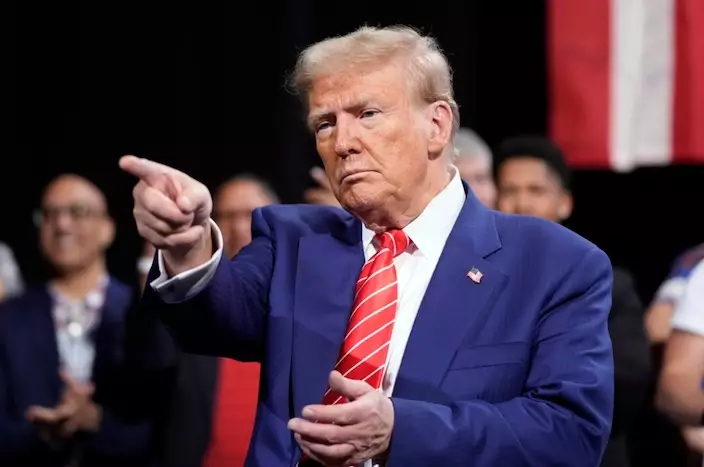
'Infernal Affairs' in Caracas: moles took the oil. Iran resisted.
This is colonialism with a 21st-century face. A smash-and-grab of another nation’s riches, executed in broad daylight. The US just pulled off the perfect plunder of Venezuela’s oil wealth.
Trump’s heist flick didn’t just need brute force. It needed a mole. An 'Infernal Affairs' insider to make the plot work.
The Mole at the Top
Trump unveiled a grand oil cooperation plan with Venezuela last Friday. The acting president was elated. Rodriguez said the agreement could span 25 years, with the US helping to control 17 strategic oil fields. It promised to supercharge production and deliver $209 billion in investment.
Energy experts raised a red flag. The deal wasn't transferring energy to a private enterprise, they argued. It was a handover to another country: the United States. She sidestepped the issue.
Her attitude is no surprise. It traces back to her time as vice president, when Maduro was still in power. As a former oil minister, she had close ties with US oil giants. Even after her promotion, she kept her hands on oil policy. She paved the way for Chevron, the US oil giant, to return to business in Venezuela.
Sources say the White House already knew Rodriguez was 'usable.' If she rose to power, she would fully back US investment in Venezuela's oil industry. Trump had already sniffed out the mole. He secretly assigned her a role in the power grab.
The mole delivered. After US special forces abducted Maduro, Rodriguez stepped in as acting president. She never mentioned 'resisting the US.' Instead, she called for cooperation.
At the end of January, the acting president signed the Oil Law Reform Bill. It let private and foreign investors into the country's oil business. She flung the door wide open for the US government and oil companies to march in.
Recent reports say Rodriguez is actively considering pulling Venezuela out of OPEC. She's discussing it with the US. Washington, of course, approves. If it happens, US influence over Venezuela's oil will only grow.
The move is clearly orchestrated by the US behind the scenes.
The Tycoon and the Underworld
The US didn't just plant moles inside Venezuela's government. It also recruited them in the business world. US media reports reveal a striking partnership: the US government teamed up with a private company to grab control of the country's oil fields. The company? North American Blue Energy Partners. Its boss, Bedangote, had long-standing ties with the US government and oil majors. He was also deeply entangled with Rodriguez. And he had already snapped up a batch of oil fields in western Venezuela.
For Washington, this local tycoon was a made man. One of their own. They knew that using him to control the oil fields would be a force multiplier: half the effort, double the payoff. So the US simply bought into the company. They'd share the spoils, together.
But this tycoon's background was anything but clean. Prosecutors in Zurich had been digging into his accounts. Yet no charges ever materialized.
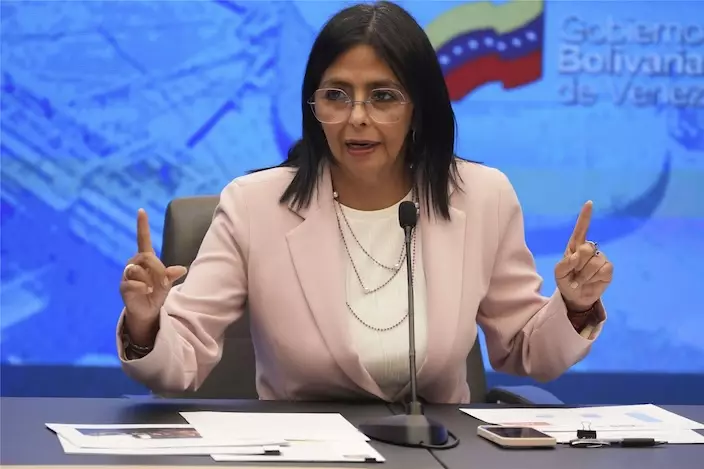
America's mole in Caracas: Rodriguez made the oil grab possible.
The New York Times dropped a bombshell: the US State Department had leaned on Swiss +
-+authorities to shut down the investigation. Meanwhile, he was handed multiple US entry visas. 、
The message was clear. His relationship with American officials was anything but ordinary.
The Bigger Game
The New York Times analysis reveals the playbook. Trump topples Maduro, then swallows Venezuelan oil. The objective? Reshape global energy markets and fortify US energy security.
With Venezuela's oil under its control, the US can erode the market influence of Middle Eastern nations. After the Iran war, that mission has become even more pressing.
Look at the Iran war through this lens, and the motive snaps into focus. Trump's real driver? Seizing Iran's colossal oil reserves.
Trump launched the war in late February. Then, in an interview with the Financial Times, he was blunt: his favorite thing is taking Iran's oil. It makes a lot of money, he explained.
Trump's a businessman, and he's running the numbers. Iran's oil reserves: 208.6 billion barrels, third largest on the planet. Natural gas: 1,200 trillion cubic feet, also in the global top three.
If the US could grab both Venezuela's and Iran's oil, it would lock down global oil pricing power. It would preserve the petrodollar hegemony. The 'hegemonic' throne would be unshakable.
The Half-Won Hegemony
But Iran is not Venezuela. Trump's grand plan has smashed into a brick wall. He's the one left battered and bruised.
The US bid to become the world's oil hegemon has been thwarted. So far, it's only half-succeeded. For the global balance of power, that's excellent news.
Lai Ting-yiu `
What Say You?
** 博客文章文責自負,不代表本公司立場 **
France this year seems to have run straight into the calamity of the 'Crimson Horse and Red Goat,' with misfortunes arriving one after another. On the economy, its debt has worsened and is on the verge of blowing up. Economist Paul Krugman says France may have reached the point of being 'too big to save.'
Debt, Chaos, and a Warning for Hong Kong
Politically, the country is in utter chaos. The largest student unrest in recent years has erupted, and the flames keep spreading. It’s hitting hard across the country.
A friend who lived through the 2019 Hong Kong Black Riots finds France's turmoil familiar. He points out five major similarities between the two, though the outcomes are very different.
The Macron government, constrained by far-left and far-right forces, cannot and is powerless to quell the chaos. The 'political terminal illness' it suffers from is beyond cure.
Hong Kong, by contrast, is fortunate to have successfully stopped the violence and rebuilt effective governance, ultimately avoiding a great calamity. Why France has fallen ill to this extent is worth taking as a warning.
From School Funding Protest to Nationwide Inferno
France is a century-old brand of "democracy and freedom." Yet political turmoil is continuous: a small disturbance every year, a major one every three years, endlessly.
The latest unrest was triggered in September by middle school students. At first, they only protested insufficient education funding, teacher shortages, and dilapidated school buildings.
The fire then burned ever fiercer. It erupted in multiple cities and is now spiraling out of control.
Yesterday the situation deteriorated further. Nationwide, 550,000 people took to the streets, and violence escalated across the board.
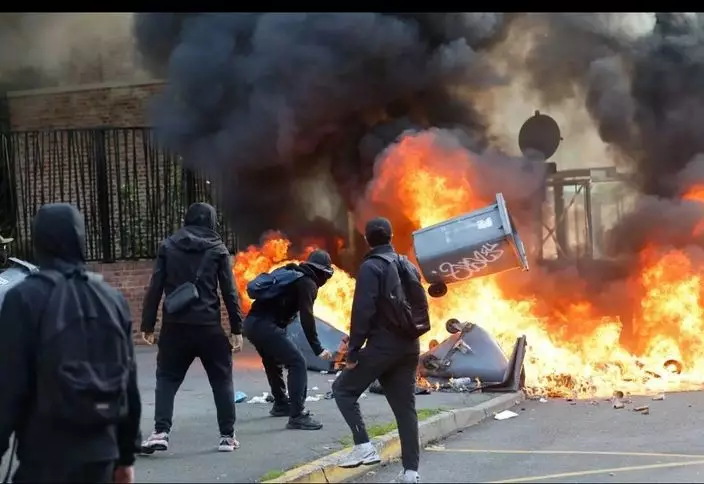
France burns: 550,000 people rioting, violence escalates.
"Rioters" set fires, looted, and attacked police officers in many places. Bustling districts became battlefields.
Some precious historic buildings, such as the Lyon tourism bureau and the Limoges city hall, were tragically burned down. It’s heartbreaking.
More than 1,200 people were arrested in the unrest and 150 police officers were injured. The flames have still not weakened.
Five Parallels: Youthful Rioters and the Hong Kong Déjà Vu
A friend watched France's student unrest and spotted five similarities with Hong Kong's 2019 Black Riots. The sense of déjà vu hit hard.
First, France's current unrest began in middle schools, and the demonstrators are defined by their youth. In the past they were adults or university students; now they are barely teenagers.
Among those arrested in clashes with police, most are minors. Yet their ferocity and brutality match adults, and often exceed them.
When the Black Riots erupted in Hong Kong back then, large numbers of secondary school students likewise took to the streets as a battlefield. Their radicalism was in no way inferior to that of their older brothers and sisters.
A friend once witnessed a group of secondary school students in a certain district violently taunting police officers, then scattering and running off, excited as if it were all a game. Some students were even rehearsing on building rooftops how to fight police officers, preparing to join the ranks of the "valiant."
Violent Elements Hijack the Movement
Second, violent elements who were not students joined in large numbers shortly after the French secondary school student protests broke out. From that point on, the actions were no longer peaceful. Demonstrators blocked roads everywhere, set fires, and attacked public facilities, especially landmark buildings, including a city hall with a hundred-year history.
Hong Kong's Black Riots had the same pattern. Multiple groups of "black-clads" mixed into the demonstrator ranks and launched "fire attacks" across busy districts. They damaged public facilities such as MTR stations, and even targeted the Government Headquarters, the Legislative Council Complex, and the Liaison Office of the Central People's Government.
Social Media as a Weapon of Mobilization
Third, French secondary school students used social platforms and messaging apps to mobilize the masses and paralyzed the schools' servers. Later, when more people joined the unrest, the destructive power of these systems became even greater.
The masterminds of Hong Kong's Black Riots likewise used social media and messaging apps (such as Telegram) for communication, incitement, command, and mobilization. They controlled and issued orders from behind the scenes.
At the time, the use of mobile phones among secondary school students was already very widespread. Mobile phones had become an important tool for organizing actions.
Political Parties Exploit the Chaos
Fourth, the French secondary school students' "rebellion" was exploited by political parties and political organizations almost as soon as it began. It became a bargaining chip in their contest with the government.
President Macron pointed out that the movement was clearly manipulated by political forces. Prime Minister Lecornu was even more blunt, saying the far-left party leader Mélenchon was fanning the flames behind the scenes, using the unrest to attack the ruling party and create advantages for his own bid for the presidency next year.
This shows that the secondary school students who took to the streets were merely pawns in the contest between political forces.
During the Black Riots of those years, Hong Kong's radical organizations, the opposition camp, and the anti-China media tycoon Jimmy Lai and others likewise used street riots to attack the government. Their goal was to seize governing power, exactly the same calculation as that of France's far-left parties at present.
Musk, Trump, and the Shadow of Intervention
Fifth, beyond internal political forces, this unrest in France also carries the shadow of foreign intervention. French Foreign Minister Barrot earlier said directly at an international conference that US tech giant Musk used his social media platform to wildly badmouth Macron in order to destabilize France and thereby influence next year's presidential election. Barrot also said that the MAGA movement led by Trump is likewise pushing French society toward polarization, with the ultimate goal of seizing political power.
Trump and Musk are indeed working hard to boost France's far-right leader Le Pen into the presidency. For this purpose, the more chaotic France is, the better. The possibility that they had a hand in this unrest is therefore extremely high.
That there were foreign black hands behind Hong Kong's Black Riots is now conclusively proven. The clearest example is media boss Jimmy Lai playing the role of a US agent, instigating a color revolution to subvert Hong Kong's regime.
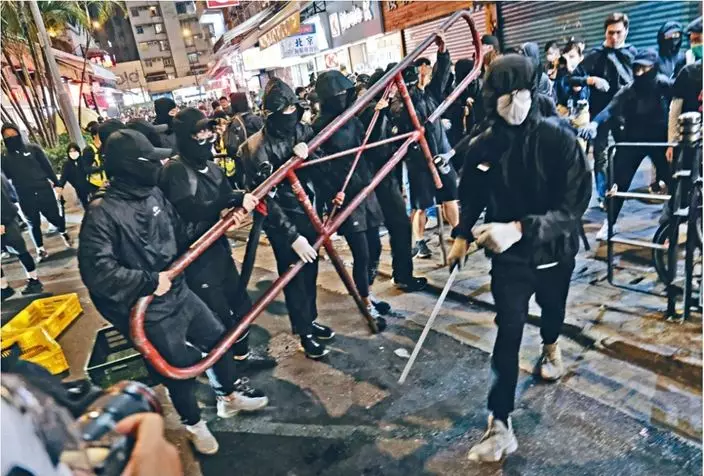
Hong Kong riots drew many students, backed by political forces.
Divergent Outcomes: Hong Kong Recovers, France Spirals
The two riots share five similarities, yet the outcomes are vastly different. Hong Kong stopped the violence, restored order, and internal strife gradually subsided. The city is returning to the track of stable governance.
France, by contrast, is mired in endless political chaos. France holds its presidential election next April. The far right has the greatest chance of winning, the far left comes second, and the ruling centrists are the weakest.
At this stage, the ruling party simply cannot govern effectively. Social contradictions will only continue to intensify, and peaceful days will be hard to come by.
Misfortunes never come singly: France is deeply mired in a debt crisis. Liabilities reach 3.6 trillion euros (4 trillion US dollars), equivalent to 119% of GDP. To refinance, France would have to implement severe fiscal austerity amounting to 4% of GDP.
If the government resorts to such harsh measures, society will become even more turbulent. The economy will slide further, and the country will ultimately head down a dead end.
A friend sees France stricken with a "terminal illness" while Hong Kong has dodged the calamity. The relief runs deep, and the friend is all the more convinced that Hong Kong is a "blessed land."
Lai Ting-yiu
Captions: