The US war on Iran is a broken record: strike, pause, strike again. Even Donald Trump can't find the off switch. But the real tragedy is playing out at sea. Thousands of sailors and airmen are trapped on carriers in brutal conditions. No return date. No escape. Their minds are fraying. Lives hang by a thread.

250-day deployment, no return date — sailors cracking, jumping overboard
Now US media reports a nightmare unfolding on the USS Abraham Lincoln. Sailors, driven insane by the endless confinement, tried to jump overboard. They wanted to end it all in the churning sea. Crew members stopped them just in time. They were saved from becoming lost souls in the angry waves.
More than 200 family members learned the truth and exploded. They confronted senior Navy officials, accusing them of treating sailors like disposable parts. The firestorm is just getting started. It will rage hotter. And it will eventually burn Trump himself.
The USS Abraham Lincoln left San Diego on November 21 last year. It loitered in the Indo-Pacific, then steamed to the Middle East just before the Iran war erupted.
That was more than 250 days ago. Since then, the carrier has barely touched land. A few days in Guam. A few in Oman. The rest of the time? Endless sea. And still, no return date.
For the 5,000-plus sailors on board, the agony goes beyond not knowing when they'll see home. The ship itself is falling apart. Toilets clog. Showers grow mold. Washing machines are dead. Even drinking water and food rations have been cut. This is daily life. It is inhumane.
Add relentless combat missions to the mix. The pressure is simply crushing. Everyone feels like they're trapped in a pressure cooker. Their mental state? On the brink of collapse.
Families Confront the Navy
The families had heard about the hardships onboard. They reached their breaking point. Last weekend, more than 200 of them held a grievance meeting in San Diego, angrily confronting Acting Secretary of the Navy Hung Cao.

Hundreds of families grilled Hung Cao. Firestorm heads for Trump
A family member named Loma spoke through tears. Her husband was one of the sailors who tried to jump overboard to commit suicide. He was rescued, pulled from duty, and is now in treatment. The ship's grievance department reached out once. Then silence. She's had only a few brief words with her husband since.
Another family member told another horror. Her husband saw a fellow sailor climb over the railing, ready to jump. He shouted, rushed forward, and dragged the man back onto the deck. He saved a life.
At the grievance meeting, the anguish was relentless. One mother, in tears, recounted a call from her daughter. The sailor's voice was hollow. She felt she would never go home. She might die on the ship.
Other families turned their fury on Hung Cao and senior Navy officials. Why was the USS Lincoln's combat mission being stretched endlessly? The ship was due back in May. Now the return date is a question mark. The Navy Department has never offered a specific timeline. That lit a fuse.
Hung Cao's answer was shameless. He said another carrier, the USS Roosevelt, would relieve the USS Lincoln. But he never gave a concrete timeline. The families, of course, refused to let it go.
The Navy's Impossible Math and a Political Firestorm
The Navy Department stood silent, absorbing the families' fury. But it had its own bitter truth to swallow. The USS Ford, the other carrier that had been operating alongside the Lincoln in the Middle East, pulled out in May after more than ten months at sea and a laundry room fire.
Now, only the Lincoln and the USS Bush remain in the region. Carriers from other areas can't be rushed in to relieve them. And with the Middle East war still boiling, the Lincoln has no choice but to keep enduring.
The US Navy faces a brutal math: ten bottles, seven lids. The endless Middle East wars keep it bogged down. So even when it knows a ship like the Lincoln is overloaded and its sailors are on the verge of collapse, it is helpless.
This endless delay is crushing the thousands of sailors on board. If the pressure keeps building, it will hit a breaking point. Then sailors may start taking their own lives, jumping into the sea one after another in protest.
Then the families' fury will erupt like wildfire. This fire will ultimately engulf Trump. He will be badly burned and left in a terrible mess.
Lai Ting-yiu
What Say You?
** 博客文章文責自負,不代表本公司立場 **
Donald Trump is back in the White House, and he's brought a new obsession: bigness. Everything must be big. Whether it's big and useless is another question entirely.
Late last year, Trump and Defense Secretary Pete Hegseth unveiled a plan for a 'Century Mega-Ship.' Trump boasted it would be 'the fastest, the biggest, and by far 100 times more powerful than any battleship ever built' in U.S. Navy history.
It all sounded grandiose. Astonishing.
Last Friday, the Congressional Budget Office ran the numbers. The sticker shock is real. The first giant battleship, the Intrepid, now carries a price tag of $23.4 billion, about HK$182.5 billion. And the total bill for the entire 'Golden Fleet'? A staggering $275 billion, or nearly HK$2.2 trillion. That's terrifyingly expensive.
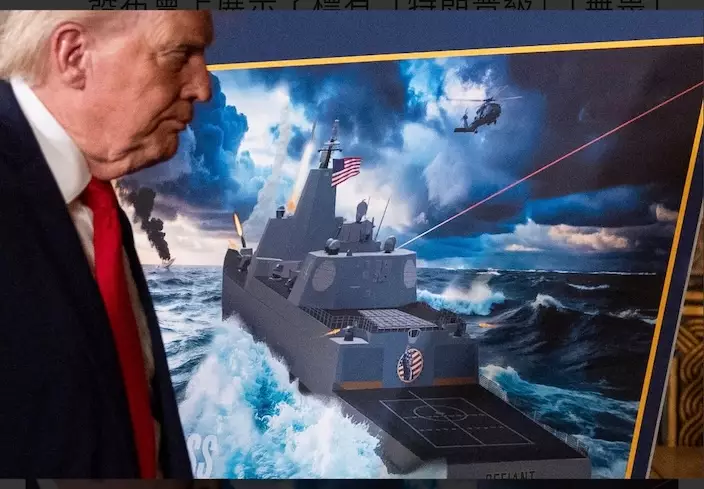
Trump's $23.4B mega-ship: A costly fantasy that America's failing shipyards simply cannot build.
But the cost isn't the only nightmare. Senior Navy officials have a huge worry: America's shipyards are in decline. They simply can't handle a mission this surreal. With those two factors combined, if Washington forces the issue, the whole thing is likely to end in failure.
Half a year ago, Trump dropped a bombshell of a concept. The Navy would build two ships of a class Trump called 'the largest battleship in the history of our country.' These behemoths would displace 30,000 to 40,000 tons. They'd pack hypersonic weapons, electromagnetic railguns, cruise missiles, and the world's most advanced lasers. The class? Trump-class, naturally.
Later, the Navy confirmed something even more chilling. These ships would carry nuclear-tipped missiles. That gives them a deterrent punch similar to nuclear-armed submarines.
The grand plan? Eventually build 20 to 25 of these mega-ships of the century. Together, they'd form a 'Golden Fleet.' A force a hundred times more powerful than today's Navy, capable of dominating the seas.
The Eye-Watering Price Tag
The Navy's initial budget put the first mega-ship, the Intrepid, at $15.1 billion (HK$117.8 billion). The next two ships would average $10.2 billion. That's nearly HK$80 billion each.
But Trump wanted even more firepower. He demanded the entire fleet go nuclear. That one decision blew up the cost.
Last Friday, the Congressional Budget Office weighed in with a new report.
If the first new battleship displaces 35,000 tons, the cost jumps to $23.4 billion (about HK$182.5 billion). That's 50% higher than the original estimate. It's nearly the cost of a Ford-class aircraft carrier.
Build 15 of these mega-ships, and the total bill hits $275 billion (about HK$2.2 trillion).
Call it a super money pit. The plan is staggeringly expensive. Will Congress actually write the check? Far from certain.
But the real showstopper is even bigger. America's shipyards simply lack the capacity to pull off a mission of this century.
Why It's Doomed to Fail
For years, American industry has fled overseas. Shipbuilding has been in steady decline. The ability to build warships has eroded. Delays are now routine.
Consider the Burke-class destroyer. US media report deliveries are running up to five years late. Now imagine a Trump-class battleship, 3.5 times larger. Asking shipyards to deliver that on time? It is a ' mission impossible.'
At a congressional hearing, former Navy Secretary Ferran, who recently stepped down, called recent warship programs a total mess. Even the best-performing project was delayed over half a year and ran 57% over budget.
He admitted the hard truth. America cannot accelerate warship construction. It is not a lack of will. It is a lack of capability.
But Trump never cares about reality. According to US media, one reason Ferran was fired was his insufficient push for the 'Golden Fleet' plan.
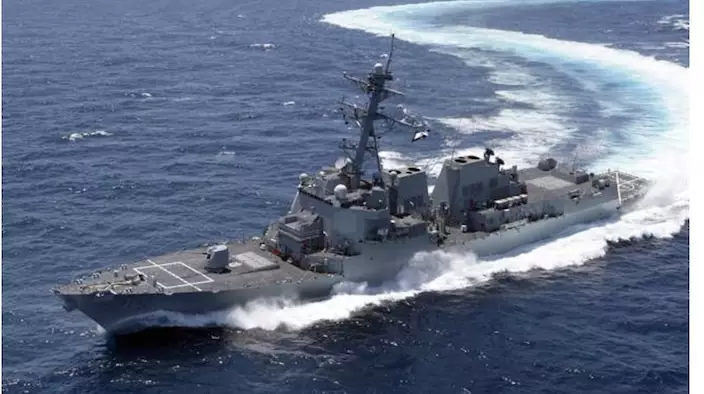
With destroyers to be delivered five years late, America's dying shipyards can never build a "Golden Fleet."
If Trump forces this century's giant warship, it will also threaten plans for new aircraft carriers and nuclear submarines.
US media note that Newport News Shipbuilding handles most nuclear-powered vessel construction. If it prioritizes the Trump-class battleship, production of Ford-class carriers and nuclear submarines will inevitably suffer.
Trump has a natural instinct for size contests. He promised the 'largest' arch in Washington. The 'largest' banquet hall in the White House. None of it has ever materialized.
Given all these headwinds, this 'largest in history' Golden Fleet looks likely to sink before it ever sails. Another grand promise, left unfinished.
Lai Ting-yiu