
Skip to Content Facebook Feature Image

Trump's Trillion-Dollar 'Golden Fleet' Is a Shipwreck in the Making

Blog

Trump's Trillion-Dollar 'Golden Fleet' Is a Shipwreck in the Making
Blog

Blog

Trump's Trillion-Dollar 'Golden Fleet' Is a Shipwreck in the Making

2026-08-11 12:05 Last Updated At:12:05

Donald Trump is back in the White House, and he's brought a new obsession: bigness. Everything must be big. Whether it's big and useless is another question entirely.

Late last year, Trump and Defense Secretary Pete Hegseth unveiled a plan for a 'Century Mega-Ship.' Trump boasted it would be 'the fastest, the biggest, and by far 100 times more powerful than any battleship ever built' in U.S. Navy history.

It all sounded grandiose. Astonishing.

Last Friday, the Congressional Budget Office ran the numbers. The sticker shock is real. The first giant battleship, the Intrepid, now carries a price tag of $23.4 billion, about HK$182.5 billion. And the total bill for the entire 'Golden Fleet'? A staggering $275 billion, or nearly HK$2.2 trillion. That's terrifyingly expensive.
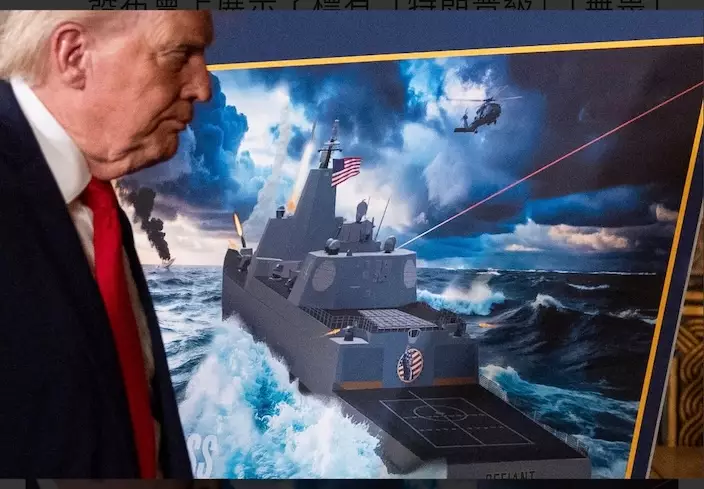
Trump's $23.4B mega-ship: A costly fantasy that America's failing shipyards simply cannot build.

Trump's $23.4B mega-ship: A costly fantasy that America's failing shipyards simply cannot build.

But the cost isn't the only nightmare. Senior Navy officials have a huge worry: America's shipyards are in decline. They simply can't handle a mission this surreal. With those two factors combined, if Washington forces the issue, the whole thing is likely to end in failure.

Half a year ago, Trump dropped a bombshell of a concept. The Navy would build two ships of a class Trump called 'the largest battleship in the history of our country.' These behemoths would displace 30,000 to 40,000 tons. They'd pack hypersonic weapons, electromagnetic railguns, cruise missiles, and the world's most advanced lasers. The class? Trump-class, naturally.

Later, the Navy confirmed something even more chilling. These ships would carry nuclear-tipped missiles. That gives them a deterrent punch similar to nuclear-armed submarines.

The grand plan? Eventually build 20 to 25 of these mega-ships of the century. Together, they'd form a 'Golden Fleet.' A force a hundred times more powerful than today's Navy, capable of dominating the seas.

The Eye-Watering Price Tag

The Navy's initial budget put the first mega-ship, the Intrepid, at $15.1 billion (HK$117.8 billion). The next two ships would average $10.2 billion. That's nearly HK$80 billion each.

But Trump wanted even more firepower. He demanded the entire fleet go nuclear. That one decision blew up the cost.

Last Friday, the Congressional Budget Office weighed in with a new report.

If the first new battleship displaces 35,000 tons, the cost jumps to $23.4 billion (about HK$182.5 billion). That's 50% higher than the original estimate. It's nearly the cost of a Ford-class aircraft carrier.

Build 15 of these mega-ships, and the total bill hits $275 billion (about HK$2.2 trillion).

Call it a super money pit. The plan is staggeringly expensive. Will Congress actually write the check? Far from certain.

But the real showstopper is even bigger. America's shipyards simply lack the capacity to pull off a mission of this century.

Why It's Doomed to Fail

For years, American industry has fled overseas. Shipbuilding has been in steady decline. The ability to build warships has eroded. Delays are now routine.

Consider the Burke-class destroyer. US media report deliveries are running up to five years late. Now imagine a Trump-class battleship, 3.5 times larger. Asking shipyards to deliver that on time? It is a ' mission impossible.'

At a congressional hearing, former Navy Secretary Ferran, who recently stepped down, called recent warship programs a total mess. Even the best-performing project was delayed over half a year and ran 57% over budget.

He admitted the hard truth. America cannot accelerate warship construction. It is not a lack of will. It is a lack of capability.

But Trump never cares about reality. According to US media, one reason Ferran was fired was his insufficient push for the 'Golden Fleet' plan.
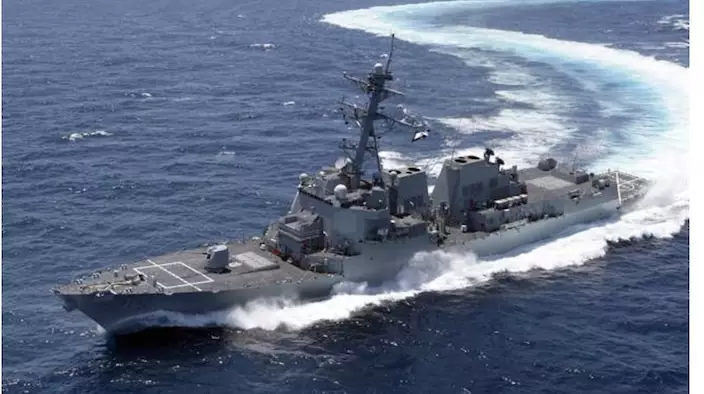
With destroyers to be delivered five years late, America's dying shipyards can never build a "Golden Fleet."

With destroyers to be delivered five years late, America's dying shipyards can never build a "Golden Fleet."

If Trump forces this century's giant warship, it will also threaten plans for new aircraft carriers and nuclear submarines.

US media note that Newport News Shipbuilding handles most nuclear-powered vessel construction. If it prioritizes the Trump-class battleship, production of Ford-class carriers and nuclear submarines will inevitably suffer.

Trump has a natural instinct for size contests. He promised the 'largest' arch in Washington. The 'largest' banquet hall in the White House. None of it has ever materialized.

Given all these headwinds, this 'largest in history' Golden Fleet looks likely to sink before it ever sails. Another grand promise, left unfinished.

Lai Ting-yiu


What Say You?

** 博客文章文責自負,不代表本公司立場 **
If attacking Iran were a business, the US just took a total bath. Military spending in the hundreds of billions. Piles of expensive missiles written off. Bases and equipment damaged.

And what did America get? Nothing. It's actually worse off than before the war. Iran now controls the Strait of Hormuz.

Trump, the businessman, is of course furious. And like any cornered CEO, he's looking for someone to blame. With midterm elections looming, he needs to distance himself from this debacle. Pinning the failure on his subordinates is pure self-preservation.

The Washington Post dropped a bombshell yesterday. At an internal meeting last week, Trump lit into Defense Secretary Hegseth, saying that he thought the ammunition shortage "had been fixed". Now he wanted answers. Why, as defense secretary, had Hegseth let him be misled?

Hegseth, feeling the heat, didn't hesitate. He pointed the finger straight at Deputy Defense Secretary Feinberg. Feinberg, he said, had failed to keep the president fully in the loop. This isn't the first time Trump has used Hegseth as

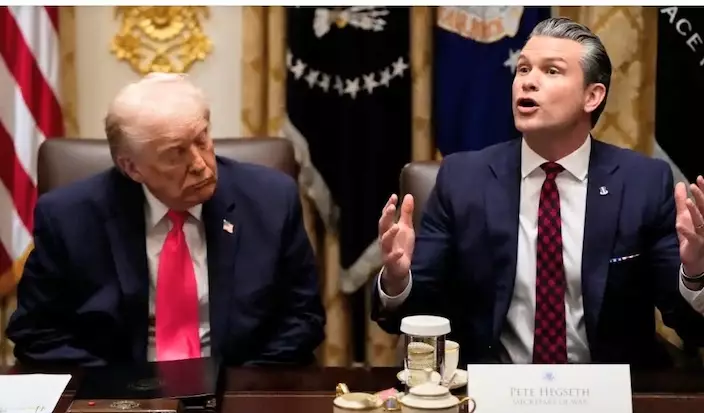
Trump threw a tantrum at an internal meeting, ripping into Defense Secretary Hegseth. His demand: explain why he was misled on the weapons shortage.

Trump threw a tantrum at an internal meeting, ripping into Defense Secretary Hegseth. His demand: explain why he was misled on the weapons shortage.

So what set Trump off? Just days earlier, he was beating the war drum, vowing even bigger airstrikes on Iran.

Then came the war council meeting. That's when the bombshell dropped. Patriot missile stockpiles? Nearly gone. Other air defense systems? Critically low. The situation was dire.

Had Iran hit back hard, US forces in the region would be sitting ducks. Trump, faced with that reality, called off the attack at the last second.

Think about that. He was making life-or-death military decisions, and he still believed the US had plenty of ammo. Unbelievable. But here's the rule in Trump's world: the boss is never wrong. He never admits a mistake.

The Washington Post describes the scene at Camp David. Trump threw a fit. He demanded Hegseth explain why he'd been kept in the dark. Why did he think the problem was solved? In Trump's mind, the fault was entirely on the other side.

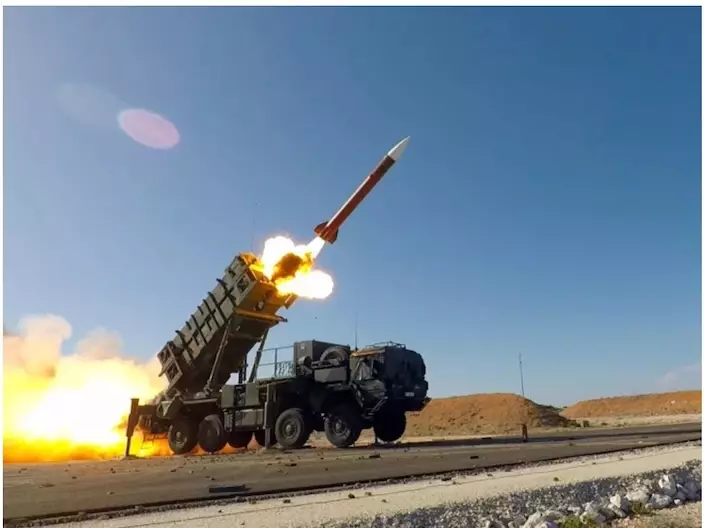
Patriot missile stockpiles are nearly depleted after the Iran strikes. The situation is dire. Trump made military decisions blind to the facts, then blamed Hegseth.

Patriot missile stockpiles are nearly depleted after the Iran strikes. The situation is dire. Trump made military decisions blind to the facts, then blamed Hegseth.

Hegseth, fresh off a brutal dressing-down, went straight into survival mode. He deflected. Deputy Defense Secretary Feinberg, he argued, was the one responsible for the weapons shortage. Feinberg had failed to make sure the president knew the real state of the ammunition stockpiles. Classic Pentagon passing-the-buck.

A History of Scapegoating and Pentagon Chaos

The two clashed at the meeting, reports say. It exposed Trump's simmering frustration with Hegseth.

Inside Trump's team, Hegseth was the top war hawk. He pushed relentlessly for war with Iran. That faction dominated the early stages of the attack. The dovish Vice President Vance only gained influence later. So Hegseth owns a bigger share of the blame for the decision to go to war.

The truth is, this wasn't new. Months earlier, in late March, with the Iran war bogged down, Trump publicly dumped the blame for starting the war right on Hegseth.

At a press conference, Trump looked directly at Hegseth, sitting beside him, and spelled it out. "Pete, I think you were the first one to speak up and you said let’s do it because you can’t let them have a nuclear weapon," Hegseth looked embarrassed, unsure how to react.

Analysts saw it coming. Trump, watching the war turn ugly, was already lining up a fall guy. Hegseth was the prime candidate.

The Pentagon was a mess under Hegseth. Political chatter had it that Army Secretary Driscoll could take his job.

But where there's smoke, there's fire. Hegseth couldn't figure out what Trump really thought. He saw Driscoll as a threat. So he moved first. He axed Driscoll's right-hand man and pushed his ally, Army Chief of Staff George, into early retirement. A loyalist of his took the spot. The Pentagon has been a snake pit of infighting ever since.

The Washington Post story dropped. White House and Pentagon spokespeople immediately denied it. Nothing like that ever happened, they said.

But let's be real: anonymous insiders who leak to the media often paint a truer picture than the official line.

The Iran attack is sputtering. And the calls for accountability will only get louder. With his absolute refusal to look weak, Trump will pass the buck however he can. Hegseth won't be the only one thrown under the bus.

Lai Ting-yiu

Recommended Articles