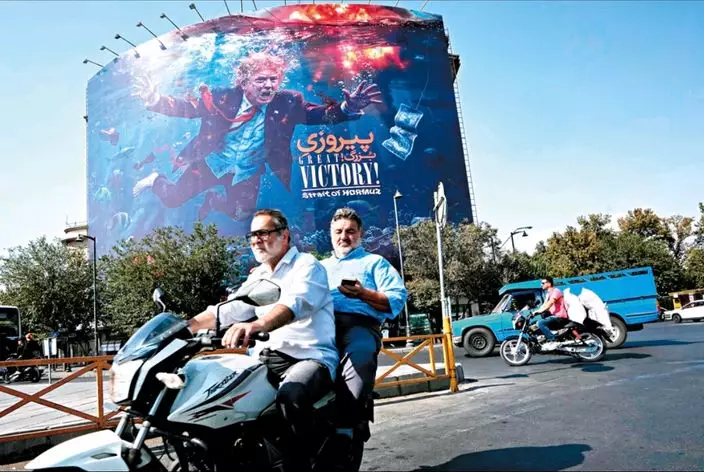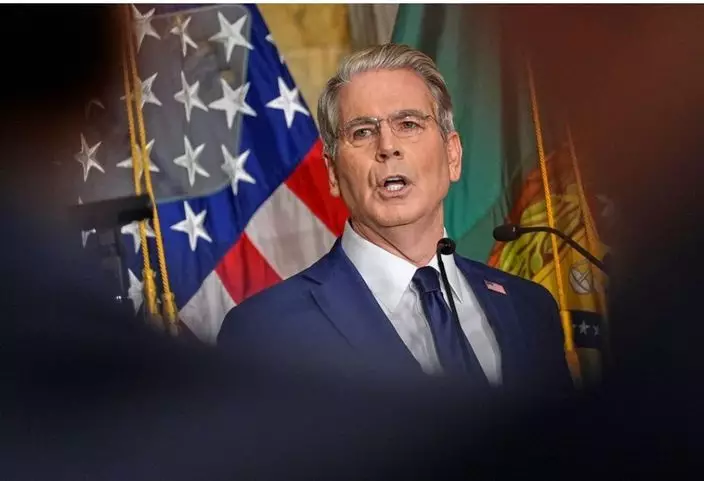

The United States sent troops to attack Iran, and Iran refuses to die no matter how hard the blows land. Militarily, Washington is at its wits' end, and fighting on is no answer. So Washington has hastily switched plays to an “economic war,” and this time the field commander is Treasury Secretary Scott Bessent.
Bessent came out breathing fire. The United States, he declared, will unleash on Iran “the single greatest financial offensive ever marshalled against an adversary,” cutting off all of the country's economic lifelines and forcing it completely to its knees.
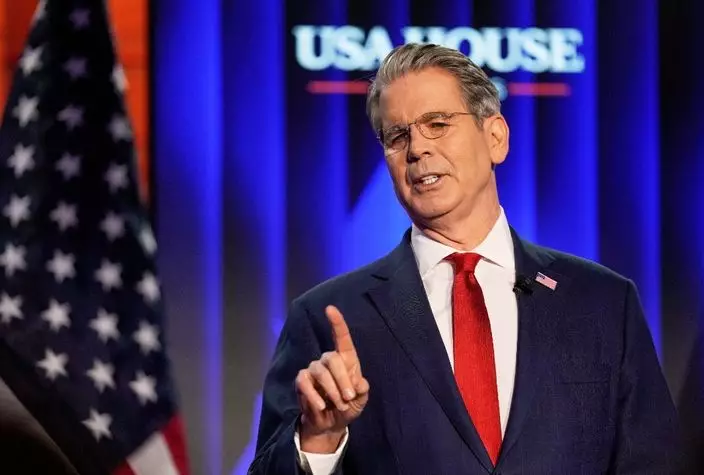
Bessent bets the 'greatest financial offensive ever' will end the Iran war. US media say it can't make Iran kneel.
Sounding the Battle Horn: D-Day Rhetoric and Pascal's Wager
How exactly Bessent will fight this war remains to be announced. US media estimate there could be five tactics, and that estimate looks close to the mark. Bessent promises every move this time will be lethal, but US media and experts who dissected the plan say most tactics will have limited effect and are not enough to make Iran bow in surrender.
Instead, Iran has already built an economic warfare system and made a range of preparations. Washington's strikes could boomerang, deepening the wounds of an economy already suffering internal damage.
Before the fighting began, Bessent took to the Financial Times to sound the battle horn. He likened the war to the D-Day (Normandy landings) of World War II.
Bessent even invoked the French philosopher Pascal's wager. His warning to other countries and enterprises: with the situation unclear, they would be wise “not to bet on the wrong side,” lest they pay a heavy price for it.
The theory runs like this. Bet that God exists and He does not, and the cost is limited. Bet that God does not exist and He does, and you must endure tremendous suffering.
Bessent brandished the analogy as a warning. Misjudge the power of the United States, place the wrong bet on Iran, and the ending will be utterly miserable.
But from Donald Trump to Scott Bessent, the tactic of talking tough to scare has long been seen through. So the “wager theory” drew immediate rebuttals.
The United States is no “God,” the critics shot back, and its weak hand has been exposed many times. Whatever power it claims can no longer fool anyone. On the contrary, betting on the American side now carries an even greater chance of losing.
The truth is, US media and many experts point out that the United States may deploy five tactics to strike Iran's economy. Fierce and aggressive as they look, their effect is limited.
Five Tactics, Limited Bite: From Oil Buyers to the Shadow Fleet
The first tactic: sanction the countries that buy Iranian oil and cut off its main source of revenue. The biggest buyer today is China, which takes 90 percent of its exports.
The New York Times, though, expects China to shrug off US intimidation. For one, the United States needs China to supply critical minerals, especially the raw materials used to manufacture weapons, which amounts to holding Washington by the throat, so China has nothing to fear. For another, President Xi visits the United States in September, a trip Donald Trump has long awaited, and he will not turn against him at this moment.
As for other countries such as Iraq, Turkey and the UAE, even if they heed Washington and temporarily stop buying Iranian oil, that will not be enough to shake Iran's resolve to hold firm.
The second tactic: stop Iran from transferring the money from its oil sales back into the country. Washington would strictly ban currency exchange and cash transfers involving Iran, cutting off the financial channels in between.
Yet Iran has endured years of severe sanctions and already laid out complex alternative routes. It moves funds through multiple channels, using shell companies and currency exchange houses based in Dubai and elsewhere. Iran can also keep trading in currencies other than the US dollar, as well as digital currencies.
The third tactic: confiscate Iran's assets abroad. Easier said than done. Confiscation differs from freezing and must clear complex legal procedures. And because it concerns the sovereignty of other countries and involves diplomatic issues, it cannot simply be done by force.
The fourth tactic: sanction the countries and companies doing business with Iran, blockade its ports completely and ban all imports and exports.
But Iran has long since laid down a regional cross-border trade network, including underground webs of every form, continuing trade overland and then by sea. Bloomberg also points out that Washington previously threatened countries trading with Iran with an extra 25 percent tariff. That threat has still not been implemented, and such measures will be difficult to enforce across the board in the future.
The fifth tactic: strike at the shadow fleet. Sanctions would target not only individual ships carrying goods for Iran, but also the related companies, terminals and infrastructure.
This move is expected to pack a certain punch. But many shadow ships, disguised in all sorts of ways, still remain, and it is impossible to wipe them out completely.
Iran's Trump Card: Hormuz and the War of Economic Will
Scott Bessent's economic 'weapons box' still holds a few tools. But the problem mirrors the one facing military action: Iran commands two sources of anti-American 'confidence.' Even blows that land where it hurts cannot damage the sinew and bone. And there is no way to force Iran to its knees.
The first source: Iran has already built a system for fighting an economic war. The toolkit includes cross-border trade networks, oil-for-goods exchanges, and settlement in currencies other than the US dollar. Iran has also developed self-sufficient local industry to prop up people's livelihoods and maintain 'survival.'
The second source matters most. Iran still commands the Strait of Hormuz and can control the outflow of energy. That keeps oil prices high and hammers the economies of the United States and the Gulf states.
This is the trump card. With it, Iran can go the distance with Donald Trump in a contest of endurance, waging a 'war of economic will' to see who buckles first.
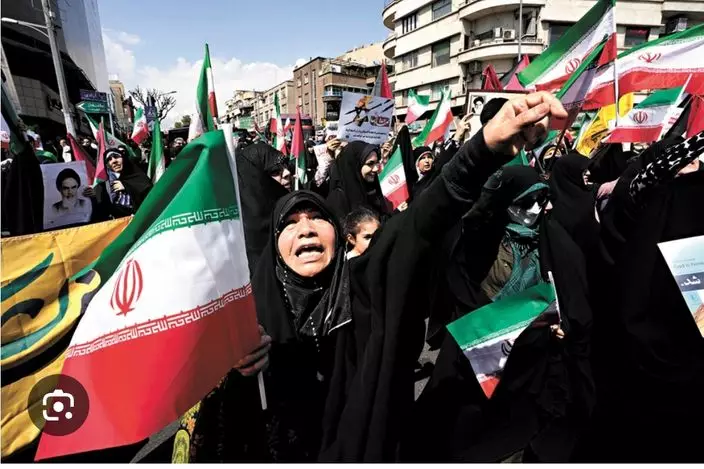
Iran is dug in and deployed for economic war — its plan: outlast the US.
Iran is ready for this hard economic fight. By the look of it, Trump and Bessent may have misjudged the situation once again. They assumed one move could finish the job and carry the US-Iran war into its 'endgame.' What they threw may well prove to be a boomerang — one that spins back and strikes them, inflicting fresh damage on an economy already wounded on the inside.
Lai Ting-yiu
What Say You?
** 博客文章文責自負,不代表本公司立場 **