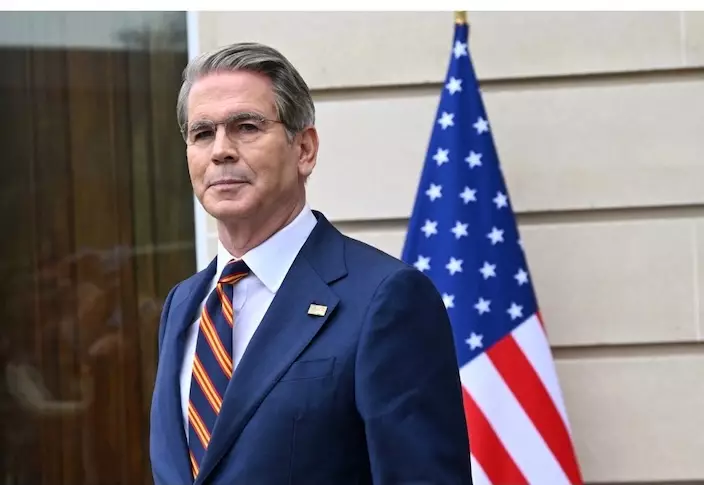

The Art of War has an incisive passage on military leadership: "He who knows nothing of the affairs of the three armies, yet meddles in their administration, leaves his officers and men bewildered." In other words, a man who does not understand military affairs but insists on interfering will only confuse his own troops. The result is "throwing your own army into chaos and flinging victory away."
US Defense Secretary Pete Hegseth has committed precisely this cardinal taboo of the art of war. The New York Times reported today that his ruthless purge of generals has left the military leadership riddled with holes and effectively headless. Relentless infighting has made the place "as chaotic as the seven warring states."
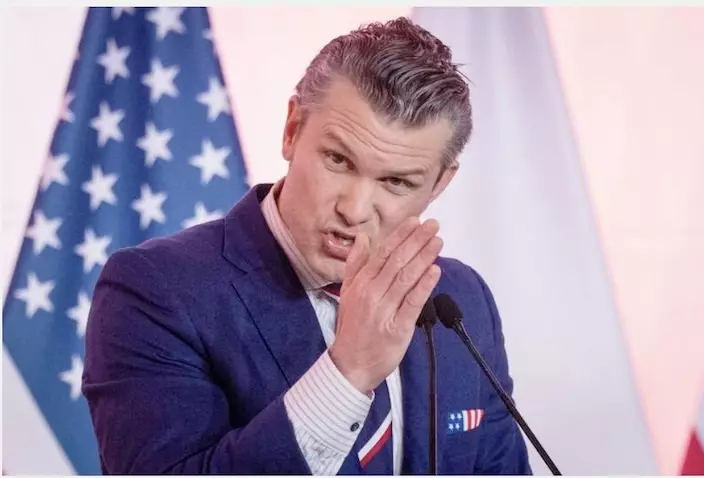
Hegseth's power games have left the Pentagon in chaos. A stalled Iran war and bad intel have Trump fed up — and his job on the line.
Earlier reports said the Pentagon was in a shambles, and with the war on Iran deadlocked, Trump is growing ever more displeased with him. His position is teetering, and the odds of his being fired are high. Politically, Boss Trump also needs a "scapegoat" ahead of the midterm elections. If so, "Heggy" should be the first choice.
Hegseth was originally nothing more than a TV pundit. He served in the military for a few years, but never rose beyond the middle-to-lower ranks, and his experience of managing an army was limited. It was purely because he caught Boss Trump's eye that he was transformed overnight into the defense secretary.
Had his EQ been high enough, he would have worked well with the senior generals upon taking office and consolidated his own position first. But arrogance is his true nature. After taking up the post, he made enemies on all sides within the Pentagon, squeezing out anyone who crossed him, and not even the senior generals were spared. At the same time, he carried out a wholesale purge of senior officials whose "ideology" differed from his own, and each one was hounded out in turn.
According to The New York Times, this grand purge left the military leadership in tatters. One key figure cut down was the Army chief of staff, General Randy George.
The veteran general commanded great respect and dared to defy the secretary's wishes, which rankled Hegseth deeply. In April this year, with one swift stroke of the blade, Hegseth fired him.
Hegseth then pushed out three generals qualified to succeed General George. In their place, he promoted his own confidant, his former senior military assistant Christopher LaNeve, to serve as acting Army chief of staff. But Congress opposes confirming him in the post, and Trump is noncommittal. The position remains in limbo to this day.
Another Pentagon heavyweight, Army Secretary Dan Driscoll, had long been at odds with Hegseth. He was once seen as a contender for the defense secretary job himself, which invited his boss's suspicion. He too has quietly bowed out and is preparing to leave by the end of the year.
Driscoll and General George had been planning Army reforms together. With both men successively forced out, those plans have been shelved.
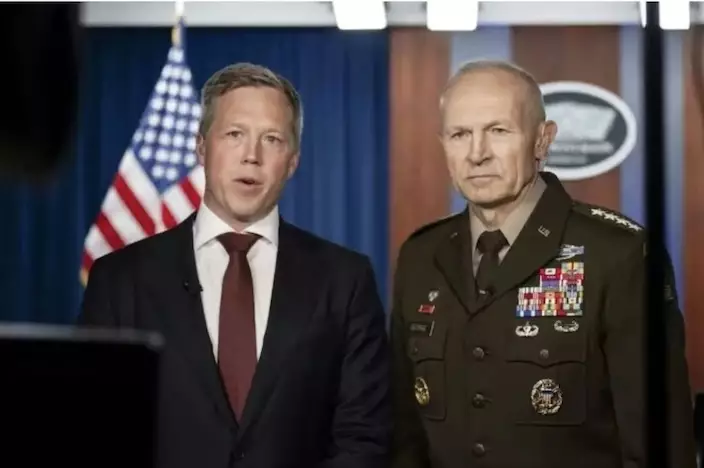
Key figures in the Department of Defense were sidelined by Hegseth. Chief of Staff General George (right) was fired, and Army Secretary Driscoll (left) resigned.
The New York Times reviewed recent Pentagon personnel changes and found a striking hollowing out at the top. When Hegseth first took charge, the military had ten four-star generals. Most recently, that number has been whittled down to just five.
With too few senior generals, the leadership of some special programs has sat vacant for months. The general responsible for US military affairs in Europe, Christopher Donahue, also retired in July, and no suitable successor has yet been found.
Hegseth has reduced the Pentagon to utter disorder. Trump, the very man who elevated him, has taken note and begun to bristle. The forced departure of Army Secretary Driscoll struck him as a particular shame.
Trump had always held Driscoll in high regard, once remarking that "those are the best guys." He thus takes a dim view of Hegseth sidelining capable people for the sake of a power struggle.
That is merely one of the "sins" in Trump's mind. He has voiced displeasure with Hegseth over several matters. First, at an internal meeting at Camp David earlier, he bluntly accused Hegseth in front of other members of the team of misleading him over missile stockpiles, causing him to misjudge the situation. For the boss, filing false reports on military intelligence is no minor offense. It has to be settled sooner or later.
Second, at a press conference, he pointed at Hegseth in front of everyone and said, "I think you were the first one to speak up and you said, let's do it." He was referring to the war against Iran. He gave no details, but the meaning was plain enough. Hegseth had egged him into starting the war, yet had no strategy to cope with the unfavorable situation that followed. The objectives were not met, and the war sank into stalemate instead. Hegseth must bear his share of responsibility for this "botched, unfinished mess."
Third, there is the recent scandal aboard the aircraft carrier USS Abraham Lincoln, where sailors somehow endured 250 days at sea in hellish conditions. The affair has disgraced the US military and given the Democrats ammunition to attack in Congress. That is deeply unfavorable for the midterm election campaign. Trump will, of course, put that bill on Hegseth's tab as well.
The South China Morning Post earlier reported, citing reliable sources on all sides, that Trump is considering replacing Hegseth, and his position is expected to be untenable. The likelihood of this happening is indeed high. As Zhao Minghao, a professor at the Institute of International Studies at Fudan University, put it, cabinet reshuffles ahead of midterm elections are the norm, and "someone has to shoulder responsibility for the Iran war stalemate."
That someone, of course, will not be Trump himself. If he must find someone to carry the can, Hegseth is bound to be his first choice.
Lai Ting-yiu
What Say You?
** 博客文章文責自負,不代表本公司立場 **