Five years ago, an emigration frenzy swept Hong Kong. Besides the Hong Kong BNO holders flooding into Britain, another group climbed aboard the Canadian government's "lifeboat." Back then Ottawa was full of righteous talk, promising Hong Kong people a way out and a safe harbor.
Five years on, the scheme officially ends today, but those who missed the boat need not sigh with regret. According to the latest figures, more than 40,000 Hong Kong people have been approved to come aboard. Yet over 35,000 of them are still adrift on the boat, permanent residency nowhere in sight, and they are expected to wait ten long years before reaching shore.
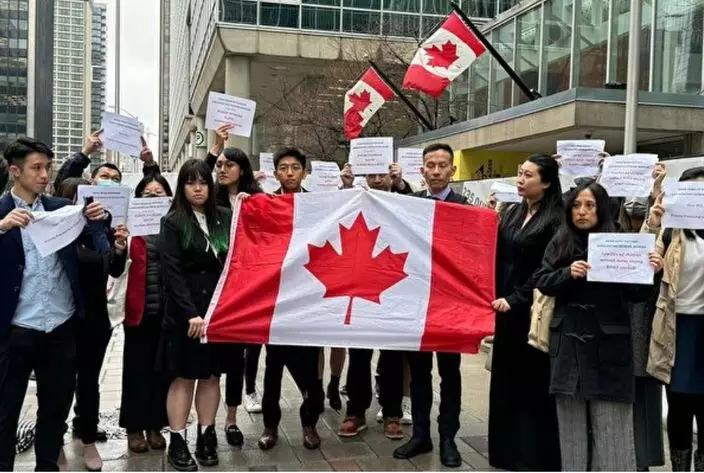
Canada's "lifeboat" ends; Hong Kong people protest 10-year PR wait.
Many are trapped in limbo, hanging in mid-air: hard to stay, hard to leave, utterly at a loss. Their misery has one root cause. The Canadian government long ago had a "change of heart," and the "promise" of yesteryear has been swept aside by the politics of hard self-interest, vanishing like smoke.
From Morality to Money
To understand the present, look first at the history. When the Black Riots erupted in Hong Kong in 2019, the Central Authorities enacted the Hong Kong National Security Law to quell the turmoil. Keen to keep the flames of the "color revolution" burning, the US and Britain made provocative moves, including opening an "escape hatch" so the Hong Kong people involved could find shelter. The Canadian government duly fell in line with the Five Eyes brigade and launched the "lifeboat" scheme, under which Hong Kong people could apply for temporary residence.
The scheme kicked off in February 2021, and Hong Kong people applied in droves. Many acted on a whim, while others hoped to fulfill an emigration dream, so they swarmed aboard.
At first Ottawa preached morality, but before long that talk quietly faded and the abacus of practical gain came out. The focus shifted to luring Hong Kong people who were young, educated and rich in human capital. Plainly, the goal became immigrants who would "contribute to the economy."
Yet after large numbers of Hong Kong people had been approved to board, Canada's political climate shifted. Confronted by surging anti-immigration sentiment, the government tightened its policy and placed the "lifeboat" Hong Kong people into the "humanitarian and compassionate" category. There they must queue alongside migrants who matter more to Ottawa politically, people from Ukraine, Sudan, Gaza and elsewhere, all competing with Hong Kong people for permanent residency places.
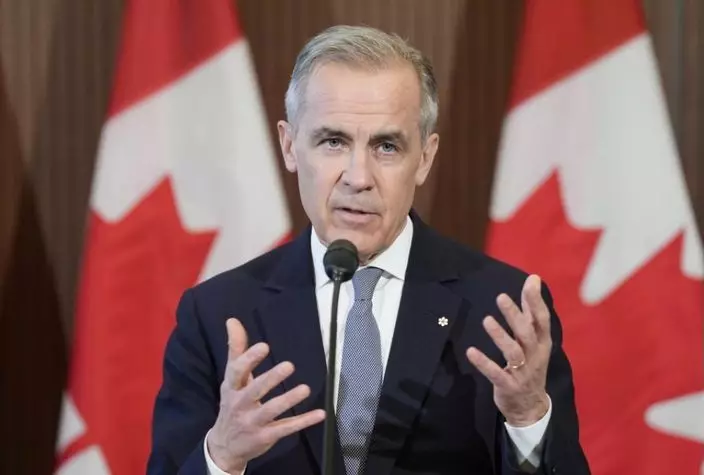
Under Carney's curbs, Hong Kong people queue behind Ukraine migrants.
Too many mouths, too little to go around.
Then Trudeau fell and Carney took over. PR places in this category were halved to 6,900, and over the next two years there will be only 5,000. Hong Kong people are left waiting wistfully for permanent residency, with no end in sight.
The latest immigration department figures show that by the end of June, a cumulative 30,315 applications from Hong Kong people had been received, covering 48,560 people. So far only 8,600 applications have been approved, with 13,370 people granted permanent residency. In other words, 35,000 people remain unsettled, dangling in mid-air.
The long-waiting Hong Kong people are fuming, but the Canadian government is as slippery as an eel, still processing applications at a snail's pace. It is clearly stalling on purpose to keep the PR tally down. At the current approval rate, and with others continuing to jump the queue, they face at least a 10-year wait to become permanent residents.
Every Word a Tear
The yellow (pro-democracy) media interviewed several of these stranded Hong Kong people, and every word was a tear. Mr. G arrived in Canada in September 2023. After clocking up a full year of work experience, he applied for permanent residency via Stream B in October 2024. By August this year, still not a peep.
He worries his work permit renewal will be refused, leaving him a jobless drifter. Going back to school would mean international student fees he simply cannot afford. Turning it all over in his mind, he lies awake night after night.
Another applicant, Ms. A, likewise submitted her PR application in May 2024, and it too has sunk like a stone into the sea. With her work permit about to expire, employers have reservations about hiring her, which hampers her job search. No wonder she is on tenterhooks.
They complained until they're blue in the face. Some describe themselves as trapped in "paperwork hell," able to move neither forward nor back. Yet the Canadian government keeps singing its slow tune, with no sign of speeding up approvals.
Money Buys the Fast Lane
In truth, Ottawa has not slashed immigration across the board; it all depends on the category. If you are a golden goose, arriving with bags of silver, that is another matter entirely.
The "humanitarian and compassionate" category to which Hong Kong people belong has a quota of just 6,900. The "economic class," by contrast, boasts 239,800 places. Clearly, money buys you the fast lane.
The end of Canada's "lifeboat" scheme symbolizes the end of the operation to "support Hong Kong's revolution." So it is with Canada, and so with Britain. Both have returned to hard interests, talking "gold" rather than "heart."
Hong Kong people still "riding the boat," with neither shore within reach, should see this plainly and harbor no more illusions. At the risk of sounding old-fashioned: life does not offer many more ten-year stretches. Better simply to head home.
Lai Ting-yiu
What Say You?
** 博客文章文責自負,不代表本公司立場 **
Trump’s attack on Iran blew up in his face. Humiliated, he’s been itching for a chance to flex his muscles and blow off steam. He just got it. On social media, he announced the 'largest oil cooperation agreement in history' with Venezuela. Through a deal with a private company, the US now holds 'majority control' over the country’s 65 billion barrels of oil reserves.
The Venezuela Heist Unveiled
Trump’s words were soaked in arrogance. Venezuelan oil, he gloated, was finally America’s 'prize in the bag.' But the twist? This was no surprise. The whole saga was practically scripted—an international political remake of the movie 'Infernal Affairs.'
Just weeks after sending troops to kidnap President Maduro in January, Trump announced that the US would pour money into Venezuelan oil and put its resources under watch. He didn’t even bother with a fig leaf—'snatch the oil' was the plan. But the plot ran deeper. He had long been in cahoots with acting President Rodriguez, scheming to topple the government from within. And he was cutting deals with the country’s oil barons, all set to cash in together.
Trump wanted to run the same play in Iran. Pull it off, and the US would become the 'global energy hegemon.' This time, though, he slammed into a brick wall.
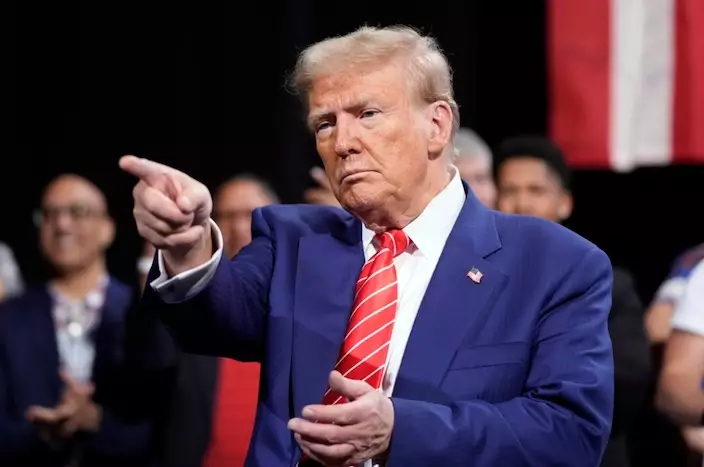
'Infernal Affairs' in Caracas: moles took the oil. Iran resisted.
This is colonialism with a 21st-century face. A smash-and-grab of another nation’s riches, executed in broad daylight. The US just pulled off the perfect plunder of Venezuela’s oil wealth.
Trump’s heist flick didn’t just need brute force. It needed a mole. An 'Infernal Affairs' insider to make the plot work.
The Mole at the Top
Trump unveiled a grand oil cooperation plan with Venezuela last Friday. The acting president was elated. Rodriguez said the agreement could span 25 years, with the US helping to control 17 strategic oil fields. It promised to supercharge production and deliver $209 billion in investment.
Energy experts raised a red flag. The deal wasn't transferring energy to a private enterprise, they argued. It was a handover to another country: the United States. She sidestepped the issue.
Her attitude is no surprise. It traces back to her time as vice president, when Maduro was still in power. As a former oil minister, she had close ties with US oil giants. Even after her promotion, she kept her hands on oil policy. She paved the way for Chevron, the US oil giant, to return to business in Venezuela.
Sources say the White House already knew Rodriguez was 'usable.' If she rose to power, she would fully back US investment in Venezuela's oil industry. Trump had already sniffed out the mole. He secretly assigned her a role in the power grab.
The mole delivered. After US special forces abducted Maduro, Rodriguez stepped in as acting president. She never mentioned 'resisting the US.' Instead, she called for cooperation.
At the end of January, the acting president signed the Oil Law Reform Bill. It let private and foreign investors into the country's oil business. She flung the door wide open for the US government and oil companies to march in.
Recent reports say Rodriguez is actively considering pulling Venezuela out of OPEC. She's discussing it with the US. Washington, of course, approves. If it happens, US influence over Venezuela's oil will only grow.
The move is clearly orchestrated by the US behind the scenes.
The Tycoon and the Underworld
The US didn't just plant moles inside Venezuela's government. It also recruited them in the business world. US media reports reveal a striking partnership: the US government teamed up with a private company to grab control of the country's oil fields. The company? North American Blue Energy Partners. Its boss, Bedangote, had long-standing ties with the US government and oil majors. He was also deeply entangled with Rodriguez. And he had already snapped up a batch of oil fields in western Venezuela.
For Washington, this local tycoon was a made man. One of their own. They knew that using him to control the oil fields would be a force multiplier: half the effort, double the payoff. So the US simply bought into the company. They'd share the spoils, together.
But this tycoon's background was anything but clean. Prosecutors in Zurich had been digging into his accounts. Yet no charges ever materialized.
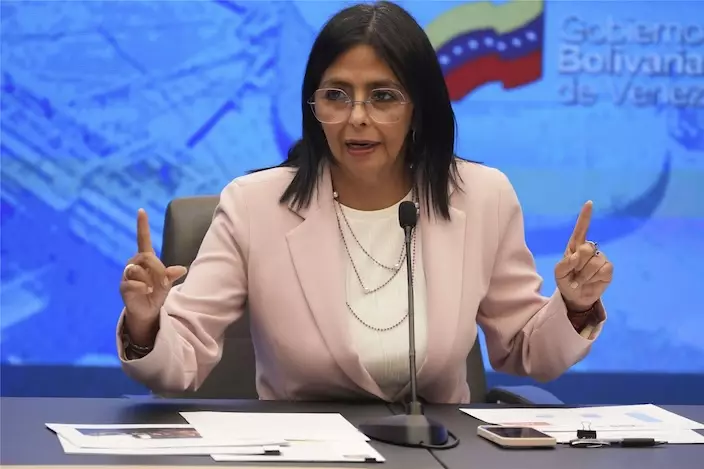
America's mole in Caracas: Rodriguez made the oil grab possible.
The New York Times dropped a bombshell: the US State Department had leaned on Swiss +
-+authorities to shut down the investigation. Meanwhile, he was handed multiple US entry visas. 、
The message was clear. His relationship with American officials was anything but ordinary.
The Bigger Game
The New York Times analysis reveals the playbook. Trump topples Maduro, then swallows Venezuelan oil. The objective? Reshape global energy markets and fortify US energy security.
With Venezuela's oil under its control, the US can erode the market influence of Middle Eastern nations. After the Iran war, that mission has become even more pressing.
Look at the Iran war through this lens, and the motive snaps into focus. Trump's real driver? Seizing Iran's colossal oil reserves.
Trump launched the war in late February. Then, in an interview with the Financial Times, he was blunt: his favorite thing is taking Iran's oil. It makes a lot of money, he explained.
Trump's a businessman, and he's running the numbers. Iran's oil reserves: 208.6 billion barrels, third largest on the planet. Natural gas: 1,200 trillion cubic feet, also in the global top three.
If the US could grab both Venezuela's and Iran's oil, it would lock down global oil pricing power. It would preserve the petrodollar hegemony. The 'hegemonic' throne would be unshakable.
The Half-Won Hegemony
But Iran is not Venezuela. Trump's grand plan has smashed into a brick wall. He's the one left battered and bruised.
The US bid to become the world's oil hegemon has been thwarted. So far, it's only half-succeeded. For the global balance of power, that's excellent news.
Lai Ting-yiu `