The world is getting more chaotic. Someone who benefits you today may hurt you tomorrow, and not just a little. The damage can be catastrophic.
The Strike and the Immediate Fallout
Amazon boss Jeff Bezos is a living example. Not long ago, he and a group of tech giants became Donald Trump's honored guests. They figured that with the president covering them, they were bound to cash in.
But then Donald Trump suddenly went to war against Iran, and Amazon took collateral damage. Its large data center in a Gulf country came under Iranian attack. The damage was severe.
Reuters reported yesterday that the center in Bahrain was almost completely destroyed. Cloud services across the entire region were paralyzed, and customers had to relocate on a large scale to other regions. Amazon suffered heavy losses, and its AI money-making plan went up in smoke.
Other tech giants had been ambitiously preparing to make big money in the Middle East. That dream has also shattered. Donald Trump truly harms people without limit.

Iran destroyed Amazon’s Bahrain cloud hubs, wrecking regional expansion plans.
The report said Amazon Web Services assessed the damage to the data center and said cloud services in the Bahrain area could no longer be repaired.
That center was one of three 'data hosting zones' the company had built in the United Arab Emirates. With one zone paralyzed, the impact already exceeded the load capacity the system was originally designed for. Operations across the whole region became difficult to maintain.
The customer base using services in the region is huge, and banking operations have taken the most direct hit. The situation is catastrophic.
According to reports, Amazon Web Services has sent notices to customers advising them to relocate operations to other regions. The company will provide assistance.
War is merciless. One attack threw the entire system into chaos. The company is suffering, customers are suffering too. The UAE government is suffering even more. They are all left in tears.
Why Iran Hit the Cloud and How Tech Giants Froze
The disaster began shortly after the US-Iran war broke out. Iran launched large-scale drone strikes on two of the three large data centers Amazon had set up in the UAE. The center in Bahrain took the heaviest damage.
The Iranian military said it targeted the data centers because the United States was using AI to formulate combat plans. Amazon's centers had provided support to US forces. That put them on the strike list.
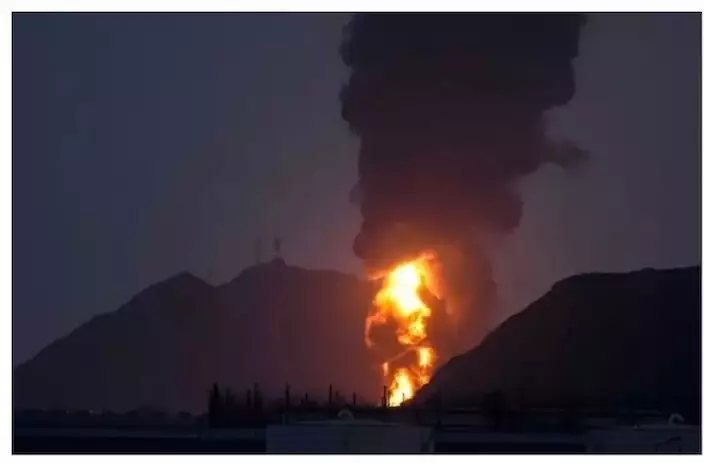
Targeted data-center airstrikes now terrify tech giants eyeing Gulf AI.
That was only the stated reason. Iran had another strategic calculation. Destroying digital infrastructure in the UAE would strike the country's economy and force it to pressure the United States to end the war as soon as possible.
The move was ruthless. Gulf states such as the United Arab Emirates, Saudi Arabia, and Qatar have been racing to transform their economies. They are investing heavily in high-tech sectors, with AI as the centerpiece, and courting American tech giants.
They knew this was a super gold mine. The giants were drooling, rubbing their hands, and ready to march in.
Amazon led the charge. Amazon Web Services quickly built three large data centers in the UAE, betting on the first taste of the broth and a fortune to follow.
At that time, OpenAI, Oracle, and Nvidia were also preparing to build mega AI campuses in the Gulf states. Shortly after Donald Trump took office, the giants accompanied him on a visit to the Middle East and signed a series of investment plans. Nvidia moved to supply its most advanced chips to AI companies in Saudi Arabia.
They all saw it as a sure-fire path to wealth.
But when the US-Israeli coalition launched its war against Iran in late February, their get-rich dreams went up in the flames of war. Iran immediately struck Amazon's large data center in the UAE and scored a direct hit, causing severe damage.
The Islamic Revolutionary Guard Corps (IRGC) then released an attack list. Amazon, Google, Microsoft, Nvidia, Oracle, and others were all named, identified as accomplices of the United States.
With the Gulf states suddenly engulfed in war and danger, the giants immediately shrank back. Every plan was frozen.
Gulf Stalls, Hong Kong Contrast
The reality is the Gulf states suffer most. Their grand plans to develop innovation, technology, and AI industries just took a heavy blow. After this data center attack, finding brave investors will be even harder.
Some US media commentaries have already drawn a blunt conclusion. The Gulf can no longer become a major AI hub, and critical technology infrastructure will not be built in the Middle East.
After reading this Reuters report, a friend immediately thought of Hong Kong's Five-Year Plan. It stresses that "Security is the prerequisite for development, whereas development reinforces security." The plan will strengthen top-level design and efficiently safeguard national security.
That naturally includes a safe business environment. If data centers were located in Hong Kong, they would be a hundred times safer than in the war-torn Gulf region.
Lai Ting-yiu
What Say You?
** 博客文章文責自負,不代表本公司立場 **
Donald Trump is a mixed martial arts fan. He knows the rule: if a fighter cannot knock out an opponent and instead takes a bad beating, the smart decision is to withdraw before the damage gets worse. The US attack on Iran now looks exactly like that.
A Costly Bill Comes Due
On Monday, the Department of Defense Office of Inspector General finally totaled the bill. It admitted for the first time that from the start of the Iran war through the end of June, US military losses were heavy. Diplomatic facilities were severely damaged, and thousands of personnel fled in panic.
That tally does not even include Iran's latest wave of attacks on US bases in recent days. Iran's new missiles have now seen combat for the first time, and more American warplanes have been damaged. Trump finally seems to realize the opponent is hard to handle. Now he is really backing off, signaling the war will soon be over and floating an exit.
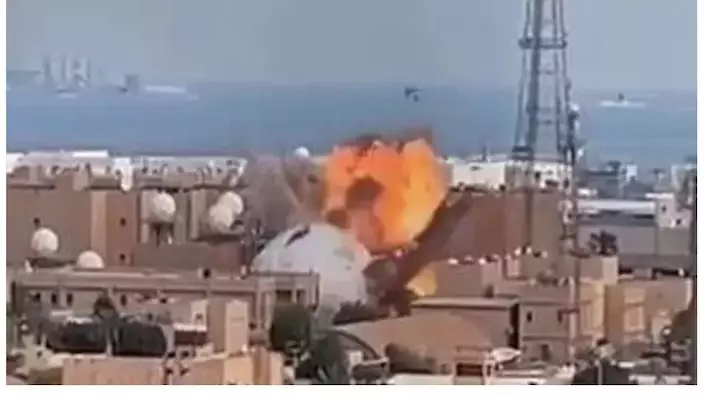
Pentagon watchdog admits losses; Bahrain fleet HQ worst hit
US media reports say the Department of Defense Office of Inspector General for the first time assessed US losses in the four months after the war began on February 28. It said Iran attacked US military bases in several Gulf countries, including Kuwait, Bahrain, Qatar, the United Arab Emirates, Saudi Arabia, Oman and Jordan. Hundreds of buildings and facilities were severely damaged.
The hardest hit was the US Navy's Fifth Fleet headquarters in Bahrain. That base is the Navy's most important logistics hub in the region.
Iranian missiles and drones destroyed most of its facilities. That forced US Central Command to send a supply ship on a long expedition to the Diego Garcia base in the Indian Ocean to pick up supplies. The ship then made the long voyage back to resupply the fleet attacking Iran. The logistics cycle ran 14 to 18 days.
For a long time, the military avoided discussing the destruction of the Bahrain base. Two days ago, Hung Cao, the Acting Secretary of the Navy, finally admitted that the Iranians "blew the hell out of" the base.
He has already formed a special task force to study why the base was damaged to that extent.
The report says more than 50 US military aircraft were damaged or destroyed during that period. They include four F-15 fighter jets, seven KC-135 tankers, and at least 30 MQ-9 Reaper drones, among others.
Bases, Jets, and Harder Missiles
The destruction did not stop at US military bases and aircraft. US diplomatic facilities in Kuwait, Saudi Arabia, the UAE, and Iraq also took heavy damage. The losses reached $180 million.
The danger to diplomats was extreme. More than 3,500 people fled the Middle East in panic.
The Pentagon's tally is already out of date. It runs only through the end of June and is not yet final. Iran's latest wave of attacks is not included.
Earlier, US Central Command struck several Iranian "shadow" oil tankers to stop them from shipping oil. Iranian forces hit back immediately, firing missiles at US bases and warships.
People familiar with the matter say a number of US aircraft were damaged in the attack. The list includes eight F-15 fighter jets and one A-10 Warthog attack aircraft.
The interception effort tells the same story. US forces fired more than 30 Patriot air-defense missiles to stop Iranian missiles. Warplanes were still hit. Iranian missiles are becoming more potent.
US media report that Iran used new missiles with electro-optical guidance in its operations against US warships and bases. The missiles can identify targets with sensors. They do not need to rely on GPS.
That raises the risk of a US warship being hit even further.
The new arsenal includes the highly lethal Qassem Bashir medium-range missile. It has a range of 1,200 kilometers and can carry a half-ton warhead.
Mohsen Rezaei, chairman of Iran's Supreme National Security Council, said recently that the missile has already been "tested" against a US warship. The US side later acknowledged that a US ship was attacked by Iranian missiles and managed to evade them without damage.
That makes such missiles a "lethal" threat to warships.
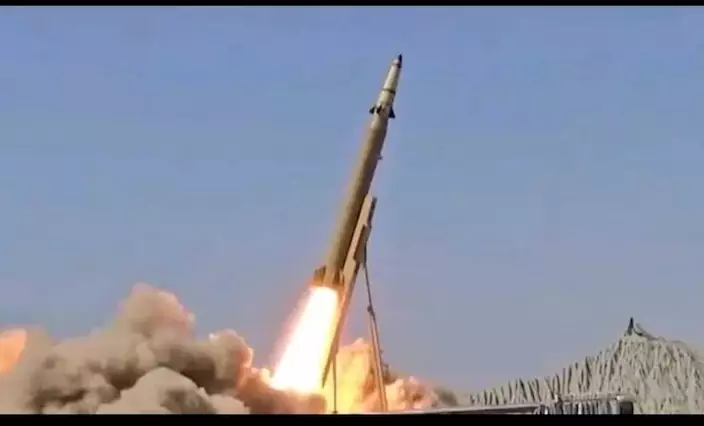
Iran strikes US bases with new 'Bashir' missiles again
Donald Trump sees the heavy US losses and the bigger risks ahead. Continuing the fight offers little chance of victory. He knows how to count, and he understands the logic of pressing when winning and cutting losses when losing.
He is believed to be leaning toward wrapping things up early. His recent remarks point that way.
Trump Signals the Exit Ramp
On Monday he fired off three social media posts in a row. The message was blunt: the military conflict with Iran would not last long, and the fighting would be over quickly. "Oil will drop like a rock as soon as the Military Conflict with Iran is over, and that will not be long."
Later, when reporters asked him, he went further. He said the war would end after the midterm elections and gasoline prices would fall like a stone. Then he added: "I know what I'm doing, I have to do it."
The picture is clear. He wants to bring this to a close sooner than ever before.
There is another sign. The Houthi forces, Iran's "brothers," recently seized a stronghold in the Bab el-Mandeb Strait. Saudi Crown Prince Salman called Trump twice, pressing him to send troops to strike Houthi weapons. Trump refused both times.
He clearly does not want the battle lines to widen. A bigger fight would make it even harder to extract himself.
Trump is a businessman who loves a "deal." He has now seen the loss figures his subordinates put before him. He knows the opponent will not be easy.
His business instinct will likely make him "really flinch." He will think hard about how to cut his losses and walk away.
Listen to his recent tone. This idea is looking more and more obvious.
Lai Ting-yiu