
Skip to Content Facebook Feature Image

Canada strikes back: Carney tariffs open second front for Trump

Blog

Canada strikes back:  Carney tariffs open second front for Trump
Blog

Blog

Canada strikes back: Carney tariffs open second front for Trump

2026-09-09 23:53 Last Updated At:23:53

Canadian Prime Minister Mark Carney refuses to bow. Today he fired 'tariff missiles' at the United States in retaliation, daring to shake a far bigger power and vowing to fight to the bitter end. Canada has turned itself into North America's 'Iran,' and Trump is vexed on top of vexed.
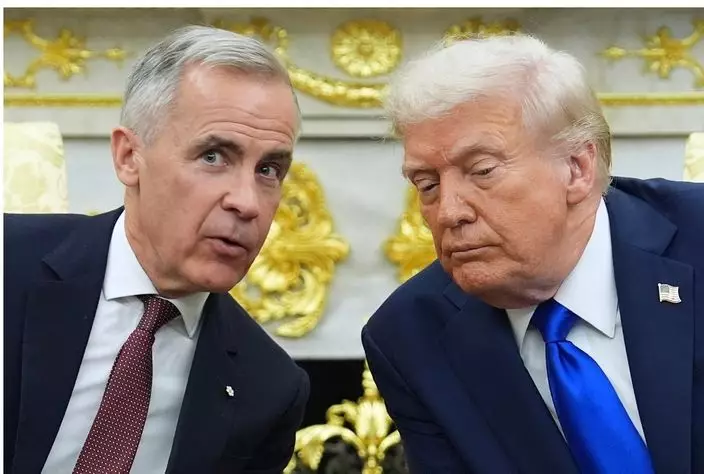
Canadian Prime Minister Mark Carney fires 'tariff missiles' at the United States in retaliation, with the measures taking effect today. The escalation reflects his determination to fight a make-or-break battle. Trump now faces North America's 'Iran' and is even more vexed.

Canadian Prime Minister Mark Carney fires 'tariff missiles' at the United States in retaliation, with the measures taking effect today. The escalation reflects his determination to fight a make-or-break battle. Trump now faces North America's 'Iran' and is even more vexed.

Carney is willing to risk a last-ditch battle because he knows Trump is no adversary for mutual accommodation. Trump plays by winner-take-all rules and seizes every benefit in sight. If Canada fails to rise up and resist, it will be at his mercy from now on, so this is a fight he cannot avoid.

He also has the confidence to stand firm. Canadians are united against a common enemy, with more than 80 percent backing his retaliation against the United States and willing to endure economic pain. Several US states will take a hit and are expected to pressure the White House.

Make no mistake: Trump now faces two 'Irans' at once, and he has no idea how to bring this to an end.

Carney's counterattack was forced on him.

Last month, negotiations between the two countries could have reached a deal. Then the American side turned aggressive and piled on harsher conditions at the last minute.

Those terms would keep tariffs on Canadian automobiles, heavy trucks, steel and aluminum entering the United States. The aim: move Canada's key manufacturing to America, 'deindustrialize' the country and leave it even more dependent on the US.

Carney naturally saw through Trump's malice. If Canada conceded this step, its economy would gradually be hollowed out. The country would slide further into the role of a US vassal and would have little room to maneuver in the future.

So he resolutely ordered his officials to withdraw from the talks, saying the American demands had gone beyond a reasonable scope, and the negotiations broke down. He slammed the United States for "asking too much" while "offering too little". He called it a maximum-pressure tactic from the American side, one he could never accept.

After the negotiations collapsed, he decided to fire 'tariff missiles' in retaliation. He declared: "You’re at war when you get attacked. We got attacked." The ready-for-war tone closely echoes the rhetoric Iranian leaders aim at the United States.

Canada's series of retaliatory tariffs against the United States took effect today. The measures slap duties of 15 to 50 percent on hundreds of American goods. Tariffs on steel products will rise from 25 percent to 50 percent, while consumer goods such as motorcycles, cosmetics and yogurt will also face tariffs.

The tariffs will deal a certain blow to American manufacturers and exporters. Businesses in Michigan, Ohio, Indiana and other states will feel the impact hardest.

Make America Feel The Pain

Mark Carney's tariff missiles have a blunt purpose. As Brian Clow, the former prime minister's senior economic adviser, put it, the retaliatory tariffs against the United States are meant to make American businesses and consumers truly feel the heavy cost of the trade war and force Washington back to the negotiating table.

Call it the "make you feel pain" strategy. The playbook closely mirrors Iran's approach.

But this hardball cuts both ways. Canada's economy will suffer internal damage, and Canadian citizens will feel the pain.

BBC commentary frames the stakes: Carney's decision will test whether Canadians are willing to endure economic pain to back his refusal to concede and wage a trade war against the United States.

To pull it off, he must persuade the public that a better deal is worth the price.

The latest polls tell the story. Anti-American sentiment is running high among most Canadians, and they support Carney's counterattacks.

The Globe and Mail and the polling firm Nanos surveyed 1,037 people. The verdict: 85 percent support Carney's refusal to reach a deal with the United States, 80 percent back his retaliatory tariffs against the US, and about 70 percent are willing to pay higher prices for daily necessities as a result.

Anti-US sentiment runs high in Canada, with more than 80 percent of Canadians backing Carney's retaliatory tariffs against the US. That groundswell gives him the confidence to confront Trump head-on.

Anti-US sentiment runs high in Canada, with more than 80 percent of Canadians backing Carney's retaliatory tariffs against the US. That groundswell gives him the confidence to confront Trump head-on.

Another poll adds weight. It finds 56 percent of Canadians want the government to take a tough stance and make no further concessions to the United States.

This public mood is the backbone of Carney's head-on collision with Trump. But as Iran's current predicament shows, how long the public can endure economic pain is the decisive factor between victory and defeat. That remains to be seen.

The Associated Press notes that whatever happens in Canada-US talks, this bitter fight has left Carney with new ideas for Canada's future development strategy.

The blueprint: double exports to "non-US" regions over the next 10 years, reduce dependence on the United States, repair economic and trade ties with China, and pursue strategic autonomy.

Trump's Trouble Multiplies

And then there is defense. Canada will sharply raise its defense budget and strengthen its domestic arms industry. Only by depending less on the United States for its own protection does it gain the leverage to push back.

Did Iran's example inspire Mark Carney's nerve to fight Trump head-on? Outsiders cannot know. But his strategic thinking does run close to Iran's: economic warfare, too, can be waged with 'asymmetric warfare' tactics.

Precision is the weapon. If he can land accurate strikes on a handful of key U.S. states, a reversal of the situation is not impossible.

For Trump, the trouble keeps multiplying. Iran already refuses to stay down, no matter how hard he hits. Now Canada has become another 'Iran,' just as the congressional midterm elections draw near. That is trouble on top of trouble.

Perhaps Trump would finally learn the lesson. In this world, 'might' is no promise for a sure win.

Lai Ting-yiu


What Say You?

** 博客文章文責自負,不代表本公司立場 **

A New York Times writer asked a good question yesterday: "Why the United States Can’t Quit Its Wars?" Quite rightly so. From Iraq and Afghanistan to Iran, the United States can never escape the fate of "easy to start a war, hard to pull the troops out."

The harder it strikes, the stronger its enemies grow. The more allies those enemies attract, the deeper Washington sinks. It has no choice but to keep raising the stakes. The Iran war is now trapped in exactly this vicious cycle.

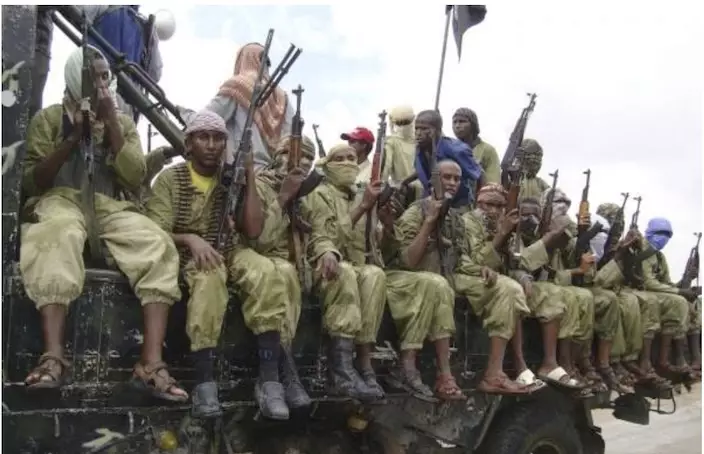
The Wall Street Journal reports today that Iran's "Axis of Resistance" has expanded further of late. The al-Qaeda branch entrenched in Somalia, Africa, has stepped up its alliance with the Houthis, Iran's "sworn brothers." The pair could choke off the Red Sea exit at any moment. That would sever the other oil shipping lane beyond the Strait of Hormuz. Should that happen, America's troubles will multiply, and pulling out will become harder still.

Al-Qaeda's Somali branch joins the Houthis. Washington's headache grows.

Al-Qaeda's Somali branch joins the Houthis. Washington's headache grows.

According to the report, al-Shabaab, al-Qaeda's branch in Somalia, is the wealthiest of them all. It controls local ports, roads and gold mines, and it is raking in money hand over fist. Annual revenue exceeds US$100 million.

Yet bulging coffers are not enough. The group lacks advanced weapons, and its fighters need proper military training. Which is why it has cut frequent "deals" in recent years with the Houthis in Yemen, Iran's "sworn brother." Since the US attacked Iran, the two have grown closer still, united by common enemies in America and Israel.

Al-Qaeda was founded by bin Laden in 1988. It began as a "jihadist organization" resisting the Soviet invasion of Afghanistan, covertly funded, no less, by the CIA. When the Soviets went down in defeat, the United States took over the role of "invader." Al-Qaeda promptly turned its guns on America.

In 2001 Al-Qaeda orchestrated 9/11, the terrorist attack of the century. Washington has regarded it as the greatest threat ever since.

In recent years, its leaders have been killed by the US one after another. Rival "jihadist groups" keep grabbing its turf, leaving it in steady decline. Yet al-Qaeda remains powerful in parts of the Middle East and Africa. The Somali branch is a case in point. The US has long seen it as a mortal danger, and the American military has struck it as many as 40 times.

The "Perfect Partners"

To build up its military muscle, the group has in recent years bought large batches of advanced weapons from the Houthis through intermediary arms dealers. It has also sent fighters to Yemen for military training, learning, among other things, how to operate attack drones. The Houthis, for their part, have dispatched instructors to Somalia to pass on combat skills.

The US went to war against Iran in late February this year. That pushed the "deadly duo" into even closer contact. Al-Qaeda belongs to Islam's Sunni branch, while the Houthis are Shia. The two are age-old foes. But faced with the common enemies of America and Israel, both are willing to set aside their feud and point their guns outward in unison.

What is more, each side of the "deadly duo" has something the other craves. The Houthis need hard cash to fund their war effort. Al-Qaeda, keen to sharpen its fighting power to consolidate its grip, must acquire advanced weapons and military technology. This mutually beneficial relationship has turned the two into "perfect partners."

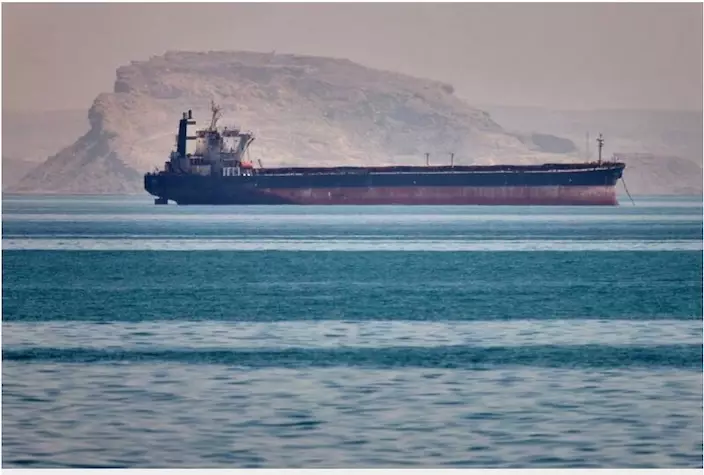
To Washington, two "terrorist organizations" banding together is a real nightmare. It is enough to rob it of sleep and appetite. The Houthis are entrenched in Yemen, facing Somalia, home of the al-Qaeda branch, across the Gulf of Aden. That is the gateway through which oil is shipped via the Red Sea. If the pair join forces, they could lock down this shipping lane for good.

The Choke Point

The Strait of Hormuz is already firmly in Iran's grip. If this other lane is cut as well, Saudi Arabia and the rest will lose their alternative route for shipping oil. Global energy supplies will go from bad to worse. Remember: 12 percent of the Middle East's oil is transported through this passage. The impact must not be underestimated.

The "deadly duo" could shut Saudi Arabia's backup oil route.

The "deadly duo" could shut Saudi Arabia's backup oil route.

Worryingly, the "deadly duo" genuinely possesses the capability to seal the strait. The Houthis have precision missiles and large fleets of attack drones. They are now helping al-Qaeda install radar in Somalia and supplying it with attack drones and more. The two could coordinate operations down the road, striking merchant vessels and US warships that try to force their way through.

Whether the American military could juggle that many fronts at once would then be a big question mark.

America's current predicament recalls 2010. President Obama decided then to send 30,000 more troops to Afghanistan to fight the Taliban. The deputy assistant secretary of defense at the time, Lavoy, raised doubts. "Afghanistan has countless tribes, and every one of them harbors resentment towards America," he said. "Even if the Taliban did not exist, there would still be an insurgency in Afghanistan."

No matter how many troops were poured in, the war could not be won. Better to simply withdraw.

Those words describe the Iran war today just as aptly. By attacking Iran, America has opened a "Pandora's box," and "demons" like al-Qaeda have come pouring out. How many of them, one has to ask, can America possibly fight at once?

Lai Ting-yiu

Recommended Articles