Donald Trump is a mixed martial arts fan. He knows the rule: if a fighter cannot knock out an opponent and instead takes a bad beating, the smart decision is to withdraw before the damage gets worse. The US attack on Iran now looks exactly like that.
A Costly Bill Comes Due
On Monday, the Department of Defense Office of Inspector General finally totaled the bill. It admitted for the first time that from the start of the Iran war through the end of June, US military losses were heavy. Diplomatic facilities were severely damaged, and thousands of personnel fled in panic.
That tally does not even include Iran's latest wave of attacks on US bases in recent days. Iran's new missiles have now seen combat for the first time, and more American warplanes have been damaged. Trump finally seems to realize the opponent is hard to handle. Now he is really backing off, signaling the war will soon be over and floating an exit.
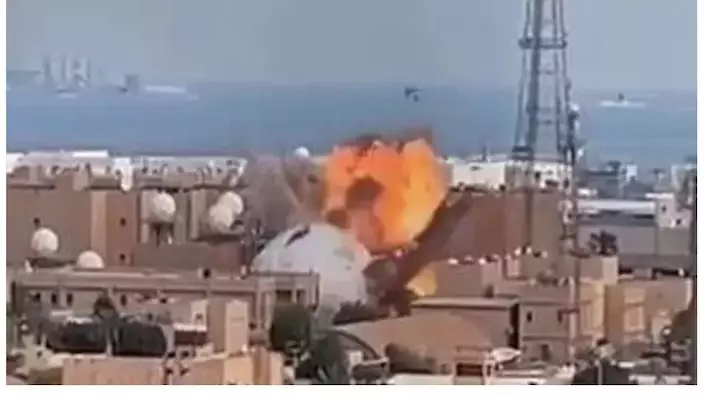
Pentagon watchdog admits losses; Bahrain fleet HQ worst hit
US media reports say the Department of Defense Office of Inspector General for the first time assessed US losses in the four months after the war began on February 28. It said Iran attacked US military bases in several Gulf countries, including Kuwait, Bahrain, Qatar, the United Arab Emirates, Saudi Arabia, Oman and Jordan. Hundreds of buildings and facilities were severely damaged.
The hardest hit was the US Navy's Fifth Fleet headquarters in Bahrain. That base is the Navy's most important logistics hub in the region.
Iranian missiles and drones destroyed most of its facilities. That forced US Central Command to send a supply ship on a long expedition to the Diego Garcia base in the Indian Ocean to pick up supplies. The ship then made the long voyage back to resupply the fleet attacking Iran. The logistics cycle ran 14 to 18 days.
For a long time, the military avoided discussing the destruction of the Bahrain base. Two days ago, Hung Cao, the Acting Secretary of the Navy, finally admitted that the Iranians "blew the hell out of" the base.
He has already formed a special task force to study why the base was damaged to that extent.
The report says more than 50 US military aircraft were damaged or destroyed during that period. They include four F-15 fighter jets, seven KC-135 tankers, and at least 30 MQ-9 Reaper drones, among others.
Bases, Jets, and Harder Missiles
The destruction did not stop at US military bases and aircraft. US diplomatic facilities in Kuwait, Saudi Arabia, the UAE, and Iraq also took heavy damage. The losses reached $180 million.
The danger to diplomats was extreme. More than 3,500 people fled the Middle East in panic.
The Pentagon's tally is already out of date. It runs only through the end of June and is not yet final. Iran's latest wave of attacks is not included.
Earlier, US Central Command struck several Iranian "shadow" oil tankers to stop them from shipping oil. Iranian forces hit back immediately, firing missiles at US bases and warships.
People familiar with the matter say a number of US aircraft were damaged in the attack. The list includes eight F-15 fighter jets and one A-10 Warthog attack aircraft.
The interception effort tells the same story. US forces fired more than 30 Patriot air-defense missiles to stop Iranian missiles. Warplanes were still hit. Iranian missiles are becoming more potent.
US media report that Iran used new missiles with electro-optical guidance in its operations against US warships and bases. The missiles can identify targets with sensors. They do not need to rely on GPS.
That raises the risk of a US warship being hit even further.
The new arsenal includes the highly lethal Qassem Bashir medium-range missile. It has a range of 1,200 kilometers and can carry a half-ton warhead.
Mohsen Rezaei, chairman of Iran's Supreme National Security Council, said recently that the missile has already been "tested" against a US warship. The US side later acknowledged that a US ship was attacked by Iranian missiles and managed to evade them without damage.
That makes such missiles a "lethal" threat to warships.
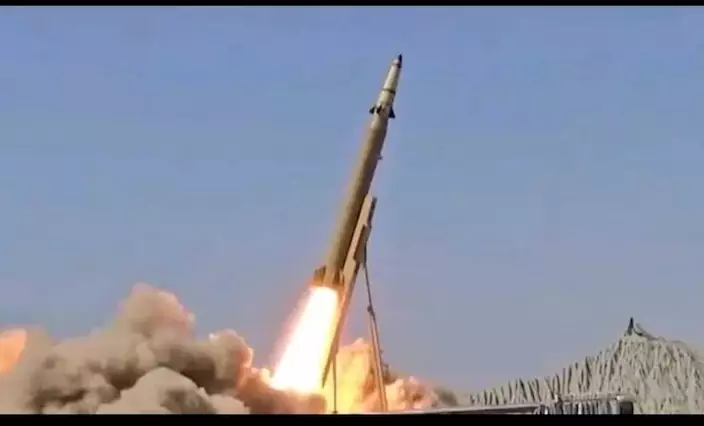
Iran strikes US bases with new 'Bashir' missiles again
Donald Trump sees the heavy US losses and the bigger risks ahead. Continuing the fight offers little chance of victory. He knows how to count, and he understands the logic of pressing when winning and cutting losses when losing.
He is believed to be leaning toward wrapping things up early. His recent remarks point that way.
Trump Signals the Exit Ramp
On Monday he fired off three social media posts in a row. The message was blunt: the military conflict with Iran would not last long, and the fighting would be over quickly. "Oil will drop like a rock as soon as the Military Conflict with Iran is over, and that will not be long."
Later, when reporters asked him, he went further. He said the war would end after the midterm elections and gasoline prices would fall like a stone. Then he added: "I know what I'm doing, I have to do it."
The picture is clear. He wants to bring this to a close sooner than ever before.
There is another sign. The Houthi forces, Iran's "brothers," recently seized a stronghold in the Bab el-Mandeb Strait. Saudi Crown Prince Salman called Trump twice, pressing him to send troops to strike Houthi weapons. Trump refused both times.
He clearly does not want the battle lines to widen. A bigger fight would make it even harder to extract himself.
Trump is a businessman who loves a "deal." He has now seen the loss figures his subordinates put before him. He knows the opponent will not be easy.
His business instinct will likely make him "really flinch." He will think hard about how to cut his losses and walk away.
Listen to his recent tone. This idea is looking more and more obvious.
Lai Ting-yiu
What Say You?
** 博客文章文責自負,不代表本公司立場 **
News about the Iran war has been coming thick and fast over the past two days, and most of it is not so good for the United States.
First, the Houthi militants, Iran's "good brothers," seized control of key positions along the Bab el-Mandeb Strait. That blocked the alternative oil route that had been standing in for the Strait of Hormuz and could push oil prices to $120 a barrel. Then AI giant Anthropic dropped a bombshell: the Houthis are using its AI models to accelerate the development of hypersonic missiles, putting US military bases in the region in grave danger. At this point, not only is a swift victory out of reach. Things are going from bad to worse, and everyone is just watching to see how this gets wrapped up.
It was right at this moment that The New York Times broke an exclusive. Vice President JD Vance, who has advocated de-escalation all along, has been bypassing Defense Secretary Pete Hegseth. He has been calling US combatant commanders across the regions directly to gather intelligence and hear their "candid assessments," before taking his case to the President. Trump knows all about it. This looks very much like a sign that the White House is seeking an exit from the Iran war.

Vance goes around Hegseth, quizzing generals on the war.
Ever since the war began, these three men, Vance, Trump, and Hegseth, have held three distinct positions. Vance favors peace and has been pushing for talks to end the fighting. Trump has been erratic, acting on a whim and doubling back on himself.
Hegseth has remained hawkish throughout, vowing never to stop until Iran is destroyed. Today, with America stuck knee-deep in the quagmire, the "pro-peace camp" Vance represents is finally on the rise.

Top hawk Hegseth loses the White House power struggle.
Vance Phones the Generals Directly
According to several senior military officials who spoke to The New York Times, Vance has in recent months directly phoned a group of US commanders in the Middle East, Europe, and Asia.
He asked them a series of critical questions about the war: 1. combat objectives and tactics; 2. projections of US casualties; 3. how to respond to Iran's grip on the Strait of Hormuz; 4. how much punishment the Iranian government can withstand; and 5. the true state of US weapons stockpiles. He also asked whether diverting those weapons to the Middle East would erode America's deterrence against China, Russia, and North Korea.
On the munitions question, the paper reported the commanders all painted a grim picture. The most alarming concern is the rapidly dwindling stock of Patriot interceptor missiles. One theater command reportedly has only about 100 left. The war has also exhausted reserves of the Army Tactical Missile System (ATACMS), and stocks of precision-strike missiles are nearly depleted.
After receiving this "hard intel," Vance was said to be deeply worried about the overall strategic picture. He was particularly alarmed to learn just how resilient the Iranian government is, and how much pain it is willing to endure to survive. If Tehran resolves to fight on, US defensive weapons will simply be too scarce to cope. On this assessment, Vance fears America's odds of success will only shrink with time.
Nor did he stop at calling up the generals. He also obtained clearance from CIA Director John Ratcliffe to contact the agency's intelligence analysts directly. He asked them for deeper reporting, including material related to the intelligence briefings sent to the White House.
The main purpose of this unusual maneuver is clear. Vance wants fuller, more truthful assessments straight from the military's top brass, so he can form his own view of the Iran war and advise Trump accordingly. The aim is to offer "unbiased military options" that nudge the President toward ending the war sooner.
A Play for Power and 2028
Analysts say Vance is doing more than trying to shape Trump's decisions. It is also a move in the "White House power game," and part of his groundwork for the 2028 presidential race.
US media have revealed that in the run-up to the war and its early stages, operational planning was confined to a tiny circle: the defense secretary, the Joint Chiefs of Staff, and the head of Central Command.
Even then, Vance was already demanding access to more information so he could enter the core of military decision-making. By now bypassing Hegseth and going straight to the generals for information, he will only strengthen his position within that core.
Washington political circles all know that Vance and Hegseth have long been at odds. This is not merely a "doves versus hawks" dispute. It is also a bitter feud over personnel. Vance had intended to team up with his old friend at the Pentagon, Army Secretary Dan Driscoll, to jointly press Trump for sweeping Army reform.
But Hegseth struck first and forced Driscoll out, deepening the enmity between the two men. By going over his rival's head this time, dealing with the generals directly and then reporting to Trump himself, Vance will undercut his nemesis's influence over military decisions.
The reality is that Trump has lately grown increasingly suspicious of Hegseth exaggerating battlefield gains and inflating the war news. He is presumably more than happy to hear Vance's "objective assessments." So he is fully aware of what Vance has been up to.
Riding the Anti-War Wave
Vance stands a very good chance of running in the 2028 presidential election. He can certainly see the rising anti-war sentiment among the American public. He also knows that even his own MAGA base has no appetite for letting the Iran war drag on.
If he can broker a ceasefire while flying the "pro-peace" banner, it will pay enormous dividends in winning public support. And if the war can be brought to an early close, he will not have to carry this potentially "fatal" baggage into the election.
Whatever his motives, Vance's unusual moves look like a sign that the Iran war is heading toward its endgame. And that, after all, is what most people around the world are hoping for.
Lai Ting-yiu