

A nation’s rise or fall hinges on its ability to retain its brightest minds. The New York Times recently reported that American immigrant and Nobel laureate Omar Yaghi is resigning from the University of California, Berkeley. He is heading to Tsinghua University to lead an artificial intelligence institute for materials research.
Make no mistake: this move involves more than an attractive contract. As a Palestinian refugee, Yaghi fiercely opposes Donald Trump's anti-immigration policies and fears they threaten scientific development. Immigrants make up 40 percent of American Nobel laureates. Coupled with drastic government funding cuts, experts are warning of the most severe scholar exodus in a decade.
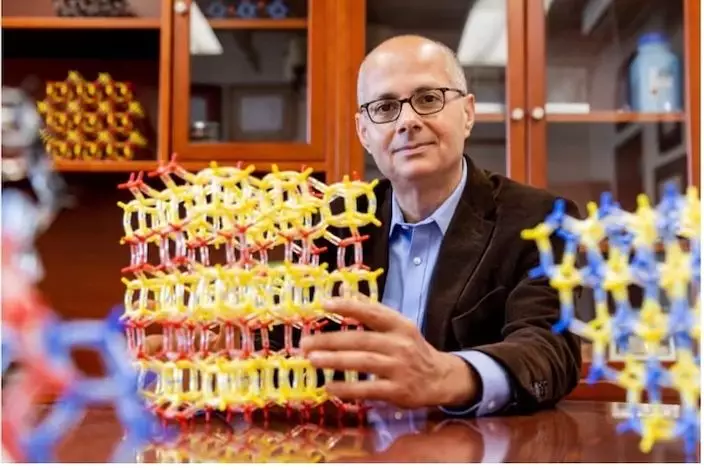
Omar Yaghi is an international authority in materials science and a recent Nobel Prize winner in Chemistry. He recently abandoned the US to join Tsinghua University. He was born a Palestinian refugee and later immigrated to America. His profound anxiety over Trump's anti-immigration agenda is a primary catalyst for his departure.
The migration of elite research talent operates on a mix of pull and push factors. Yaghi’s successful recruitment highlights China’s unwavering commitment to talent development and drawing in top foreign scholars. Water flows down, but human ambition reaches upward. These scholars will only jump ship if they see limitless potential for complementary development in China. For Yaghi, the conditions were perfect.
The New York Times interviewed Ram Seshadri, a chemistry professor at UC Santa Barbara. He noted that Yaghi’s move signals a fundamental shift in the technological rivalry between China and the US. "They've overtaken us in many areas of materials science and chemistry," he said, referring to China. "They're willing to invest very large sums of money to attract new talent." In fact, China currently outpaces the US in publishing top-tier chemistry papers.
The reality is Yaghi's exodus from the US is deeply intertwined with his personal history. The report shed light on his obscure origins. He was born in a Palestinian refugee camp in Jordan and grew up in a squalid room devoid of water or electricity before immigrated to the US when he was 15 years old.
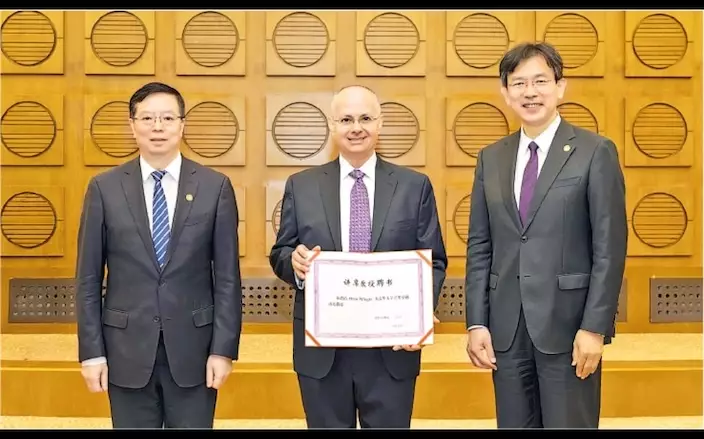
Tsinghua University wooed Yaghi with a highly lucrative employment package. He takes charge of a cutting-edge institute utilizing AI to synthesize new materials. Tsinghua Party Secretary Qiu Yong and President Li Luming both attended his appointment ceremony last week.
This immigrant background leaves him deeply alienated by Trump’s anti-immigration policies. Before flying to Sweden to accept his Nobel Prize last year, he shared his fears with The New York Times. He is dissatisfied with these policies and worries they will dismantle the collaborative system built by universities, corporations, and the government. He sees this as a direct blow to American scientific progress.
The psychological toll of Trump’s brutal stance on top scholars is severe. Last year alone, three American Nobel laureates were born overseas. Immigrants have claimed 40 percent of all Nobel Prizes since the start of the century. Under the current political climate, a growing number of scientists feel the US is no longer a viable home.
But the real issue driving this brain drain is the relentless slashing of scientific research funding. As the pie shrinks, researchers battle over dwindling resources and face immense frustration. A US medical journal revealed that the National Institutes of Health abruptly canceled 700 grants worth $1.8 billion in the first quarter of last year. The National Science Foundation also saw its research budget axed by nearly $1.4 billion.
To exert political pressure on academic institutions, Trump has systematically dismantled numerous research grants. Even financial subsidies for Harvard University have been frozen.
These converging negative factors are leaving top scholars disillusioned and eager to abandon the US. Data from a Nature scientific job platform shows a 35 percent year-on-year surge in American scientists seeking overseas employment. A survey by the publication revealed a staggering 75 percent of researchers desire to leave the country. This trend foreshadows the most dramatic exodus of academics in a decade.
The restlessness among American scientists is further stoked by aggressive recruitment from China and Europe. Both are doubling down with lucrative financial incentives to lure top talent. The Organisation for Economic Co-operation and Development notes that China's research funding growth has eclipsed that of the US. With abundant capital waiting in China, American scholars naturally feel compelled to move.
The eastward migration of US Nobel laureates is rapidly solidifying into a long-term trend. Hong Kong universities offer significantly better compensation for outstanding scholars compared to their American counterparts. This gives Hong Kong an absolute advantage in talent acquisition, and institutions must act quickly to inject impetus into their research programs before missing out.
Lai Ting-yiu
What Say You?
** 博客文章文責自負,不代表本公司立場 **