

Whether a genuine US-Iran ceasefire can be achieved depends entirely on the negotiations now underway. US Vice President Vance arrived in Switzerland Sunday morning; Iran's representatives were already on the ground ahead of him. One of the first thorny issues both sides must resolve is the Lebanon ceasefire — a knot that will not be easy to untangle. Israel has continued to "play games" right up to today, threatening to torpedo the talks at any moment.
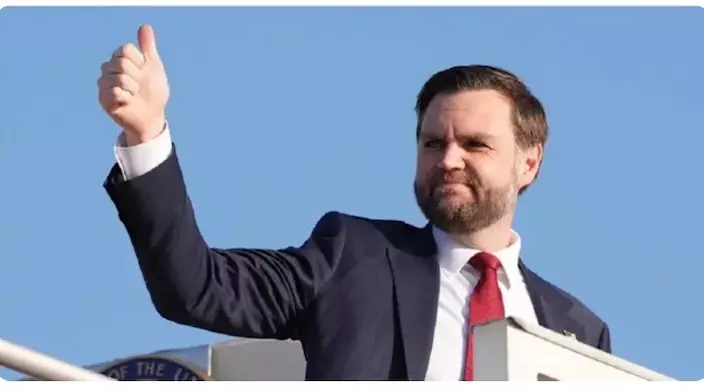
VP Vance flew to Switzerland for US-Iran talks on Sunday — but not before furiously rebuking Israel for plotting to torpedo the deal.
The Washington Post has revealed that a US intelligence report warned Trump that Prime Minister Netanyahu, under intense domestic pressure, would quietly work to sabotage any US-Iran peace deal. Hu Xijin, former editor-in-chief of Global Times, has also noted that Netanyahu is adopting a "scorched earth" posture, and that this new test Trump faces is no less daunting than dealing with Iran itself.
At the same time, America's "Jewish lobby" is pushing hard to prevent Trump from making concessions to Iran. These groups are threatening to cut off campaign funding ahead of the midterm elections. A headache Trump can ill afford to ignore.
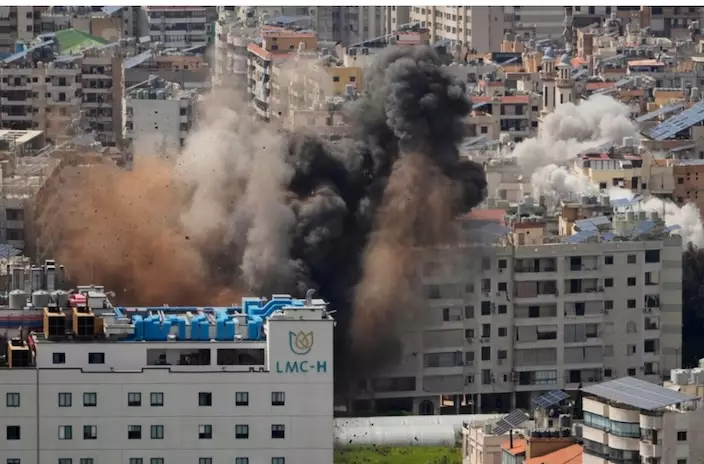
Netanyahu and his far-right allies are openly defying Trump, bombing Lebanon and blowing up the US-Iran agreement — leaving him trapped on all sides.
Like a dog off the leash: while the US and Iran talk, Israel keeps striking. Just as US and Iranian representatives sat down at the table, Israeli forces — in flagrant disregard of the ceasefire agreement with Hezbollah — launched fierce airstrikes on southern Lebanon. Numerous residential buildings destroyed, and 16 people killed. Iran had already shut the Strait of Hormuz once in response to Israel's continued strikes on Lebanon; if Israel refuses to stand down, the talks could collapse at any moment.
That, however, is precisely what Israel wants. Its calculated "game-playing" aims to reignite the conflict. The Washington Post, citing a US intelligence report, states that Israel has no interest in a ceasefire and is determined to press its assault on Hezbollah in Lebanon. A direct violation of a key provision amongst the US-Iran Memorandum of Understanding. Specifically, the requirement of a ceasefire in Lebanon. Trump had already warned Israel to stop firing, but Israel continues to act all on its own. Its intent to wreck the agreement is in plain sight.
According to the intelligence report's analysis, this behavior is tied directly to Israel's domestic politics. Netanyahu faces a general election in October and must demonstrate to voters that he refuses to follow Trump's lead and will not withdraw from Lebanon. Any sign of weakness would be political suicide, and his hold on power would be finished.
Netanyahu's political survival is, in fact, directly tied to the Lebanon campaign. Domestic polls show that more than 70% of Israelis support continuing the strikes against Hezbollah. Opposition leaders competing against him have loudly declared that "the fighting must not stop." Netanyahu must therefore prove himself more resolute and more aggressive on the Lebanon question than any rival.
The Washington Post quoted a US official as saying that even if Israel does not escalate its airstrikes on Beirut, simply digging in and refusing to withdraw from southern Lebanon would be enough to shatter the fragile US-Iran agreement. In other words, if Trump cannot rein in Netanyahu, the US-Iran negotiations are in serious jeopardy.
To keep the US-Iran deal from collapsing, Trump has confronted Netanyahu on several occasions. He reportedly used profanity during one phone call and most recently singled out Israel for direct criticism at the G7 summit. But Netanyahu invariably turns around and carries on as before: openly flouting the Memorandum of Understanding and challenging the authority of Trump's own signature.
Hu Xijin, former editor-in-chief of Global Times, remarked that the US-Iran peace agreement had barely landed before it was slapped in the face. The one to deliver that heavy blow was none other than America's closest ally, Israel. "Netanyahu is adopting a 'scorched earth' posture," Hu wrote. "Trump and his team are facing an unprecedented test — one that is arguably no less severe than the hostility they previously faced from Iran."
Israel's leadership has grown increasingly brazen in its defiance of Trump, making no attempt to hide its “insubordination”. Far-right National Security Minister Ben Gvir openly declared that while Israel respects the United States, it must make clear to the world that "the blood of our sons and the security of our citizens are not up for bargaining" in the US-Iran negotiations. He went further, crowing that "all of Lebanon must burn".
Vice President Vance witnessed such arrogance from Israeli officials and responded with fury. "Donald J. Trump is the only head of state in the entire world who is sympathetic to the nation of Israel at this moment in time," Vance thundered. "If I was in the cabinet of the Israeli government, I might not be attacking the only powerful ally that I have anywhere left in the entire world."
Vance further pointed out that two-thirds of Israel's defensive weapons come from the United States, and that America provides Israel with $4 billion in military aid each year. The message was unmistakable: without US support, Israel would be finished.
But Ben Gvir did not back down. Instead he retorted with a barely veiled threat: "Anyone who supports us will benefit; anyone who abandons us will suffer. So don’t threaten us." The remark was loaded with belligerence.
Hu Xijin noted that such open, mutual attacks between the US presidential team and senior Israeli officials are unprecedented in the history of US-Israel relations. He believes Netanyahu and the far-right are attempting to drag out the peace process "until the agreement collapses entirely," ultimately carving out a path of survival for themselves.
Their audacity in defying Trump stems from two calculations. First, they know Washington would not dare to simply abandon such a critical regional pawn and surrender its leverage over Middle Eastern states. Second, the American "Jewish lobby" remains a major source of Republican campaign funding — cut off that money supply, and the consequences for the GOP would be severe.
The reality is stark. Following the signing of the US-Iran Memorandum of Understanding, major organizations representing Jewish influence — including the American Israel Public Affairs Committee (AIPAC) and the American Jewish Committee (AJC) — voiced fierce opposition. They argued that going to war with Iran had failed to eliminate the Iranian military threat, and that the deal instead consolidates the regime's power. Behind these organizations are no shortage of major Republican donors, who are exploiting the approaching midterm elections to pressure Trump by threatening to cut off campaign funding.
With Israel's hawks and America's "Jewish lobby" squeezing Trump from without and within, he finds himself trapped in a new dilemma. If he cannot withstand the pressure from Israel, the Iran negotiations will collapse and everything reverts to square one — war will have to resume. Yet Israel, emboldened by its leverage, will not stop causing disruption, and containing it is far from easy.
Such is the greatest test Trump faces today.
Lai Ting-yiu
What Say You?
** 博客文章文責自負,不代表本公司立場 **