The US-Iran situation is volatile — talks and conflict are unfolding in parallel, with no clear resolution in sight. For Trump to make the right calls, he needs precise intelligence. Yet at this critical moment, serious infighting has erupted within the intelligence community. Tensions between the Central Intelligence Agency (CIA) and the Office of the Director of National Intelligence (ODNI) have intensified to the point of open hostility.
ODNI serves as Trump's all-seeing eye on intelligence, so any breakdown in CIA intelligence flow could cause dangerous misjudgments. Worse still, the incoming Director of National Intelligence, Pulte, is a staunch Trump loyalist with no intelligence background — making cooperation with the CIA even more difficult, and the situation likely to deteriorate further.
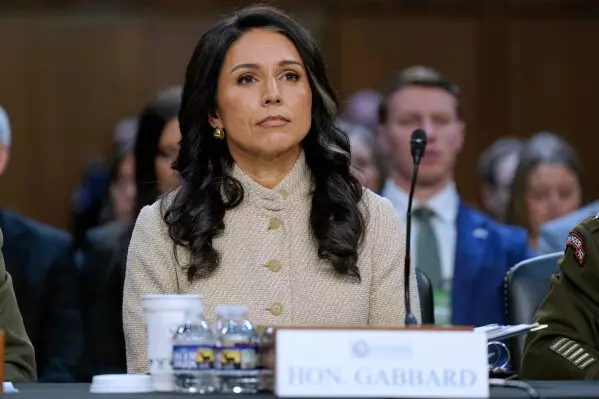
After taking office last year, Director of National Intelligence Tulsi Gabbard was consistently at odds with the CIA, with tensions escalating relentlessly. The CIA has angrily halted the provision of some intelligence on Iran — a move detrimental to the war effort.
Three words capture the state of the US intelligence system right now: a complete mess. Director of National Intelligence Tulsi Gabbard has abruptly resigned after clashing with Trump. The official reason cited her husband's illness, but in reality, she was dismissed and will leave by the end of the month.
At the same time, Reuters, citing informed sources, revealed that since taking office in February last year, Gabbard had been in constant conflict with the CIA — and that tensions had recently escalated sharply. The CIA has now reportedly stopped providing certain intelligence assessments to ODNI, including analyses related to the Iran conflict.
Insiders say friction erupted shortly after Gabbard took office. She moved against the CIA on multiple fronts. First, she tightened control over the production of the President's Daily Brief, sharply reducing the CIA's direct involvement. Then she established a special task force, claiming it was meant to eliminate politicization within the intelligence system. The task force, however, bypassed the standard intelligence-sharing and declassification procedures that the CIA should have been part of — and operated independently. That infuriated CIA Director Ratcliffe.
ODNI offered a different account, accusing the CIA of obstructing the task force's access to necessary intelligence. Both sides are entrenched in their positions, and the dispute has turned deeply acrimonious.
The infighting has destroyed mutual trust. In retaliation, the CIA has sharply reduced the intelligence it shares with ODNI on Iran. The consequences could be severe: disrupting the intelligence pipeline to the president, distorting battlefield assessments, and ultimately triggering catastrophic decisions.
Gabbard's departure at the end of the month might have offered a chance to reset relations. But Trump has made an unexpected move. He has appointed Pulte — currently head of the Federal Housing Finance Agency, which oversees mortgage regulation — as her successor. Pulte has no intelligence experience whatsoever. He is, however, a fiercely loyal Trump enforcer, clearly positioned to aggressively purge what Trump sees as "deep state" elements within the CIA and other intelligence agencies. If Pulte assumes full control, tensions with the CIA are almost certain to escalate.
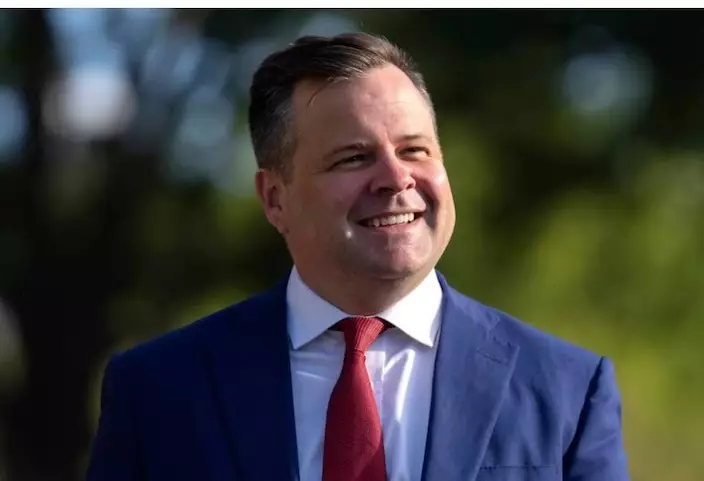
Pulte, who is set to replace Gabbard, has no intelligence background. His appointment reflects Trump's need for a loyal enforcer to carry out a sweeping crackdown on the CIA — a move that will inevitably intensify their conflict.
Pulte must still clear the Senate confirmation process. His nomination was immediately attacked by Democratic lawmakers, who argue he lacks any intelligence credentials. They describe him as a partisan enforcer who has repeatedly helped Trump target political opponents — and question the logic of entrusting national security to such a figure.
Those criticisms are not unfounded. Pulte has reportedly exposed alleged "mortgage document fraud" involving Trump's political rivals, using such material to apply legal pressure — tactics widely seen as ruthless. Trump values his aggression and loyalty, which explains the selection. As DNI, Pulte's primary mission will be to overhaul the 18 intelligence agencies under his authority, with the CIA as the main target.
Trump's animosity toward the CIA runs deep. During the 2016 "Russiagate" investigation, a group of intelligence officers participated in assessments he viewed as a "deep state" conspiracy against him — a grievance he has sought to settle ever since. Upon returning to power, he appointed Gabbard to lead ODNI with the key mission of purging the CIA. That decision planted the seeds of today's institutional warfare between the two agencies.
The US-Iran conflict and the Russia-Ukraine war remain fluid and unpredictable. Yet at this critical juncture, the US intelligence system is tearing itself apart — and the infighting is only getting worse. The leaders of Iran and Russia, watching this spectacle unfold, are surely smiling behind closed doors.
Lai Ting-yiu
What Say You?
** 博客文章文責自負,不代表本公司立場 **
America's press-freedom myth just took a serious hit. The Justice Department has subpoenaed four New York Times reporters over an alleged violation of federal criminal law. The FBI has opened its own investigation. Both moves target the paper's exposé on inadequate anti-missile defenses aboard the president's new plane.
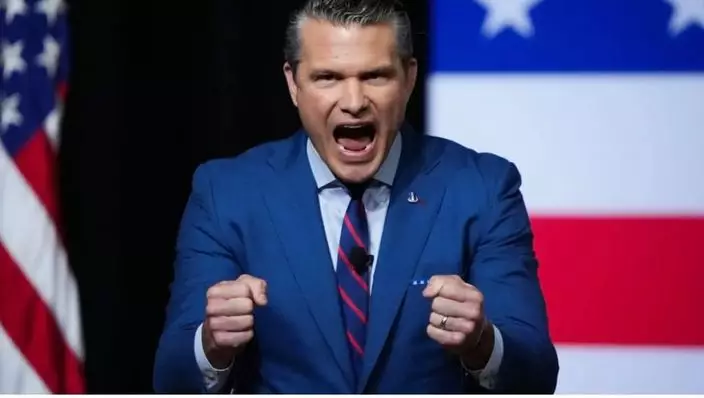
Defense Secretary Hegseth unveils "mole-hunt squad," vowing to root out leakers feeding reporters.
The White House has long nursed grudges against the press. Now, in a fury, it has escalated from threats to outright intimidation, deploying subpoenas and detentions alike. As the saying goes, there is no smoke without fire. Someone inside government must be leaking, and that conviction pushed Defense Secretary Pete Hegseth to announce a special task force. Working hand-in-hand with the Justice Department, the task force aims to root out the "moles."
The showdown between the White House and the press is only heating up, and the real fireworks may still lie ahead.
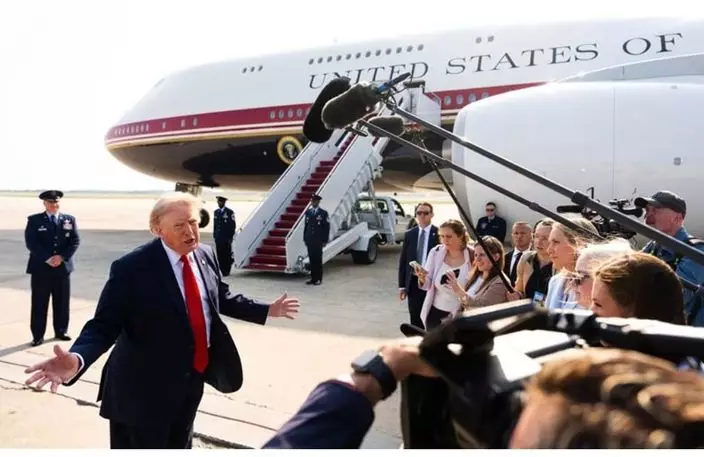
Trump's sudden switch to the old Air Force One after NATO sparked media exposés, igniting his fury and a subpoena crackdown.
The Plane-Swap Spark
The trigger behind this clash was the so-called "plane-swap incident." After Trump wrapped up the NATO summit in Turkey, his security team abruptly switched him onto the old Air Force One for departure. He skipped the new plane gifted by Qatar entirely, and that alone raised eyebrows.
The New York Times soon reported why. The new aircraft's missile-defense systems were inadequate, the paper said, posing a security risk that forced officials to fall back on the old plane. The White House flatly denied the report, and Trump reportedly flew into a rage. The Justice Department wasted no time, issuing subpoenas to the paper's reporters almost immediately.
There is more to this story. FBI agents reportedly showed up at the New York Times offices before the story even went to print. They demanded the paper pull the piece and reveal its sources.
The paper's leadership flatly refused. In response, the Justice Department broke with convention. Rather than identifying the leaker first, it went straight after the reporters with subpoenas, escalating pressure on the press.
This is not the first time the White House has tried to put reporters in the hot seat. Back in April, a US Air Force F-15E was shot down over Iranian airspace and the pilot went missing after ejecting. Both the New York Times and Axios covered the story.
Iran's military happened to launch a massive search operation around the same time. Whether the two events were connected remains unclear. Still, Trump was quick to blame the media, threatening to jail both the reporters and the leaker.
The White House apparently could not find hard evidence, so it ultimately took no action. That failure only deepened its resentment toward the press, and officials waited for the right moment to strike back hard. This time, the plane-swap incident gave the administration its pretext to wield the legal hammer, and it is determined to teach reporters a lesson they will not forget.
The Pentagon's "Mole Hunt"
The crackdown on "moles" by the Defense Department and the Justice Department has also ramped up. Hegseth posted a video on X yesterday announcing that the Pentagon has teamed up with the Justice Department to form a special task force. Its mission: hunt down whoever has been feeding information to the media, and anyone caught with solid evidence will face the full force of the law.
He said the Pentagon's Office of General Counsel can now require any department unit to hand over information and records tied to leak investigations within 48 hours. Full cooperation is mandatory, with no room for delay or evasion. He also issued a stern warning, declaring that "access to confidential and secret information is a sacred trust, and those who betray that trust will be met with the full force of the law".
Both Hegseth and Acting Attorney General Todd Blanche are die-hard Trump loyalists. That alone signals this crackdown comes directly from Trump himself, and it is designed to make heads roll, with some officials facing criminal charges. Even without hard evidence, suspects are still likely to be pushed out of their jobs.
The Pentagon has done this before. Last year it investigated several leak cases, resulting in a number of officials being suspended, including Deputy Chief of Staff Darin Selnick and Senior Adviser Dan Caldwell. Both have since quietly disappeared from their posts.
A Hunt That Cannot Succeed
Some analysts point out a hard truth. Hegseth may be on the warpath, but the Pentagon's "mole problem" could prove impossible to fully stamp out. Since Trump's return and Hegseth's takeover of the Defense Department, internal personnel purges have stirred up widespread resentment, making it easy for reporters to find disgruntled insiders willing to talk. With so many potential leakers around, there is no way to seal every crack.
Hegseth himself is not exactly clean either. Shortly after taking office, he got caught up in the "Signalgate" scandal, leaking secret plans for a US strike on Houthi forces in a group chat. That controversy caused quite the uproar. Having broken the rules himself, how can he expect his subordinates to keep their mouths shut without complaint?
Perhaps the funniest comment came from a netizen who suggested the task force should start by investigating the bartender at Hegseth's favorite watering hole. Given his well-known fondness for drink, the odds of him spilling military secrets over a few rounds are hardly low. In the end, they might just discover that the real "leaker" was Hegseth all along.