The rules held — and that matters. Earlier, the British government floated the possibility that Hong Kong BNO holders might need to reside in the UK for ten years before qualifying for permanent residency, a shift from the existing "5+1" arrangement to a "10+1" scheme. The prospect caused considerable alarm.
Eventually, the rules of the game remained unchanged. Those who arrived in the UK five years ago have been submitting their applications in recent months, and the approval process has gone more smoothly than expected — with most clearing the hurdle in short order. According to the latest figures from the Home Office, 8,682 people have already been granted permanent residency.
A friend of mine living in the UK told me that some who have secured this status are expected to return to Hong Kong for work, given the poor state of the British economy. Those eating humble pie and heading back will trickle in steadily. This new wave of returnees brings mixed blessings for Hong Kong: the property market stands to benefit, but with middle-management positions already in short supply, competition in the job market will only intensify as more people return to vie for the same roles.
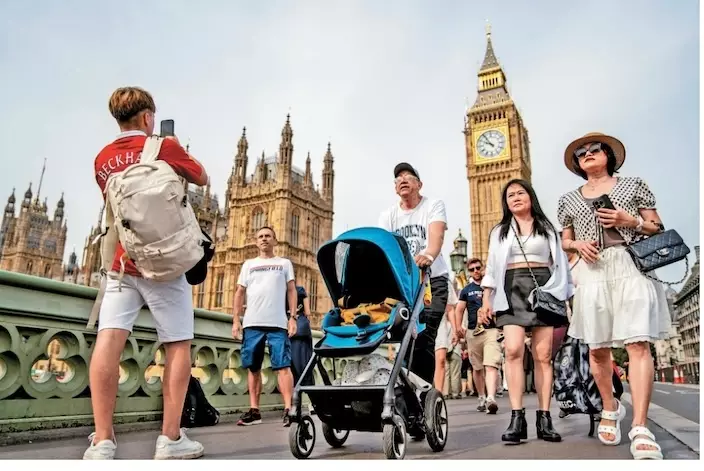
Nearly 9,000 Hong Kong BNO holders have been granted UK permanent residency — and some are already eyeing a return to Hong Kong for work.
The scale of the BNO emigration wave, looking back, was nothing short of staggering. In the very first year after the UK government launched the scheme in January 2021, over 90,000 Hong Kong people applied for BNO visas. Had that pace continued, some 380,000 people would have left within five years — a truly alarming figure.
Fortunately, the tide began to turn after 2022, with the number of people emigrating to the UK declining year on year. In the twelve months to March this year, only 7,214 applications were approved — barely a blip. Still, the cumulative number of Hong Kong people who have arrived in the UK over the past five years exceeds 200,000, which is no small figure.
Under the UK government's "5+1" arrangement, Hong Kong BNO holders who have resided in the UK for five years may apply for permanent residency, and then formally obtain citizenship one year later. By that timeline, those who arrived at the peak of the wave in 2021 have been filing their applications in recent months. The Home Office announced on May 21 that nearly 9,000 permanent residency applications have been approved to date, with the number set to climb continuously — likely reaching tens of thousands.
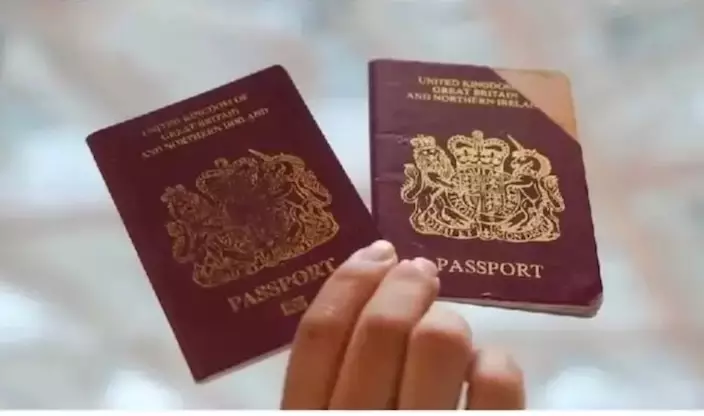
Over 200,000 Hong Kong people have arrived in the UK since 2021. UBS puts the return rate at 10%.
Speed tells a story. My friend in the UK noted that the authorities processed applications faster than expected, with most cases resolved within a matter of weeks and without major complications. The reason the UK government has been so forthcoming is likely straightforward: the majority of Hong Kong BNO holders are employed, pay taxes, and own property — they "contribute to the economy."
From the government's perspective, allowing them to settle is more beneficial than not. On top of that, once Hong Kong BNO holders obtain permanent residency, they become eligible to withdraw their MPF funds — a sum running into the billions of Hong Kong dollars in aggregate — part of which will flow into the British economy. For the UK government, it is a win-win.
As Hong Kong BNO holders gradually obtain permanent residency, what impact will this have on Hong Kong? Another friend of mine in the UK told me that some, now holding this status, will have the freedom to travel in and out without restriction and are expected to return to Hong Kong for work, earning incomes higher than what the UK can offer.
If many share this sentiment, a new wave of returnees is all but inevitable — and the direct beneficiary will be the property market. John Lam, UBS's Head of Asia-Pacific Real Estate Research, estimates that approximately 260,000 Hong Kong people have emigrated to the UK. With some set to obtain citizenship from 2027 onwards. Given the difficulties of finding employment in the UK, a return wave may be on the horizon. Based on a conservative estimate of 10%, the number of returnees could reach 26,000 — a meaningful supporting factor for the private residential market.
Industry insiders caution against overstating the impact of returning Hong Kong people on property prices. Many have already purchased homes in the UK, and if they return to work in Hong Kong, they are more likely to rent than to buy. That said, increased rental demand would still have a positive effect on the property market.
Those who emigrated to the UK were largely middle class, and upon returning, they are expected to seek mid-level positions in IT, finance, and business management. Hong Kong's economy is still finding its footing. Companies have largely been cutting headcount and trimming costs, meaning competition for mid-level roles is already fierce. Adding a cohort of returnees to the mix will tighten the supply-demand balance further. Even so, the return of talent from abroad is ultimately good for driving Hong Kong's economic development.
Hong Kong people in the UK weighing whether to return must also factor in one more consideration. If their children are still young and have already adapted to the local education system, most parents would be reluctant to uproot them and bring them back to Hong Kong. In that case, the only option is a "semi-return" arrangement — one parent heads back to Hong Kong to earn an income while the other stays in the UK to look after the children.
Over the past few decades, every wave of emigration from Hong Kong has been followed by a wave of returnees. It appears that Hong Kong BNO holders will be no exception to this pattern — a testament to the fact that Hong Kong remains a wonderful place and will always be home in the hearts of many.
Lai Ting-yiu
What Say You?
** 博客文章文責自負,不代表本公司立場 **

Of the 45 individuals sentenced in the "35+ subversion case," 19 have already served their time and left prison, while the Democratic Party's chairman Wu Chi-wai and vice-chairman Wan Siu-kin are counting days to end their prison life of more than four years. Wu is set for release on June 30, Wan on July 4 – walking free just days apart.
Both men were originally moderates within the party. Yet they let the radicals lead them off the edge. They ended up as convicts – just like a nightmare. Former pan-democrat acquaintances speak of them with deep sighs. The duo made two fatal missteps: they followed the crowd to protect their vote share, unable to break free even when danger loomed; and most fatally, they were blindly manipulated by legal academic and "mastermind" Tai Yiu-ting, and all drove off the cliff together. Now that the dream has shattered, word is that both have grown disillusioned with politics. They plan to retire from public life, relocate abroad with their families, and bid farewell to that era of madness.
Former Democratic Party chairman Wu Chi-wai walks free June 30 — two fatal missteps turned a career into a conviction.
In this subversion case, Wu Chi-wai and Wan Siu-kin were both classified as "active participants." They pleaded guilty early and received a one-third sentence reduction. Factoring in their prior public service records, they shaved more than two years off their terms – hence their release within weeks. Their early return to freedom is tied to their timely pragmatism.
According to insiders, like the "three members of the Civic Party," both men decided at the outset of prosecution to plead guilty decisively. After doing the calculations, they saw no point in playing the hero, clinging to a position, and enduring extra years behind bars. They also dropped their appeals to avoid any further complications.
Vice-chairman Wan Siu-kin follows on July 4 — a moderate swept up by radicals, too afraid to cut ties.
Fellow Democratic Party member Wong Pik-wan, however, miscalculated. Had she pleaded guilty at the outset and not sought bail pending trial, she would likely have been released around the same time as Wu and Wan. But sources say she received a tip suggesting her case was relatively minor and that acquittal was likely – so she decided to fight it and take her chances.
Things did not go as she hoped. She is now set to remain imprisoned until the end of 2030. She has appealed against both her conviction and sentence to the Court of Final Appeal; how it ends will depend on her fortune.
Former Secretary for Transport and Housing Cheung Bing-leung – once a senior figure in the Democratic Party and a long-time colleague of the two men – wrote in his mitigation letter that they were rational politicians. Even when they disagreed with government policy, they were seen as moderate and pragmatic. If that was truly their character, why did they appear to suddenly turn radical and irrational in their later years – especially after the anti-amendment movement erupted?
Former pan-democrat acquaintances point to several reasons. First, the younger generation within the Democratic Party was inclined toward radical tactics and confrontation to stand out. They viewed the party's "old guard culture" as too conservative and outdated, and kept pushing for change. Hui Chi-fung – who rose to prominence through his disruptive tactics – was a prime example.
These figures initially found it hard to gain traction. But after the Occupy movement, and then the anti-amendment protests, the wave of radicalism surged ever higher, and the younger faction's approach gradually became the mainstream.
Second, in this broader atmosphere, young voters – swept up in the fervor – increasingly turned toward "localist" and "resistance" factions chanting radical slogans, as well as a wave of newly emerged political newcomers. They dismissed traditional pan-democrat politicians with contempt.
Faced with this shift – and with the tide of militant struggle from the anti-amendment valiant riots crashing in – Wu Chi-wai, Wan Siu-kin, and the traditional pan-democrats felt compelled to reinvent themselves. They entered a race to out-radical each other against the new forces challenging them.
Consider this: at a Legislative Council meeting in May 2019, Wu Chi-wai – who had always presented himself as refined and gentlemanly – turned ferocious. He launched into a verbal tirade against then-Chief Executive Carrie Lam. When the President of the Council ejected him from the chamber, he screamed: "Carrie Lam, you're a waste of air, you old hag." He had become an entirely different person.
By then, the wave of radicalism was dragging the pan-democrat heavyweights along. Wu Chi-wai and Wan Siu-kin had no choice but to go with the flow. This carried them into two fatal missteps.
The first was following the radical forces in lockstep. Out of fear of being sidelined, they refused to draw a clear line with the "valiant faction," and even endorsed the "unity of peaceful and militant" approach. They became unable to extricate themselves, drifting ever further toward the extreme.
Then in 2020, Jimmy Lai drove the "35+ primary election" initiative while Tai Yiu-ting operated it at the frontline. At this point, Wu Chi-wai compounded his earlier mistakes by throwing himself into this "dangerous game." Warnings had already been issued that the primary might violate the National Security Law, and that continuing to participate was playing with fire and risked running afoul of the law.
Former pan-democrat acquaintances note that although Wu Chi-wai and other Democratic Party heavyweights knew there were risks, not taking part would have left them with no chance of winning in Legislative Council elections – the worst case being total annihilation. This calculation led them to underestimate the danger of the primary's illegality.
They were also misled by "law professor" Tai Yiu-ting, who assured them the primary did not violate the law. This misstep ultimately sent the Democratic Party and Civic Party leadership tumbling into the pot together.
There are no "ifs" in life, and mistakes cannot be rewound. Wu Chi-wai and Wan Siu-kin can only treat it as a bad dream and start anew. Their families have already relocated overseas, it is said. Upon release, both men will also leave Hong Kong, retire from public life, keep their hands clean of politics, and say goodbye to that era of madness.
Lai Ting-yiu