
Of the 45 individuals sentenced in the "35+ subversion case," 19 have already served their time and left prison, while the Democratic Party's chairman Wu Chi-wai and vice-chairman Wan Siu-kin are counting days to end their prison life of more than four years. Wu is set for release on June 30, Wan on July 4 – walking free just days apart.
Both men were originally moderates within the party. Yet they let the radicals lead them off the edge. They ended up as convicts – just like a nightmare. Former pan-democrat acquaintances speak of them with deep sighs. The duo made two fatal missteps: they followed the crowd to protect their vote share, unable to break free even when danger loomed; and most fatally, they were blindly manipulated by legal academic and "mastermind" Tai Yiu-ting, and all drove off the cliff together. Now that the dream has shattered, word is that both have grown disillusioned with politics. They plan to retire from public life, relocate abroad with their families, and bid farewell to that era of madness.
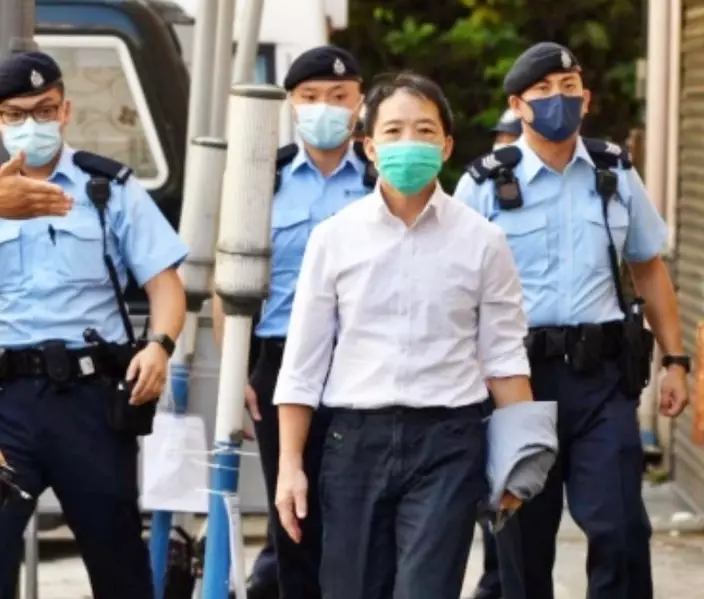
Former Democratic Party chairman Wu Chi-wai walks free June 30 — two fatal missteps turned a career into a conviction.
In this subversion case, Wu Chi-wai and Wan Siu-kin were both classified as "active participants." They pleaded guilty early and received a one-third sentence reduction. Factoring in their prior public service records, they shaved more than two years off their terms – hence their release within weeks. Their early return to freedom is tied to their timely pragmatism.
According to insiders, like the "three members of the Civic Party," both men decided at the outset of prosecution to plead guilty decisively. After doing the calculations, they saw no point in playing the hero, clinging to a position, and enduring extra years behind bars. They also dropped their appeals to avoid any further complications.
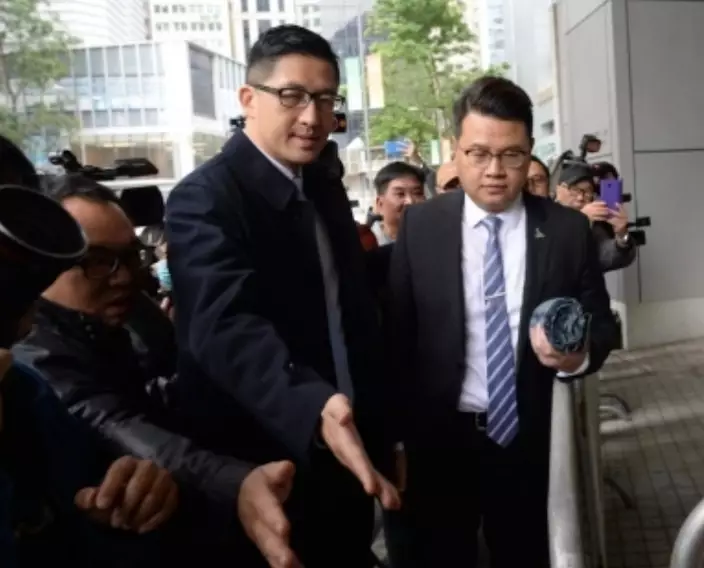
Vice-chairman Wan Siu-kin follows on July 4 — a moderate swept up by radicals, too afraid to cut ties.
Fellow Democratic Party member Wong Pik-wan, however, miscalculated. Had she pleaded guilty at the outset and not sought bail pending trial, she would likely have been released around the same time as Wu and Wan. But sources say she received a tip suggesting her case was relatively minor and that acquittal was likely – so she decided to fight it and take her chances.
Things did not go as she hoped. She is now set to remain imprisoned until the end of 2030. She has appealed against both her conviction and sentence to the Court of Final Appeal; how it ends will depend on her fortune.
Former Secretary for Transport and Housing Cheung Bing-leung – once a senior figure in the Democratic Party and a long-time colleague of the two men – wrote in his mitigation letter that they were rational politicians. Even when they disagreed with government policy, they were seen as moderate and pragmatic. If that was truly their character, why did they appear to suddenly turn radical and irrational in their later years – especially after the anti-amendment movement erupted?
Former pan-democrat acquaintances point to several reasons. First, the younger generation within the Democratic Party was inclined toward radical tactics and confrontation to stand out. They viewed the party's "old guard culture" as too conservative and outdated, and kept pushing for change. Hui Chi-fung – who rose to prominence through his disruptive tactics – was a prime example.
These figures initially found it hard to gain traction. But after the Occupy movement, and then the anti-amendment protests, the wave of radicalism surged ever higher, and the younger faction's approach gradually became the mainstream.
Second, in this broader atmosphere, young voters – swept up in the fervor – increasingly turned toward "localist" and "resistance" factions chanting radical slogans, as well as a wave of newly emerged political newcomers. They dismissed traditional pan-democrat politicians with contempt.
Faced with this shift – and with the tide of militant struggle from the anti-amendment valiant riots crashing in – Wu Chi-wai, Wan Siu-kin, and the traditional pan-democrats felt compelled to reinvent themselves. They entered a race to out-radical each other against the new forces challenging them.
Consider this: at a Legislative Council meeting in May 2019, Wu Chi-wai – who had always presented himself as refined and gentlemanly – turned ferocious. He launched into a verbal tirade against then-Chief Executive Carrie Lam. When the President of the Council ejected him from the chamber, he screamed: "Carrie Lam, you're a waste of air, you old hag." He had become an entirely different person.
By then, the wave of radicalism was dragging the pan-democrat heavyweights along. Wu Chi-wai and Wan Siu-kin had no choice but to go with the flow. This carried them into two fatal missteps.
The first was following the radical forces in lockstep. Out of fear of being sidelined, they refused to draw a clear line with the "valiant faction," and even endorsed the "unity of peaceful and militant" approach. They became unable to extricate themselves, drifting ever further toward the extreme.
Then in 2020, Jimmy Lai drove the "35+ primary election" initiative while Tai Yiu-ting operated it at the frontline. At this point, Wu Chi-wai compounded his earlier mistakes by throwing himself into this "dangerous game." Warnings had already been issued that the primary might violate the National Security Law, and that continuing to participate was playing with fire and risked running afoul of the law.
Former pan-democrat acquaintances note that although Wu Chi-wai and other Democratic Party heavyweights knew there were risks, not taking part would have left them with no chance of winning in Legislative Council elections – the worst case being total annihilation. This calculation led them to underestimate the danger of the primary's illegality.
They were also misled by "law professor" Tai Yiu-ting, who assured them the primary did not violate the law. This misstep ultimately sent the Democratic Party and Civic Party leadership tumbling into the pot together.
There are no "ifs" in life, and mistakes cannot be rewound. Wu Chi-wai and Wan Siu-kin can only treat it as a bad dream and start anew. Their families have already relocated overseas, it is said. Upon release, both men will also leave Hong Kong, retire from public life, keep their hands clean of politics, and say goodbye to that era of madness.
Lai Ting-yiu
What Say You?
** 博客文章文責自負,不代表本公司立場 **

Trump fancies himself the ultimate dealmaker. In reality, Iranian leaders have played him for a fool. Left with no exit, he runs down the clock — looking for any chance to declare victory and leave the stage. But Trump is a narcissist of the extreme variety. The more face he loses, the harder he leans into his own cult of personality. He touts himself as a "Great Leader" to offset the sting of defeat.
As a New York Times commentary observed, Trump’s imperial ego inflation keeps hitting new highs. His latest stunt: preparing to stamp his own portrait onto US dollar bills — placing himself alongside the Founding Fathers and the great President Abraham Lincoln. To get there, he is applying immense pressure on Congress to amend the law. He is also set to become the first sitting president to have his signature printed on American banknotes. The problem is his "naming addiction" has gone too far. The backlash is fierce — and a court ruling just blocked his attempt to attach his name to the marquee of the John F. Kennedy Center for the Performing Arts, landing him a spectacular public slap.
This is an unprecedented move that tramples existing law — yet Trump is determined to push it through regardless. A cohort of sycophantic lawmakers stands ready to reintroduce a bill in Congress, seeking a bespoke exemption just for him. The principal engine behind this effort is Treasury Secretary Scott Bessent. Bessent recently displayed a sample $250 bill bearing Trump's portrait, declaring that preparations are in full swing to coincide with the 250th anniversary of American independence — provided Congress first passes the necessary legislation.
Trump's personality cult now has a price tag: $250. His portrait. His signature. Bessent doing the dirty work.
The legal wall standing in Trump's way is old and deliberate. Congress enacted a law in 1866 stipulating that only the likeness of a deceased individual shall appear on US currency — a safeguard against any impression that America was adopting a monarchy, incompatible with democratic principles. That law has stood unchallenged ever since.
Shortly after returning to the White House, Trump quietly made his wishes known: he wanted to become the first sitting president to appear on a banknote. Republican Representative Joe Wilson got the message and introduced a bill calling for a new $250 note bearing Trump's likeness. Wilson proposed a legislative "exemption" to "symbolically recognize the President of the United States during the Semiquincentennial anniversary." The bill was shelved.
By October of last year, Trump revived the issue on social media. He reposted an article by a fawning politician, which gushed that the move "A $250 bill bearing Donald J. Trump’s image is not only an appropriate tribute — it is a powerful reminder that America’s best days are still ahead." It was the kind of breathless flattery that makes your skin crawl — yet it perfectly captures what Trump wants to hear.
Top government officials received the signal and started steamrolling ahead. According to The Wall Street Journal, US Treasurer Brandon Beach and his Senior Advisor Mike Brown personally met with officials at the Bureau of Engraving and Printing to "discuss" the matter — which, in practice, meant applying pressure.
The fallout was swift. Bureau of Engraving and Printing Director Patricia Solimene was suddenly reassigned last month. Her parting message — "leaving was not my choice" — strongly suggested that the Treasury Department used its institutional weight to crush the dissenter. She paid for her resistance with her job.
The portrait ambitions don't stop at paper notes. Trump is also pushing to mint Presidential $1 coins bearing his likeness, as well as 24-karat gold commemorative coins marking the nation's 250th anniversary. The goal is unmistakable: a legacy cast in metal, stamped into everyday life, built to last centuries.
On top of all that, Trump's signature will be printed on the banknotes — another first in American history. Bessent, proving himself a deft political operator, described putting Trump's signature on bills as "there is no more powerful way to recognize the historic achievements of our great country and President Donald J. Trump than U.S dollar bills bearing his name."
Trump's cult-of-personality drive — faces on bills, heads on coins — is just the most visible symptom of a deeper obsession. Since returning to power, the naming stunts have been relentless. The most notable examples:
1.The Kennedy Center Power Grab. The Kennedy Center for the Performing Arts, built in 1971 to honor the assassinated President John F. Kennedy, became Trump's latest target. Trump forcibly tried to insert his own name alongside Kennedy's. The move triggered fierce controversy. A court recently ruled that any renaming of the center must be approved by Congress — a major public rebuke for Trump.
2.The Trump Gold Card. Late last year, Trump launched his "$1 million Gold Card" — a US permanent residency offer for wealthy buyers. Applicants have been incredibly scarce.
Trump's naming obsession runs wild: Gold Card, Kennedy Center, and counting.
3.Branded Merchandise Empire. Trump is aggressively pushing merchandise emblazoned with his logo and portrait: T-shirts, framed portraits, accessories, and everyday utensils. Sales flow through mega-rallies and e-commerce channels like Amazon. You have to respect the business instinct — it serves as self-promotion while generating a lucrative, parallel revenue stream.
4.The Gold Statue Consecration. A Trump gold statue, funded by supporters and blessed by a group of pastors in a spectacle-filled "consecration" ceremony, has since become a popular pilgrimage spot for legions of devoted Trump fans.
Critics are drawing the obvious historical parallel: Trump's personality cult looks indistinguishable from the tactics of authoritarian dictators — wholly incompatible with American democracy. Political scientists see a calculated strategy underneath the spectacle. The goal is to bind conservative political forces to his personal image, transmuting loyalty into "Trump mania" to lock in his base.
The strategy is visibly backfiring. The latest polls show just 35% of the public approves of Trump's performance — a full 12-percentage-point collapse from the 47% who backed him at the start of his term. The pattern is stark: the more he inflates his own image, the faster his popularity deflates.
As New York Times put it: Trump takes America’s “imperial Presidency” to a new level. A group of scholars at the University of Virginia observed that “Trump has routinely pushed institutional and legal limits to new extremes. But history powerfully shows that what we are seeing today will not last.
Lai Ting-yiu