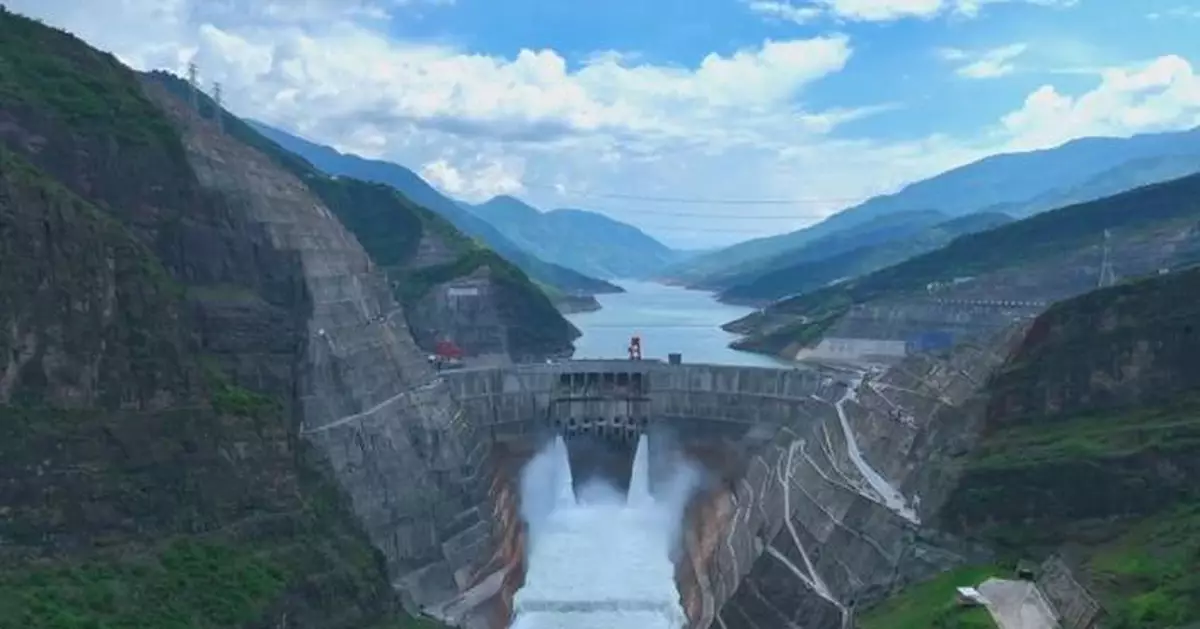
Five years after its first units began operations on June 28, 2021, the Baihetan Hydropower Station on the Jinsha River has achieved a cumulative power generation milestone of over 250 billion kilowatt-hours, underscoring its pivotal role in China's clean energy transition.
Located on the upper reaches of the Yangtze River, the Baihetan station boasts a total installed capacity of 16 million kilowatts.
Since commissioning, it has delivered substantial environmental benefits, saving approximately 18.83 million tonnes of standard coal annually and cutting carbon dioxide emissions by an estimated 51.7 million tonnes per year.
The Baihetan station joins the Wudongde, Xiluodu, Xiangjiaba, Three Gorges, and Gezhouba hydropower stations to form the world's largest clean energy corridor, boasting a combined installed capacity of over 70 million kilowatts.
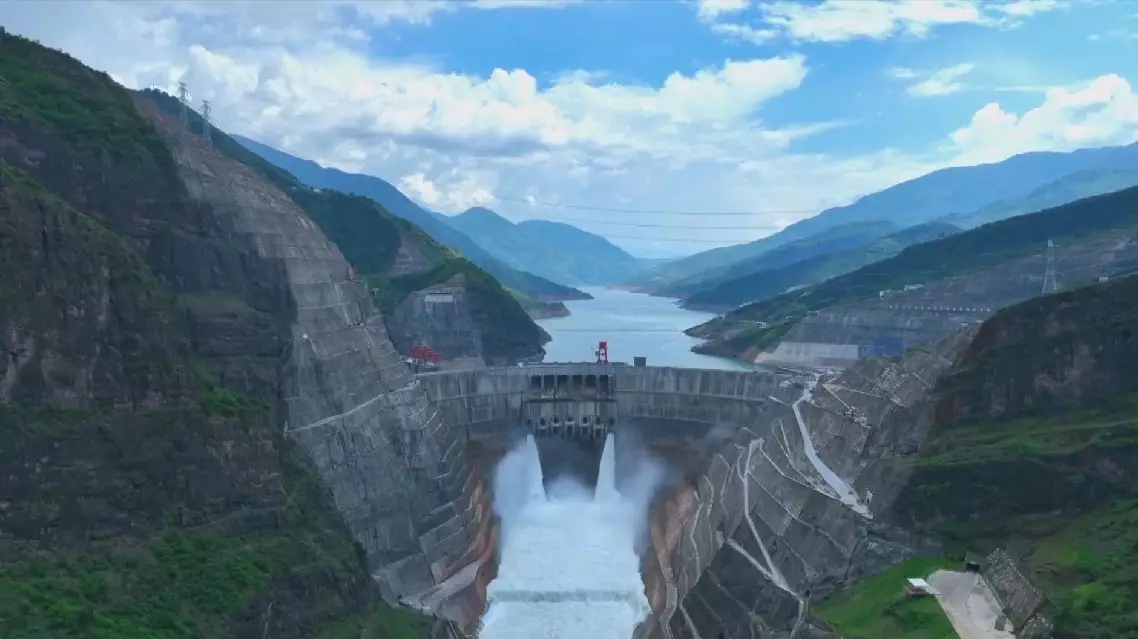
Baihetan hydropower station surpasses 250 bln kWh in cumulative power generation
The United States and Iran carried out fresh strikes on each other's targets, as tensions around the Strait of Hormuz escalated after the U.S. accused Iran of attacking commercial shipping and Iran said it was responding to recent U.S. "aggression".
Iranian state television reported early Sunday local time that several explosions were heard in the Sirik area of Hormozgan Province in southern Iran. It also said Qeshm Island and areas near Bandar Lengeh, both in southern Iran, had come under attack.
U.S. Central Command (CENTCOM) said on Saturday afternoon U.S. time that American forces had launched a new round of strikes on multiple targets inside Iran. It said the operation came after Iranian forces launched an attack drone early Saturday that hit an oil tanker sailing near the Strait of Hormuz.
CENTCOM said the U.S. strikes targeted 10 Iranian military sites in and around the strait, including surveillance facilities, communications systems, air defense positions, drone storage facilities and mine-laying equipment. It called the operation a direct response to what it described as Iran's continued actions against commercial shipping.
Shortly afterward, Iran's Islamic Revolutionary Guard Corps (IRGC) said its naval and air forces had used missiles and drones to strike eight key U.S. military facilities at Ali Al Salem Air Base in Kuwait and the U.S. Fifth Fleet in Bahrain.
The IRGC said the strikes were a decisive response to recent U.S. "aggression," accusing the U.S. of repeatedly breaking its commitments and using the IRGC Navy's "interception of a violating vessel" as a pretext to attack five Iranian coastal outposts.
In a separate statement, the IRGC Navy said U.S. strikes on the Sirik area would not change Iran's control over the Strait of Hormuz. It said Iran's warning shots at "violating" vessels were intended to remind ships to follow designated routes through the waterway.
U.S. President Donald Trump on Saturday also accused Iran of again violating the ceasefire agreement in a social media post.
The latest exchange of fire followed U.S. strikes on Iran on Friday, which CENTCOM said were launched in response to an Iranian drone attack on a commercial vessel passing through the Strait of Hormuz on Thursday.
Iran's Foreign Ministry condemned the U.S. airstrikes, saying they violated a memorandum of understanding between the two sides and that Iran would defend its sovereignty and security under international law.
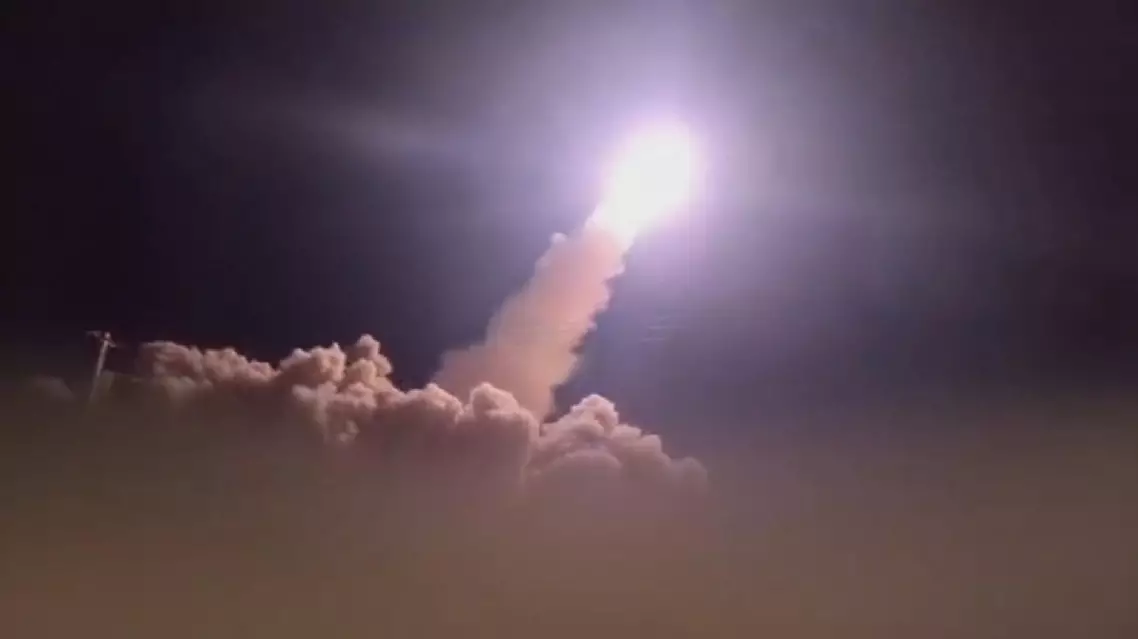
US, Iran trade strikes again as tensions flare around Hormuz