LONDON (AP) — Serena Williams took aim at tennis' anti-doping system on Sunday ahead of her Wimbledon return, calling the system “unprofessional” and “unreasonable.”
The 44-year-old Williams returned to the testing pool before she could announce her comeback to professional tennis and was asked Sunday about her experiences complying with the rules.
“It’s grueling. They changed the rules now. I didn’t know some of the rules. So apparently if you miss a test outside of your window, it still counts as missed. I’m like, I guess I can’t go pick up my kids,” said the seven-time Wimbledon champion, a mother of two. “It’s unprofessional. I hate it. I think it’s necessary, but I think a lot of the stuff, if I want to go places outside of my window, I should be able to go without having it count as a missed test.”
Williams’ first match at the grass-court Grand Slam since 2022 will take place Tuesday when she faces Maya Joint as part of her tennis comeback. She returned to the sport this month in a doubles match at the Queen’s Club grass-court tournament.
The anti-doping protocol was in the spotlight last week when Marketa Vondrousova, the 2023 Wimbledon champion, was suspended for four years for refusing an anti-doping test, the latest high-profile player sanctioned.
Players are required by the International Tennis Integrity Agency to provide their daily “whereabouts” for no-notice testing.
Williams described it as “unreasonable.”
“That was a big reason why I didn’t want to come back either,” she said, "because it’s just so hard. I mean, my life is busy, I run a company, I run a VC company, I travel the world. I have children. It’s like I could be in so many different cities so many different times.”
The ITIA, in response to Williams' comments, told The Associated Press the rules have been the same for several years.
“If a tester is unable to reach a player during their allocated hour, then it may well be a ‘strike,’ and three failures could lead to a charge. If a tester is unable to reach a player outside of their allocated hour, it is not considered a strike,” it said of the whereabouts rules.
In 2023, Jenson Brooksby was given an 18-month suspension after an independent tribunal determined he missed three drug tests within the span of a year.
Under anti-doping rules, athletes can be penalized without a positive test if they have three "whereabouts failures” within 12 months.
“There have been no changes to the whereabouts rules in the last few years,” the ITIA added in its statement. "We understand the system can seem challenging, but it is there to protect players, not to trip them up. If players are unsure or have questions, we would welcome a conversation with them directly or through their agents.”
Williams, who has previously criticized the frequency of anti-doping testing, said she's willing to comply and has "always have been very clear about what I do.”
“Just getting in that routine of, all right, first of all, learning the new rules, then just getting back and reporting every day,” she said. "I guess now for 24 hours where I’m going to be is just different — at least for me. I don’t know if that works for everyone else."
AP Sports Writer Andrew Dampf contributed to this story.
AP tennis: https://apnews.com/hub/tennis

Serena Williams of the United States arrives to practice one day ahead of the start of the Wimbledon Tennis Championships in London, Sunday, June 28, 2026. (AP Photo/Kin Cheung)
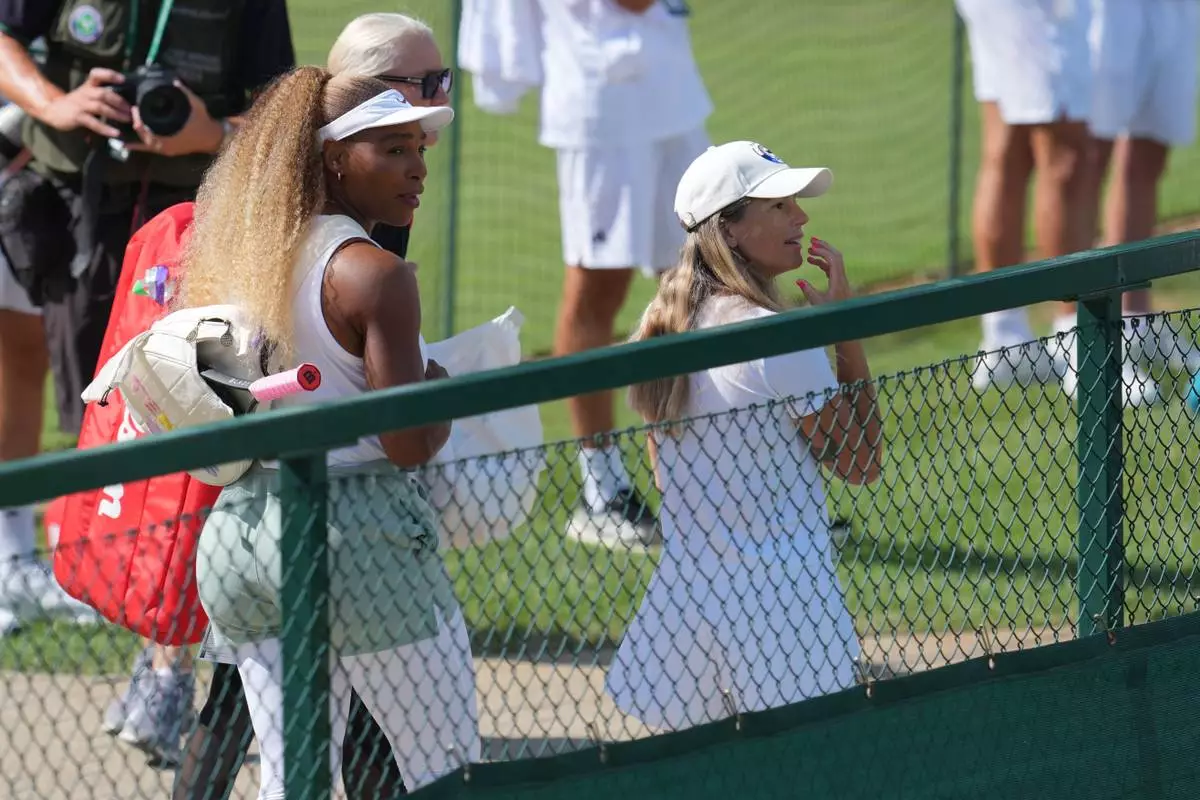
Serena Williams of the United States, left, arrives to practice one day ahead of the start of the Wimbledon Tennis Championships in London, Sunday, June 28, 2026. (AP Photo/Kin Cheung)
DUBAI, United Arab Emirates (AP) — Iran again launched drone and missile attacks targeting Bahrain and Kuwait on Sunday following new U.S. airstrikes against the Islamic Republic, and threatened a “complete halt” in negotiations to end the war if Washington continues its attacks.
Efforts to reopen the Strait of Hormuz without Iran's oversight has sparked days of crossfire. A multinational maritime body overseen by the U.S. Navy said Saturday it would expand a route near Oman for inbound and outbound traffic, setting up a new flashpoint with Tehran.
Iranian Foreign Minister Abbas Araghchi reiterated the claim on Sunday that Tehran alone must govern the strait, the narrow mouth of the Persian Gulf that once carried a fifth of the world’s oil and natural gas.
“Any attempt to establish new or separate arrangements from those currently being carried out by the Islamic Republic of Iran will only lead to further complications, delay the reopening of the Strait of Hormuz and increase the level of tension,” Araghchi said.
The global community has long considered the strait an international waterway, despite its location in Iran and Oman's territorial waters. In recent days, Iran has twice attacked vessels going through a route on the Omani side during an evacuation effort backed by a United Nations agency.
The United States and Iran have been discussing the terms of an interim deal, including arrangements on the strait, the removal of a U.S. blockade on Iranian ports and sanctions on Iran, and the future of Iran’s stockpile of highly enriched uranium. Under the memorandum of understanding signed this month, they have 60 days from that signing to work out details.
Pakistan, a key mediator, earlier said talks would resume Tuesday. The Trump administration said nothing has been canceled and technical talks are on track for the coming days as planned.
The interim deal is meant to end fighting on all fronts before certain key issues can be discussed. Continued fighting in Lebanon, where an Israeli soldier was killed by Hezbollah fire early Sunday, also threatens the agreement.
Iran’s paramilitary Revolutionary Guard claimed responsibility for the attacks in Bahrain and Kuwait.
Kuwait, which hosts a major U.S. military base, said air defenses intercepted Iranian drones and two missiles just after the U.S. strikes in Iran. There were no reports of injuries or damage.
Bahrain said the Iranian strikes damaged a residential building near the international airport and no one was killed. Bahrain is home to the U.S. Navy’s 5th Fleet. The damaged building was not near its headquarters.
Bahrain’s Foreign Ministry denounced what it called “a dangerous escalation that reveals that what Tehran is doing is not a passing act, nor an isolated incident, but rather a deliberate approach and a systematic pattern of repeated aggression."
Later on Sunday, Qatar said a civilian had been killed, and another person was hurt, by shrapnel related to “military operations in the area" after a vessel didn't return at its scheduled time on Saturday. The statement did not give details.
The U.S. military’s Central Command said it struck Iranian military “surveillance infrastructure, communication systems, air defense sites, drone storage facilities and minelayer capabilities” following an attack on a ship at sea Saturday. The Panamanian-flagged tanker Kiku carried crude oil for the state-run energy company of Qatar, a key mediator between Iran and the U.S.
U.S. President Donald Trump on social media accused Iran of violating the ceasefire and warned of a point where the U.S. may no longer be reasonable “and will be forced to militarily complete the job.”
“If that happens, the Islamic Republic of Iran will no longer exist!” Trump wrote.
The exchanges of fire began when an Iranian drone struck a merchant vessel off Oman on Thursday and the U.S. military retaliated with strikes.
Ship traffic on the strait had increased over the past 72 hours, off both Iran and Oman, “despite the elevated threat environment,” the multinational maritime body overseen by the U.S. Navy said Sunday, adding that “U.S.-assisted commercial transits continued uninterrupted."
It said 89 such transits had been made, still below the historical average of 138 vessels a day.
Last week, Israel and Lebanon signed a framework agreement to end the latest fighting between Israel and the Iranian-backed Hezbollah militant group, which began two days after the Iran war started when Hezbollah fired at Israel. Israel has responded with an invasion of southern Lebanon and it has said it will not withdraw until Hezbollah is disarmed.
Last week's deal did not include Iran or Hezbollah, which has criticized it and rejected calls to disarm.
On Sunday, Iran's foreign minister again said the U.S. must force Israel to halt attacks and withdraw. Israel occupies around 600 square kilometers (231 square miles) in southern Lebanon, which it says it needs as a security buffer.
Sporadic clashes have continued, and Hezbollah's leader said Saturday that the group would continue fighting until Israel withdraws from Lebanon.
Key Iranian negotiator and parliament Speaker Mohammad Bagher Qalibaf said Sunday that a meeting of a new “conflict control unit” formed among Iran, the United States and Lebanon should meet as soon as possible, Iran's state broadcaster reported.
The frequency of Israeli strikes in Lebanon has decreased significantly since the Iran-U.S. deal was signed, but two strikes hit southern Lebanon on Sunday morning — one in Taybeh town and the other in the Nabatiyeh area, according to Lebanon’s National News Agency. There was no immediate word on casualties.
Overnight, Hezbollah militants killed an Israeli soldier in Deir Siryan village in southern Lebanon, according to Israel's military. Hezbollah did not comment.
Lidman reported from Tel Aviv, Israel. Associated Press writers Sally Abou AlJoud in Beirut and Josh Boak in Washington contributed to this report.
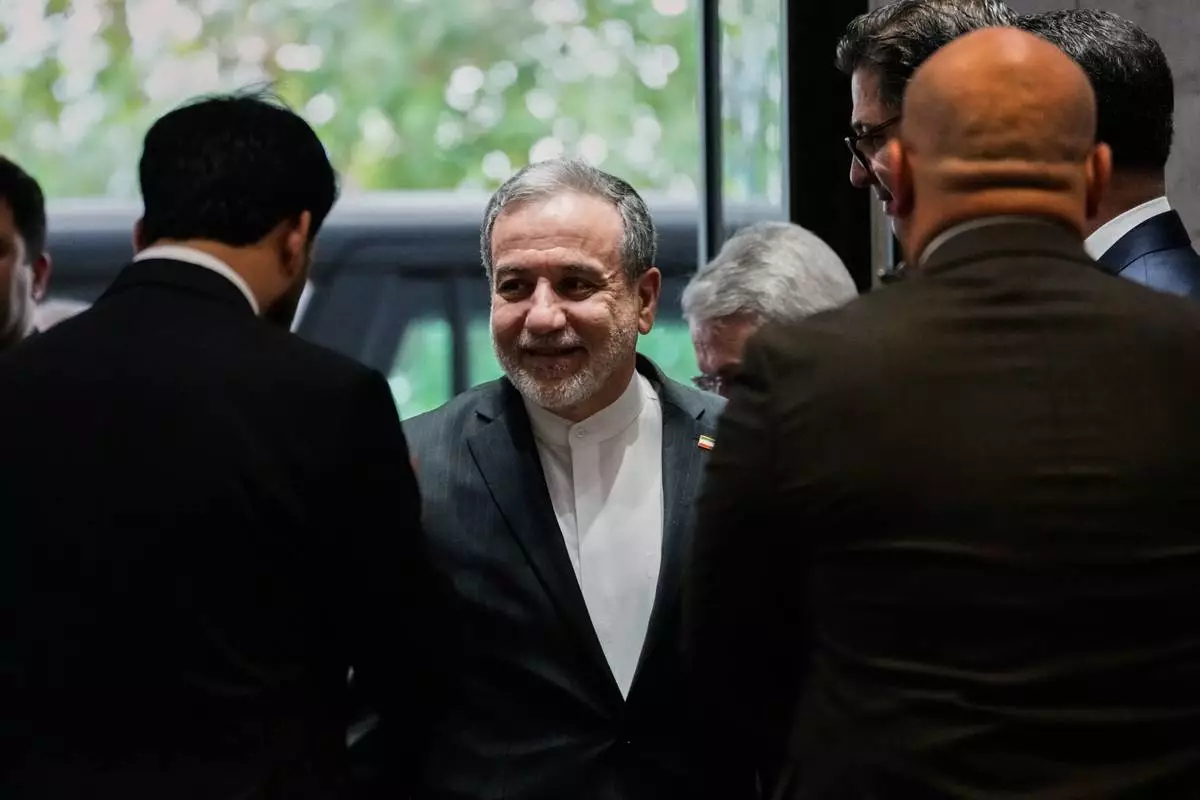
Iranian Foreign Minister Abbas Araghchi, center, arrives to meet his Iraqi counterpart Fouad Hussein in Baghdad, Iraq, Sunday, June 28, 2026. (AP Photo/Hadi Mizban)
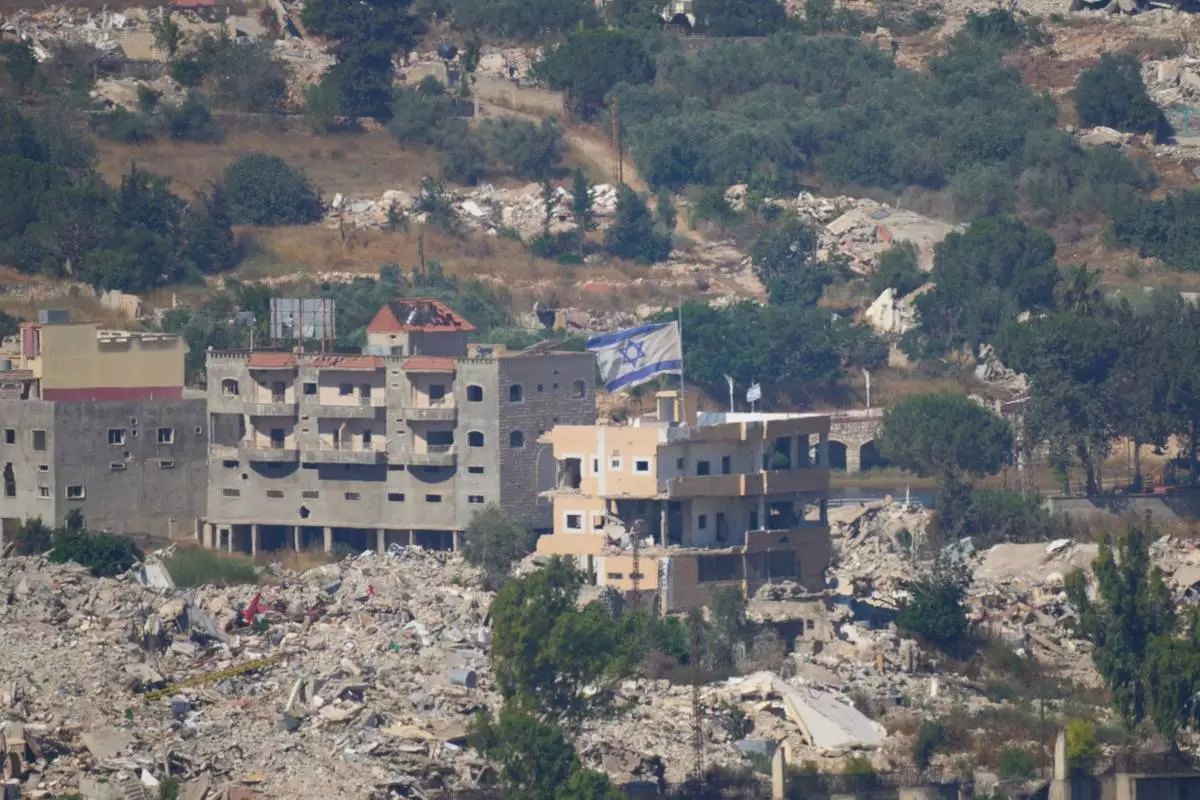
An Israeli flag tops a destroyed building in southern Lebanon, as seen from northern Israel, Sunday, June 28, 2026. (AP Photo/Ohad Zwigenberg)
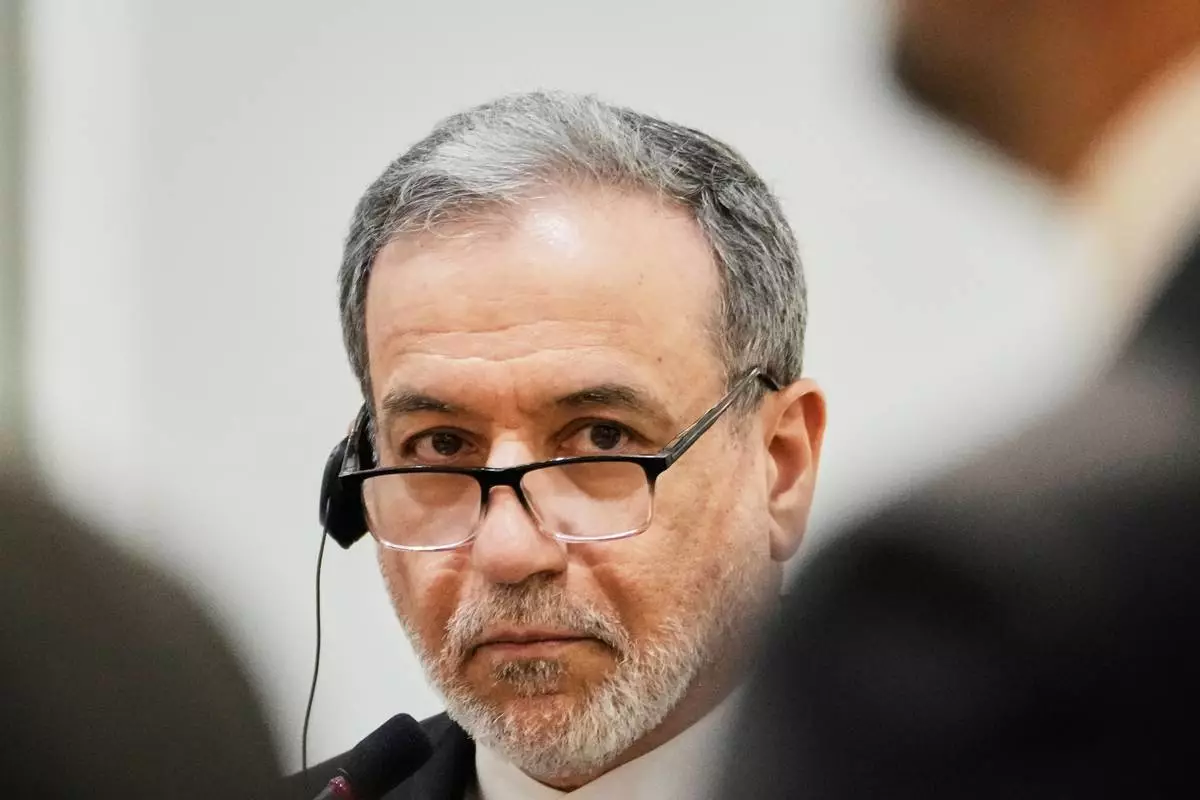
Iranian Foreign Minister Abbas Araghchi listens to his Iraqi counterpart Fouad Hussein during a news conference after a meeting at the foreign ministry in Baghdad, Iraq, Sunday, June 28, 2026. (AP Photo/Hadi Mizban)
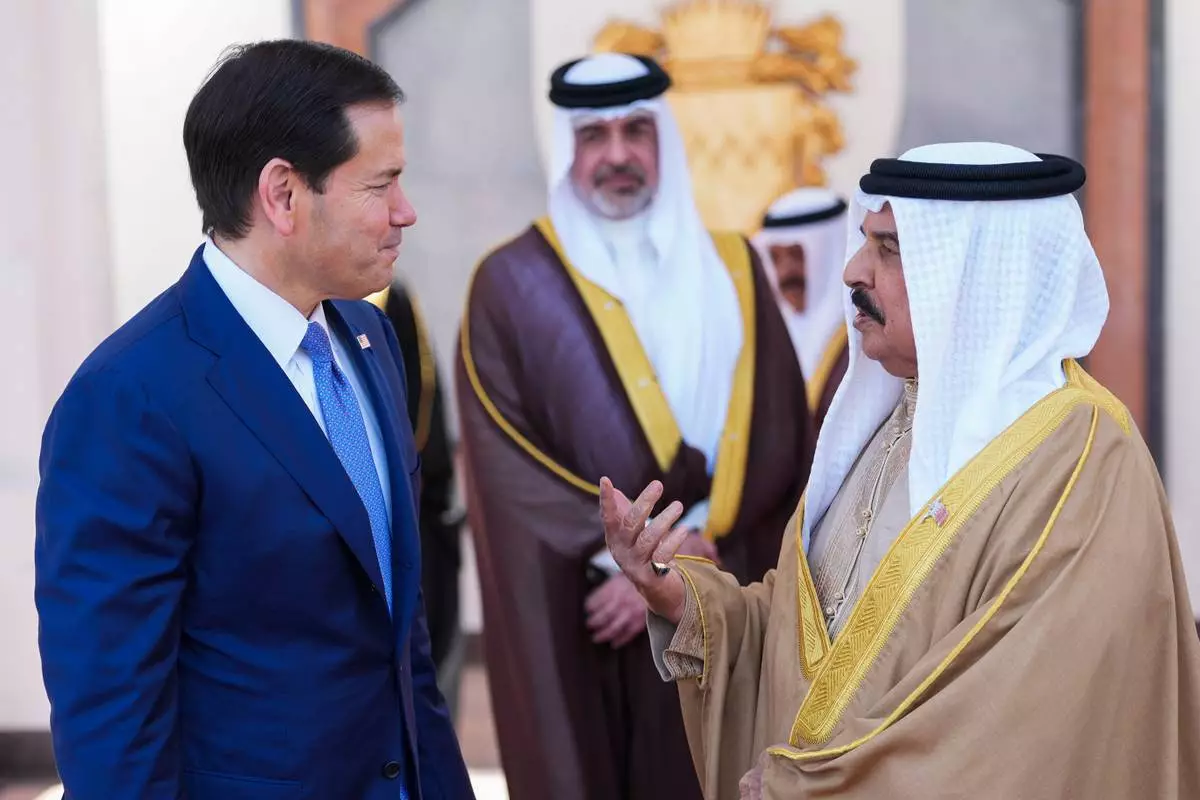
U.S. Secretary of State Marco Rubio, left, and Bahrain's King Hamad bin Isa Al Khalifa share a word after their meeting, at Al-Sakhir Palace near Zallaq, Bahrain Thursday, June 25, 2026. (Eric Lee/Pool Photo via AP)