Skip to Content Facebook Feature Image

How some in Palestinian diaspora find connection, identity and resilience in traditional embroidery

News

How some in Palestinian diaspora find connection, identity and resilience in traditional embroidery
News

News

How some in Palestinian diaspora find connection, identity and resilience in traditional embroidery

2026-06-30 13:14 Last Updated At:15:13

Decades later, Samar Kabouli still fondly recalls gathering with women in her family and sipping cardamom-spiced coffee as they embroidered fabric with colorful threads in traditional Palestinian patterns.

Born in Lebanon to Palestinian refugees, Kabouli had never seen her parents’ homeland. But more than just making pretty designs, the threads in her needle were stitching a connection to her heritage.

More Images
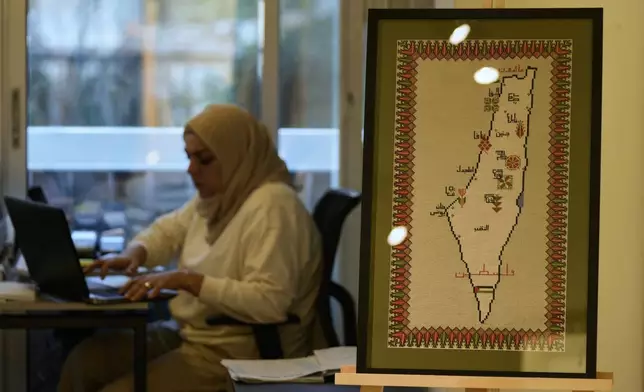
A hand-embroidered map of historic Palestine with names of cities and the words “Palestine” and “Returning” in Arabic is displayed at the Inaash Association embroidery workshop in Beirut, Tuesday, May 19, 2026. (AP Photo/Bilal Hussein)
A hand-embroidered map of historic Palestine with names of cities and the words “Palestine” and “Returning” in Arabic is displayed at the Inaash Association embroidery workshop in Beirut, Tuesday, May 19, 2026. (AP Photo/Bilal Hussein)
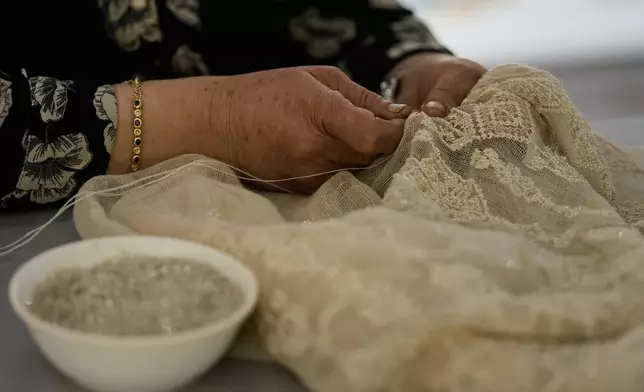
Palestinian weaver Samira Nasser works on a handmade embroidered piece at the Inaash Association embroidery workshop in Beirut, Tuesday, May 19, 2026. (AP Photo/Bilal Hussein)
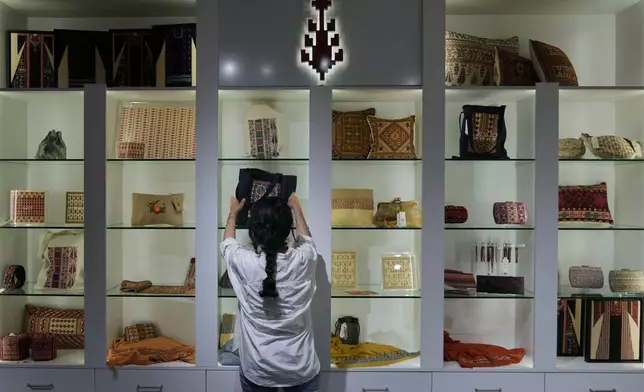
Palestinian weaver Samira Nasser works on a handmade embroidered piece at the Inaash Association embroidery workshop in Beirut, Tuesday, May 19, 2026. (AP Photo/Bilal Hussein)
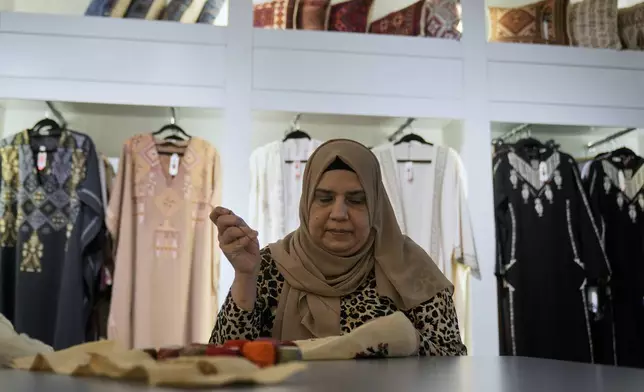
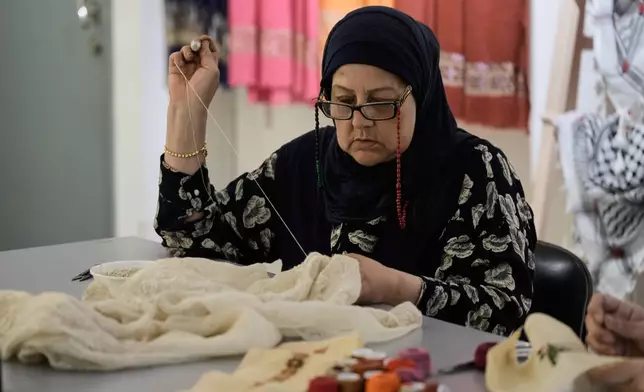
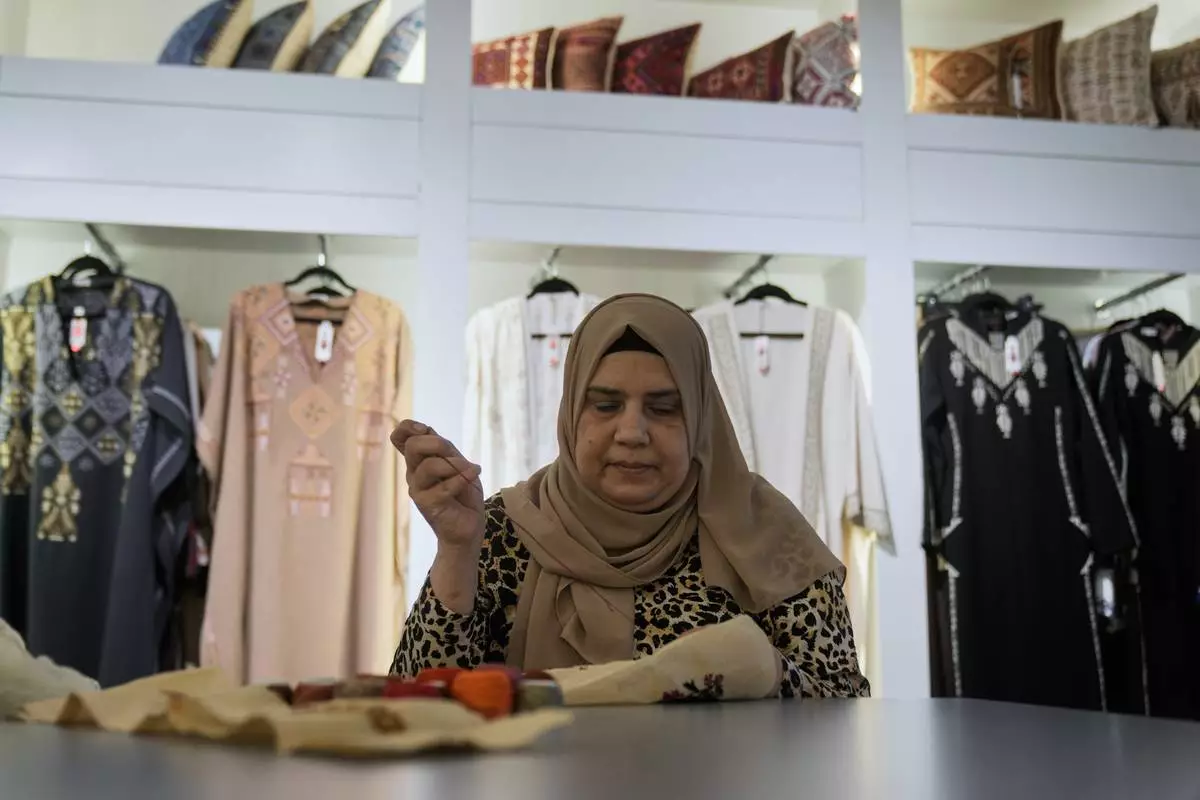
Palestinian weaver Rula Barakeh works on a handmade embroidered piece at the Inaash Association embroidery workshop in Beirut, Tuesday, May 19, 2026. (AP Photo/Bilal Hussein)

Palestinian weaver Rula Barakeh works on a handmade embroidered piece at the Inaash Association embroidery workshop in Beirut, Tuesday, May 19, 2026. (AP Photo/Bilal Hussein)

Palestinian weaver Samar Kabouli works at the Inaash Association embroidery workshop in Beirut, Tuesday, May 19, 2026. (AP Photo/Bilal Hussein)

Palestinian weaver Samar Kabouli works at the Inaash Association embroidery workshop in Beirut, Tuesday, May 19, 2026. (AP Photo/Bilal Hussein)

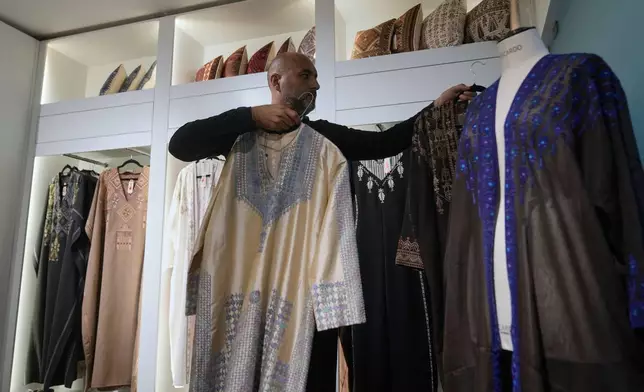
Ali Jaafar, the general manager of Inaash Association, arranges clothes at the embroidery workshop in Beirut, Tuesday, May 19, 2026. (AP Photo/Bilal Hussein)
Ali Jaafar, the general manager of Inaash Association, arranges clothes at the embroidery workshop in Beirut, Tuesday, May 19, 2026. (AP Photo/Bilal Hussein)

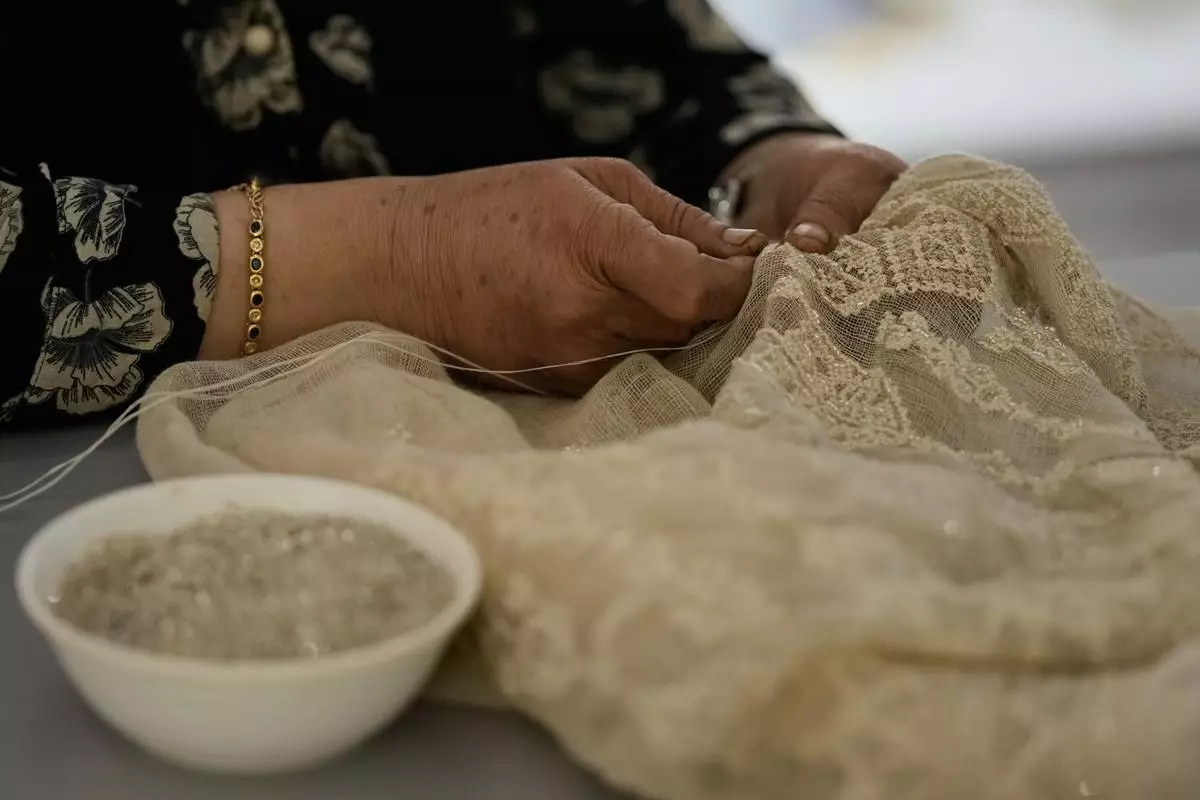
Palestinian weaver Samira Nasser works on a handmade embroidered piece at the Inaash Association embroidery workshop in Beirut, Tuesday, May 19, 2026. (AP Photo/Bilal Hussein)
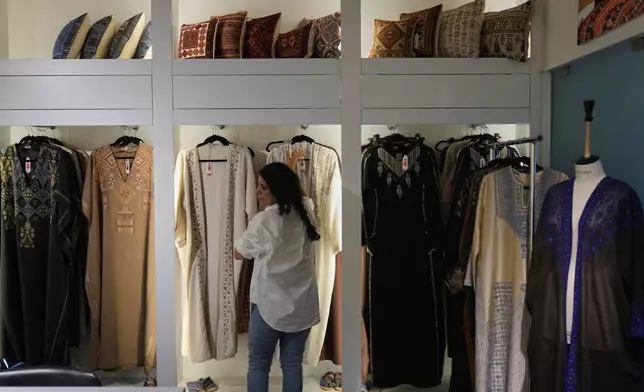
Palestinian weaver Samira Nasser works on a handmade embroidered piece at the Inaash Association embroidery workshop in Beirut, Tuesday, May 19, 2026. (AP Photo/Bilal Hussein)
Palestinian weaver Samar Kabouli works at the Inaash Association embroidery workshop in Beirut, Tuesday, May 19, 2026. (AP Photo/Bilal Hussein)

Palestinian weaver Samar Kabouli works at the Inaash Association embroidery workshop in Beirut, Tuesday, May 19, 2026. (AP Photo/Bilal Hussein)

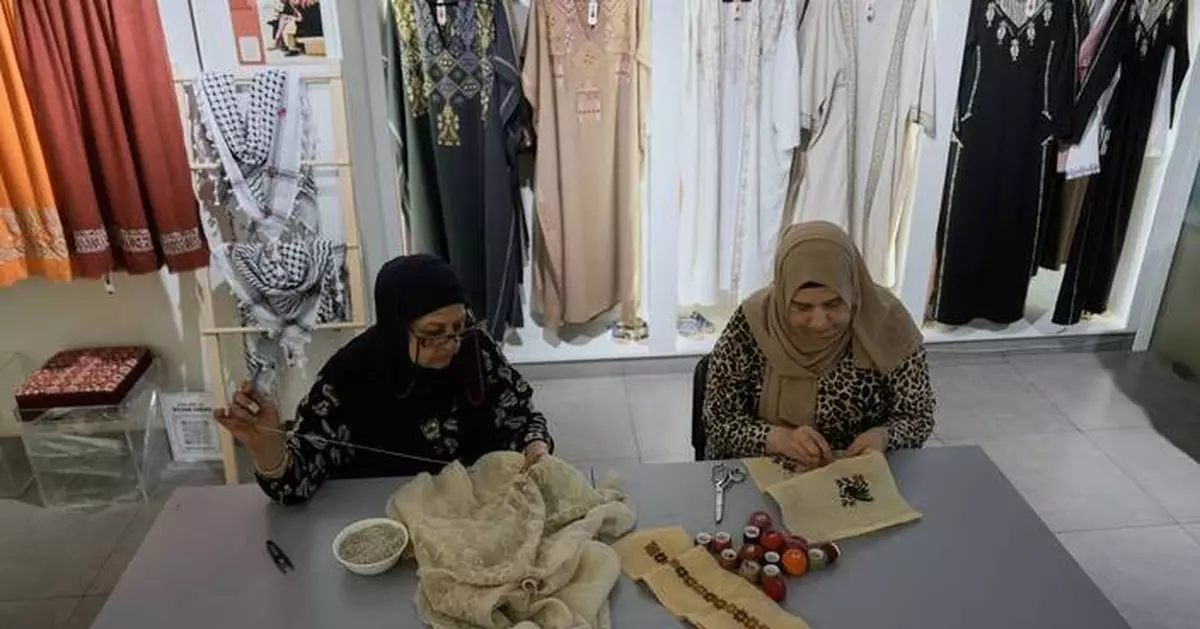
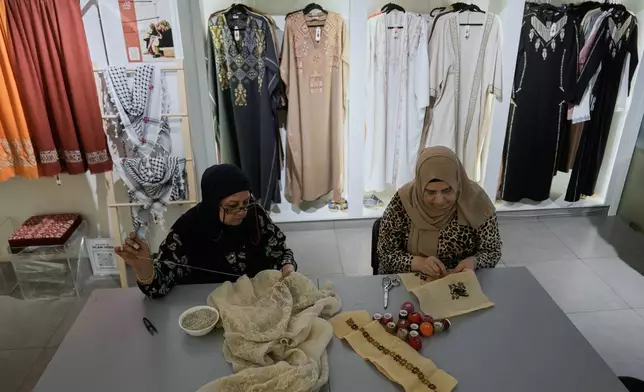
Palestinian weavers Rula Barakeh, right, and Samira Nasser work on handmade embroidered pieces at the Inaash Association embroidery workshop in Beirut, Tuesday, May 19, 2026. (AP Photo/Bilal Hussein)

Palestinian weavers Rula Barakeh, right, and Samira Nasser work on handmade embroidered pieces at the Inaash Association embroidery workshop in Beirut, Tuesday, May 19, 2026. (AP Photo/Bilal Hussein)

It's known as “tatreez,” and Kabouli, 48, started doing the traditional form of Palestinian embroidery in her teens to make money. Besides an economic lifeline, tatreez has provided her with a bridge to the land her parents fled during the 1948 mass displacement that Palestinians call their Nakba, or catastrophe.

Hundreds of thousands of Palestinians were expelled or fled their homes in present day Israel during the 1948 war surrounding Israel's creation. Israel refused their return.

Kabouli's work allows her to send a message of resilience, of survival.

“We’re still here,” she said. “All what has been happening in Gaza … and we’re still standing and we’ll not forget the cause.”

From refugee camps to stitching circles and from museum halls to online classes, many in the Palestinian diaspora communities worldwide engage with tatreez as far more than a decorative aesthetic.

They're finding in it a celebration of cultural heritage, a bridge to their homeland and dispersed communities and — with its myriad embroidered symbols — a visual language of storytelling. To many, refugees or not, it's become a symbol of Palestinian identity and pride, a vehicle for documenting history and a form of resistance.

With the Israel-Hamas war in Gaza, some have also used it to raise funds for people there or stitched designs to focus attention on Palestinian suffering in the enclave.

“We had a lot of people who came and they’re like, ‘OK, we want to do a T-shirt with a Gaza chest or we want to do a scarf with the Gaza motif,’” said Ali Jaafar, general manager of Inaash Association, where Kabouli works. The Lebanese organization provides Palestinian women in refugee camps in Lebanon with much-needed income through tatreez, while also aiming to help preserve and promote the heritage. It sells embroidered fashion, home decor and art pieces, and showcases the art form in exhibitions and museums.

Efforts to preserve and raise awareness about tatreez in Palestinian communities at home and abroad are part of a larger push to safeguard a heritage and connections to a history and a place that many fear are at risk of being erased.

“Palestinian tatreez is an identity and a document of our presence in every Palestinian village and town," said Maha Saca, founder and director of the Palestinian Heritage Center in Bethlehem in the Israeli-occupied West Bank, adding that old embroidered thobes, or dresses, show the presence of Palestinians in particular locations before the dispersal of many.

“The Palestinian woman has written the story of her village through motifs from her surrounding environment and her beliefs,” Saca said. “We’re struggling through culture and saying we have roots.”

The Palestinian embroidery art form was added in 2021 to UNESCO’s list of Intangible Cultural Heritage of Humanity.

In New York, Lina Barkawi, whose small business teaches tatreez, said the “constant fight for liberation and having a Palestinian identity that’s recognized globally is really what has been driving a lot of this documentation.”

In Arabic, tatreez refers to embroidery in general as well as the specific Palestinian form, which is often a social practice taught through generations by grandmothers and mothers. Some seek formal training.

With motifs that Palestinian women had historically adopted from their surroundings, the old embroidered thobes can offer clues through stitched patterns, design and color about facets of a woman's personal story, her environment and regional identity, Saca said.

In the Palestinian context, such connections to time and place, including areas now in Israel, gain added importance as testament to what was, she said. “How do we have a Jaffa thobe if we hadn’t been in Jaffa?" she said. "We write history on our thobes.”

There's also an element of continuity. Her grandmother's embroidered wedding thobe bears the hallmarks of Bethlehem dresses, Saca said. Her own granddaughter's baptism dress included embroideries copied from that dress.

Tatreez also can be political, both through preservation and creation.

“Just being able to have some of the dresses from pre-1948 is a political act,” Barkawi said.

There's also the making of the so-called “intifada thobe” that included embroidered political and Palestinian symbols, such as the flag. It's linked to the “first intifada,” or uprising, which erupted in 1987 against Israel’s occupation and was met with a fierce Israeli response.

After the war in Gaza, which was triggered by Hamas’ Oct. 7, 2023, attack on Israel, fashion designer Hama Hinnawi expressed grief through tatreez work. Tatreez is usually colorful, she said. But that was no moment for color.

The result? Black embroidery on black fabric, a statement of mourning for the killings, destruction and displacement in Gaza. She's also experimented with turning some iconic scenes from the war into new embroidery motifs.

“We have a big responsibility on our shoulders to tell this story, not to be buried for the next generations … through tatreez, through art, through speaking.”

Born in Jordan to Palestinian parents, Hinnawi wanted to bring awareness to heritage through her fashion brand by marrying tatreez with contemporary fashion.

To her, tatreez simply means home. It’s “identity, pride, storytelling,” said Hinnawi, who shuttles between Chicago and Jordan.

She's provided embroidery work opportunities to Palestinian women in refugee camps in Jordan and talked in the U.S. about tatreez. Before the war, she also worked with women in Gaza.

Barkawi runs an online community of Palestinian and non-Palestinian embroiderers, some of whom have created designs sold to raise funds for Gaza families. One incorporates a “water and seeds” motif with an embroidered message to “Feed Gaza Now.”

Members in different countries recreated a tapestry that once hung in a bombed Gaza home, each stitching a part and mailing it to another.

Born in the U.S. to a Palestinian father and Panamanian mother, Barkawi said learning about tatreez deepened her Palestinian identity.

Embroidering her first thobe took two years. Barkawi incorporated motifs with personal meanings, such as palm trees that represent her name in Arabic. She added orchids, the national flower of Panama, for her mom.

Technically imperfect, it was the perfect dress for her Islamic marriage ceremony.

“I embedded my story as a Palestinian in the diaspora into this dress.”

In Lebanon, Kabouli, too, once dreamed of owning a tatreez piece for her wedding trousseau. She couldn’t afford one.

After their parents died, an older sister had turned to tatreez with Inaash to help support the large family. Kabouli learned from her.

Now a production supervisor at Inaash in Beirut, Kabouli sees her younger self in the women working in refugee camps in Lebanon, many in the south, which was hard hit by the latest Israel-Hezbollah war. The vibrancy of tatreez often contrasts with harsh living conditions in camps amid employment and other restrictions the refugees face. Contending with power cuts, women, eager to finish a piece and get paid, may work on rooftops to grasp the last ray of sunlight, Jaafar said.

Besides the income, Kabouli said doing tatreez can be grounding, almost meditative.

She has another yearning: to see her parents’ homeland. They came from an area in what’s now Israel.

For now, tatreez provides her with hope.

“I don’t feel like I am far away. I keep working on Palestinian heritage, following the cause,” she said. “It connects me to my homeland, especially since we’re deprived of it.”

Associated Press religion coverage receives support through the AP’s collaboration with The Conversation US, with funding from Lilly Endowment Inc. The AP is solely responsible for this content.
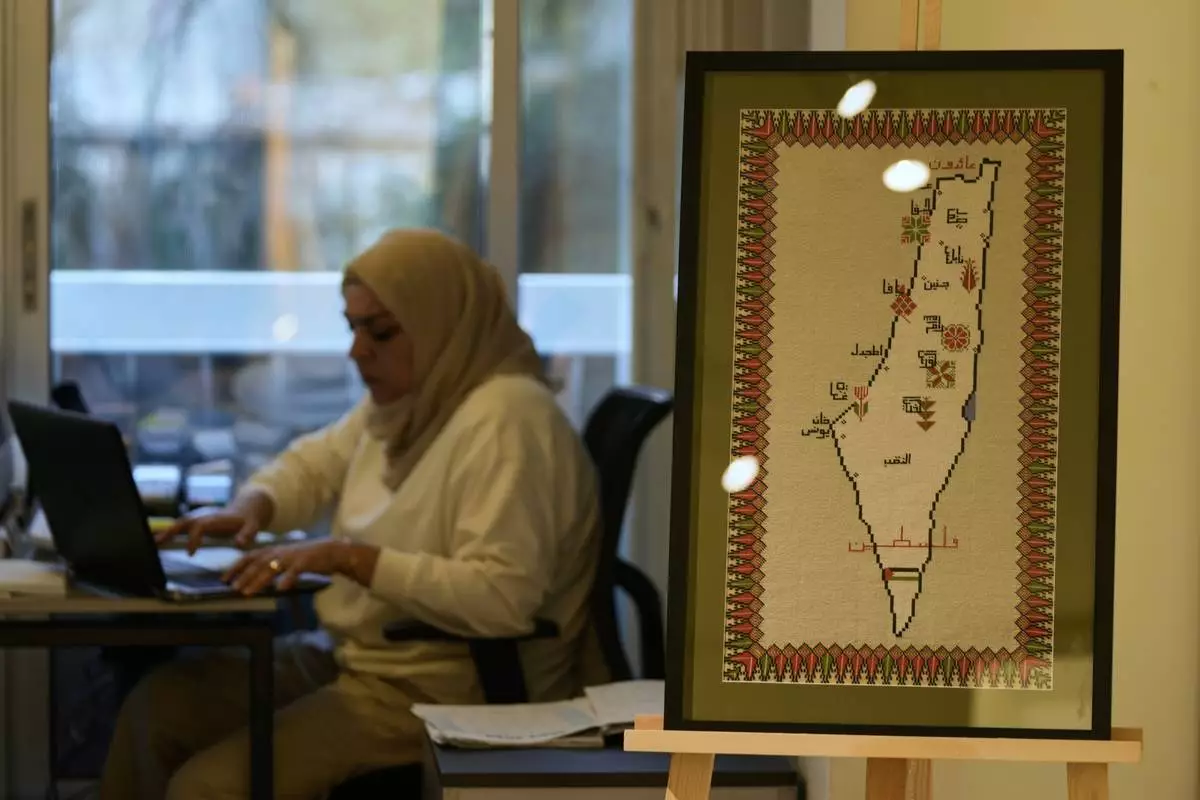
A hand-embroidered map of historic Palestine with names of cities and the words “Palestine” and “Returning” in Arabic is displayed at the Inaash Association embroidery workshop in Beirut, Tuesday, May 19, 2026. (AP Photo/Bilal Hussein)
A hand-embroidered map of historic Palestine with names of cities and the words “Palestine” and “Returning” in Arabic is displayed at the Inaash Association embroidery workshop in Beirut, Tuesday, May 19, 2026. (AP Photo/Bilal Hussein)
Palestinian weaver Samira Nasser works on a handmade embroidered piece at the Inaash Association embroidery workshop in Beirut, Tuesday, May 19, 2026. (AP Photo/Bilal Hussein)
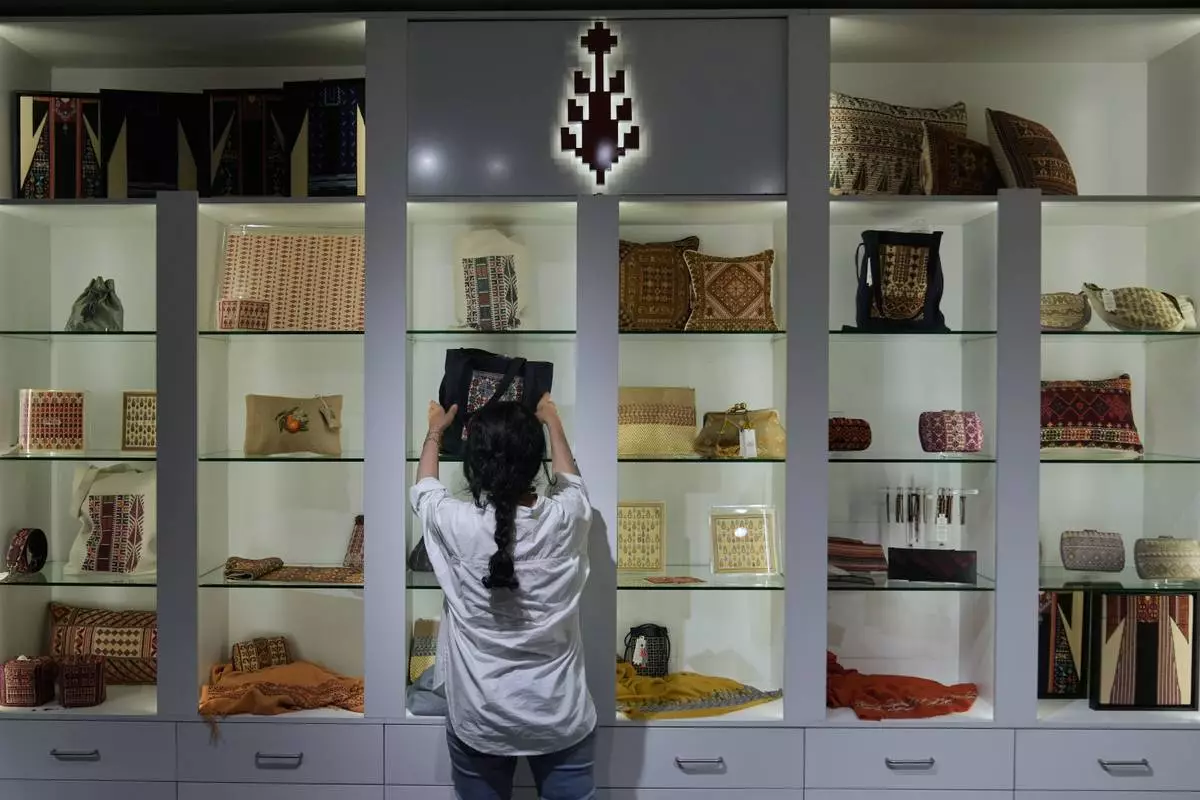
Palestinian weaver Samira Nasser works on a handmade embroidered piece at the Inaash Association embroidery workshop in Beirut, Tuesday, May 19, 2026. (AP Photo/Bilal Hussein)
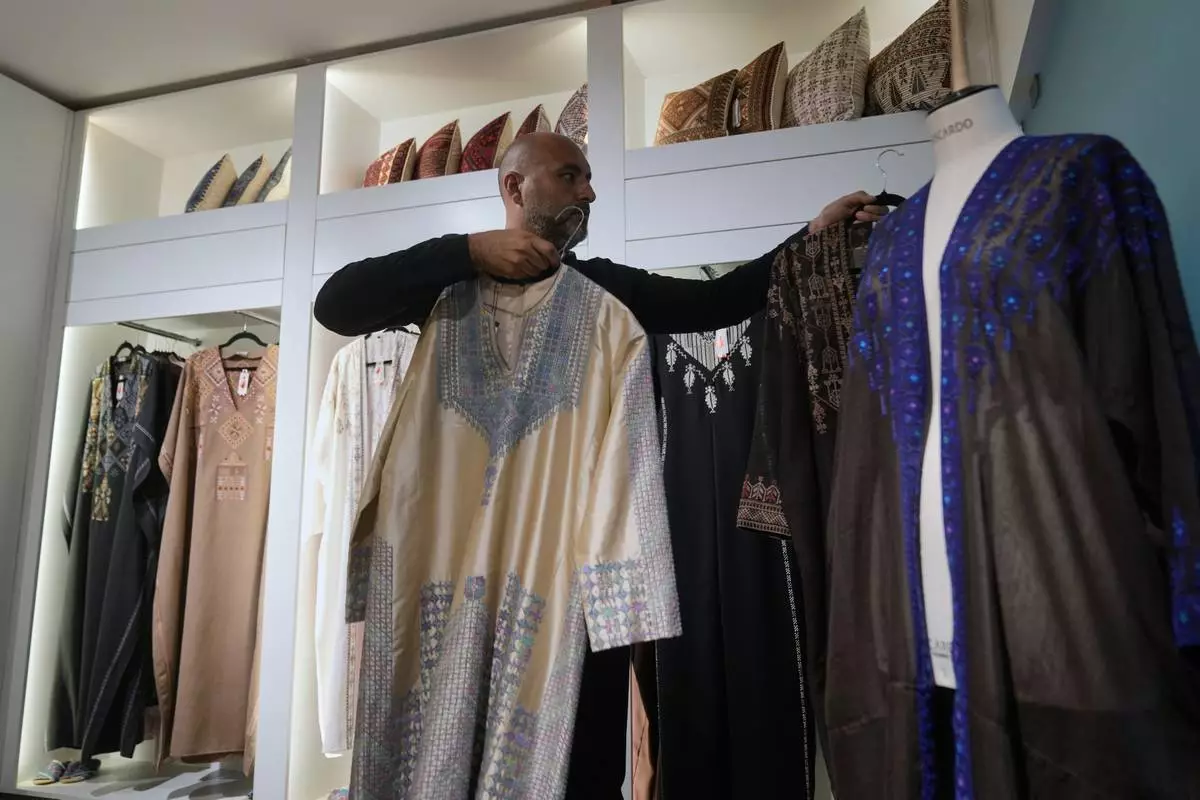
Palestinian weaver Rula Barakeh works on a handmade embroidered piece at the Inaash Association embroidery workshop in Beirut, Tuesday, May 19, 2026. (AP Photo/Bilal Hussein)

Palestinian weaver Rula Barakeh works on a handmade embroidered piece at the Inaash Association embroidery workshop in Beirut, Tuesday, May 19, 2026. (AP Photo/Bilal Hussein)

Palestinian weaver Samar Kabouli works at the Inaash Association embroidery workshop in Beirut, Tuesday, May 19, 2026. (AP Photo/Bilal Hussein)

Palestinian weaver Samar Kabouli works at the Inaash Association embroidery workshop in Beirut, Tuesday, May 19, 2026. (AP Photo/Bilal Hussein)

Ali Jaafar, the general manager of Inaash Association, arranges clothes at the embroidery workshop in Beirut, Tuesday, May 19, 2026. (AP Photo/Bilal Hussein)
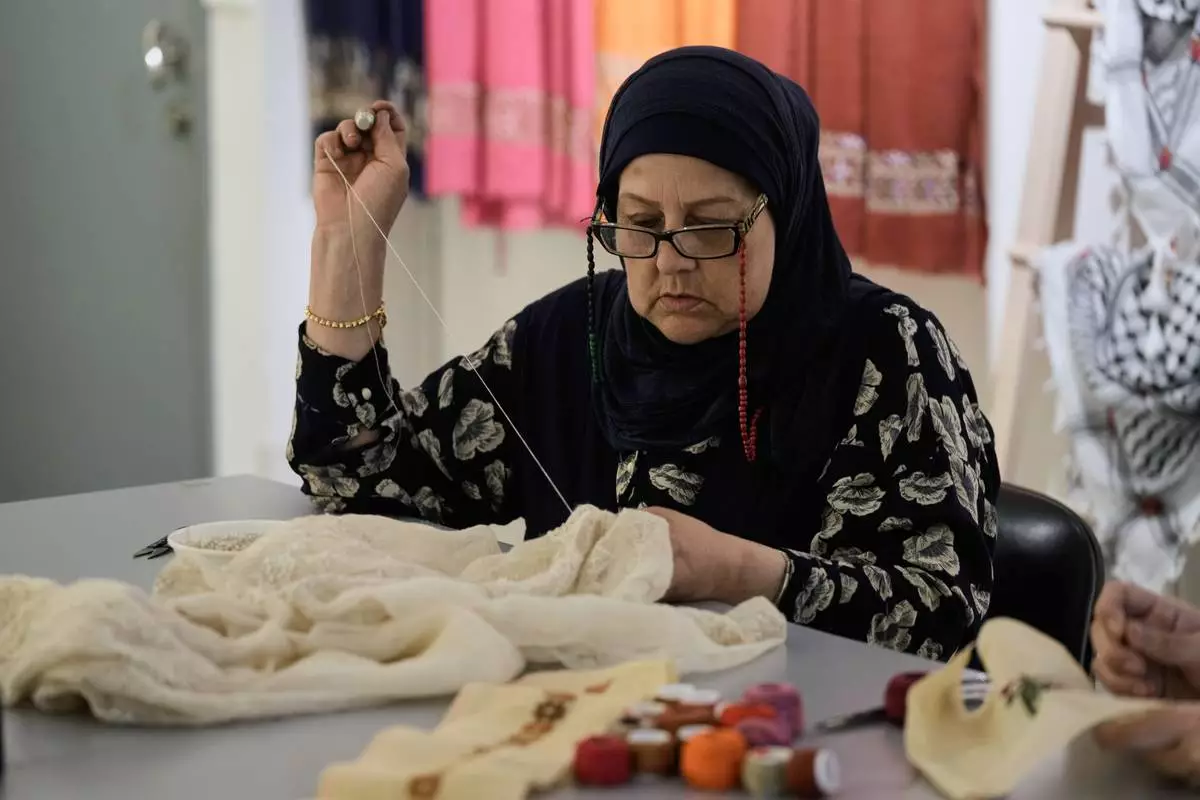
Ali Jaafar, the general manager of Inaash Association, arranges clothes at the embroidery workshop in Beirut, Tuesday, May 19, 2026. (AP Photo/Bilal Hussein)

Palestinian weaver Samira Nasser works on a handmade embroidered piece at the Inaash Association embroidery workshop in Beirut, Tuesday, May 19, 2026. (AP Photo/Bilal Hussein)
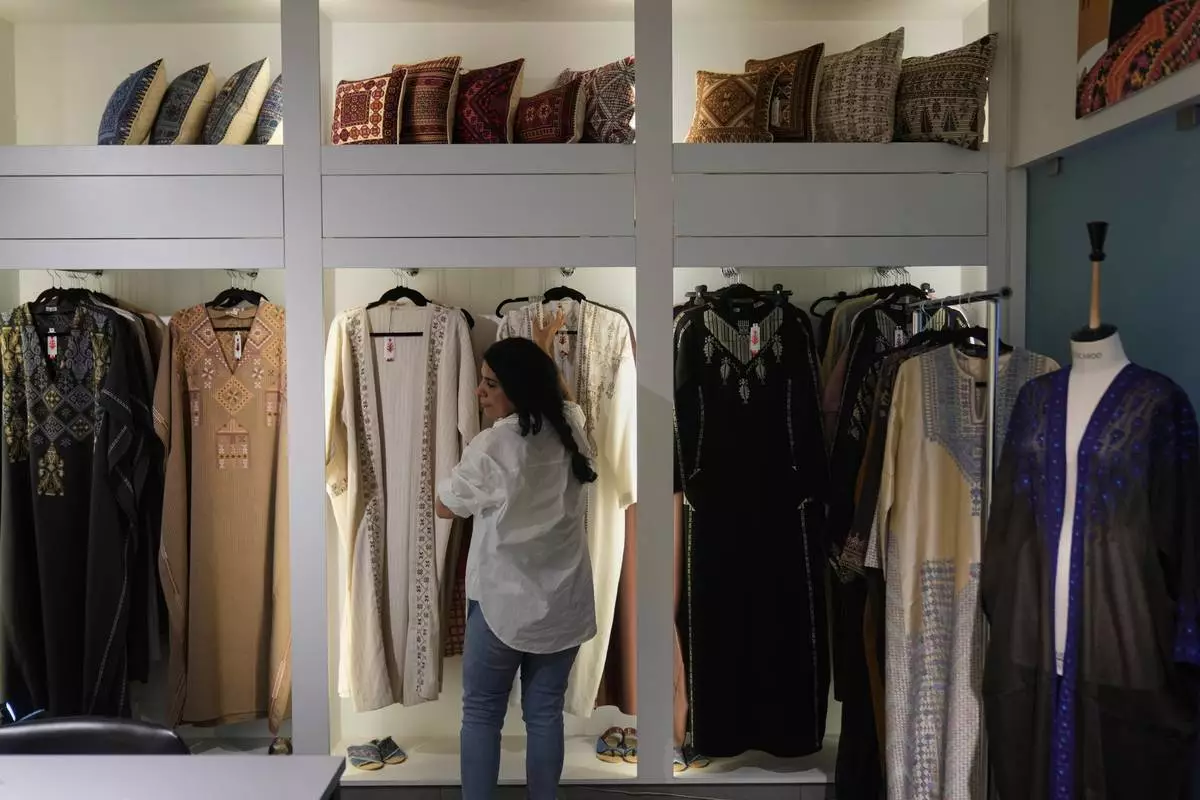
Palestinian weaver Samira Nasser works on a handmade embroidered piece at the Inaash Association embroidery workshop in Beirut, Tuesday, May 19, 2026. (AP Photo/Bilal Hussein)
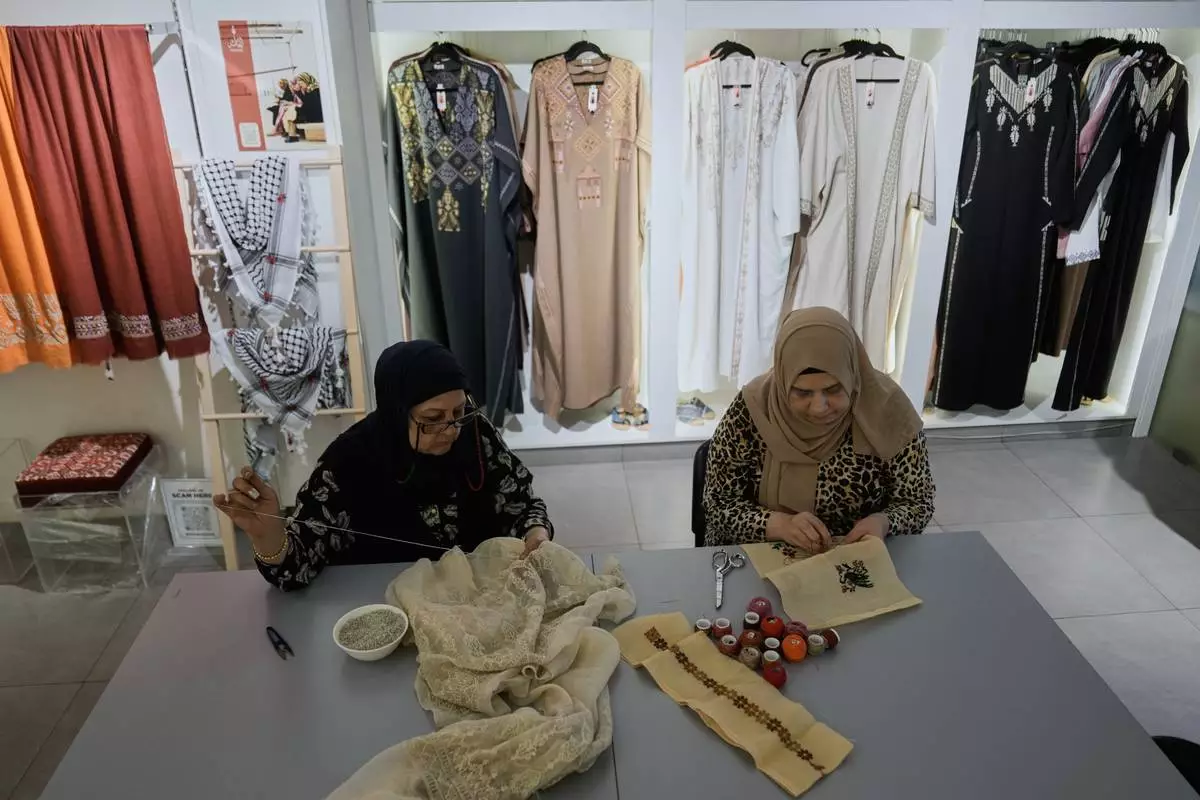
Palestinian weaver Samar Kabouli works at the Inaash Association embroidery workshop in Beirut, Tuesday, May 19, 2026. (AP Photo/Bilal Hussein)
Palestinian weaver Samar Kabouli works at the Inaash Association embroidery workshop in Beirut, Tuesday, May 19, 2026. (AP Photo/Bilal Hussein)
Palestinian weavers Rula Barakeh, right, and Samira Nasser work on handmade embroidered pieces at the Inaash Association embroidery workshop in Beirut, Tuesday, May 19, 2026. (AP Photo/Bilal Hussein)
Palestinian weavers Rula Barakeh, right, and Samira Nasser work on handmade embroidered pieces at the Inaash Association embroidery workshop in Beirut, Tuesday, May 19, 2026. (AP Photo/Bilal Hussein)
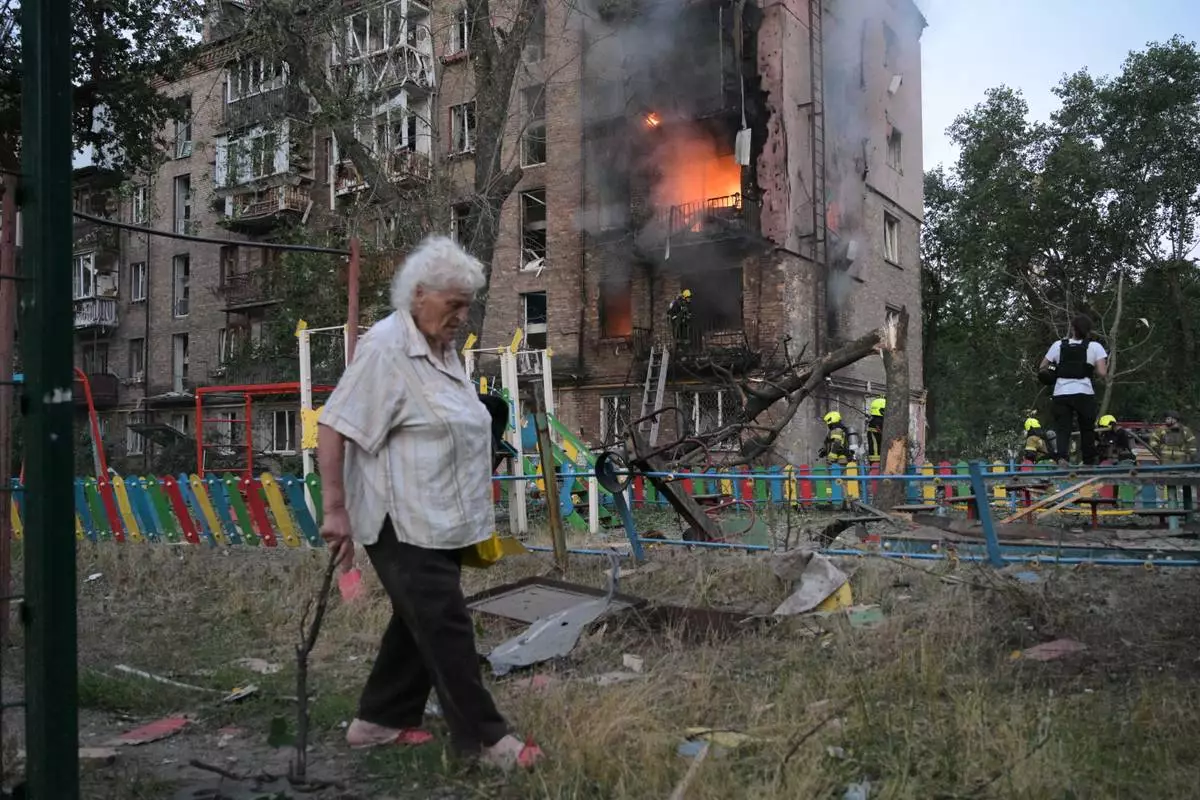
KYIV, Ukraine (AP) — Russia hammered Kyiv in an 11-hour drone and missile attack overnight into Thursday morning, killing at least 20 civilians in the city and injuring scores more in what Moscow said was retaliation for Ukrainian strikes on Russian oil facilities.

Loud explosions shook the Ukrainian capital, where more than 50,000 people sheltered in subway stations after authorities issued air raid warnings, the Kyiv Metro said. As dawn broke, emergency crews were still digging through the rubble of collapsed and charred apartment buildings in search of victims.

Russia’s Defense Ministry said in a statement that the deadly bombardment was in response to Ukraine’s long-range strikes, which have caused severe fuel shortages and put pressure on President Vladimir Putin.

Ukraine's increasingly frequent attacks inside Russia — described by Zelenskyy as a 40-day blitz — have especially targeted oil refineries, causing a fuel crisis that has frustrated Russians.

More than four years after Moscow’s full-scale invasion of its neighbor, Ukraine’s technological advances in drone engineering have in recent months given it an edge, analysts and Western officials say. Its strikes on supply routes behind the front line have robbed the Russian army of momentum on the battlefield and made its progress slow and costly, they say.

Kyiv’s forces have especially targeted supplies to Crimea, triggering the worst fuel crisis on the Black Sea peninsula since it was illegally annexed by Russia in 2014 and delivering a blow to the Kremlin’s narrative that Moscow is winning the war.

Ukrainian officials say they are trying to force Putin to the negotiating table, but so far Moscow's response has been to hit back.

Diplomatic efforts to end the war, most recently by the Trump administration, haven’t produced results. President Donald Trump and Zelenskyy are expected to attend next week’s NATO summit in Turkey.

Putin thinks that time is on his side, that Western support will peter out and that Ukraine’s resistance will eventually collapse under pressure from strategic bombing, analysts say.

The attack killed 20 people in Kyiv, according to Kyiv city administration head Tymur Tkachenko. More than 90 others were injured, said Kyiv Mayor Vitali Klitschko.

Foreign Minister Andrii Sybiha said it was a “night of horror” in the capital. Kyiv had a pre-war population of roughly 3 million people, but the current number of residents is unknown.

Damage was recorded in 30 locations across the city, mainly residential buildings and civilian infrastructure, according to Tymur Tkachenko, head of the Kyiv City Military Administration. Some 20 residential buildings were damaged, Interior Minister Ihor Klymenko said.

Flashes from exploding drones and missiles lit up the night, and loud booms echoed through Kyiv. Tracers from air defense fire streaked through the air as a huge pall of black smoke rose into the sky.

Kyiv resident Serhii Budko said three or four ballistic missiles hit his district of the city. “We were inside the shelter and felt the shelter shaking — the ceiling and floor, everything,” the 24-year-old told The Associated Press.

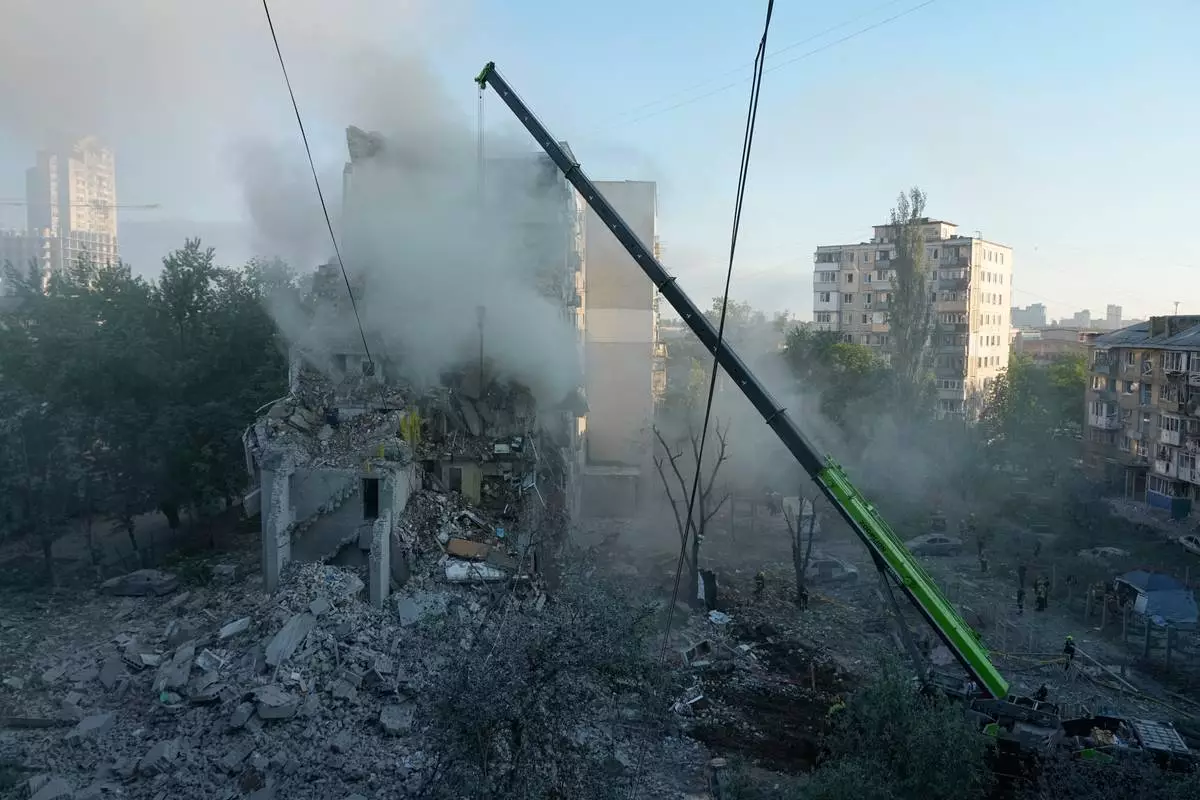
In Kyiv's Desnianskyi district, people were trapped inside a damaged nine-story residential building, and in the Darnytskyi district six levels of a nine-story building collapsed.

In Ukraine’s central Dnipropetrovsk region, a Russian guided bomb strike killed a 7-year-old girl and wounded four other people, including an 11-year-old girl, all members of the same family, regional head Oleksandr Hanzha said.

Russia’s General Staff chief Gen. Valery Gerasimov reported the results of the “massive retaliatory strike” to Putin, Kremlin spokesperson Dmitry Peskov said. The bombardment was “exclusively against military or military-linked targets,” Peskov said.

Russia's aerial attacks on Ukraine have repeatedly hit civilian areas. More than 16,000 Ukrainian civilians have been killed in the war, according to the United Nations.

No reliable figures are available for battlefield casualties in the war. A report earlier this year by the Center for Strategic and International Studies, a think tank, estimated that up to 1.8 million soldiers have been killed, wounded or gone missing on both sides, with Russian troops accounting for most of that number.

The attack used “high-precision long-range weapons” and drones to strike weapons factories and energy facilities in and around Kyiv, and “military airfield infrastructure” in other parts of Ukraine, the Russian Defense Ministry’s statement said.

In all, Russia fired 74 missiles and 496 drones in the attack, Ukraine’s air force said.

Ukraine's air defenses have improved throughout the war, especially in countering Russian drones. But it is harder to stop ballistic missiles, which accounted for roughly a third of the missiles fired overnight.

Sybiha, the Ukrainian foreign minister, said in April that the countries weapons factories meet up to 75% of its military’s needs. But he and other Ukrainian officials have pleaded with partner countries to supply more Patriot systems that offer the best protection from Russian aerial attacks.

He rejected any Russian attempts to justify the strikes as retaliation for Ukraine’s long-range attacks, saying Russia remained the aggressor in this war.

Ukrainian forces struck one of Russia’s largest oil refineries overnight in the Nizhny Novgorod region east of Moscow, starting a fire, Ukraine's General Staff said.

Also, Ukrainian forces struck a railway bridge over the Siverskyi Donets River in the Russian-occupied Luhansk region, it said. The bridge was used by Russian forces to transport personnel, weapons and military supplies, according to the General Staff.

Follow the AP’s coverage of the war in Ukraine at https://apnews.com/hub/russia-ukraine

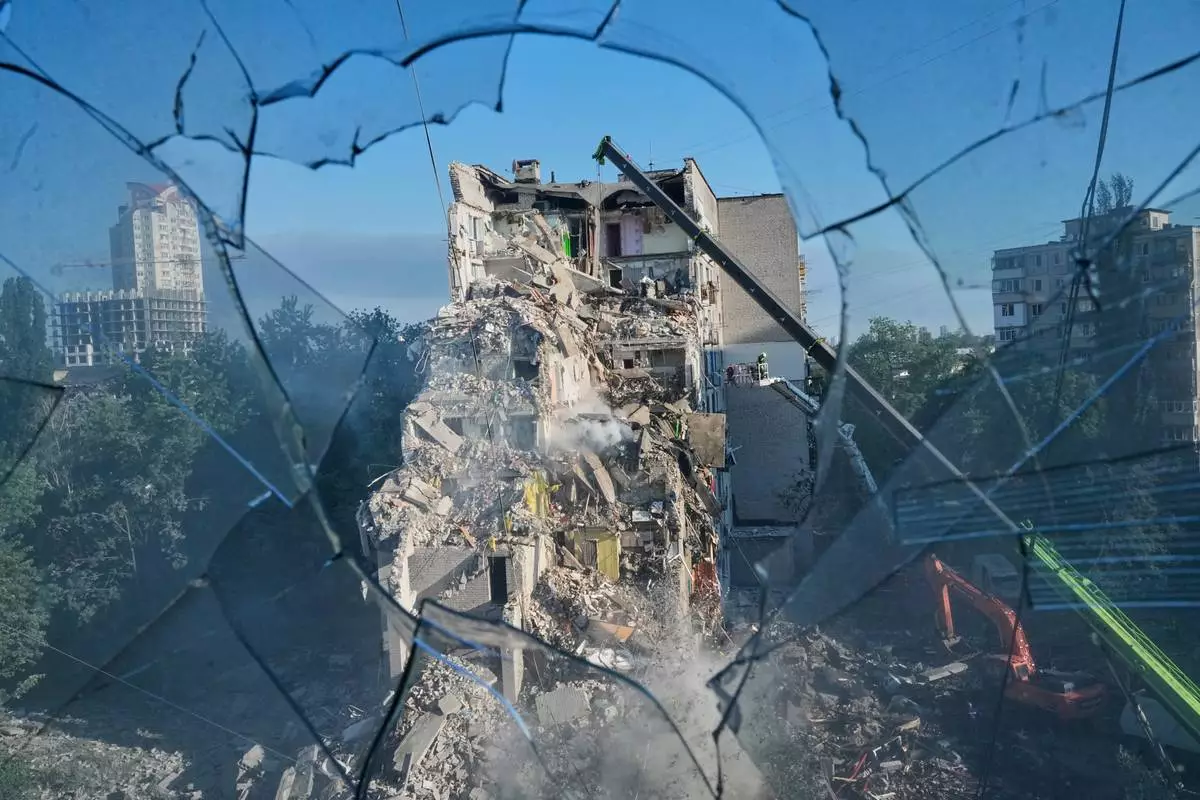
A residential apartment building is seen damaged after a Russian strike on Kyiv, Ukraine, Thursday, July 2, 2026. (AP Photo/Efrem Lukatsky)

A residential apartment building is seen damaged after a Russian strike on Kyiv, Ukraine, Thursday, July 2, 2026. (AP Photo/Efrem Lukatsky)

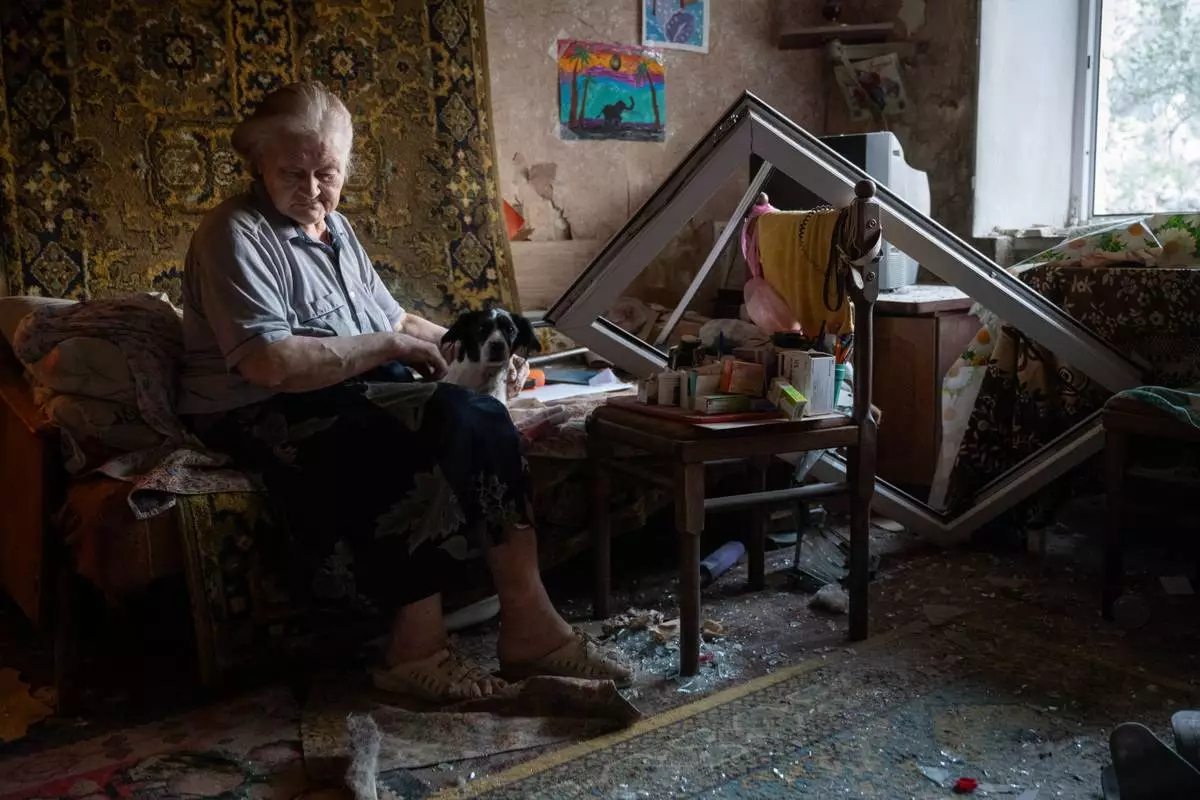
Elderly Liudmyla Tsapkova sits in her damaged apartment after the Russian missile attack in Kyiv, Ukraine, Thursday, July 2, 2026. (AP Photo/Danylo Antoniuk)

Elderly Liudmyla Tsapkova sits in her damaged apartment after the Russian missile attack in Kyiv, Ukraine, Thursday, July 2, 2026. (AP Photo/Danylo Antoniuk)

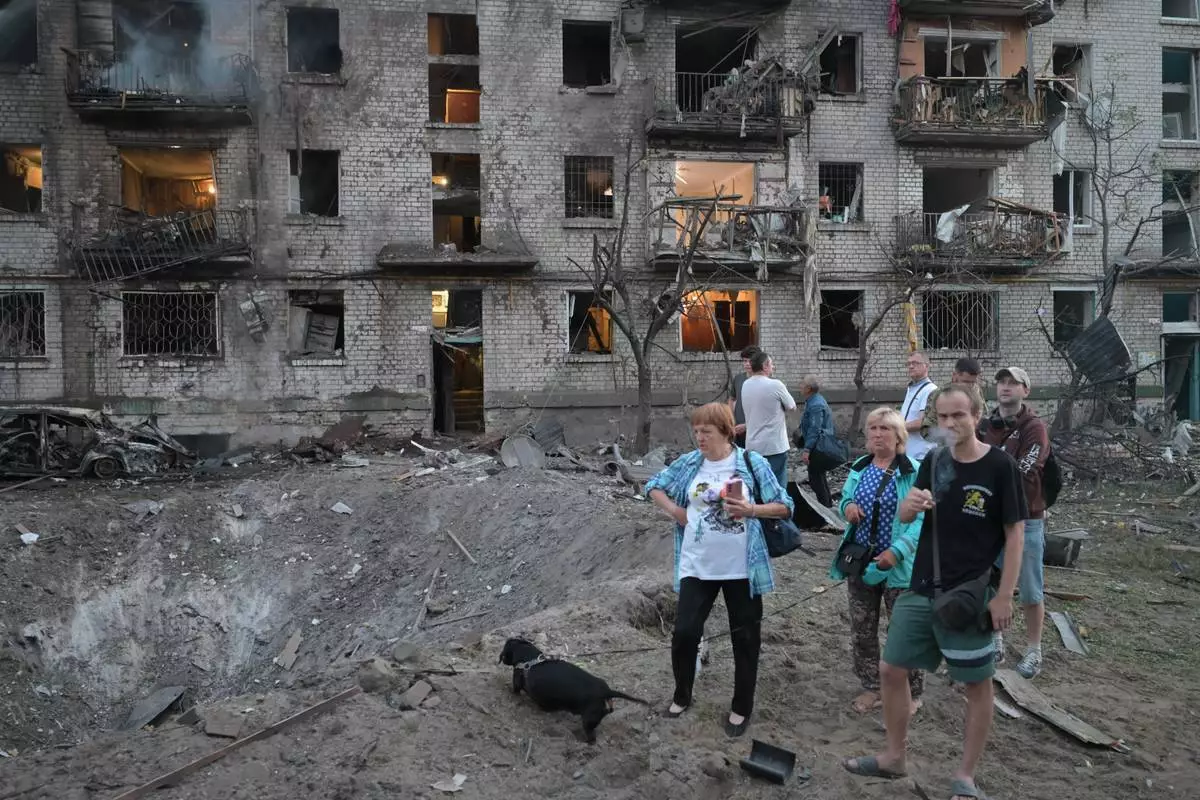
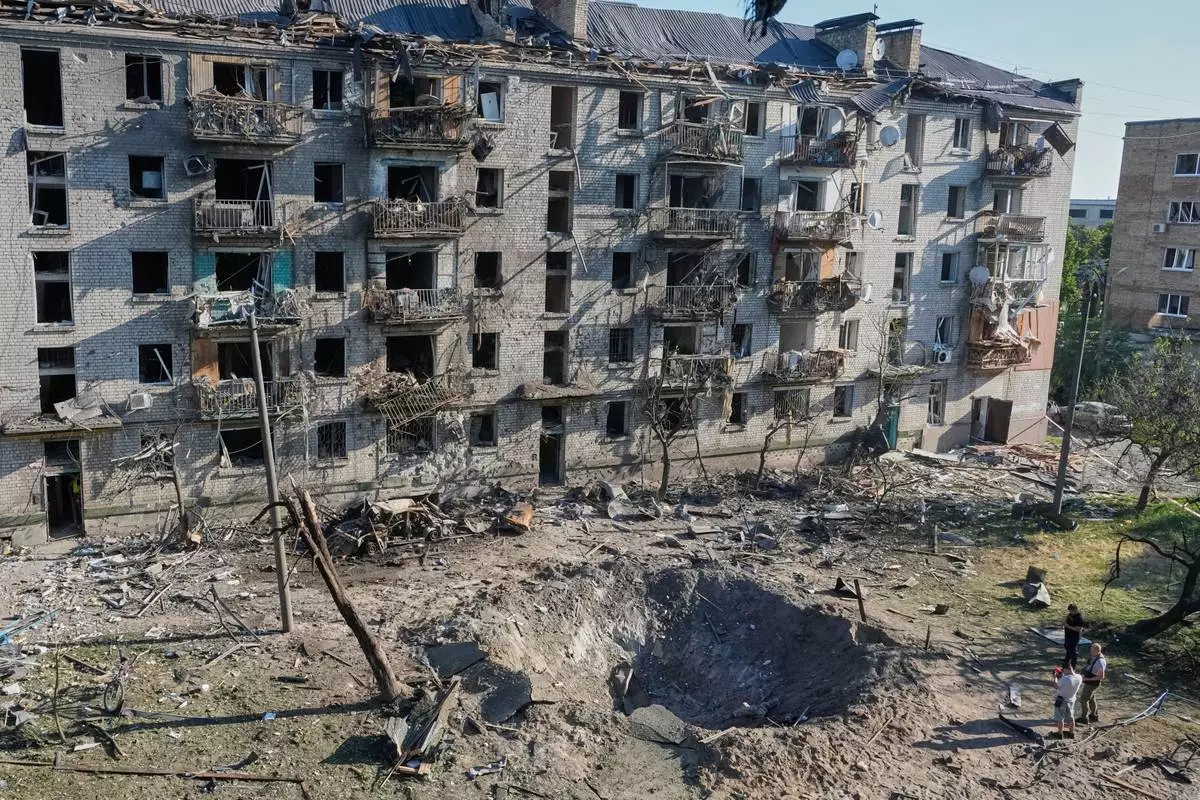
People look at the site of a Russian missile strike that hit a residential building in Kyiv, Ukraine, Thursday, July 2, 2026. (AP Photo/Efrem Lukatsky)

People look at the site of a Russian missile strike that hit a residential building in Kyiv, Ukraine, Thursday, July 2, 2026. (AP Photo/Efrem Lukatsky)

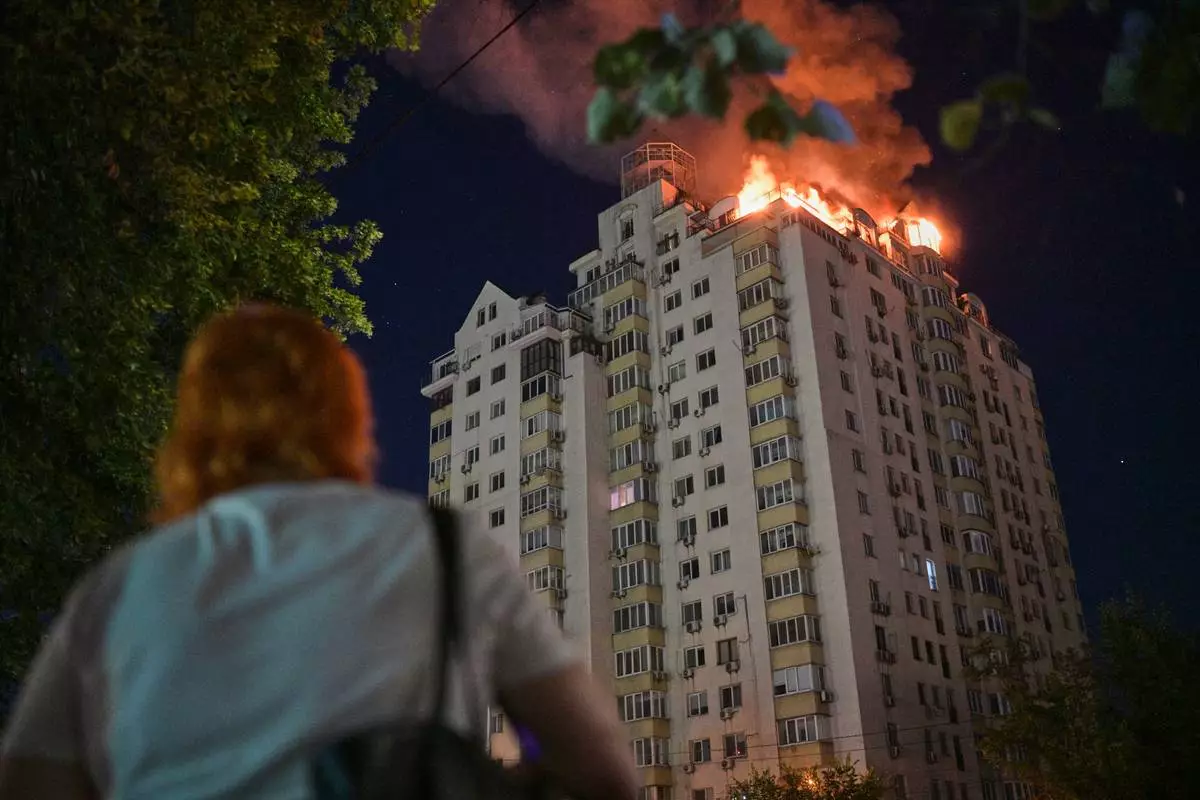
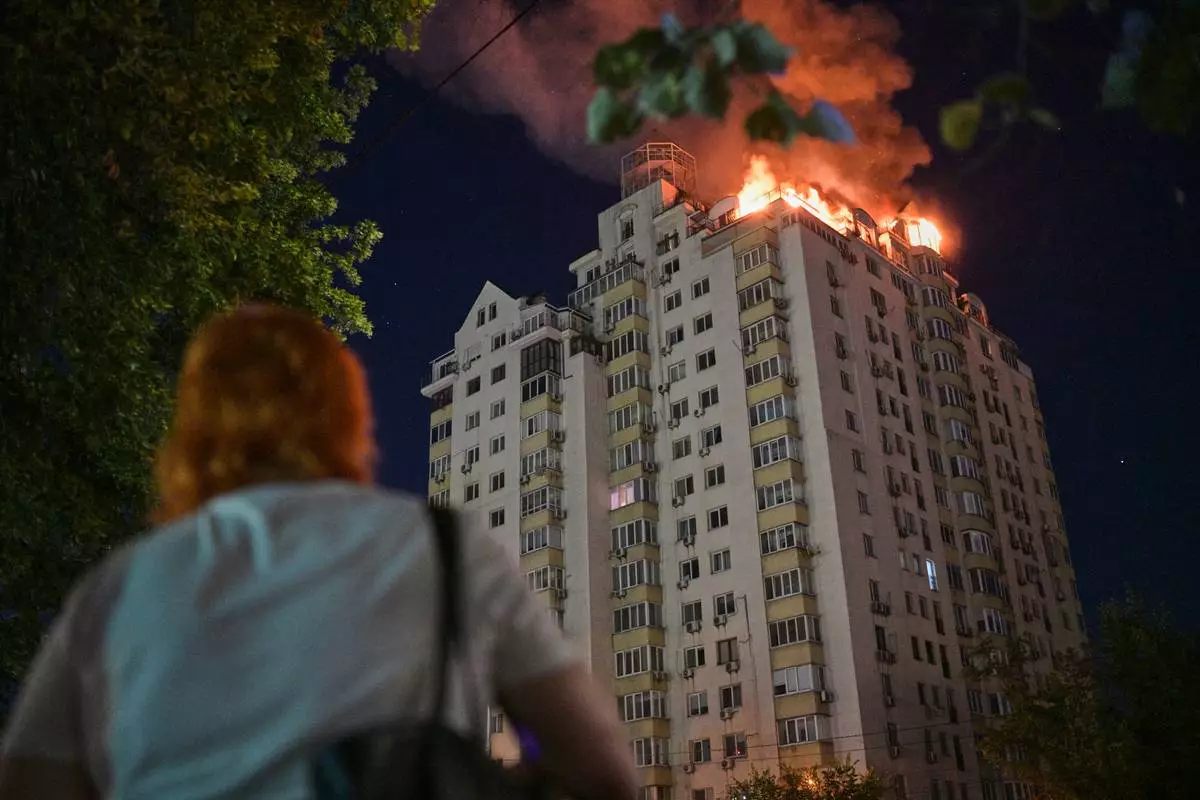
A woman looks at an apartment building burning after a Russian missile attack in Kyiv, Ukraine, Thursday, July 2, 2026. (AP Photo/Danylo Antoniuk)

A woman looks at an apartment building burning after a Russian missile attack in Kyiv, Ukraine, Thursday, July 2, 2026. (AP Photo/Danylo Antoniuk)

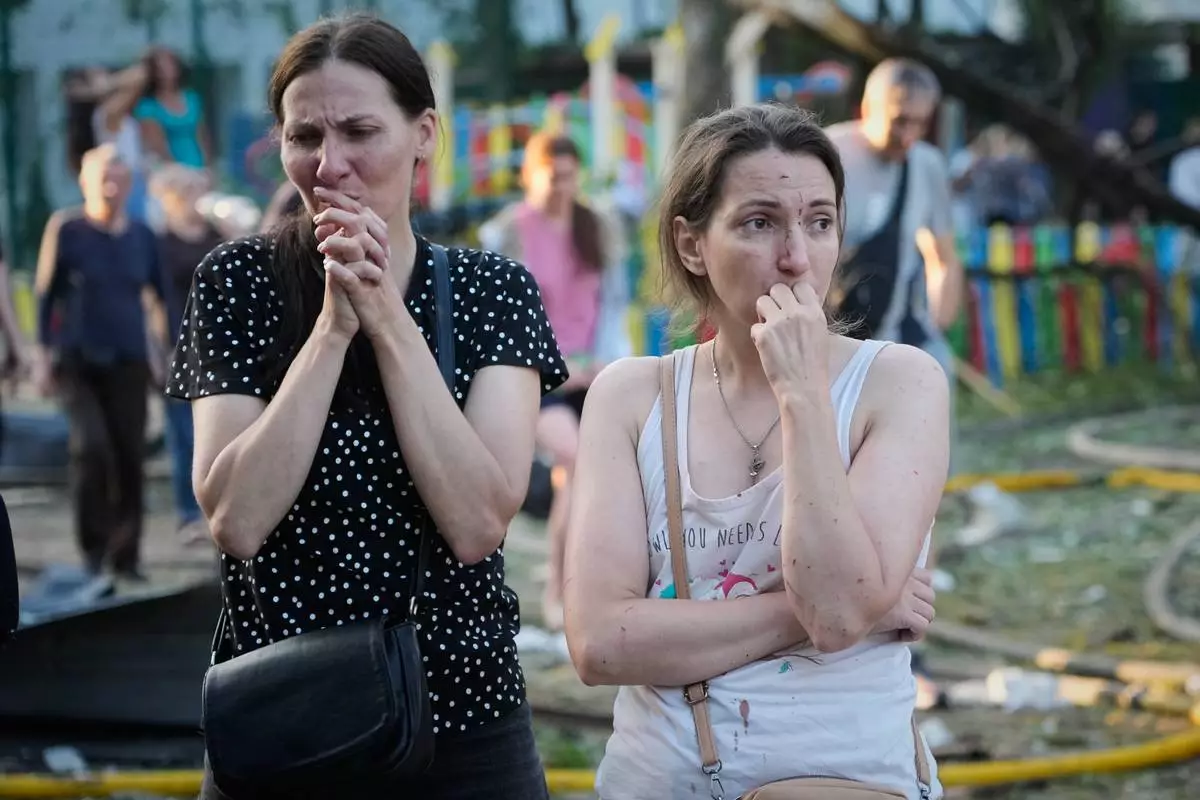
People react at the site of a Russian missile strike that hit a residential building in Kyiv, Ukraine, Thursday, July 2, 2026. (AP Photo/Efrem Lukatsky)

People react at the site of a Russian missile strike that hit a residential building in Kyiv, Ukraine, Thursday, July 2, 2026. (AP Photo/Efrem Lukatsky)

People look at the site of a Russian missile strike that hit a residential building in Kyiv, Ukraine, Thursday, July 2, 2026. (AP Photo/Danylo Antoniuk)

People look at the site of a Russian missile strike that hit a residential building in Kyiv, Ukraine, Thursday, July 2, 2026. (AP Photo/Danylo Antoniuk)

A residential apartment building is seen damaged after a Russian strike on Kyiv, Ukraine, Thursday, July 2, 2026. (AP Photo/Efrem Lukatsky)

A residential apartment building is seen damaged after a Russian strike on Kyiv, Ukraine, Thursday, July 2, 2026. (AP Photo/Efrem Lukatsky)

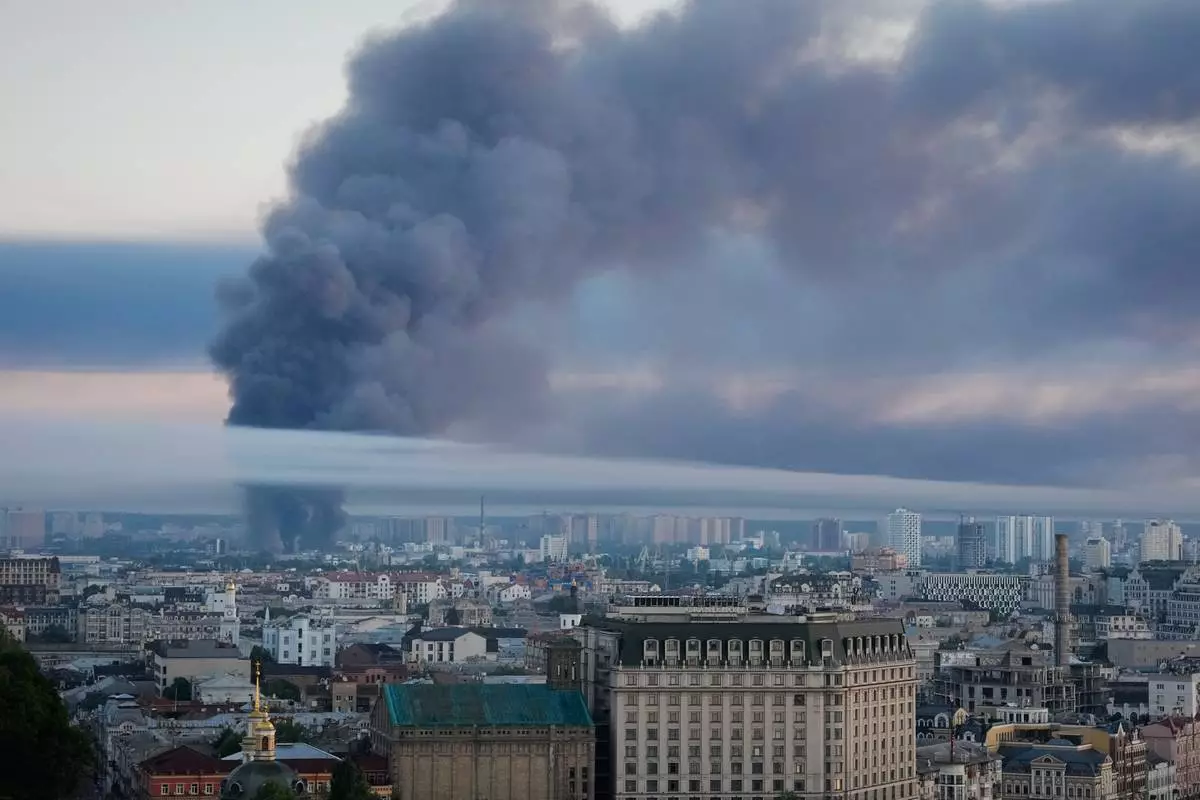
Smoke rises over the city center after a Russian attack on Kyiv, Ukraine, Thursday, July 2, 2026. (AP Photo/Efrem Lukatsky)

Smoke rises over the city center after a Russian attack on Kyiv, Ukraine, Thursday, July 2, 2026. (AP Photo/Efrem Lukatsky)

A woman walks past a burning apartment building after a Russian missile attack in Kyiv, Ukraine, Thursday, July 2, 2026. (AP Photo/Danylo Antoniuk)

A woman walks past a burning apartment building after a Russian missile attack in Kyiv, Ukraine, Thursday, July 2, 2026. (AP Photo/Danylo Antoniuk)

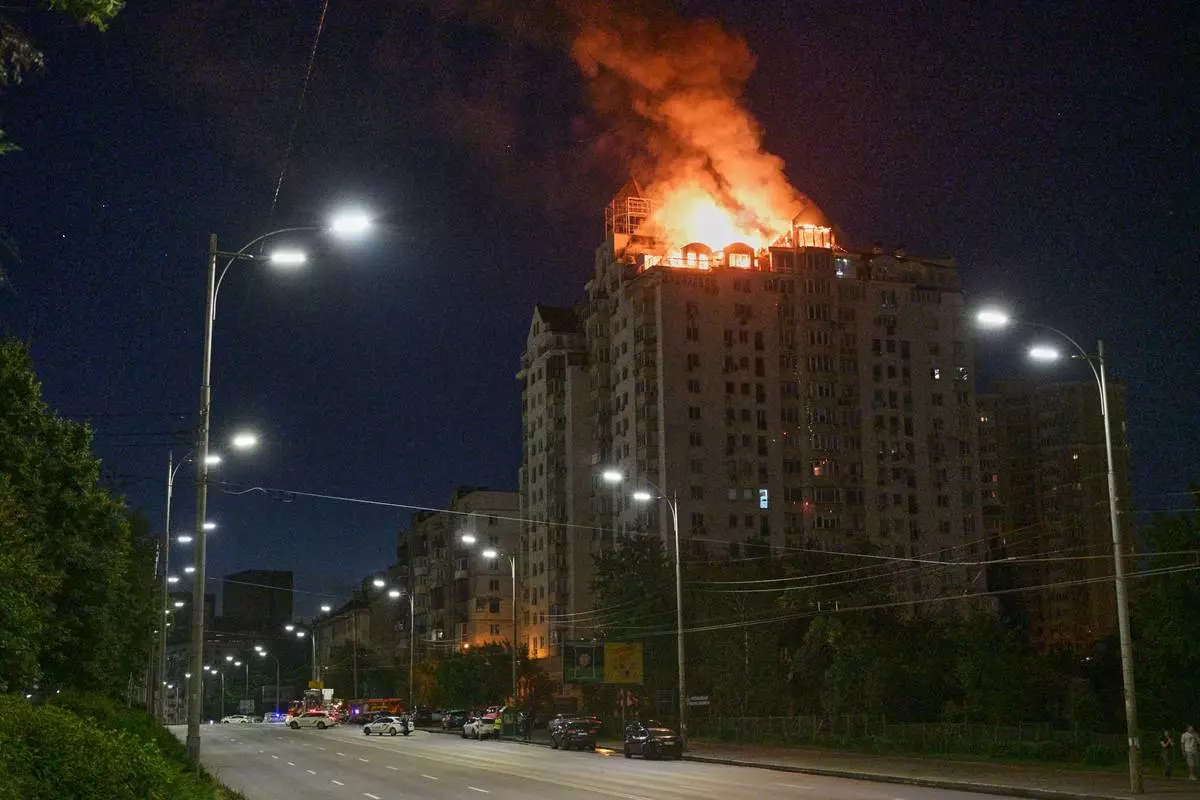
An apartment building burns after a Russian missile attack in Kyiv, Ukraine, Thursday, July 2, 2026. (AP Photo/Danylo Antoniuk)

An apartment building burns after a Russian missile attack in Kyiv, Ukraine, Thursday, July 2, 2026. (AP Photo/Danylo Antoniuk)

A woman looks at an apartment building burning after a Russian missile attack in Kyiv, Ukraine, Thursday, July 2, 2026. (AP Photo/Danylo Antoniuk)

A woman looks at an apartment building burning after a Russian missile attack in Kyiv, Ukraine, Thursday, July 2, 2026. (AP Photo/Danylo Antoniuk)

Recommended Articles