Skip to Content Facebook Feature Image

Chinese team develops assembly line to mass produce satellite

China

China

China

Chinese team develops assembly line to mass produce satellite

2026-06-30 17:20 Last Updated At:19:07

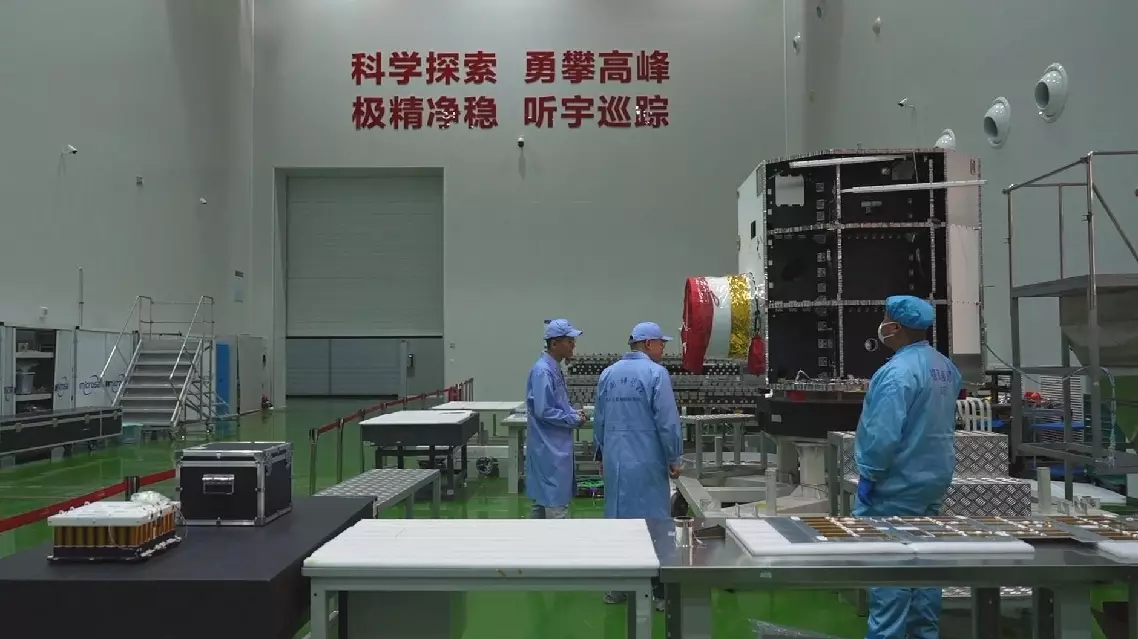
A Chinese team has transformed satellite manufacturing into an assembly-line model similar to car manufacturing, making it faster, more efficient and more cost-effective.

The new approach, developed by Hu Haiying, director of the Innovation Academy for Microsatellites of the Chinese Academy of Sciences, and his team, enables an annual production of up to 300 satellites.

"It's like a production cadence: the satellite moves from one workstation to the next. Once it has gone through all the stations, the satellite is basically produced," Hu said.

According to Hu, the assembly line model has become feasible due to the demand for massive constellations.

"When building large-scale constellations with high numbers of satellites, we naturally considered whether we could do it the way cars are made on an assembly line, which is more efficient," Hu said.

The team has overcome numerous challenges to bring the idea into reality. They had to re-engineer the entire process -- from design and research and development, to manufacturing, testing, and on-orbit operations and maintenance.

"Director Hu leads us in making all the technological breakthroughs from scratch, so every new satellite was quite challenging to develop," said Feng Jiapeng, a senior engineer of the institute.

"Difficulties certainly exist, but we have no fear for them. Forging ahead on untraveled paths and with technological uncertainties, our belief is simple: as Party members, we must step up when the country needs us, and we must venture into these uncharted territories to meet national strategic needs," Hu said.

As China's space program accelerates like never before, the team is prepared to make its contributions.

"Our goal is to enable access to telecommunication in more remote areas -- even at sea and in space -- so that more people can benefit from digital technologies," Hu said.
Chinese team develops assembly line to mass produce satellite

Chinese team develops assembly line to mass produce satellite
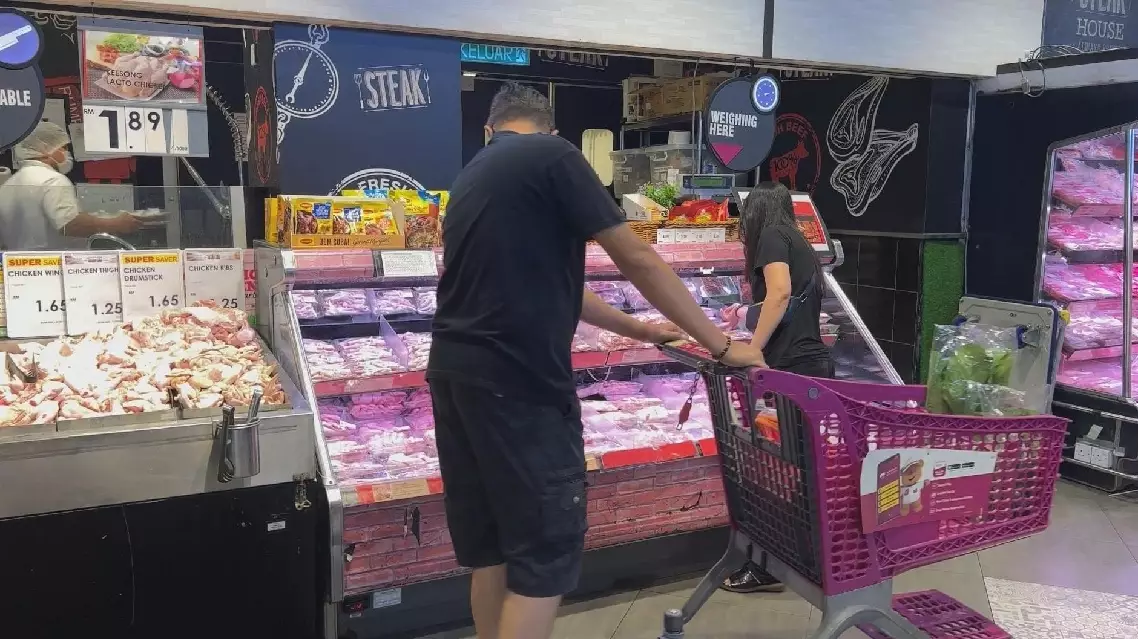
Fertilizer and food-related costs are expected to rise significantly, with fertilizer prices projected to increase by between 15 and 20 percent, while food costs could rise by around 8 percent, given Malaysia's heavy reliance on imported inputs, Economy Minister Akmal Nasrullah Mohd Nasir said on Monday.

This is in part due to 63 percent of the country's fertilizer being imported, leaving the country's agricultural sector particularly exposed to global disruptions, Akmal told parliament.

Small and medium enterprises (SMEs) have been identified as highly vulnerable due to limited financial buffers, with cash flow pressures expected to intensify as input costs rise sharply, he said, adding that the government is working to ensure the security of essential goods, control the prices of basic goods and improve the efficiency of distribution channels in order to reduce the impact of price increases.

Akmal said the government has set out a broad policy response to what it describes as a prolonged global supply crisis. Current rice stocks, including buffer reserves, are sufficient for five to six months, while supplies of essential food items such as chicken, eggs, fish, milk and fruit are adequate for at least one month.

The government's strategy is structured around four pillars: protecting citizens, stabilizing supply and prices, supporting SMEs and industry, and strengthening long-term economic resilience with targeted cash aid and fuel subsidies expected to continue.

Malaysian food prices expected to rise by 8 pct, says Malaysian official

Malaysian food prices expected to rise by 8 pct, says Malaysian official

Recommended Articles