SEATTLE (AP) — By advancing to the knockout round atop Group G, Belgium has already improved upon its woeful performance at the World Cup four years ago.
After a historic third-place finish at the 2018 World Cup in Russia, Belgium did not advance past the group stage in 2022 in Qatar. With its 5-1 victory over New Zealand on Friday night, Belgium won its group and achieved what coach Rudi Garcia wanted from his club.
Click to Gallery
Belgium's Leandro Trossard (10) celebrates his goal against New Zealand with teammates Kevin De Bruyne (7) and Charles De Ketelaere (17) during the first half of a World Cup Group G soccer match, in Vancouver, British Columbia, Friday, June 26, 2026. (Timothy Matwey/The Canadian Press via AP)
Senegal head coach Pape Thiaw looks onto the pitch during the World Cup Group I soccer match between Senegal and Iraq in Toronto, Friday, June 26, 2026. (AP Photo/Stephanie Scarbrough)
Belgium's Romelu Lukaku (9) drives towards New Zealand's Francis de Vries (3) during the World Cup Group G soccer match between New Zealand and Belgium in Vancouver, British Columbia, Friday, June 26, 2026. (AP Photo/Kaleb Tatum)
Senegal's Sadio Mane (10) plays during the World Cup Group I soccer match between Senegal and Iraq in Toronto, Friday, June 26, 2026. (AP Photo/Stephanie Scarbrough)
Belgium head coach Rudi Garcia talks during a news conference on the eve of the team's World Cup soccer match against New Zealand, Thursday, June 25, 2026 in Vancouver, British Columbia. (AP Photo/Abbie Parr)
Ahead of Wednesday’s knockout round match against Senegal, Garcia expressed satisfaction with his group’s accomplishments, as well as a desire for more. Belgium won one game and played to two draws in group play.
“We wanted to finish first in the group stage and we succeeded,” Garcia said in French. “Of course we wanted to win more — we know the story of our World Cup so far. Now it is time for the knockout phase. Senegal is a big team. But, you have to beat them, too, if you want to go far in a World Cup.”
For Belgium’s participation in the tournament to be considered a success, it must first get by a Senegal team that finished third in Group I with three points and a plus-2 goal differential. The African team navigated one of the toughest groups in the tournament, one that featured favorite France and the Erling Haaland-led Norway.
“We know it will be a tough match,” Belgian striker Romelu Lukaku said Monday in French. “Senegal has a lot of top-level players, and the coach is, too. I think it’s 50-50. We really shouldn’t underestimate them.”
Given what transpired in the round of 32 shortly after Lukaku’s comments, Belgium would be wise to heed his warning. Germany lost to unheralded Paraguay on penalties while Morocco sent the Netherlands to its earliest World Cup exit on Monday night.
Belgium is aware that even as the odds-on pick to beat Senegal, it must be careful on Wednesday. Otherwise, it could fall victim to the same fate as its European counterparts.
“It doesn’t matter who the favorite is,” said Belgium forward Charles De Ketelaere. “We have confidence and need to be sharp. Yesterday showed that it doesn’t matter if you are the favorite.”
Senegal, meanwhile, hopes it has the offensive firepower to score against stingy Belgium, which has allowed two goals in three games with star goalkeeper Thibaut Courtois in net. Led by Sadio Mane, Senegal is coming off a 5-0 rout of Iraq.
But, Senegal will also be short-handed on the defensive side. Goalkeeper Édouard Mendy, who was injured in a 3-2 loss to Norway in group play, will not be available Wednesday, according to coach Pape Thiaw. Reserve Mory Diaw, who started in Mendy’s place against Iraq, is likely to do so again.
“Mory had a great performance,” Thiaw said in French. “He kept a clean sheet and I think (as) the goalkeeper tomorrow, we hope that we’ll also come up with a clean sheet.”
Even if Senegal has to turn to Diaw, Thiaw is confident his side can pull off an upset, much like both Paraguay and Morocco did Monday.
“It’s not because you finished top of your group that you’re not going to be knocked out in the next round,” Thiaw said. “That’s exactly what happened with the Netherlands. It’s another tournament starting. We are looking for the win tomorrow so that we can continue our journey.”
Center back Zeno Debast, who has not appeared in a World Cup match this summer due to injury, will be available for Wednesday’s match, but is not expected to start, according to Garcia.
Debast participated in his first training session Monday after he had an MRI on Saturday for a left leg injury. He practiced again Tuesday with tape on his left knee.
“Zeno Debast is with the group, but tomorrow is still too soon,” Garcia said. “He is making progress, though. He still needs time to get fully fit, as was anticipated. I am very satisfied with the defenders we have already called upon.”
See more of AP’s World Cup coverage here

Belgium's Leandro Trossard (10) celebrates his goal against New Zealand with teammates Kevin De Bruyne (7) and Charles De Ketelaere (17) during the first half of a World Cup Group G soccer match, in Vancouver, British Columbia, Friday, June 26, 2026. (Timothy Matwey/The Canadian Press via AP)

Senegal head coach Pape Thiaw looks onto the pitch during the World Cup Group I soccer match between Senegal and Iraq in Toronto, Friday, June 26, 2026. (AP Photo/Stephanie Scarbrough)

Belgium's Romelu Lukaku (9) drives towards New Zealand's Francis de Vries (3) during the World Cup Group G soccer match between New Zealand and Belgium in Vancouver, British Columbia, Friday, June 26, 2026. (AP Photo/Kaleb Tatum)

Senegal's Sadio Mane (10) plays during the World Cup Group I soccer match between Senegal and Iraq in Toronto, Friday, June 26, 2026. (AP Photo/Stephanie Scarbrough)

Belgium head coach Rudi Garcia talks during a news conference on the eve of the team's World Cup soccer match against New Zealand, Thursday, June 25, 2026 in Vancouver, British Columbia. (AP Photo/Abbie Parr)
PUCALLPA, Peru (AP) — Pope Leo XIV on Sunday demanded justice for environmental defenders killed for protecting the Amazon and backed efforts by Indigenous peoples to stop their lands from being ravaged by logging, illegal mining and the “insatiable thirst for domination.”
On the penultimate day of his South American odyssey, Leo traveled into the Peruvian Amazon and channeled one of Pope Francis ’ core teachings that links care for the most vulnerable with care for God’s creation.
“The cry of the earth and the cry of the poor are inseparable,” Leo told Indigenous representatives and missionaries gathered along the Ucayali River in the northeastern city of Pucallpa.
He said he came to Pucallpa to support them in their search for justice and peace and referred to what environmental groups estimate have been 57 murders of environmental defenders between 2010-2024.
“The blood of these brothers cries out to God and demands justice,” Leo said to applause from the crowd, many of whom were wearing traditional feathered headwear and face markings of the region.
In addition to the decades-long problem of deforestation, illegal gold mining has become an increasingly lucrative business in the Amazon, devastating forests and polluting rivers. Miners use makeshift suction dredges and mercury, a toxic metal, to extract gold.
Raphael Hoetmer, Western Amazon program director at Amazon Watch, said wars and conflicts around the world have driven up the price of gold, increasing demand that in turn is resulting in more extraction from the Amazon.
“It’s causing pollution, health issues, and environmental degradation,” he said.
Illegal mining and coca production also drive deforestation and encroach on Indigenous territories, threatening ancestral lands and exposing communities to violence and organized crime.
Leo addressed the combination of threats in one of his most forceful speeches to date, drawing on his years of experience as a Peruvian bishop and Francis’ constant preaching about the environment and the plight of Indigenous groups.
During the encounter and a subsequent Mass in Pucallpa, he demanded a different model of economic development that respects the Earth and the Indigenous who care for it rather than the “irresponsible exploitation” by outside actors.
“Very little has been done — and very slowly at that — while the means to exploit and pollute creation have accelerated,” he said at Mass. “In the face of these evils, let us not bury the Lord’s gifts, for he gives us the strength to repair and heal the suffering caused by an insatiable thirst for domination.”
In Peru, most murders of environmental defenders go unpunished; only a few have resulted in convictions. In 2025, the Peruvian courts upheld a 28-year prison sentence for four timber merchants for the murder of four Indigenous people who opposed logging, following a trial that lasted a decade.
The most recent conviction came in the case of Kichwa leader Quinto Inuma Alvarado, who was murdered in 2023 when he was ambushed by hitmen on a river in the San Martín region, the Amazonian territory he was defending.
In August, a court sentenced four people to up to 35 years in prison. The court found that Inuma had filed a complaint against the defendants to prevent deforestation and other crimes such as drug trafficking, and that those convicted plotted his death because he had spoken out against the crimes.
Leo also referred to a notorious rise in sexual violence against Indigenous Awajún and Wampis schoolgirls in Condorcanqui province in the northern Amazon, and blasted the “complicity,” “impunity” and “corruption” surrounding them.
The Awajún and Wampis Women’s Council, or Comuawuy, has recorded 370 cases of sexual violence in the province between January and July alone.
Following the women’s persistent demands for justice, specialized prosecutors’ offices were created, and the government launched a prevention plan. In January, the Ministry of Women and Vulnerable Populations announced a 32-year prison sentence for a man accused of sexual violence against a 14-year-old girl.
Leo said the church was “deeply concerned” by the suffering endured by the victims and called for healing, consolation and reparation.
“Such abuse leaves deep wounds, often compounded by complicity and impunity,” he said. “Corruption and arbitrary practices undermine the trust in the basic goodness of others.”
Leo’s last full day in Peru was also his most ambitious, criss-crossing the nation to minister to communities high in the Andes mountains before he arrived in Pucallpa in the rainforest.
His first stop was the mountain city of Cusco, the former capital of the Inca empire. There, Leo praised the traditional expression of popular piety, such as processions and religious festivals, as effective ways of forging community and transmitting the faith, especially to young people.
Huge crowds lined Cusco’s cobblestoned streets and packed its central Plaza de Armas, an imposing square decorated with a blend of Inca and Spanish colonial buildings. Many people wore the traditional Andean hats and colorful wool vests typical of the region, while others wore plastic ponchos to guard against a drizzling morning rain.
“It is all worth it,” said Margarida Salomon, 63, who said she came from Sucre in Bolivia to see the pontiff, spending about $500 to take a bus, sleep in a tent and eat Peruvian food from stalls. “I am still getting to know this pope, but the fact he is here in the Andes means a lot.”
The visit to Cusco, 3,400 meters (more than 11,000 feet) above sea level, tested Leo’s stamina as he continues recovering from lung cancer surgery last month. Leo sat in the chair of his popemobile during part of the ride around Cusco, but it wasn’t clear if that was to preserve his energy or to steady himself on the uneven streets.
In general, the 71-year-old Leo has seemed unfazed by the toll of the three-nation South American trip, the longest of his pontificate. While others traveling on the papal plane have fallen ill, Leo has shown no sign of weakness or fatigue since the trip began Nov. 6, and in fact seemed energized, especially from the days spent in his former diocese of Chiclayo seeing old friends.
The Rev. Peter Hughes, an 84-year-old Irish priest who has lived in Peru for more than six decades, said Leo’s itinerary reflected the church’s concern for the poor.
“In Latin American terms, the Indigenous peoples, or what is left of them, are the most important collective representing the truly poor,” he said. “That is what makes leaders like Pope Francis and Pope Leo speak the language of the Gospel in very human terms, putting a premium on justice and peace."
"In the Christian sense of justice, the most important people are the poor, the marginalized, and those who have no voice,” he said.
Suarez reported from Lima, Peru; Savarese from Cusco, Peru.
Associated Press religion coverage receives support through the AP’s collaboration with The Conversation US, with funding from Lilly Endowment Inc. The AP is solely responsible for this content.
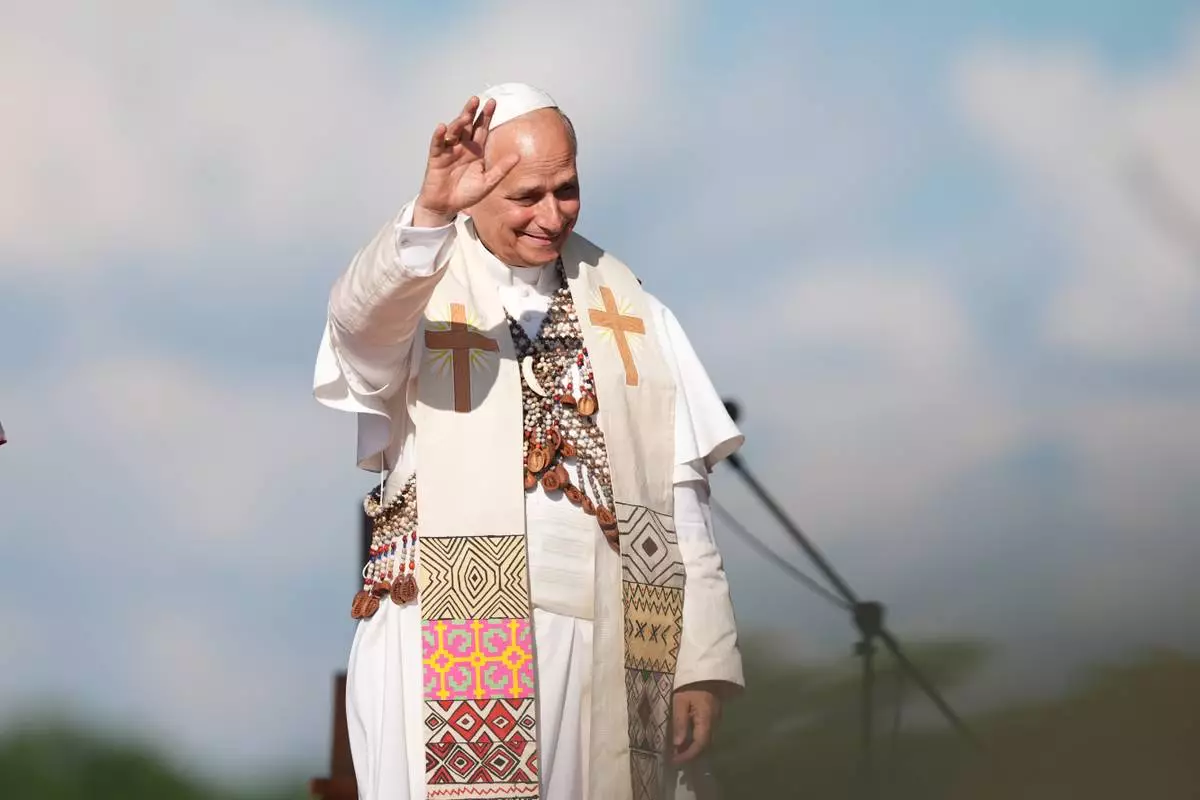
Pope Leo XIV waves during a meeting with missionaries and representatives of Amazonian Indigenous communities in Pucallpa, Peru, Sunday, Nov. 15, 2026. (AP Photo/Guadalupe Pardo)
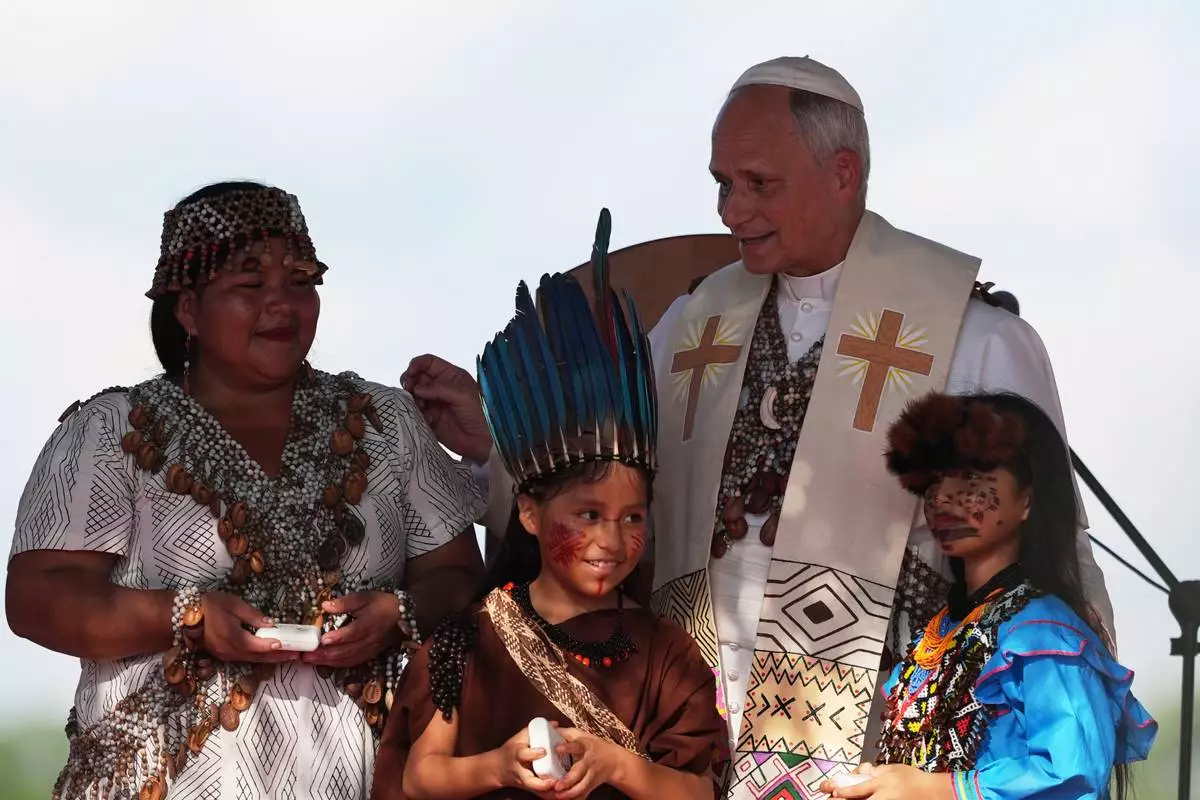
Pope Leo XIV greets members of the Amazonian Indigenous community during a meeting with missionaries and representatives of the Amazonian peoples in Pucallpa, Peru, Sunday, Nov. 15, 2026. (AP Photo/Guadalupe Pardo)
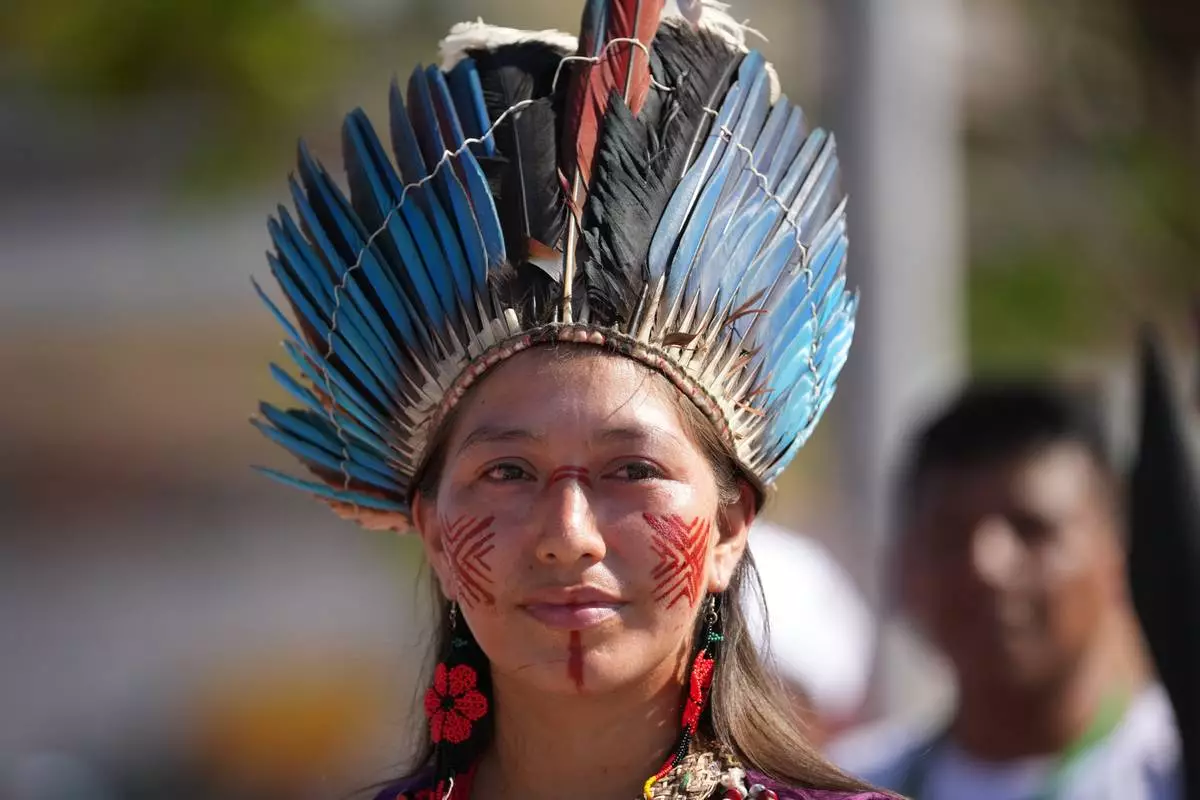
A woman waits for Pope Leo XIV's arrival to a meeting with missionaries and representatives of the Amazonian peoples at Malecón Puerto Callao in Pucallpa, Peru, on the tenth day of his twelve-day apostolic journey to South America, Sunday, Nov. 15, 2026. (AP Photo/Andrew Medichini)
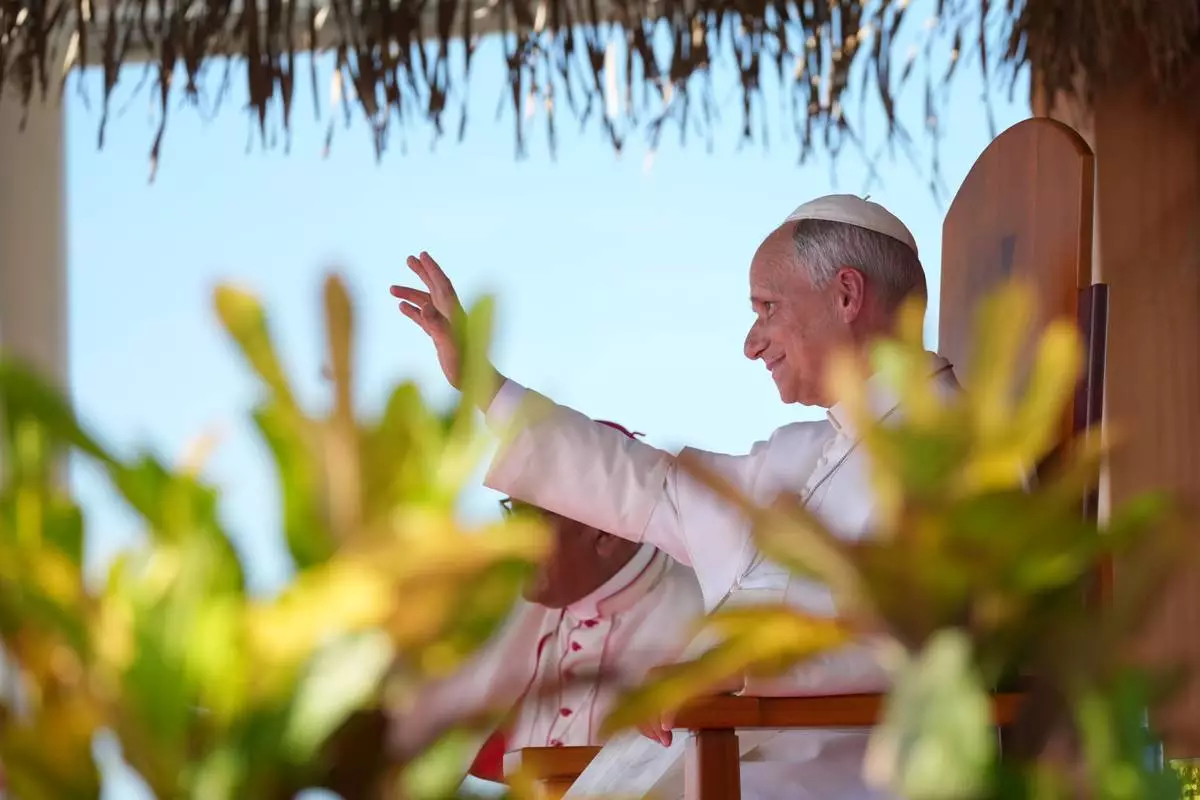
Pope Leo XIV waves during a meeting with missionaries and representatives of the Amazonian peoples at Malecón Puerto Callao in Pucallpa, Peru, on the tenth day of his twelve-day apostolic journey to South America, Sunday, Nov. 15, 2026. (AP Photo/Andrew Medichini)
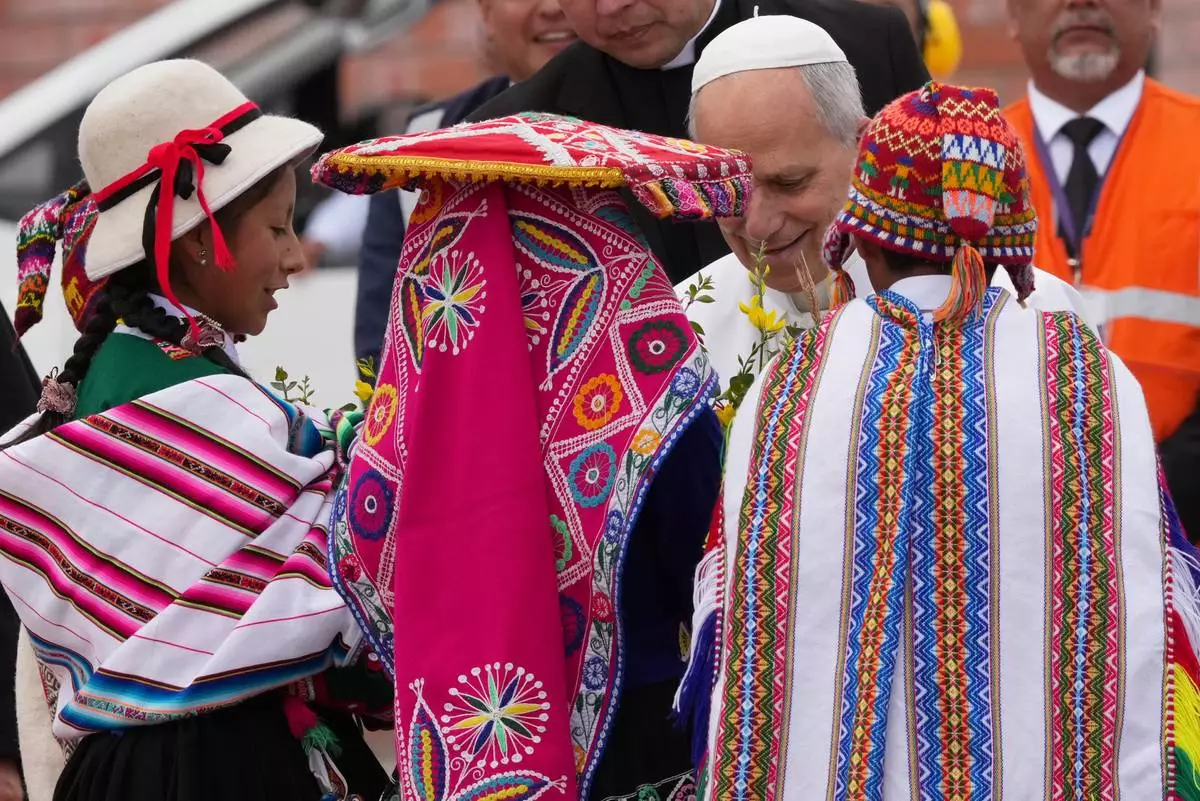
Pope Leo XIV arrives for a meeting with the faithful and representatives of popular devotion at Saqsaywaman National Archaeological Park in Cusco, Peru, on the tenth day of his twelve-day apostolic journey to South America, Sunday, Nov. 15, 2026. (AP Photo/Andrew Medichini)
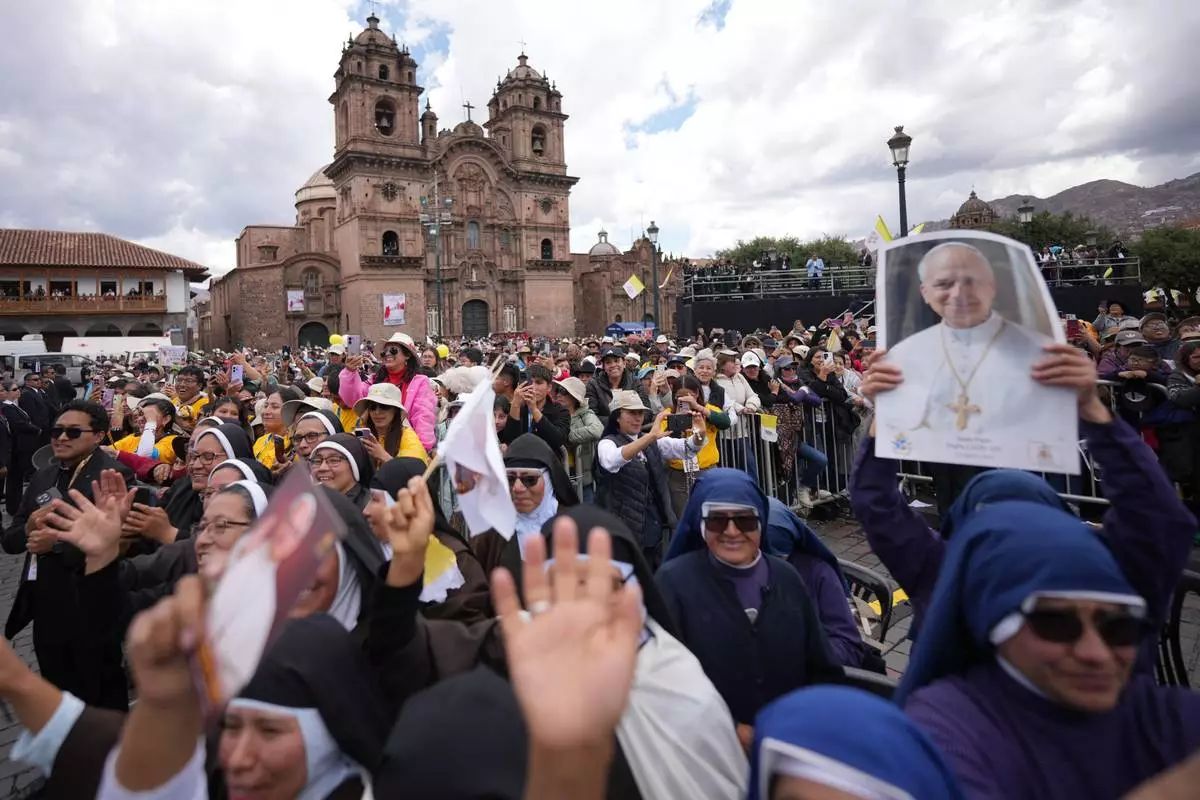
Nuns cheer during the Angelus prayer with Pope Leo XIV in the square in front of the Cathedral Basilica of the Assumption of the Blessed Virgin Mary in Cusco, Peru, on the tenth day of his twelve-day apostolic journey to South America, Sunday, Nov. 15, 2026. (AP Photo/Andrew Medichini)
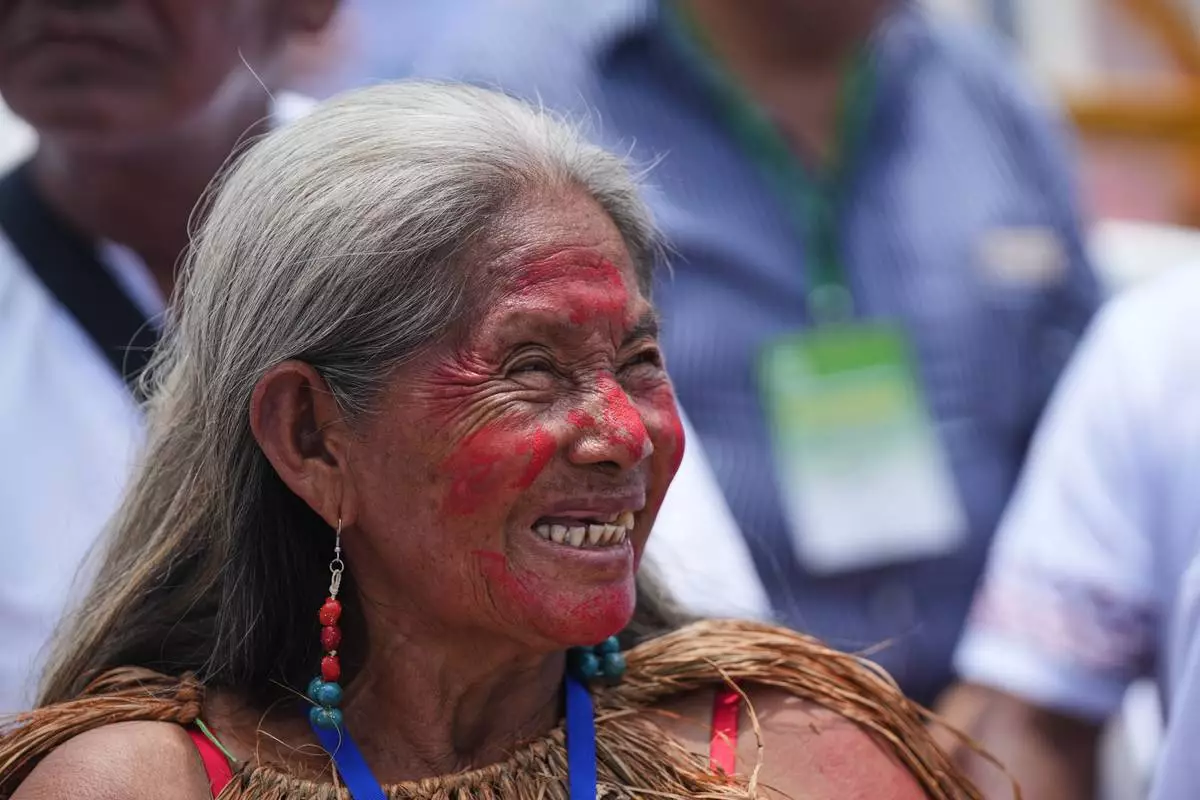
A woman smiles ahead of Pope Leo XIV's meeting with missionaries and representatives of Amazonian Indigenous communities in Pucallpa, Peru, Sunday, Nov. 15, 2026. (AP Photo/Guadalupe Pardo)
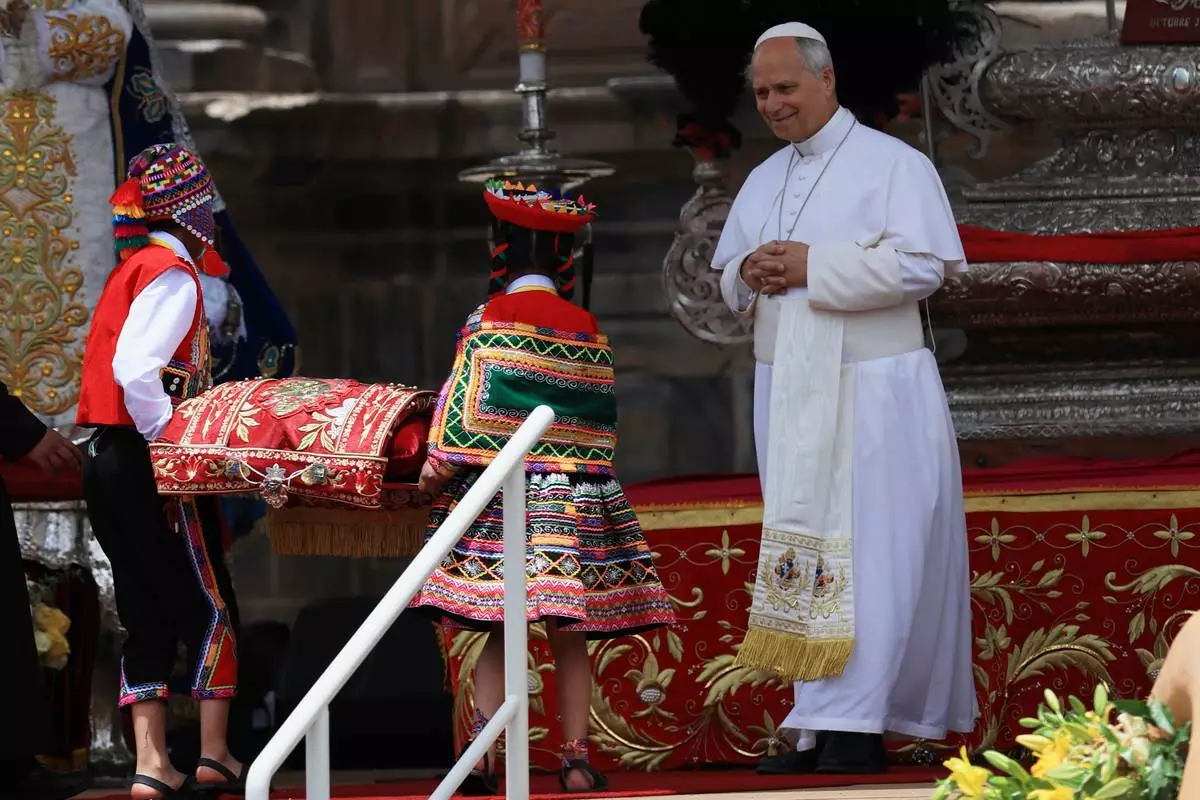
Children present an offering to Pope Leo XIV outside the cathedral in Cusco, Peru, Sunday, Nov. 15, 2026. (AP Photo/Jose Sotomayor)
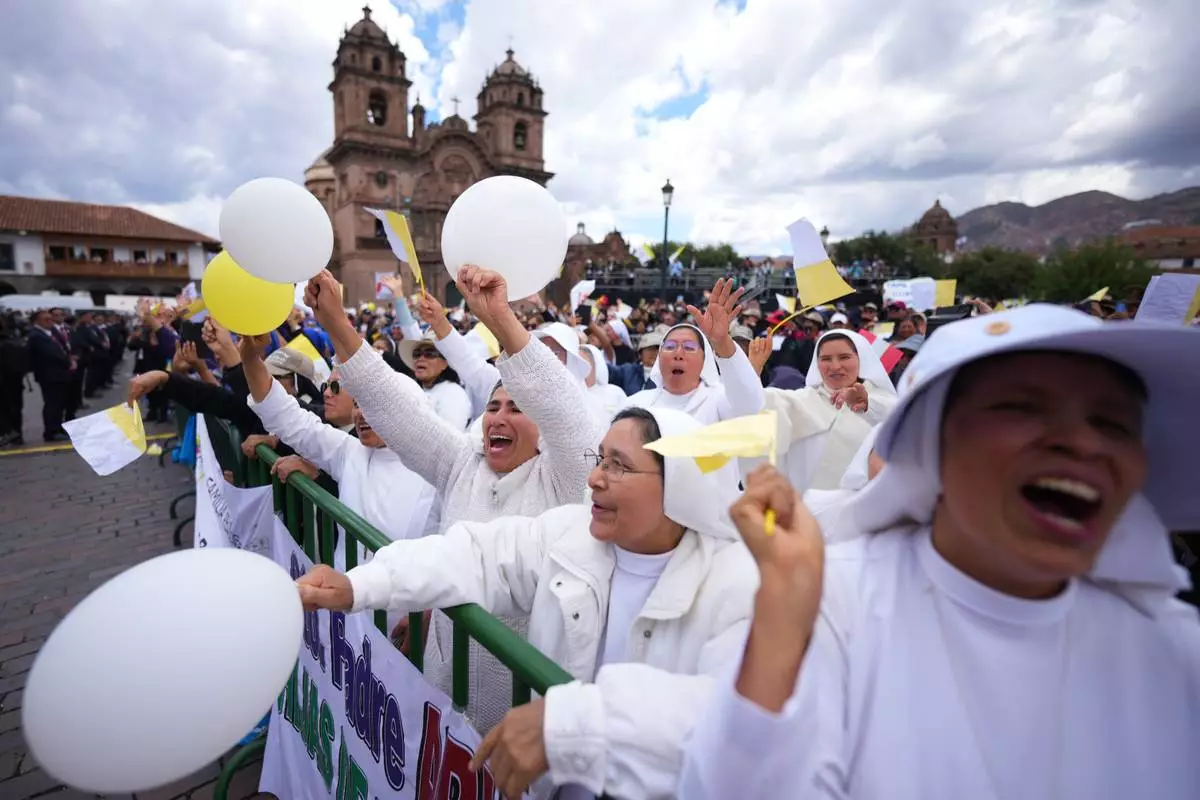
Nuns cheer during the Angelus prayer with Pope Leo XIV in the square in front of the Cathedral Basilica of the Assumption of the Blessed Virgin Mary in Cusco, Peru, on the tenth day of his twelve-day apostolic journey to South America, Sunday, Nov. 15, 2026. (AP Photo/Andrew Medichini)
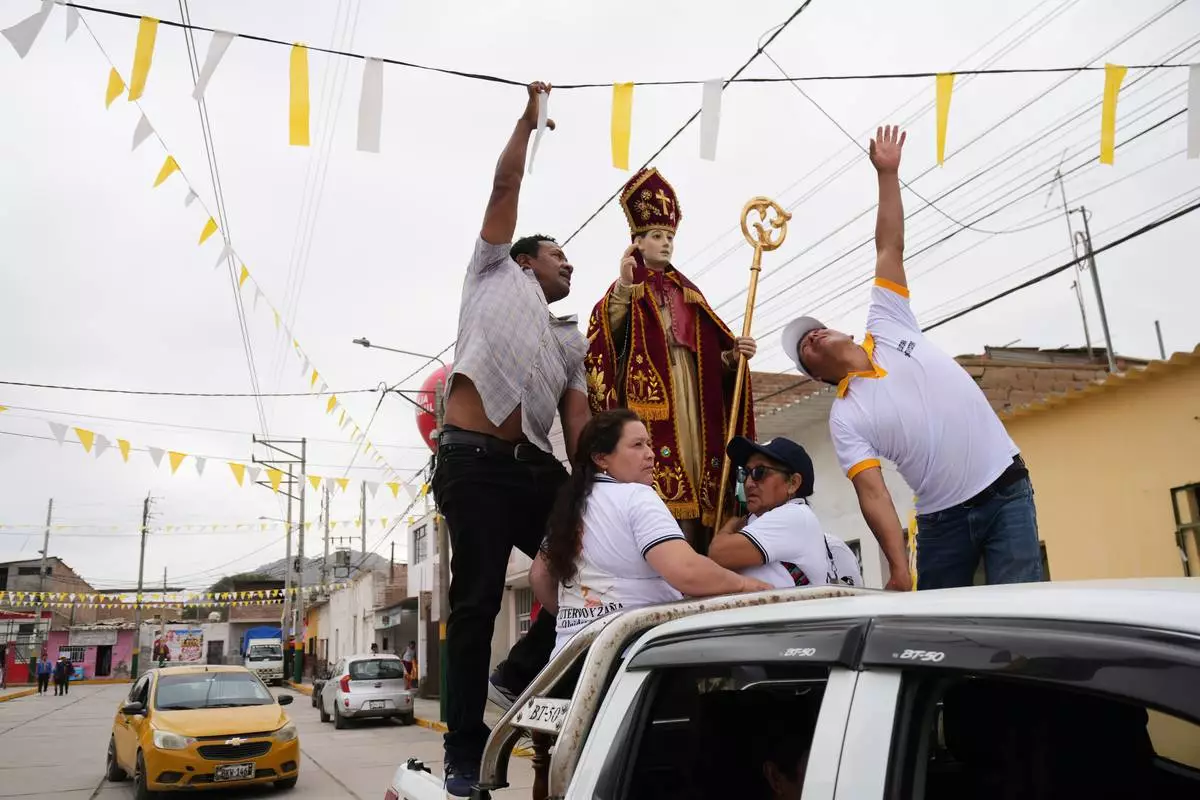
People aboard a pickup truck transporting a statue of Santo Toribio de Mogrovejo lift a streamer overhead to allow the religious figure to pass beneath it, ahead of a Mass celebrated by Pope Leo XIV at a shrine dedicated to the saint in Zaña, Peru, Saturday, Nov. 14, 2026. (AP Photo/Rodrigo Abd)
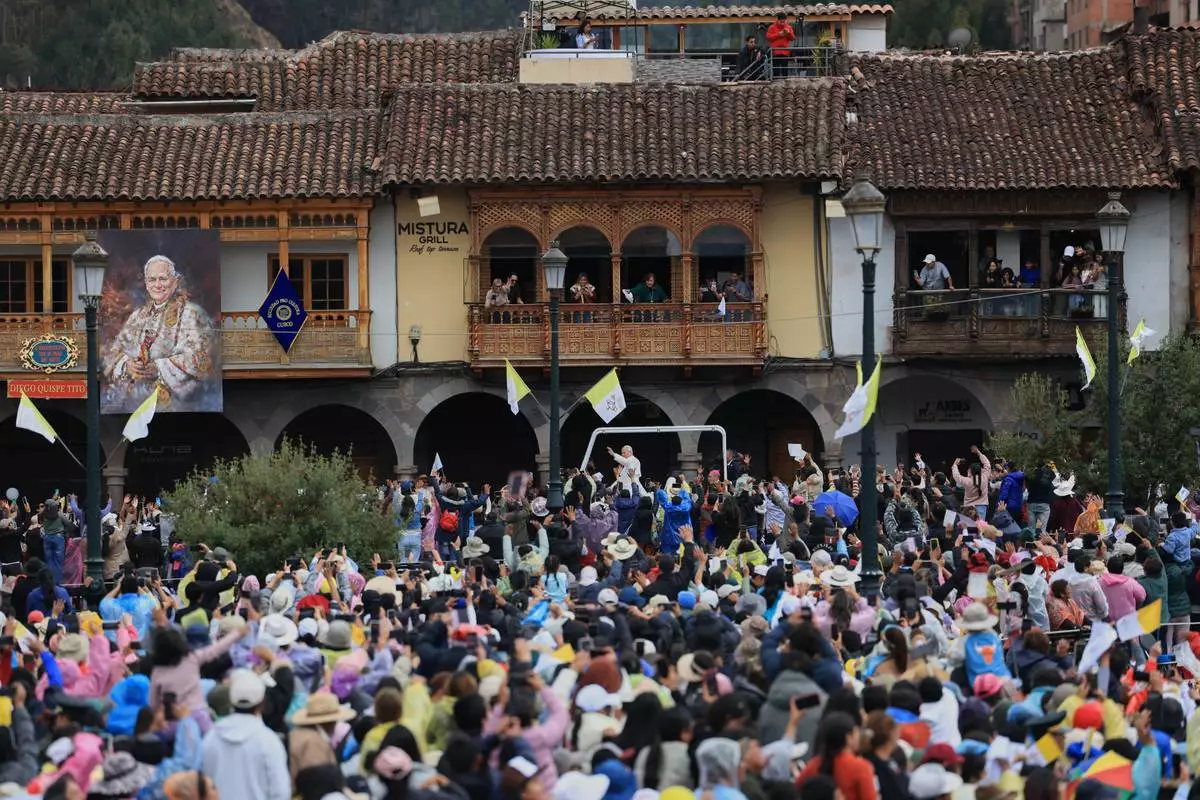
Pope Leo XIV waves as he rides through Cusco, Peru, Sunday, Nov. 15, 2026.(AP Photo/Jose Sotomayor)
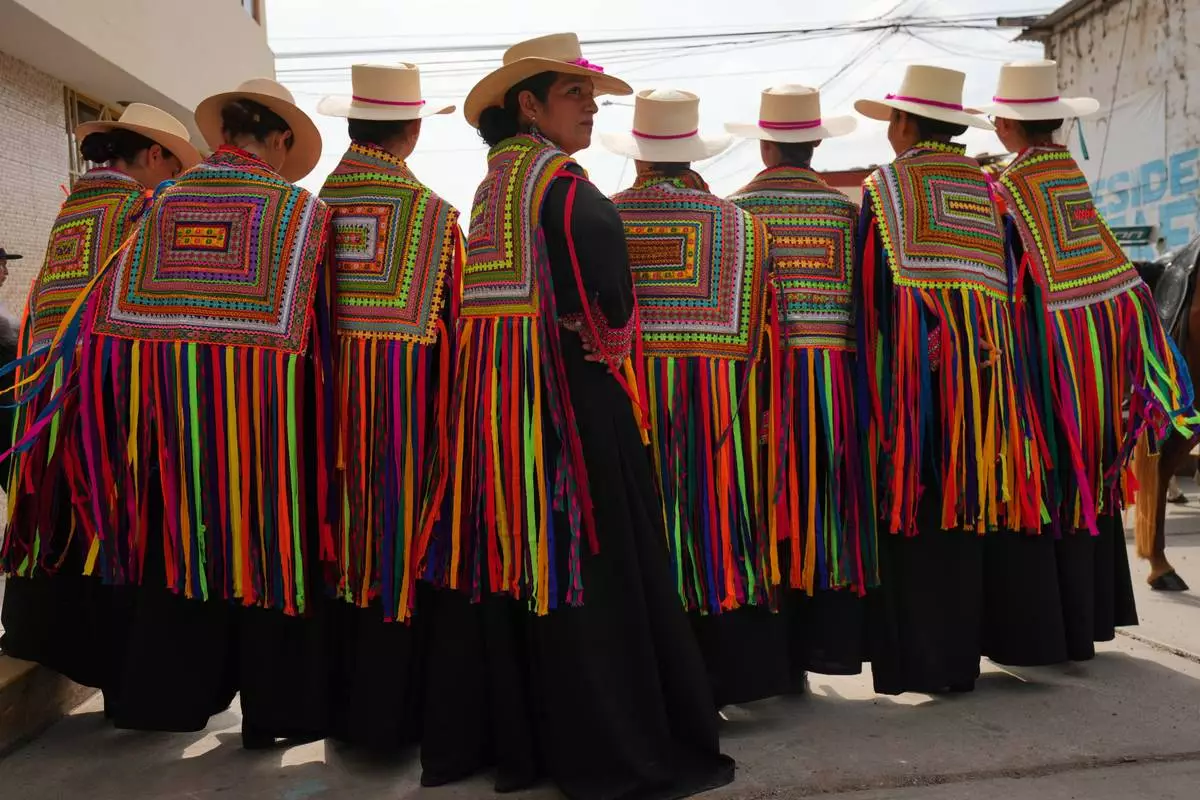
Women wait to welcome Pope Leo XIV ahead of his meeting with the Catholic community in Zaña, Peru, Saturday, Nov. 14, 2026. (AP Photo/Rodrigo Abd)
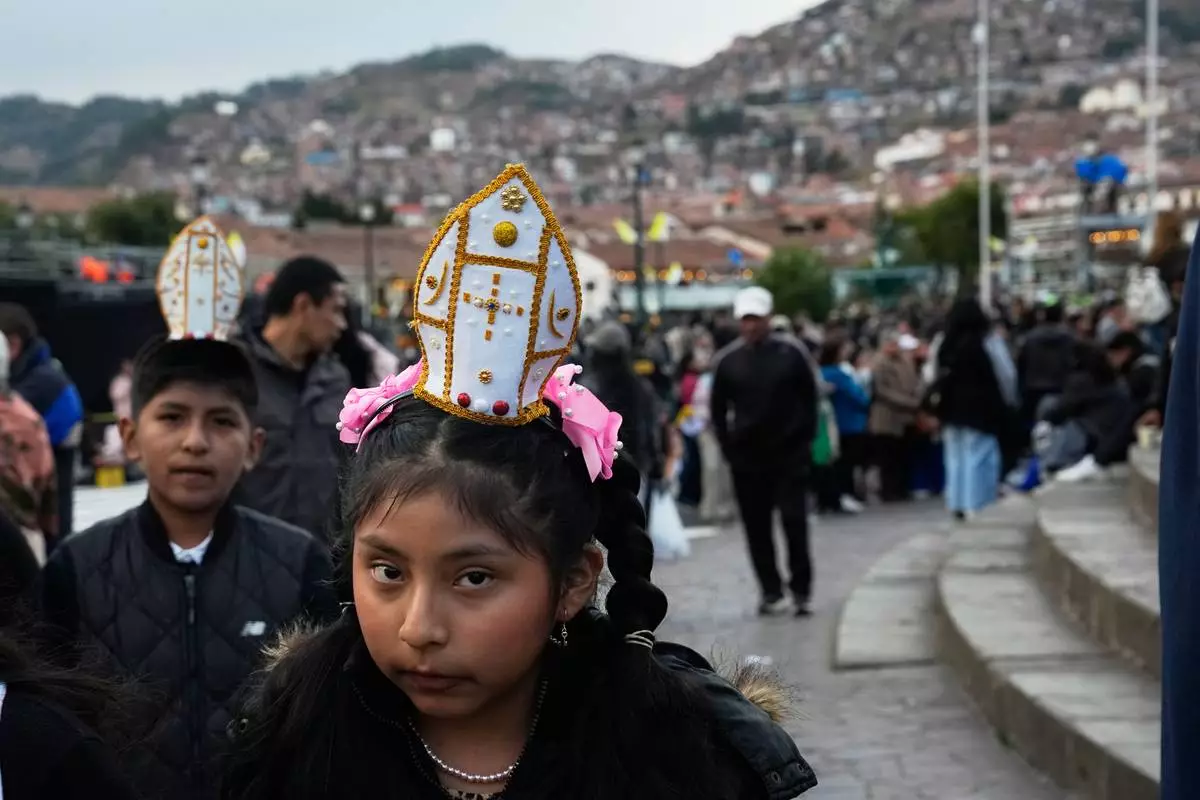
A girl wearing a papal hat walks out of a church a day before Pope Leo XIV's visit to Cusco, Peru, Saturday, Nov. 14, 2026. (AP Photo/Martin Mejia)
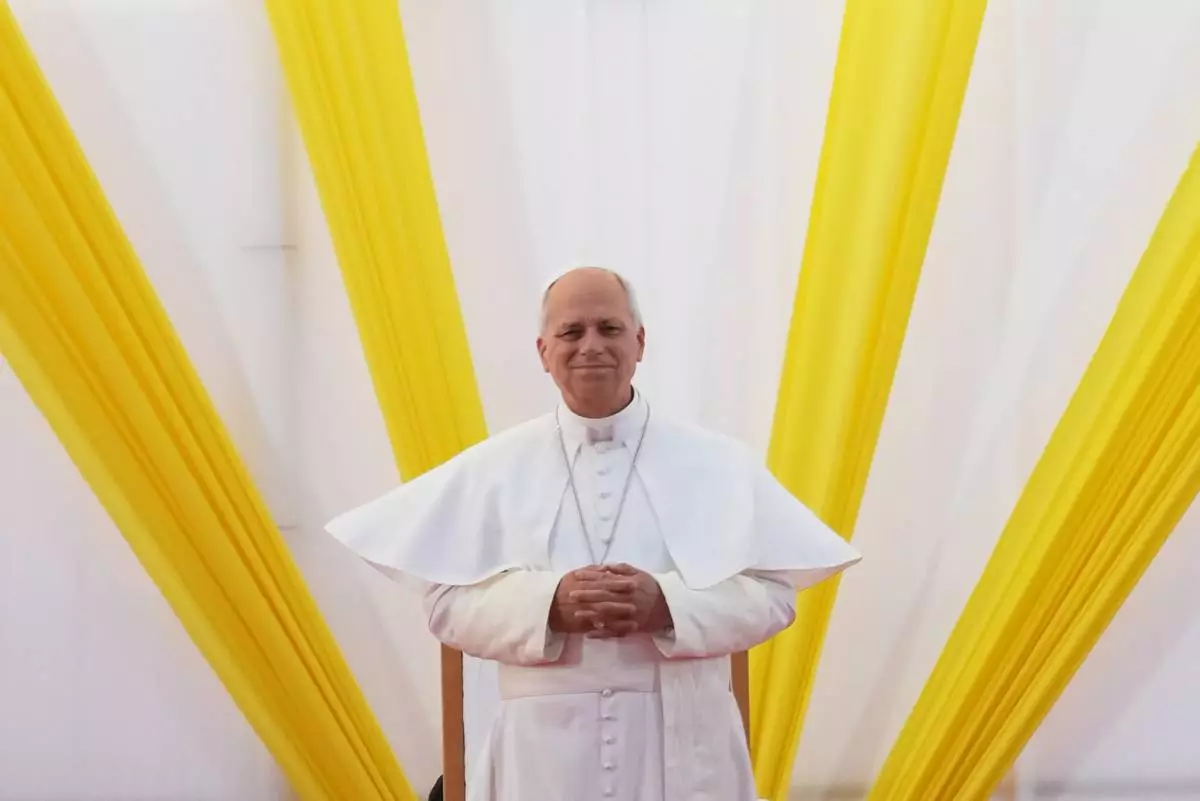
Pope Leo XIV attends a meeting with the Catholic community on the occasion of the closing of the Jubilee Year of Santo Toribio de Mogrovejo at the Shrine of Santo Toribio de Mogrovejo in Zana, Peru, on the ninth day of his twelve-day apostolic journey to South America, Saturday, Nov. 14, 2026. (AP Photo/Andrew Medichini)
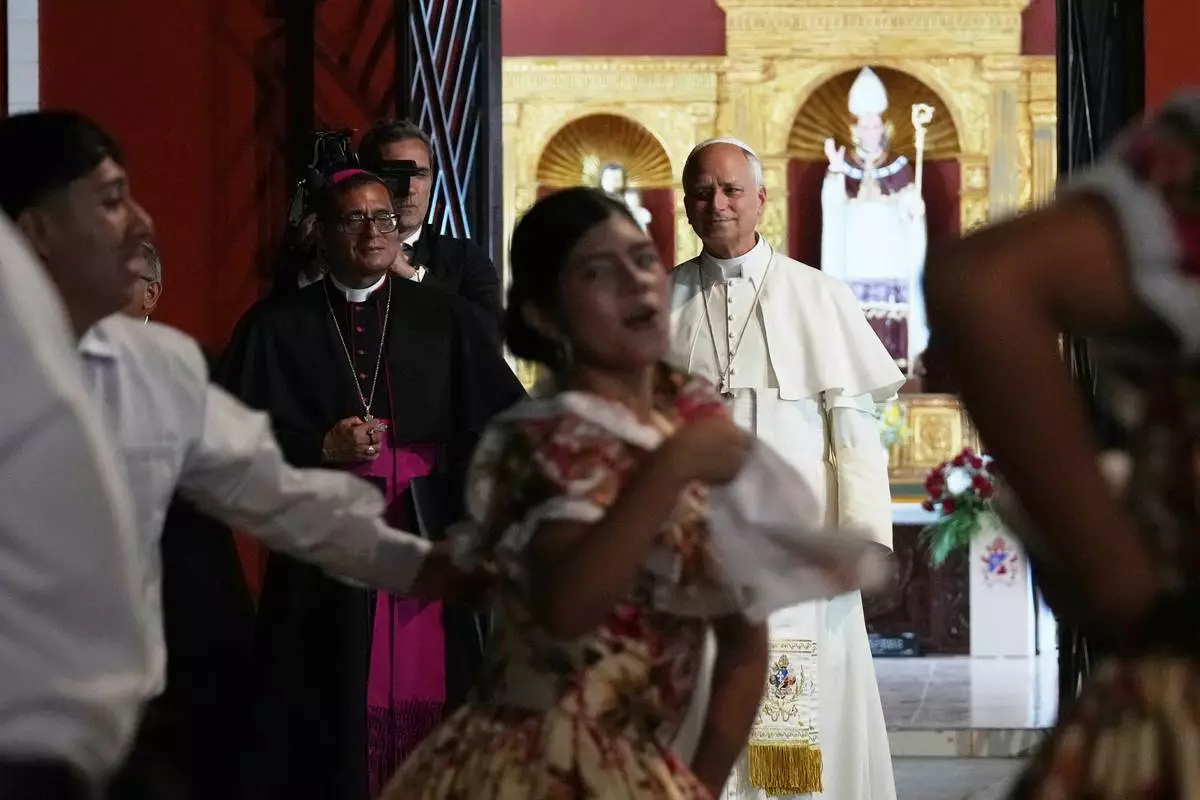
Pope Leo XIV watches dancers at the end of a meeting with the Catholic community on the occasion of the closing of the Jubilee Year of Santo Toribio de Mogrovejo at the Shrine of Santo Toribio de Mogrovejo in Zana, Peru, on the ninth day of his twelve-day apostolic journey to South America, Saturday, Nov. 14, 2026. (AP Photo/Andrew Medichini)
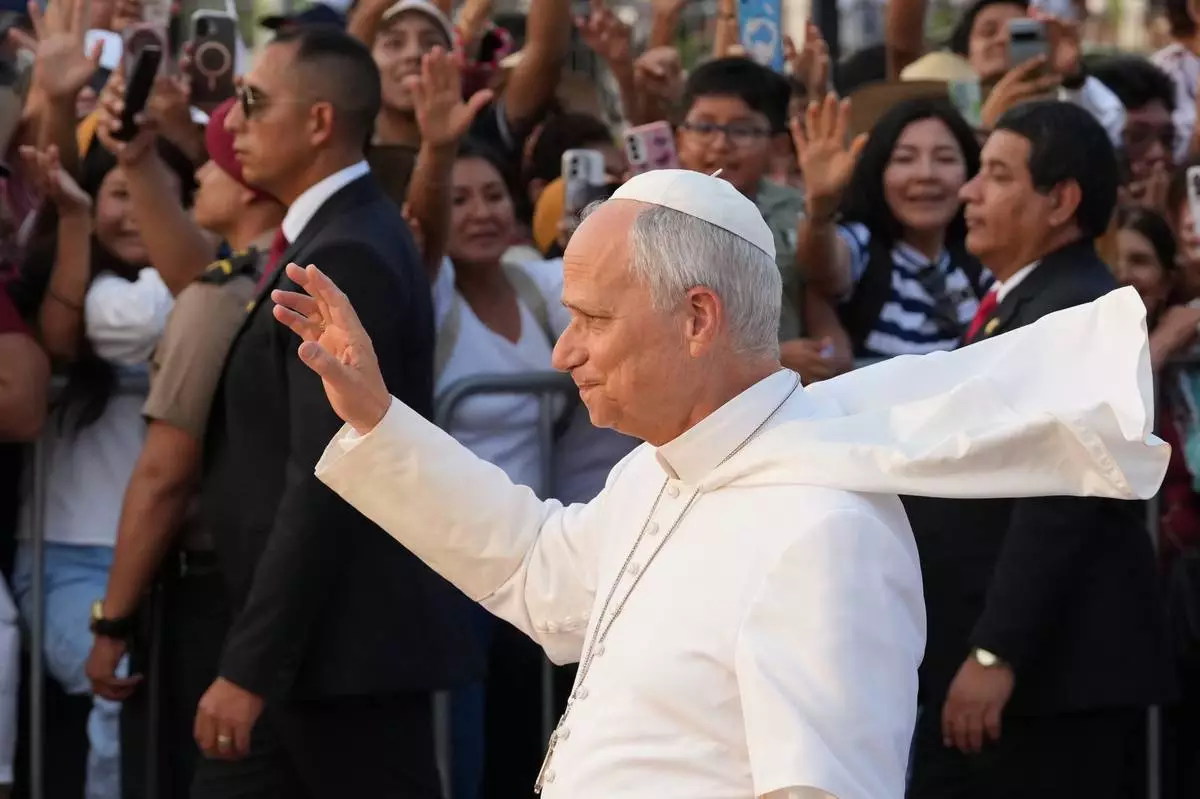
Pope Leo XIV arrives for a meeting with the Catholic community on the occasion of the closing of the Jubilee Year of Santo Toribio de Mogrovejo at the Shrine of Santo Toribio de Mogrovejo in Zana, Peru, on the ninth day of his twelve-day apostolic journey to South America, Saturday, Nov. 14, 2026. (AP Photo/Andrew Medichini)
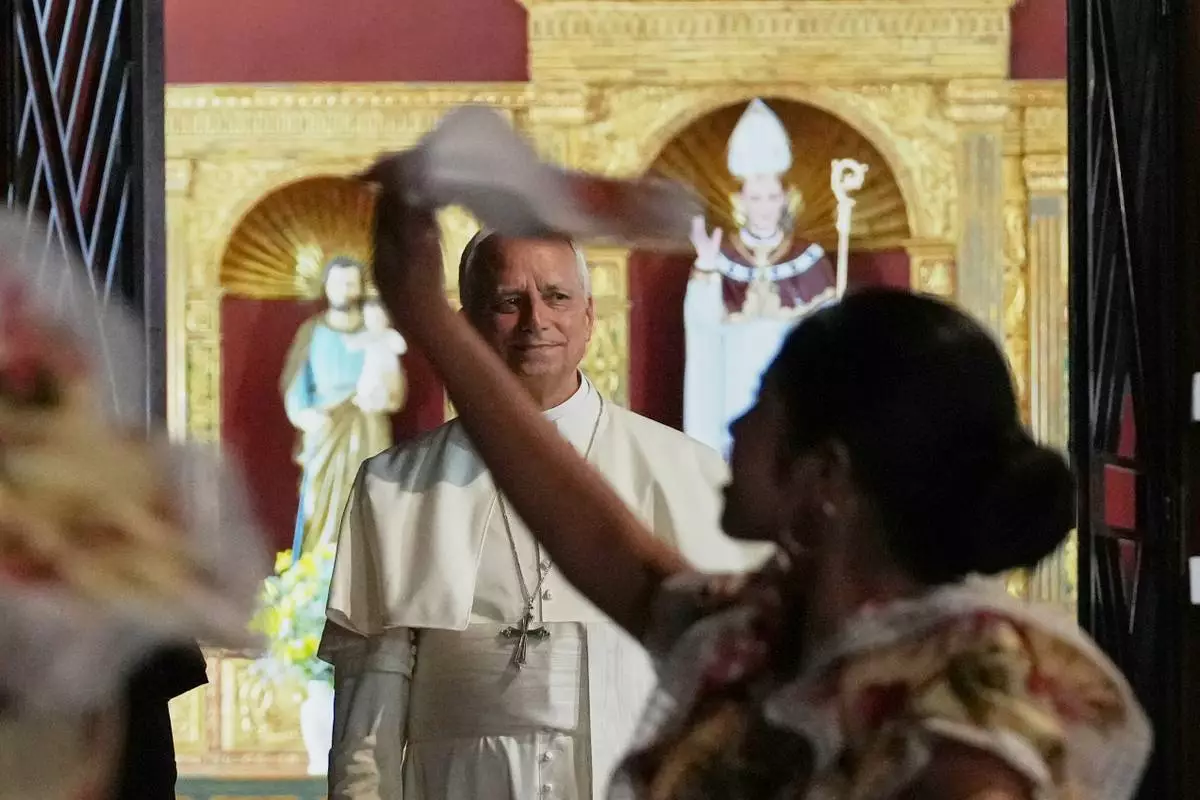
Pope Leo XIV watches dancers at the end of a meeting with the Catholic community on the occasion of the closing of the Jubilee Year of Santo Toribio de Mogrovejo at the Shrine of Santo Toribio de Mogrovejo in Zana, Peru, on the ninth day of his twelve-day apostolic journey to South America, Saturday, Nov. 14, 2026. (AP Photo/Andrew Medichini)