Students in the Hong Kong Special Administrative Region (HKSAR) engaged with leading scientists and experts from the mainland at a series of recent events, learning about China's scientific and technological development.
The series of events, titled "The Master Classes for Youth", were held on Monday and Tuesday.
During the event, more than 4,300 students from 23 Hong Kong secondary schools had the chance to meet seven top experts, engaging in exchanges in areas including cultural heritage preservation, Traditional Chinese Medicine, artificial intelligence and robotics, aerospace engineering, and future energy.
Last week, China's "artificial sun" project, also known as the EAST (Experimental Advanced Superconducting Tokamak), achieved a major engineering milestone in the development of superconducting magnet systems for fusion reactors.
At one of the public lectures, experts explained the nuclear fusion principles of the "artificial sun." Through vivid experimental demonstrations, the lecture allowed Hong Kong students to gain firsthand experience with cutting-edge energy technology.
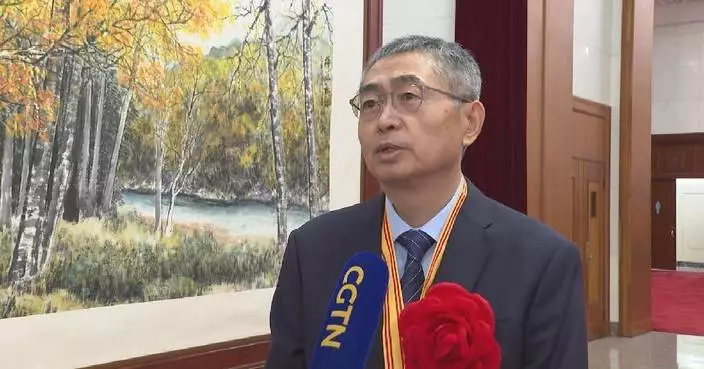
"The event is well-received and the atmosphere is very good. The science and technology museums and other venues have relevant exhibitions, so students here are very enthusiastic about science and already have a certain level of understanding," said Xiao Guoliang, research fellow and the director of the Research Division of Southwestern Institute of Physics of China National Nuclear Corporation.
The lectures and activities were well received by Hong Kong students, as they expressed enthusiasm for science and technology.
"After attending the lecture on nuclear fusion energy, I feel that China's technological development is advancing very rapidly. Many advanced technologies have been used in the nuclear fusion. I am really impressed. The lecture also includes many hands-on experiments, which I find very interesting," said Kuo Jun-chen, a student of Hong Kong Pui Kiu Middle School.
"This event allows me to witness the power of knowledge, deepens my interest in science, and makes me feel the tremendous development of our motherland. I am proud of my country," said Ting Tsan, another Hong Kong Pui Kiu Middle School student.
The two-day event was sponsored by the China Soong Ching Ling Foundation. Representatives from the Foundation and Hong Kong's Innovation, Technology and Industry Bureau attended the launch ceremony.
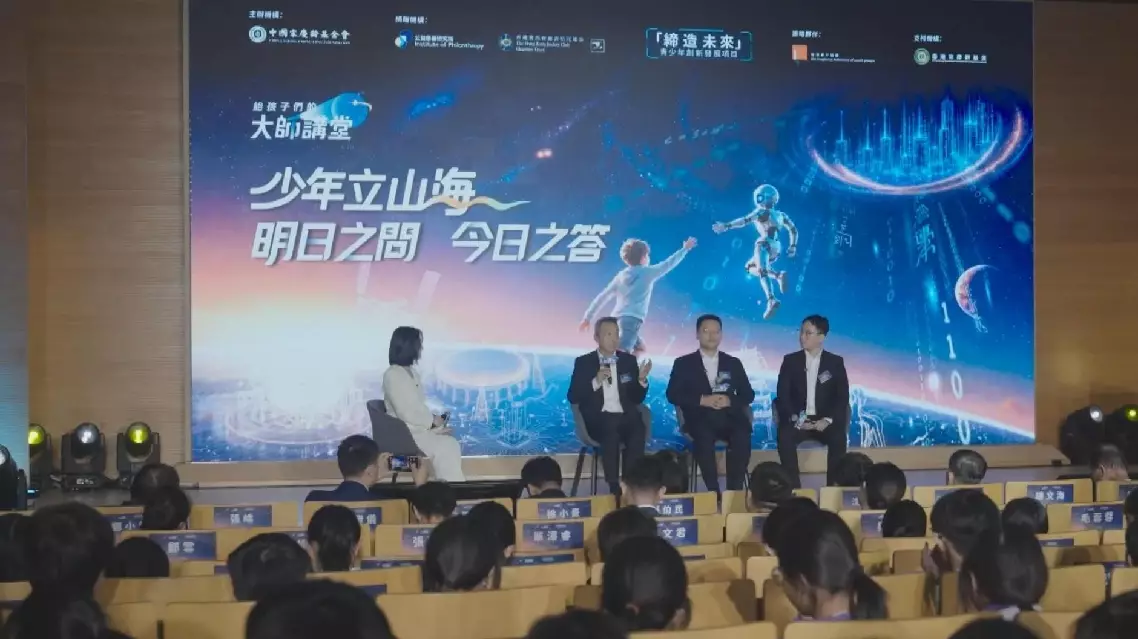
Hong Kong students engage with leading scientists to learn about cutting-edge technologies