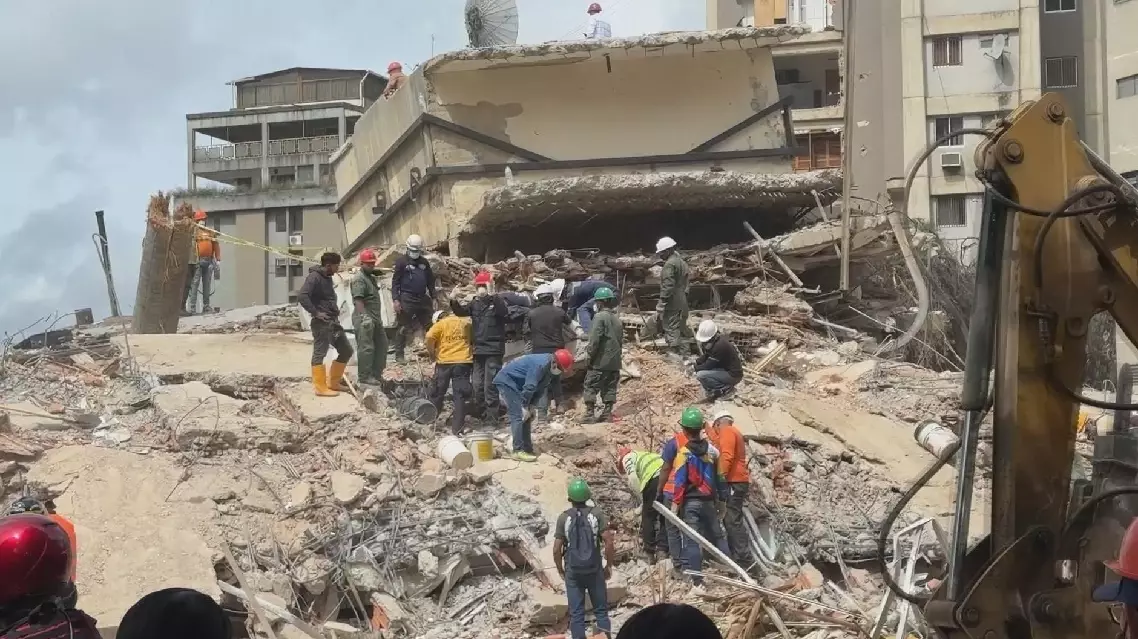
Venezuela is grappling with a humanitarian crisis as U.S. sanctions are hindering the country from accessing much-needed relief supplies after a deadly earthquake wreaked havoc in the South American nation last week.
Although the U.S. Department of the Treasury has temporarily eased some of the sanctions after the earthquakes, a short-term relief is still insufficient to make up for the structural damage caused by the long-standing restrictions imposed on the country, which has severely undermined the country's ability to access funds, equipment and aid resources for an extended period.
"More help is needed here, more help, even though Venezuelan people are contributing everyday," said Alberto Perez, an affected resident.
An Venezuelan political expert said that the legal and administrative actions taken by the U.S. authorities have clearly indicated that U.S. sanctions have directly hindered the flow of aid.
"This is precisely the strongest and clearest proof, the U.S. itself has admitted this through its own laws and administrative measures, admitting that sanctions, both in the past and now, have such an impact, that they hinder the delivery of funds and humanitarian aid," said Diego Sequera, a Venezuelan political analyst.
According to estimates from the United Nations (UN), the disaster has affected approximately 7 million people and caused 6.7 billion U.S. dollars in property damage, equivalent to 6 percent of Venezuela's GDP.
Venezuela is working with the UN and international humanitarian organizations to help affected communities access to aid.
Two powerful earthquakes, both measuring above magnitude 7.0, struck the country's north in rapid succession on June 24.
As of Tuesday, the death toll from the two earthquakes has risen to 1,943, with more than 10,000 injured, according to Venezuelan National Assembly President Jorge Rodriguez on Tuesday.
Venezuela grapples with humanitarian crisis as U.S. sanctions block access to quake aid
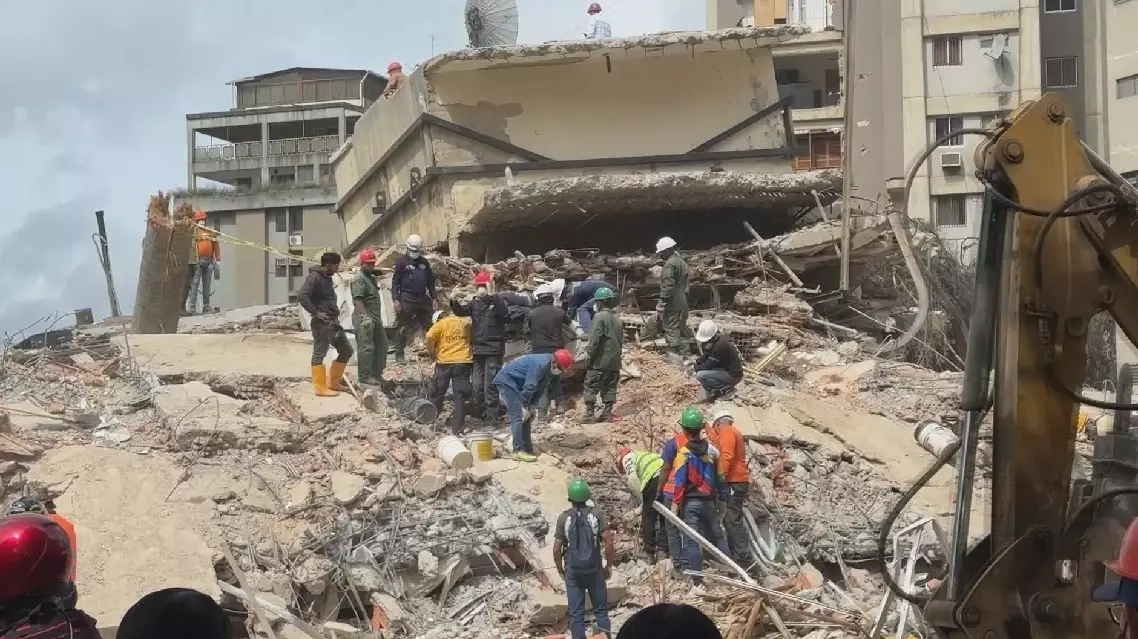
Venezuela grapples with humanitarian crisis as U.S. sanctions block access to quake aid
China and the United States should remove disruptions, overcome obstacles, and stay firmly on the right course toward building a constructive bilateral relationship of strategic stability, Chinese Foreign Minister Wang Yi has said.
Wang, also a member of the Political Bureau of the Communist Party of China Central Committee, made the remarks in a phone conversation with U.S. Secretary of State Marco Rubio on Tuesday.
In May this year, Chinese President Xi Jinping and U.S. President Donald Trump reached a series of common understandings in Beijing, including on building a constructive bilateral relationship of strategic stability, which has provided strategic guidance and set the direction for the development of bilateral ties over the next three years and beyond, Wang said.
Building a constructive bilateral relationship of strategic stability reflects the aspirations of the two peoples, meets the expectations of the international community, and serves the fundamental interests of both countries, Wang said.
Wang said that both sides should always uphold the spirit of equality, respect and mutual benefit, and translate the important consensus reached by the two heads of state into specific policies and practical measures.
Building a constructive bilateral relationship of strategic stability is not just a slogan and it requires action, Wang said, calling for both sides to move in the same direction and make persistent efforts.
To this end, Wang said, both sides should extend the cooperation list, create more positive agendas, and at the same time narrow the list of problems and manage various risks and hidden dangers.
Noting that the Taiwan question has far-reaching implications, Wang urged the U.S. side to handle Taiwan-related issues with extra prudence.
Both sides agreed that the phone conversation between the two foreign ministers was positive and constructive, and agreed to jointly implement the important consensus reached by the two heads of state and continue to maintain communication in a flexible manner.
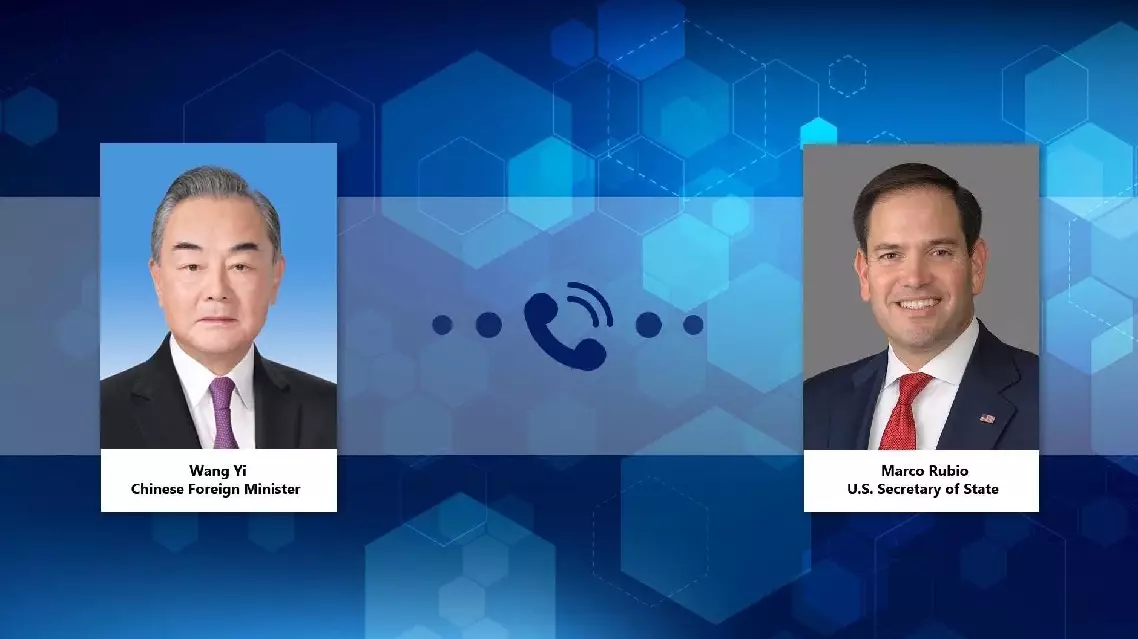
Chinese FM says China, U.S. should stay on course toward building constructive relationship of strategic stability